

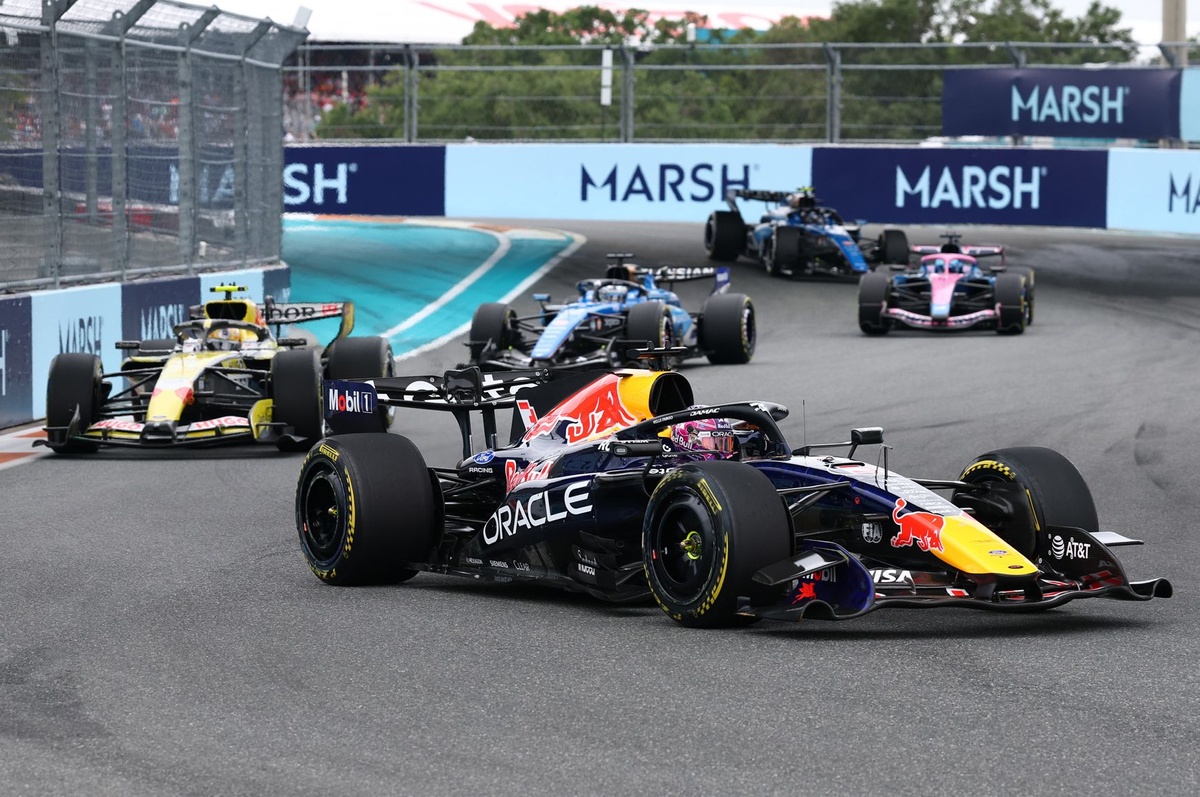
Formula 1 will shift away from the current split between combustion and electric power, which is close to 50:50 this year, for the 2027 season, the FIA has announced.
F1’s new-for-2026 rules quickly became a controversial topic this season, with the longed-for smaller, nimbler cars overshadowed by the greater emphasis on energy management.
F1 racers have been dissatisfied with the driving style that the new machinery requires, as pushing in high-speed corners has become detrimental to lap time, while cars slow down well ahead of braking zones in order to save and harvest energy.
Although overtaking has increased, with 197 recorded overtaking moves in grands prix so far compared to 84 in the same races last year, concerns swiftly emerged about the closing speeds between cars deploying energy and harvesting it. Those were unfortunately vindicated by Oliver Bearman’s hefty Suzuka accident, as he attempted to avoid crashing into a slower Franco Colapinto – who wasn’t even harvesting energy.
At least four meetings took place over F1’s unplanned five-week break – with the Bahrain and Saudi Arabian rounds cancelled following the outbreak of the Iran war – in order to find solutions to the championship’s engine predicament.
Firstly, immediate tweaks were agreed ahead of the Miami Grand Prix. Super clipping was increased from 250kW to 350kW so that drivers can recover more energy at full throttle, and cars are now allowed to harvest 7MJ rather than 8MJ during qualifying, slightly reducing energy-harvesting tactics.
Charles Leclerc, Ferrari, Max Verstappen, Red Bull Racing, Andrea Kimi Antonelli, Mercedes
Photo by: Alastair Staley / LAT Images via Getty Images
These modifications “resulted in improved competition and were a step in the right direction”, the FIA reports, with some minor adjustments to come for safety reasons.
For 2027, the internal combustion engine’s power will increase by about 50kW (67bhp) thanks to a fuel-flow increase, while the deployment power of the energy recovery system will be reduced by the same amount.
The fuel-flow increase may require hardware changes on the power unit, hence this tweak being longer-term in order to give manufacturers enough time to adjust.
These tweaks are not official yet, as they still need to be voted on by power unit manufacturers and ratified by the World Motor Sport Council.
However, the FIA has made it clear that these measures have been “agreed in principle”, meaning that the aforementioned process shouldn’t be a stumbling block.
The FIA’s statement in full
“A number of proposals to introduce hardware component changes to the F1 2026 Regulations were agreed in principle at an online meeting convened today by the FIA and attended by Team Principals, FOM, and representatives from Power Unit Manufacturers.
“Today’s meeting began with a review of the amendments introduced for the Miami Grand Prix before discussion moved to longer-term regulatory considerations.
“The conclusion from the deployment of modifications in Miami, designed to improve safety and reduce excessive harvesting, was that they resulted in improved competition and were a step in the right direction. Following analysis and consultation, the FIA reported that no material issues or safety concerns had been identified from Miami.
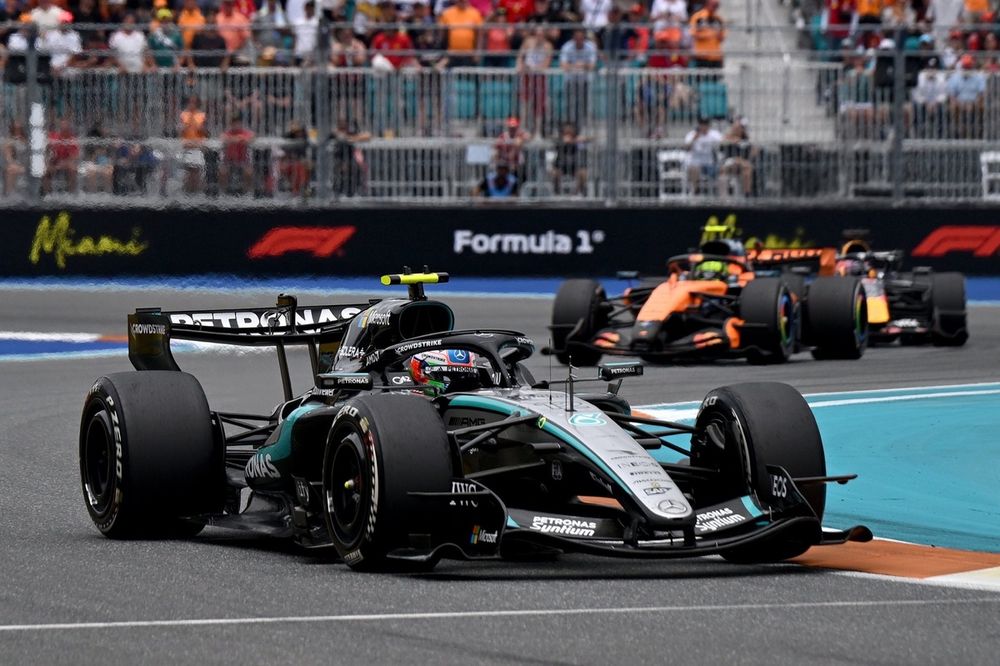
Andrea Kimi Antonelli, Mercedes
Photo by: Sam Bagnall / Sutton Images via Getty Images
“Evaluation of the Miami package is ongoing with a view to the introduction of further adjustments at future events. These include improved start-safety revisions and measures to improve safety under wet conditions. These will be communicated to teams once defined. Improvements to the visual-signalling measures are being evaluated for the Canadian Grand Prix.
“Turning to the longer-term measures, there was unanimous commitment to introduce changes which further enhanced fair and safe competition, that were intuitive for drivers and teams and were in the best interests of the sport.
“The measures agreed in principle today for 2027 would see a nominal increase in Internal Combustion Engine (ICE) power by ~50kW with a fuel-flow increase and a nominal reduction of the Energy Recovery System (ERS) deployment power by ~50kW.
“It was agreed that further detailed discussion in technical groups comprising teams and Power Unit Manufacturers was required before the final package was decided.
“The final proposals presented during today’s meeting are the result of a series of consultations over the past few weeks between the FIA and multi-stakeholders with invaluable input from F1 drivers.
“The next step is to formally present these regulatory changes, once refined, for a World Motor Sport Council e-vote once the Power Unit Manufacturers will have voted on this package.
“The 2026 regulations were developed and agreed in close partnership between the FIA, FOM, teams, OEMs and Power Unit Manufacturers. Today’s proposals were discussed against the backdrop of this spirit of collaboration.”
We want to hear from you!
Let us know what you would like to see from us in the future.
Take our survey
– The Autosport.com Team
Read the full article here