

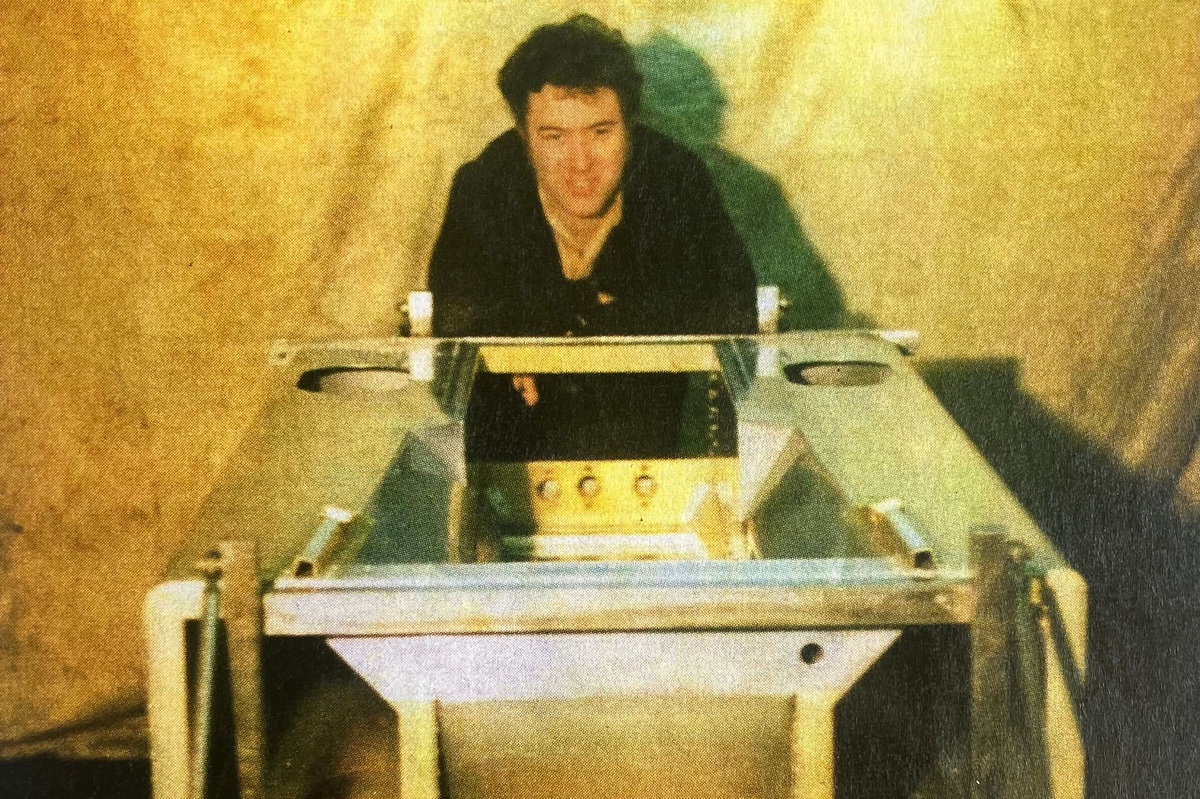
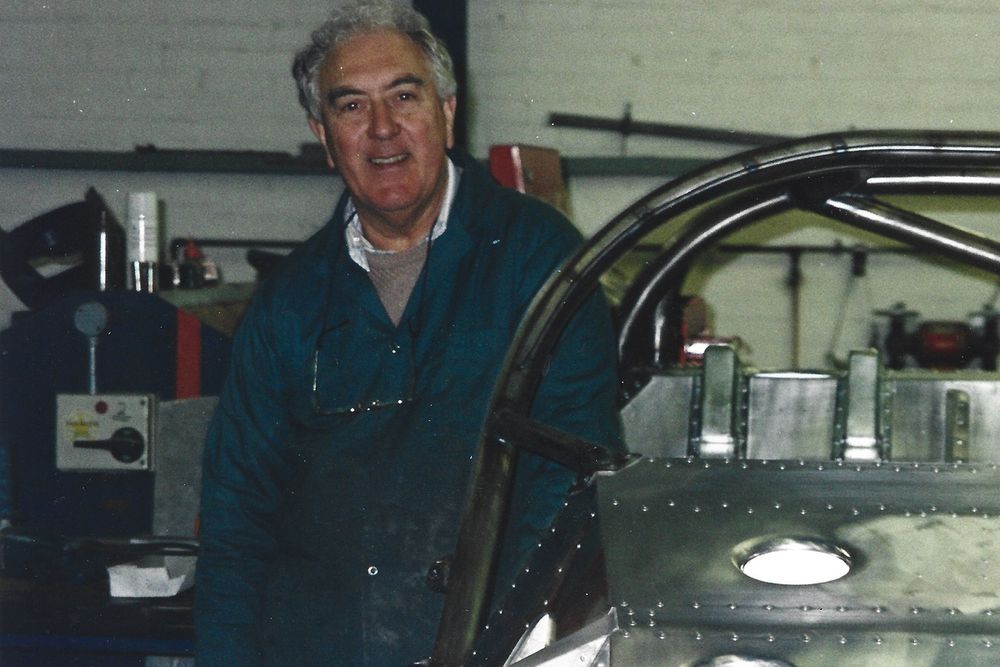
John Thompson never sought fame nor publicity, but his TC Prototypes (TCP) fabrication and subcontract company was a largely unsung linchpin of the motorsport industry in Britain and beyond for in excess of 30 years. Thompson, who has died aged 85, built chassis, suspension and much more – sometimes complete cars – for scores of teams and manufacturers. Ferrari was one of them: he produced the Scuderia’s first monocoque chassis.
The three tubs Thompson produced for Ferrari’s 312 B3 weren’t the only TCP-built components on the grand prix grid in 1973. It was also responsible for the chassis of the one-off Tecno E731, which was built up in its Northamptonshire workshops, as well as suspension parts for the fledgling Shadow team’s DN1.
But the activities of a company established in 1970 encompassed much more than just F1. TCP was a major player in the world of sportscar racing, building monocoques for Porsche’s 962 Group C/IMSA GTP prototype almost by the dozen, producing the bodywork for the first Tom Walkinshaw Racing Group C Jaguars and then developing three generations of NSX GT racer for Honda. It also produced Indycars, touring cars and rally cars over the years.
It wouldn’t be quite right to say that the order from Ferrari was just another job for TCP. For a start, the drawings supplied by the Italian manufacturer were in metric. A company used to working in yards, feet and inches had to invest in new equipment as a result. Thompson reckoned much of the profit from the deal – he charged just £400 a pop – was eaten up by the switch from Imperial. He also took on the commission because he reckoned it would be a good opportunity to do a spot of sightseeing.
“We didn’t really make any money on those tubs, but I thought it would be a chance to have a bit of a holiday in Italy and have a look around Ferrari,” Thompson told this author back in 2013. The first chassis was airfreighted to Italy, but the second and then the third were delivered by Thompson, strapped to the roof rack of his Ford Cortina: “We threw the kids in the car, and off we went. I’m not sure we even had a map.” But there was one thing he did have for the first time over the course of the Italian jaunt, he recounted. A croissant!
Thompson had been surprised when he received a call in October ’72 from Sandro Colombo, the man Fiat had put in technical charge of the Ferrari F1 team on the banishment of Mauro Forghieri to elsewhere in the factory. He thought it might have been a wind-up at first. “Colombo was in London for the Motor Show at Earls Court and asked if he could come and visit us at 11 o’clock the following morning,” remembered Thompson. “We were sitting there having our morning tea break when I said, ‘Do you think we ought to have a sweep-up?’”
Jacky Ickx, Ferrari
Photo by: Rainer Schlegelmilch / Getty Images
The official reason why Ferrari sought TCP’s services was industrial action in Italy, forcing it to subcontract chassis build. Thompson always believed that was a ruse: “I think that was just an excuse. The truth is that they had never done a monocoque and didn’t know how to.” Tyre supplier Firestone was pushing for Ferrari to adopt technology first used in F1 by Lotus with the type 25 in 1962, and with Forghieri out of the way, Colombo was able to carry through on the request that resulted in the second car to carry the B3 suffix. It made its debut at the 1973 Spanish Grand Prix.
Yet Ferrari wouldn’t build its own monocoques for nearly another 10 years. A further shift of the political sands at Maranello resulted in the return of Forghieri and the use of his favoured panelled spaceframe or semi-monocoque chassis construction. It would take until the arrival of Harvey Posthlewaite in the design office for the manufacture of another true monocoque design, the 126 C2 of 1982.
The Ferrari and the Tecno weren’t the only Italian F1 cars built by TCP. Ten years later in 1983, it produced the second Osella to carry the FA1E moniker. A car incorporating the complete rear end — engine, gearbox and suspension from the previous year’s Alfa Romeo 182 — was the work of Tony Southgate. The British design legend already had a long relationship with Thompson that stretched through his time with Shadow and then Arrows.
Thompson had set up TC Prototypes late in 1970 after a stint at McLaren, where he had acquired the nickname ‘Welder John’, and then short stops at Cosworth working on its four-wheel-drive F1 car and then the fledgling chassis constructor March Engineering. He founded the business with £100 in the bank and a partner called Chris Charles, hence the TC. Charles quickly left, leaving TCP as very much a family affair run by Thompson and his wife, Maureen. It might even be described as a homespun operation; there was nothing showy about the business. It was all about the product.
Southgate remembers Ford motorsport boss Stuart Turner being slightly disconcerted by TCP’s premises on a visit as the RS200 Group B rally car project was about to get going. The former Eagle, BRM, Shadow and Arrows designer had been responsible for the Blue Oval’s unraced mk3 version of the C100 Group C contender produced by Thompson for the 1983 season. Now, it wanted the Southgate/Thompson partnership, which operated under the Auto Racing Technology banner, to design and build what became the RS200 Group B rally car.
“John’s place was never the smartest, a bit junk on junk in places,” recalled Southgate. “Stuart was horrified and said he wasn’t sure about TCP representing the Ford Motor Company, but I told him that John would get the cars out the door on time, for a good price and at good quality.” The first eight RS200s were produced at Thompson’s Wellingborough workshops ahead of the car’s competition debut near the end of 1985.
George Fouché, Franz Konrad, Wayne Taylor, Porsche Kremer Racing
Photo by: LAT Images via Getty Images
The RS200 wasn’t the only rally project with which TCP was involved. It was a key player in Ralliart Europe’s early exploits with the Gallant in the World Rally Championship from 1989.
Indycar projects included the 1980 Phoenix CART contender. It was, at least externally, a copy of the Williams FW07, then the dominant car in F1. Thompson once explained that he’d seen a line drawing of the F1 machine in the pages of Autosport and “scaled it up” as he set to on the chassis that raced in the hands of Tom Sneva, Gordon Johncock and Kevin Cogan among others.
An important touring car in the TCP story was an E36-shape BMW coupe built for Linder Racing after the German manufacturer ended its official engagement in the Germany-based tin-top series. A car powered by the E30 2.5-litre M3 Evolution four-pot engine and dubbed the 325i wasn’t a success on the track, but it was responsible for a connection being made between Thompson and Honda. Armin Hahne had raced the Linder BMW in the 1983 DTM and a Honda NSX for Seikel Motorsport in the ADAC GT Cup the same year. When Honda outlined a plan to go to Le Mans, he suggested TCP could build them the necessary machine.
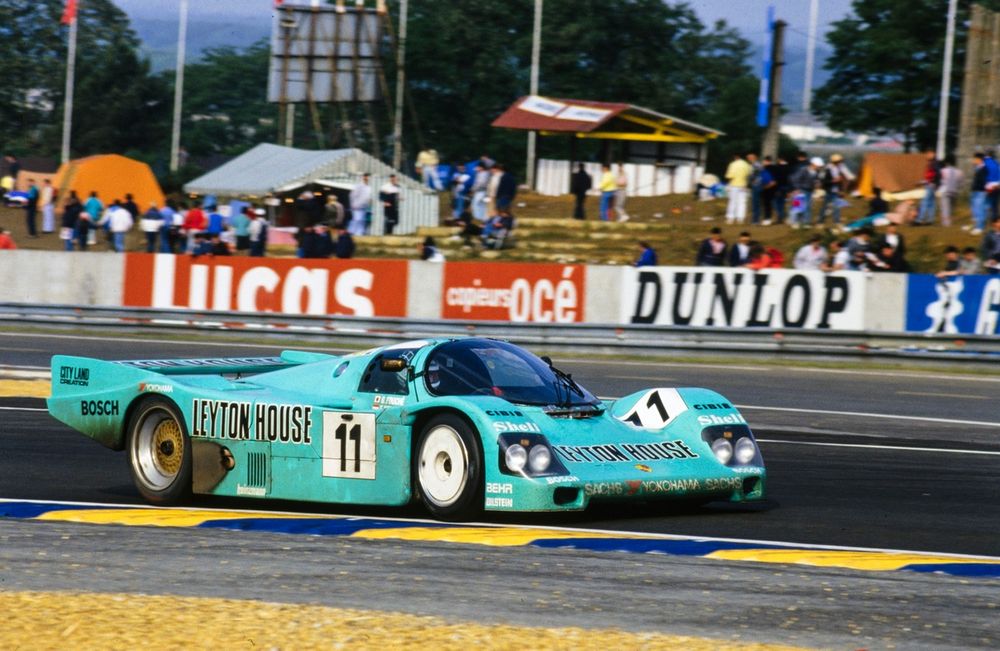
A GT2 contender built by Thompson was fielded by Kremer Racing – which also had close links with TCP courtesy of its used of its 962 tubs – at both Le Mans and in the German series in 1994. It won races in the latter and would triumph in class at Le Mans with the privateer Team Kunimitsu operation the following year. The factory campaign was focused on GT1 in ’95, TCP building a second iteration of the NSX with the engine turned 90deg to run longitudinally in the car. A team based out of TCP’s workshops fielded one twin-turbo car and one in normally-aspirated form at the Circuit de la Sarthe. A third version was built for ’96 but never raced.
Thompson retired in the mid-2000s but continued to work as a consultant for a subcontract company known as EY3 Engineering. Yet more 962 tubs followed. Kremer had more than 10 produced by his hand over the years.
“John was happy to stay in the background; he was never one to blow his own trumpet,” said Southgate. “But on projects I was involved with, I always liked to make sure that people knew about his contribution. John was just ace at making things, anything out of sheet metal, that was what he was best at.”
John Thompson
Photo by: Uncredited
We want to hear from you!
Let us know what you would like to see from us in the future.
Take our survey
– The Autosport.com Team
Read the full article here