



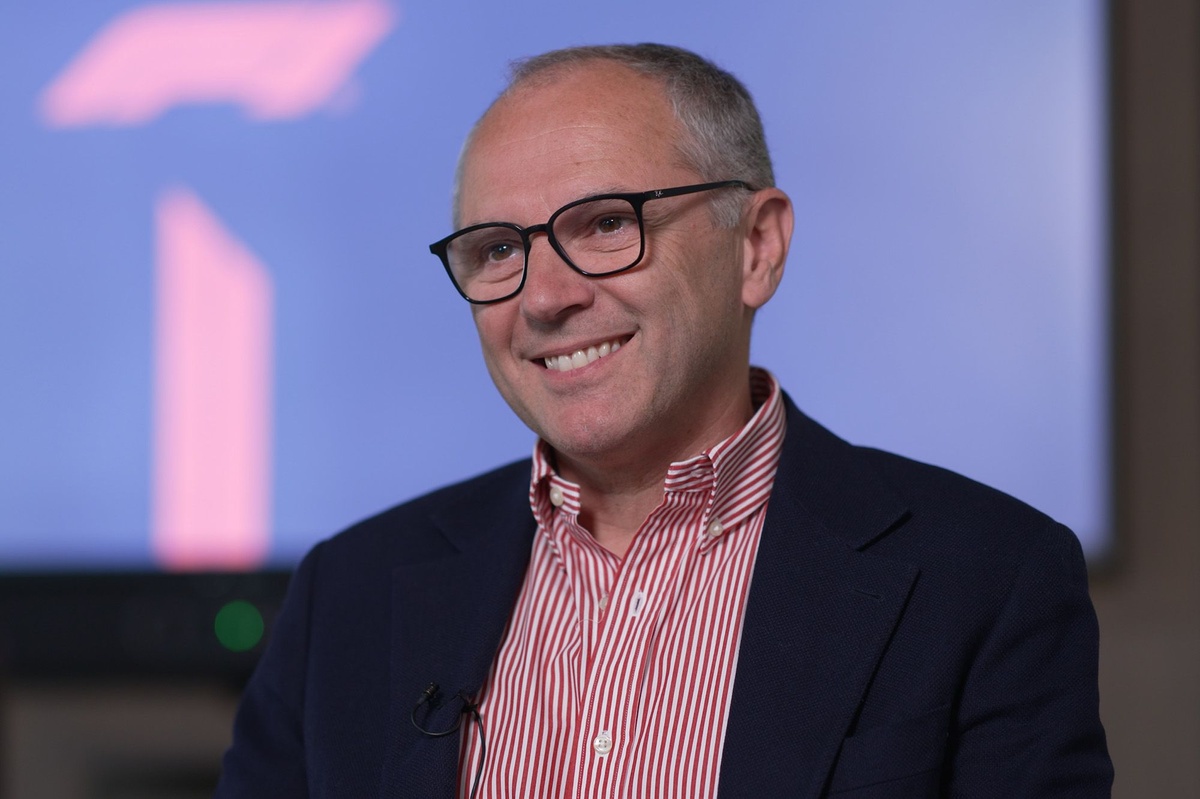
Formula 1 CEO and president Stefano Domenicali is confident the world championship will make the required adjustments to improve the 2026 regulations – but insists F1 is on the right track amid growing worldwide interest.
F1 overhauled its technical regulations for 2026 with a much bigger reliance on electric energy, featuring a near 50-50 split between the internal combustion engine and a larger hybrid element. It has also introduced advanced sustainable fuels, while adding active aerodynamics and slashing downforce on the smaller and lighter cars.
The end result is a compromise which is largely dictated by the new energy management requirements and has delivered a sharp increase in overtaking over F1 2026’s first three grands prix. But the rules have also led to concerns from drivers and diehard fans over a dilution of qualifying, with drivers having to use lift-and-coast and back off in F1’s fastest corners to recharge the battery several times per lap. There have also been concerns over the growing closing speeds between cars, which have already led to a high-speed accident by Haas driver Oliver Bearman in Japan.
F1 stakeholders, including the teams, governing body the FIA and power unit representatives, are currently holding a series of meetings to come up with short-term rule tweaks that could allay the biggest concerns as soon as next month’s Miami Grand Prix.
Speaking exclusively to Autosport in London, Domenicali said he was confident F1 would make the right adjustments, but he also insisted it has the right foundations in place to make the new rules a success, and claimed fan research showed the interest in the championship is at an all-time high.
“I can see an incredible result in terms of positivity from the bigger fan base on what is the effect on the racing,” Domenicali said. “Definitely, I take on board the criticism related to certain situations that we have to manage related mainly to qualifying.
Start action
Photo by: Jayce Illman / Getty Images
“Qualifying has been always the place where the driver has to push as much as you can, and to see where the physical limits of the car and the driver really are. That’s an area where we are working in these weeks, together with the drivers, together with the teams, coordinated by the FIA to see what the right adjustment could be without losing the right [track].
“We are managing it in the right way, with no panic, with a solid foundation, being ready to have different options.”
F1’s biggest regulations shift in generations was driven by the need to retain existing manufacturers and attract newcomers, with the likes of Audi, Ford and General Motors all getting involved to varying degrees while Honda performed a U-turn on its earlier decision to walk away. With Renault having recently pulled out as an engine manufacturer, there had been fears that not heeding the industry’s calls would have led to just Ferrari and Mercedes remaining on board.
“I think it’s very important to remember why we changed the regulations as an ecosystem,” Domenicali explained. “Five years ago, the manufacturers thought that the only way to progress in being involved in motorsport was to be 50-50 or trying to find the right balance between the internal combustion engine and electrification. That was a starting point.
“The regulations definitely have to be improved, as always when there is something that is totally new, because that step change has never been so big. But that was the reason.”
The car industry at large has since started re-evaluating its aggressive pivot towards EVs, with Domenicali expecting upcoming discussions around the next rules cycle in five years’ time to look “definitely different”. The advent of sustainable fuels could open the door for a return to V8 engines with a smaller hybrid component.

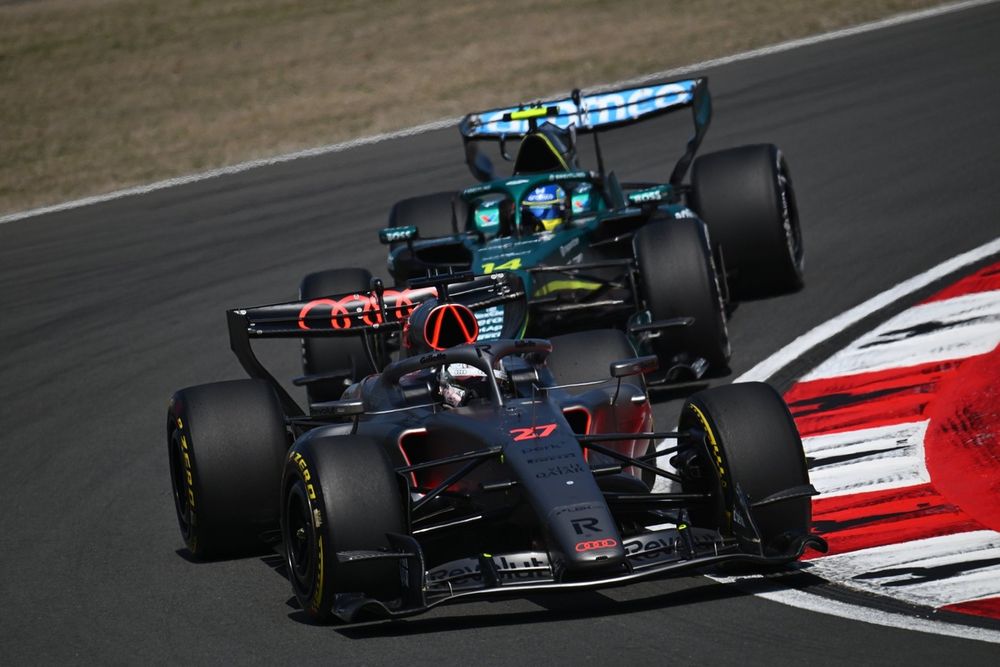
Nico Hulkenberg, Audi F1 Team, Fernando Alonso, Aston Martin Racing
Photo by: Guido De Bortoli / LAT Images via Getty Images
In the meantime, F1 is keen to respect the investments made by the current manufacturers, while also safeguarding the DNA of the series and finding a balance between keeping its diverse fan groups engaged and keeping its drivers on board.
While a subset of fans have expressed vocal criticism on the rules, partly steered by negative driver feedback, F1’s own metrics have also seen an uptick in interest. The 2026 season’s first three sold-out races in Australia, China and Japan all grew in attendance, while F1 says TV viewership in its biggest markets is also up year on year by an average of 25%.
“If I see the survey of what is [going on] all around the world with new fans of Formula 1, the result is magnificent. Everybody is saying: ‘What is going on?’ A lot of action, and this is what people want to see,” Domenicali said.
That’s why the Italian is backing a calm, constructive dialogue on how to improve F1’s product, saying people who criticise F1 for the sake of it will have “zero effect”.
“Generally speaking, when we’re talking about something it’s great, because that generates a constructive discussion,” he said. “What I don’t like is people who love to criticise. Criticising to criticise doesn’t help anyone, and it has really zero effect.
“I think the discussions that have been in place since many months with the FIA, with the teams, now even more with the drivers, are going in the right direction. There are meetings now, actually this week, and also next week before Miami, to see what can be done to improve or to adjust the situation.
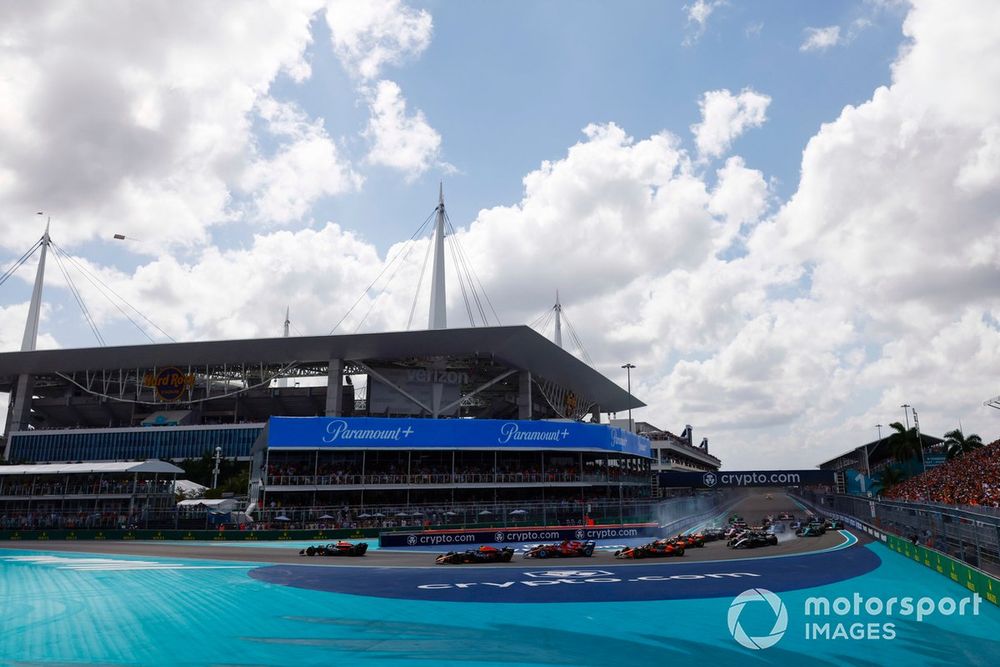
Miami International Autodrome
Photo by: Sam Bloxham / Motorsport Images
“Hopefully, before Miami, the FIA will inform [us] what would be the adjustment that would be done for two considerations. First is qualifying, trying to be as much as you can on full power or full braking, whatever it is. And on the other hand, of course, to make sure that certain concerns that drivers highlight will be fixed in the right way.”
Domenicali doesn’t see the battery-related increase in overtaking as artificial, drawing parallels with the extensive lifting and coasting required in F1’s turbo era in the 1980s as drivers battled to make it to the finish without running out of fuel. F1 also had the DRS overtaking aid until last year, which was initially deemed artificial, but helped the series spice up the action while cars otherwise struggled to follow each other closely.
“What is artificial? Overtaking is overtaking,” he stressed. “People have a short memory, because in the turbo age in the ’80s, you [had] to save [fuel] in the race because otherwise the fuel tank was too small. And it’s part of the game.”
“So, as I said, [you have to] take on board everything, but have a real [direction] of what you want to do for the future.”
We want to hear from you!
Let us know what you would like to see from us in the future.
Take our survey
– The Autosport.com Team
Read the full article here


