






Last week Matt Blood, the Orioles’ vice president of player development and domestic scouting, was let go after seven years with the organization. It’s too early to say definitively why, but one narrative that’s seeped into the mainstream is that the front office is unhappy with how the Orioles’ draft picks have panned out. Recall that the Orioles were rewarded for years of tanking by picking in the top five of the draft four years running from 2019 to 2022, landing No. 1 overall twice (Adley Rutschman in 2019, Jackson Holliday in 2022), alongside star college outfielders Heston Kjerstad and Colton Cowser. Well, so far, the returns are underwhelming. Kjerstad still hasn’t stuck as an everyday big leaguer. The jury’s out on Cowser and Holliday. And Rutschman, the centerpiece of the whole rebuild, is now wearing Red Sox red after Baltimore traded him to Boston at the deadline. Mike Elias’s front office gets credit for stockpiling prospects, especially athletic left-handed college hitters who play up the middle, but that’s a pretty thin return out of the draft.
But while the merits of the Orioles’ drafting strategy may require further assessment, one thing the regime seems to have quietly done quite well at is turning up players nobody else wants anymore. I’m referring to the waiver wire pickups, the “for cash” trades, the minor-league deals not even the biggest Orioles sicko paid attention to when they were announced. Despite all the sour feelings around this season, we might ask, is this front office actually good at finding value where the market says there isn’t any? There are a couple names that give cause to think this.
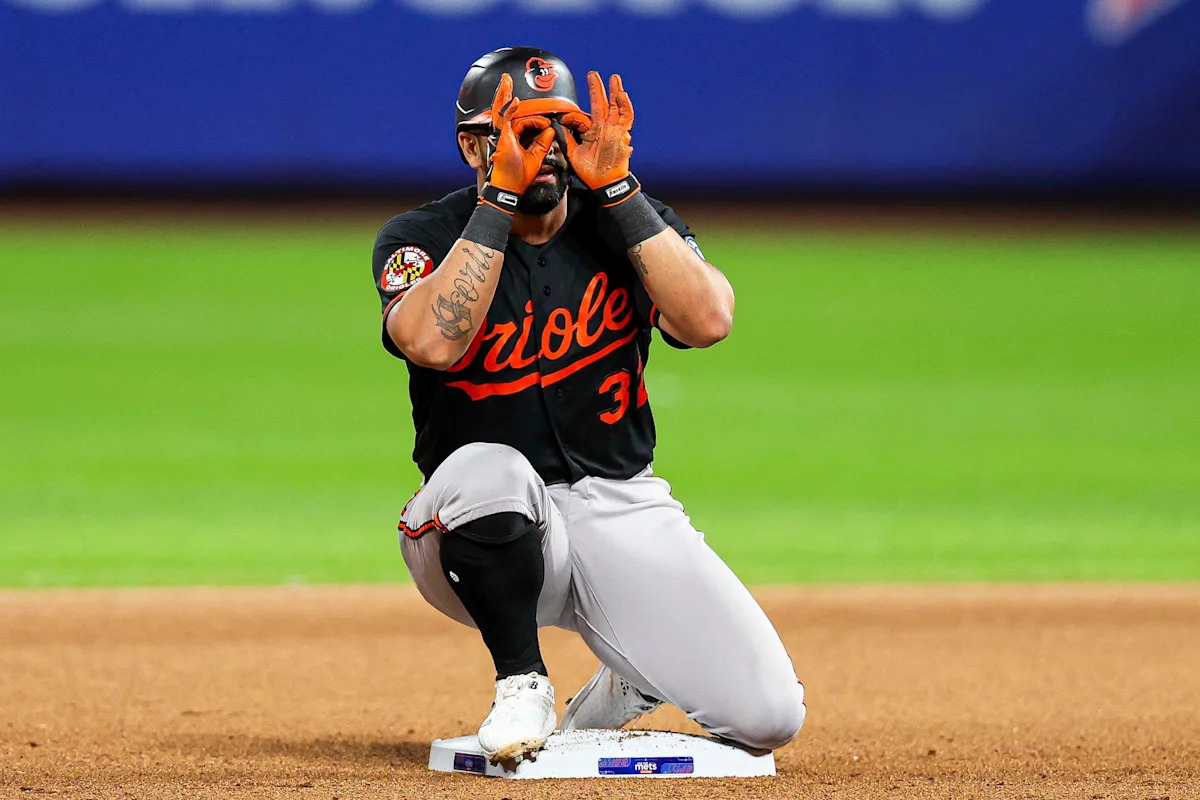
Christian Encarnacion-Strand is one. A fourth-round Twins pick in 2021, he came to Cincinnati in 2022, mashed as a rookie in 2023 (.270, 13 homers in just 63 games), then lost most of two seasons to a wrist fracture. After a lousy, injury-shortened 2025 (.208, -0.6 bWAR in just 36 games), the Reds designated him for assignment and shipped him to Baltimore on April 13, 2026 for cash considerations, after Ryan Mountcastle got hurt. In 51 games since, CES has delivered a .277/.326/.520 with an .846 OPS and 35 RBIs in 51 games. He’s been one of the Birds’ best clutch hitters, and is hitting close to .300 over his last month. He’s also playing a good third base, too, allowing the Orioles to replace the injured Jordan Westburg’s production without relying too much on the dangerous “Coby Mayo at 3B” experiment. Seriously impressive value.
The Orioles bullpen is full of random guys like this. Granted, some arms are random and not-great, but some are pretty exciting. The gold standard here remains Yennier Cano, one of four arms (along with Cade Povich) that Baltimore got from Minnesota in July 2022 for Jorge López, an emotionally tough trade at the time that has aged pretty well, in fact. From a terrible 9.22 ERA in Minnesota that year, Cano became an All-Star in 2023, posting a sterling 2.11 ERA in 72 2/3 innings with 65 strikeouts, and though he hasn’t returned to that form, with periods of up and down efficacy, he’s posted 1.3 WAR across three seasons since, and has looked good this season, with a 3.06 ERA and a new two-year extension.
Another is Rico Garcia, a fellow journeyman and a waiver wire pickup last August after he did stints with both New York teams in 2025. Garcia competently appeared in 20 games for the O’s last season and has been a revelation this year, with career bests in ERA (2.94) and innings (64 1/3). The right-handed Garcia, with his wicked changeup, is the guy Orioles manager Craig Albernaz turns to to clean up bad bases-loaded situations.
And let’s not forget the run of waiver claims that built the 2022-23 roster’s supporting cast. Ramón Urías is a huge one. Claimed off waivers from the Cardinals in 2020, he went on to win a Gold Glove and post 10.5 WAR in six seasons before Baltimore flipped him to Houston at the 2025 deadline for pitching prospect Twine Palmer. Jorge Mateo, acquired off waivers from San Diego in August 2021, led all of MLB in stolen bases in 2022 and won a Fielding Bible Award as the league’s best defensive shortstop before injuries eroded his value and the Orioles finally let his option lapse this past November. Cionel Pérez, plucked off waivers from Cincinnati in November 2021 right after he’d posted a 6.38 ERA there, immediately ran a 1.40 ERA in his first Baltimore season. The lefty was great until he wasn’t. And Danny Coulombe, acquired from Minnesota in March 2023 for pure cash, gave the Orioles a 2.81 ERA and then a 2.12 ERA over two years before elbow surgery.
Even before that, there was Tyler Wells. Baltimore took the big righty in the Rule 5 draft from the Twins in December 2020 and not only did he stick with the team, he became a valuable swingman for them between 2021-26, with 5.3 WAR in that stretch. Wells had real high points—he was arguably the O’s best starter in the first half of 2023 (3.18 ERA, 103 strikeouts in 104 2/3 innings), although he continued to battle injuries and inconsistency. Tommy John surgery cost him basically all of 2024 and 2025 but he came back in September 2025 and was throwing well enough by mid-2026 (2.67 ERA in 54 innings) that Baltimore actually got something for him: they traded Wells to Tampa Bay at the deadline for pitching prospect Michael Forret.
I should also mention the grandaddy of this whole approach, Anthony Santander, even though he predates Elias. Baltimore grabbed the talented but oft-injured switch-hitting outfielder in the December 2016 Rule 5 draft, and though he struggled to justify the pick for a couple of years, by his mid-to-late twenties he turned into a legitimate middle-of-the-order threat, racking up 11.0 bWAR across eight seasons in Baltimore before cashing in on a five-year, $92.5 million deal with Toronto. Tony Taters is the platonic ideal of the genre: a player another team was essentially happy to lose, acquired for nothing, who became an All-Star.
I don’t want to overstate things. Whether this list is probative of anything depends on your baseline (are others teams also succeeding by scavenging?). But it’s at least persuasive. This front office seems to be very good at scouting random, unappreciated talent, acquiring it, and in some cases, flipping it for something. You can’t build a playoff team this way. But as a low-cost pipeline for finding two, three, four wins a year out of players other organizations had already discarded, the record over the last five-plus years is hard to disagree with, and Encarnacion-Strand and Rico Garcia suggest that the pipeline isn’t slowing down.
Read the full article here


