



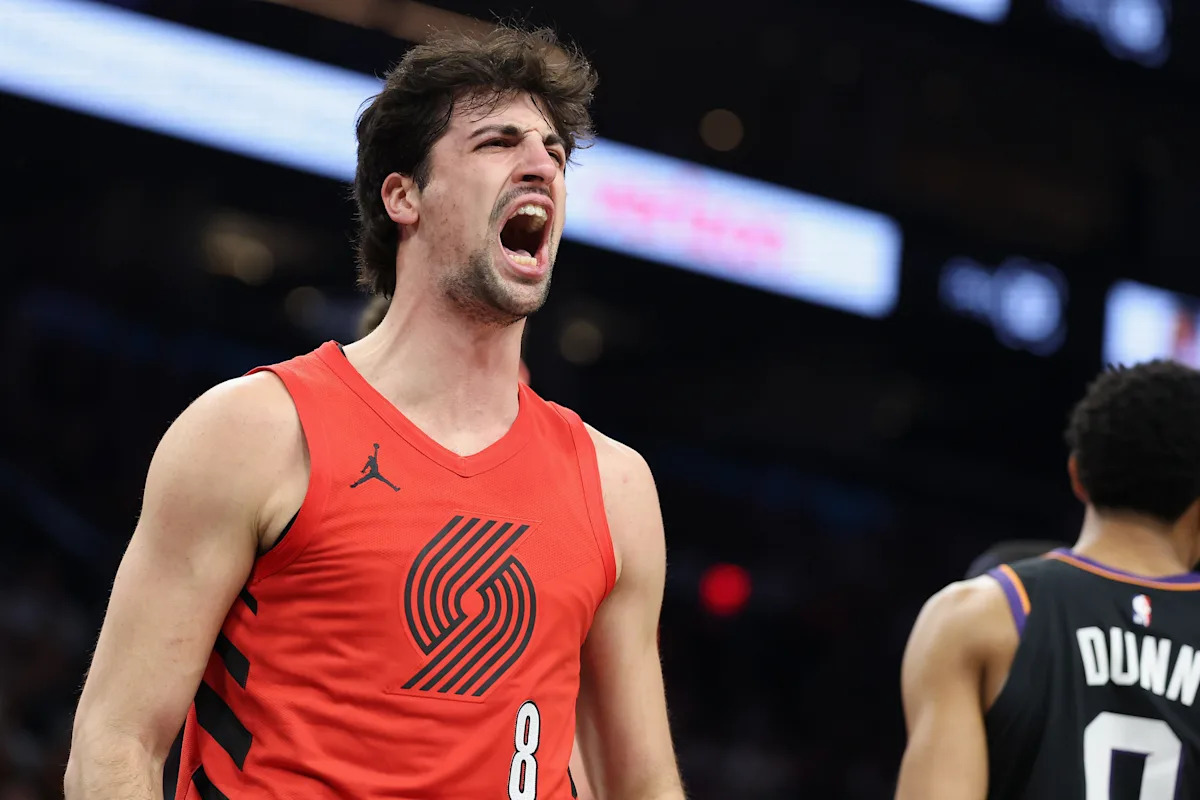
The Play-In game against the Portland Trail Blazers was a tough loss, but was it unexpected? All of us Suns fans were optimistic going into the game and the Suns definitely could have won. It wasn’t a blowout and came down to the final possession. But the Suns didn’t pull it out in the end, and along the way, they gave up 41 points to Deni Avdija, just two points shy of his career high.
Deni spent the most time in the game being guarded by Jordan Goodwin. In the six minutes that Goodwin, the shortest player in the Suns’ starting lineup, was guarding Deni Avdija, the Trail Blazers’ star was held to just 1-of-3 from the field. Portland as a whole scored 25 total points in those minutes.
The tallest non-center in the starting lineup, Dillon Brooks, guarded Avdija for the second most amount of time. In the three minutes Brooks was guarding him, Avdija scored 14 points on 75% shooting from the field. Portland also scored 25 total points in those minutes.
Jordan Goodwin was the best defensive forward on the court against Deni Avdija last night, and Goodie is almost half a foot shorter than him.
The Phoenix Suns are just too small and every Suns fan knows it. The guys who are almost tall enough to compete with the elite forwards of the NBA just aren’t good enough to compensate for the size disadvantage. There has not been a reliable power forward option on this team all season, and Phoenix is paying the price.
Even before the season began, the power forward weakness was known. On October 9th, 2025, thirteen days before the Suns tipped off the season, Bright Side Managing Editor John Voita wrote this:
“Among the biggest question marks is the power forward position.
No matter how you view it, the Suns appear either undersized or underskilled at that spot. Ryan Dunn lacks the size to battle with the league’s elite forwards. Royce O’Neale, Nigel Hayes-Davis, and Dillon Brooks fit the same mold. Oso Ighodaro brings energy and intelligence, but his offensive game remains raw. If you are identifying a weak link in the lineup, power forward stands out before any other position.”
If I had to write an assessment of the current state of the power forward position at the end of the season, I would write almost the exact same thing.
We knew coming into the year that this team had a profound weakness. Against Portland, Jordan Ott started a guard that plays like a wing, three actual wings, and a center. Why did he do this? Because he is working with a roster where somewhere between six and nine of his fourteen players would probably best fit into the “wing” category.
Here is Tuesday night’s starting lineup and their listed heights on basketball reference:
Guard 1: Jordan Goodwin – 6’ 3”
Wing 1: Devin Booker – 6’ 5”
Wing 2: Jalen Green – 6’ 4”
Wing 3: Dillon Brooks – 6’ 7”
Center: Mark Williams – 7’ 1”
And here is Portland’s starting lineup from the same game:
Guard 1: Scoot Henderson – 6’ 3”
Guard 2: Jrue Holiday – 6’ 4”
Forward 1: Toumani Camara – 6’ 7”
Forward 2: Deni Avdija – 6’ 8”
Center: Donovan Clingan – 7’ 2”
Portland came into the Play-In with balance. They have guards, they have forwards, they have bigs. They have defensive-oriented players and offensive-oriented players. They have jump-out-of-the-gym athletes (I thought Shaedon Sharpe was going to hit his head on the rim on that alley-oop over Royce O’Neale), and they have shooters.
The Suns have one of the worst rosters in the NBA among teams that made it to the postseason. Phoenix has leaned into the wing-heavy roster construction that was popular 8-10 years ago, but they have done so in the era of ultra-talented bigs and forwards. Whether that was by choice or because the players they have are the best players they could get during each individual transaction, the point remains true.
The Suns’ shooting guard cast is the best example of the profound roster imbalance. Devin Booker, Jalen Green, and Grayson Allen are all starting-quality shooting guards in the NBA, but holding on to all three past the deadline did not put the Suns in a position to succeed. Trading Allen, for example, for a fringe starting caliber power forward at the deadline may have been an overall reduction in talent, but it probably would have resulted in an overall better team.

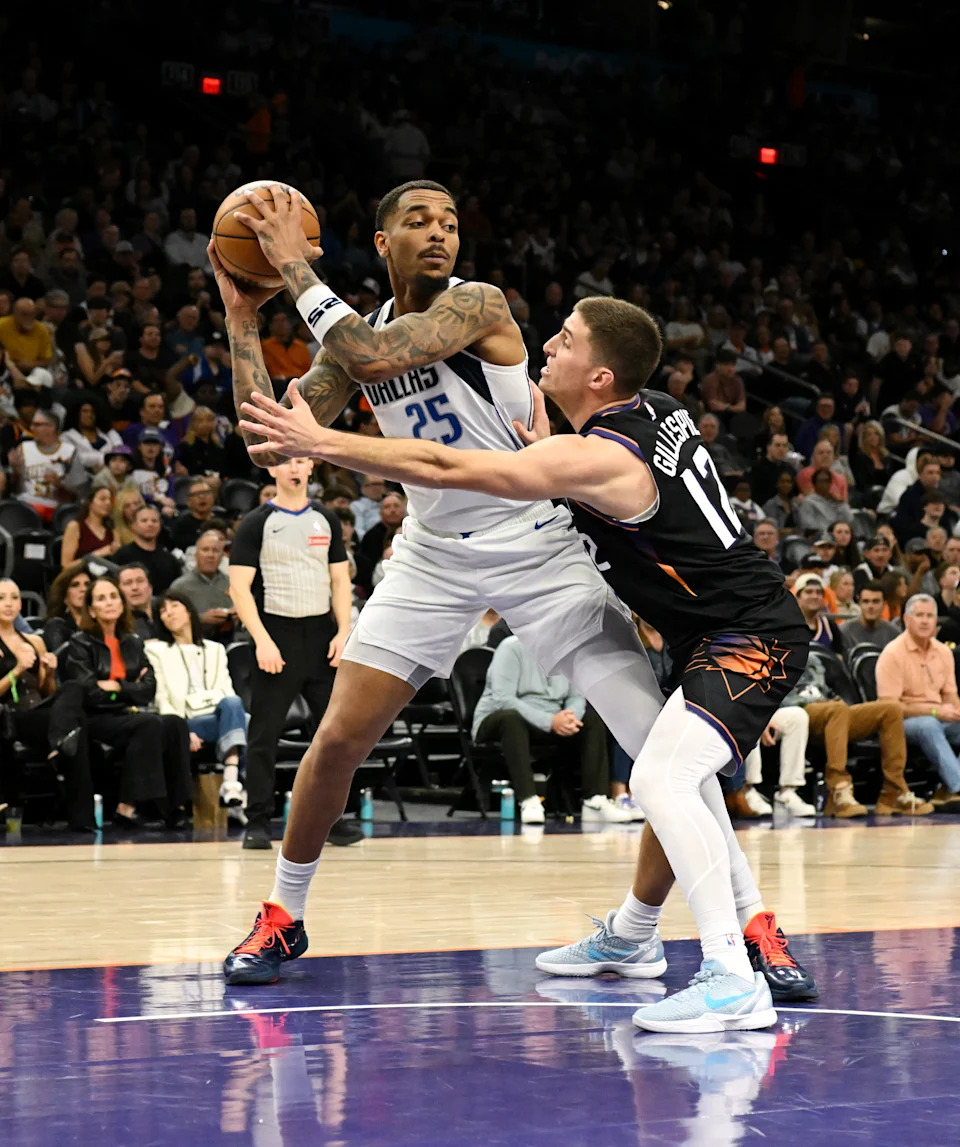
What the Suns needed to find at the deadline was their PJ Washington. Washington was a very important trade acquisition that the Mavericks made during the season en route to their 2024 NBA Finals appearance against the Celtics.
Would the Suns be favorites to make the Finals this year if they had traded for Jalen Smith, Santi Aldama, or Jonathan Kuminga? No, definitely not. But the roster balance and the lack of a reliable power forward are holding this team back.
Maybe that power forward is already on the roster. Maybe next year, we’ll see Rasheer Fleming or Ryan Dunn make the leap that solidifies them in that spot. Maybe Oso Ighodaro becomes a reliable three-point weapon, and the Suns can run a double-big lineup. Or maybe the Suns finally go out and get the power forward they so desperately need.
But they aren’t going to make it far next year without a serious upgrade.
Read the full article here


