

The Yankees’ bullpen, contrary to popular belief, hasn’t been a weakness so far. Well, statistically at least. The unit ranks tenth in MLB with a 3.59 ERA before Tuesday’s game, which is not bad. Of course, true contenders want to be much closer to the top of the league, and that hasn’t been the case with this group.
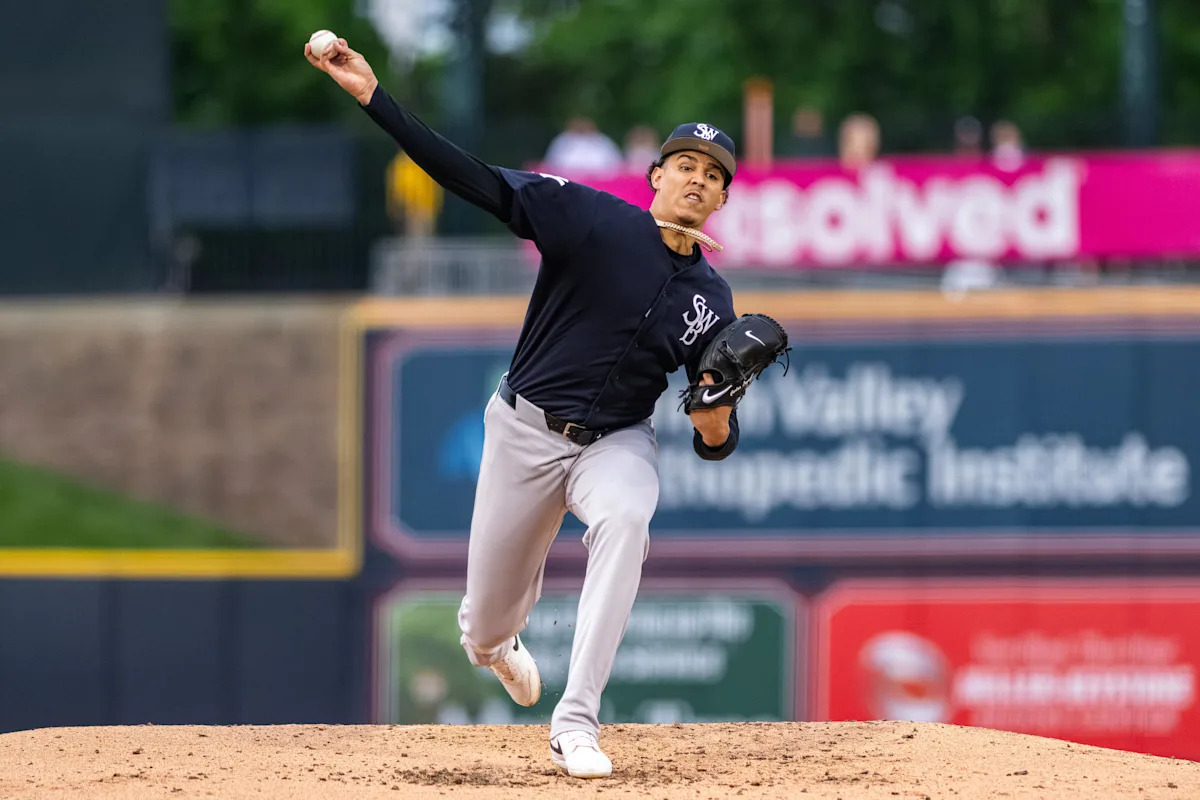
However you split it, though, the Yanks want another true shutdown reliever or two, and if they go out to the trade market to bring them in, the cost in prospects would be high. That’s probably why they have decided to speed up Carlos Lagrange’s potential call-up by moving him to the bullpen.
Lagrange, to this point, had been OK as a starter in Triple-A Scranton. Not particularly good, and certainly not bad. Just OK, which is fine for a 23-year-old pitcher with big velocity but control issues pitching at that level for the first time in his career.
The right-hander has a 4.41 ERA in 49 innings of work, with an impressive 29 percent strikeout rate but also an 11.5 percent walk rate. While that last number might look a tad high, it’s actually solid considering Lagrange’s reputation as a thrower as opposed to a pitcher.
The main issue so far with Lagrange, at least this season in Triple-A, hasn’t even been walks: it’s been a lack of better command. In his most recent start in Scranton, he threw 30 fastballs, and 21 were strikes, for example. That’s not bad if we speak strictly about control:
He can overwhelm hitters in the low minors just by pumping 103-mph heaters and that filthy slider of his, but he needs more to consistently get Triple-A batters out, and he’ll certainly need even more to be a solid major leaguer. That ‘more’ is, quite simply, command. He has the raw stuff to be a difference-maker on any staff, but MLB hitters will test him in ways he didn’t think were possible.
View Link
The lack of good command, which is basically hitting his spots and not just throwing the ball in the zone, has resulted in more hard contact against Lagrange. Last year, the flamethrower allowed 0.46 home runs per nine innings in Double-A Somerset, but that number has soared to 1.47 in 2026 in Scranton. It’s the first time in his career he has been over 1.00 in a relevant sample.
Perhaps the fact that Lagrange is prone to leaving some meatballs over the plate from time to time played a big role in the Yankees’ decision to move him to the bullpen, at least for 2026. Yes, their lack of elite relief pitching talent on the roster aside from one or two exceptions might have contributed, too, but they also believe that the righty could be less vulnerable in short spurts as a reliever. They probably think his top-notch velocity can be an asset even if command is not ideal, and they are probably right… as long as he doesn’t hurt himself with walks at the highest level.
If Triple-A hitters can make him pay if he gets wild, you can be sure the same is true, even to a greater extent, for MLB batters. When it’s time for him to test his skills against top competition, he will need to show that he has, indeed, made strides.
The 2026 campaign has been positive for the pitcher even though the results have been far from elite. His development, however, is not done. Lagrange still needs to do a better job preventing the long ball, and that will come with reps, time, and innings. Circumstances might force the Yankees to call him up in the summer, once he has become familiar with his new role, and to be completely honest, it suits his current skill set better than starting.
Read the full article here