






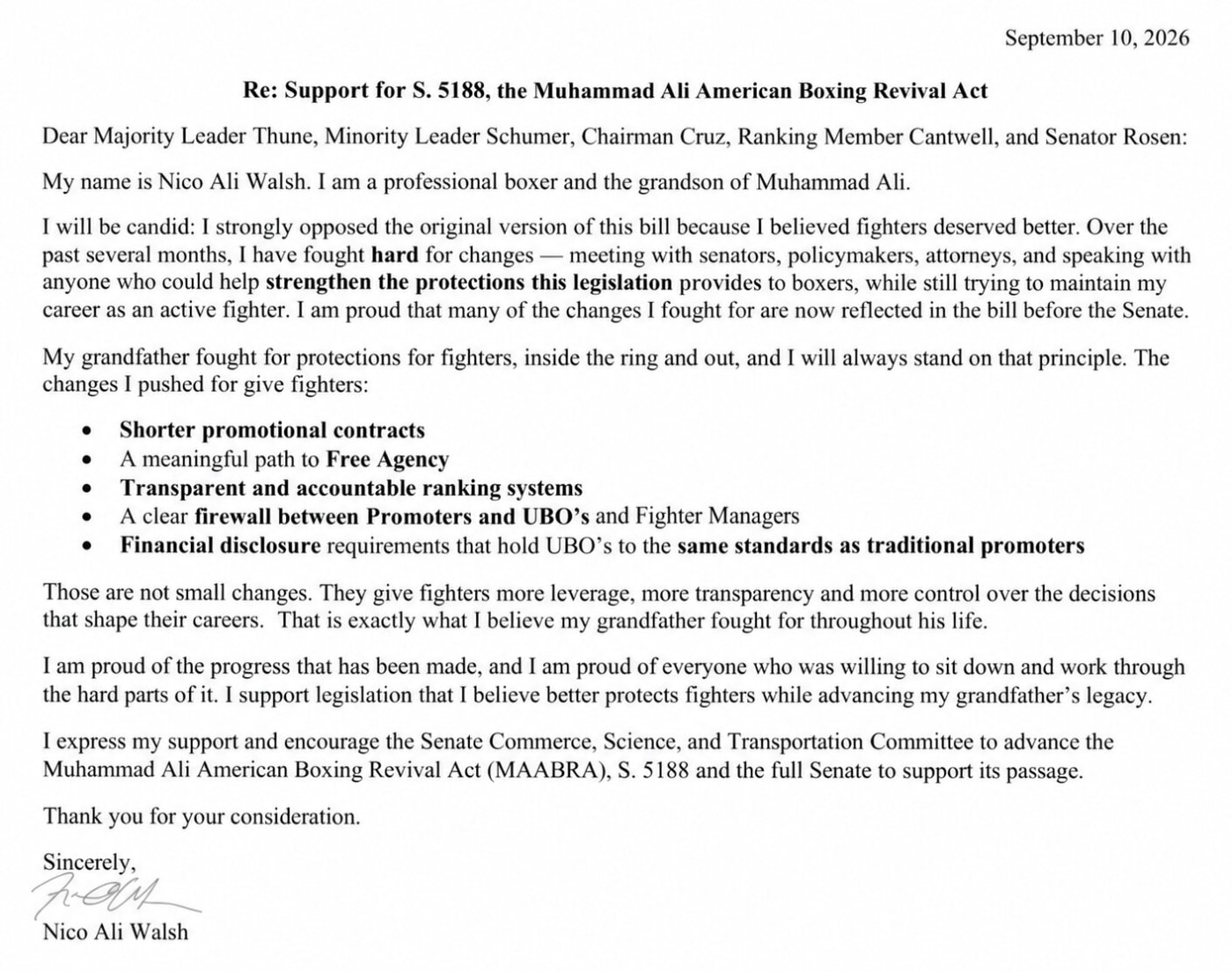


Senator Ted Cruz spotlighted Walsh’s endorsement ahead of the vote, crediting him with securing vital amendments. Walsh testified against the draft in April, but reversed his stance after lawmakers added shorter terms, free agency rules, ranking oversight, and mandatory financial reporting.
Under the new terms, an initial Unified Boxing Organization deal cannot exceed three years, subsequent deals cap at six years, and boxers get a 90-day negotiating window before agreements expire.
Mannix remains focused on the concentration of control. A UBO could sign fighters, stage fights, manage rankings, and hand out championship belts. Merging those regulatory and promotional roles under one roof directly upends decades of customary divisions in the sport.
Walsh raised that exact warning during his April testimony. He highlighted how UFC competitors capture less than 20 percent of event revenue, whereas top boxers command the vast majority. Major league team sports use centralized systems, but their players rely on labor unions to negotiate wages and revenue splits. The Senate bill offers boxers no similar collective voice.
Promotional bidding wars drive boxer pay. A premier UBO armed with exclusive broadcast distribution, proprietary belts, and internal rankings would neutralize outside competition. Boxers might hit free agency after three years, but departing the ecosystem would mean giving up their titles and standing.
A $200 per round wage floor offers modest help to preliminary fighters. It provides zero protection for contenders whose earning power depends on competing offers. Walsh secured contractual adjustments, but Mannix points out that Cruz can now leverage the Ali legacy to establish unprecedented corporate control over the sport.
Read the full article here


