






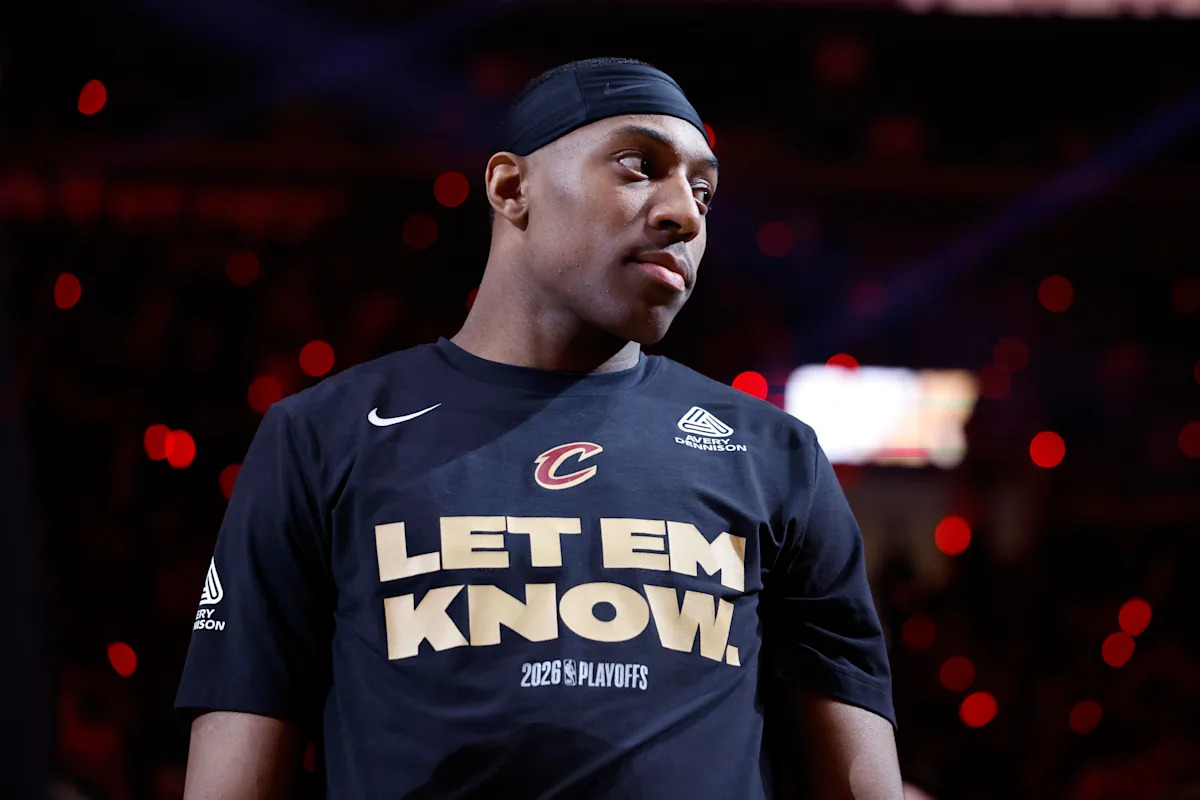
Nae’Qwan Tomlin’s emergence as a helpful fill-in rotation player was a pleasant surprise for the Cleveland Cavaliers. This led to his two-way deal being converted to a standard contract midway through the season.
All grades are based on our usual expectations for each player. A “B” represents that player meeting their standard.
Regular Season Stats
Making the jump from a two-way deal to a standard contract doesn’t happen as often as you’d think.
There are 90 NBA two-way slots available, and far more than 90 players who occupy those positions throughout the season. Since these are non-guaranteed deals, teams are pretty quick to cut and sign players to these deals.
This year, only 31 players had their two-way contracts converted to a standard deal for at least the rest of the season. Tomlin was among that group.
Tomlin’s journey to this spot was unconventional to say the least. He didn’t play organized basketball until college, and then played for four teams in five years. Three of those years were spent at smaller juco schools.
He made the Cleveland Charge’s roster heading into the 2024-25 season, but wasn’t a regular rotation at the start of the year. He eventually worked his way into the rotation, then became a starter, and ended the year on a two-way deal.
That progression continued this season. Tomlin worked his way up after the Cavs were decimated with injuries. He made the most of those opportunities as he became a fixture in the rotation throughout the season, and was even a spot starter in three games.
Tomlin’s athleticism and hustle stood out on a team that needed both of those qualities. He was an impactful offensive rebounder and an explosive finisher in the paint when given a runway to do so.
The increased playing time also exposed some of the shortcomings in Tomlin’s game.
First of all, the outside shooting is an issue. Tomlin spent many of his half-court possessions stationed in the corner, but was mostly a non-threat as a shooter. He finished last among qualified forwards in corner three-point percentage as he knocked down just 24% of his corner triples.
This was an issue because Tomlin showed that he doesn’t have the handle or playmaking capabilities to be an on-ball creator. It’s difficult to find a consistent half-court role if you can’t either pass, dribble, shoot, or be a vertical threat at an average to high level.
This left Tomlin as mostly someone who could attack in transition or finish off cuts from the corner. Both are useful, but not ideal as the basis for an offensive package.
Defensively, Tomlin fouled far too much. He had the worst foul percentage among forwards in the league, translating to 4.5 fouls per 36 minutes.
Fouls for a forward usually come from being out of position or selling out for blocks. Tomlin’s issues came from both. He struggled to keep wings in front of him defensively. And even when he was in the right position, he was too susceptible to pump fakes.
Tomlin will need to figure out how to play defense without fouling as much as he did this year if he wants to be a rotation-caliber player. It’s difficult to justify playing someone who fouls this much, who also isn’t a rim deterrent in a meaningful way.
Despite the need for improvement, it’s undeniable that this was a successful year for Tomlin. Every player on a two-way deal in the league’s entire goal for the year is to earn a standard contract. Tomlin did that.
The next step is refining his game on both ends so that he can earn a second NBA deal.
Grade: A
Read the full article here


