







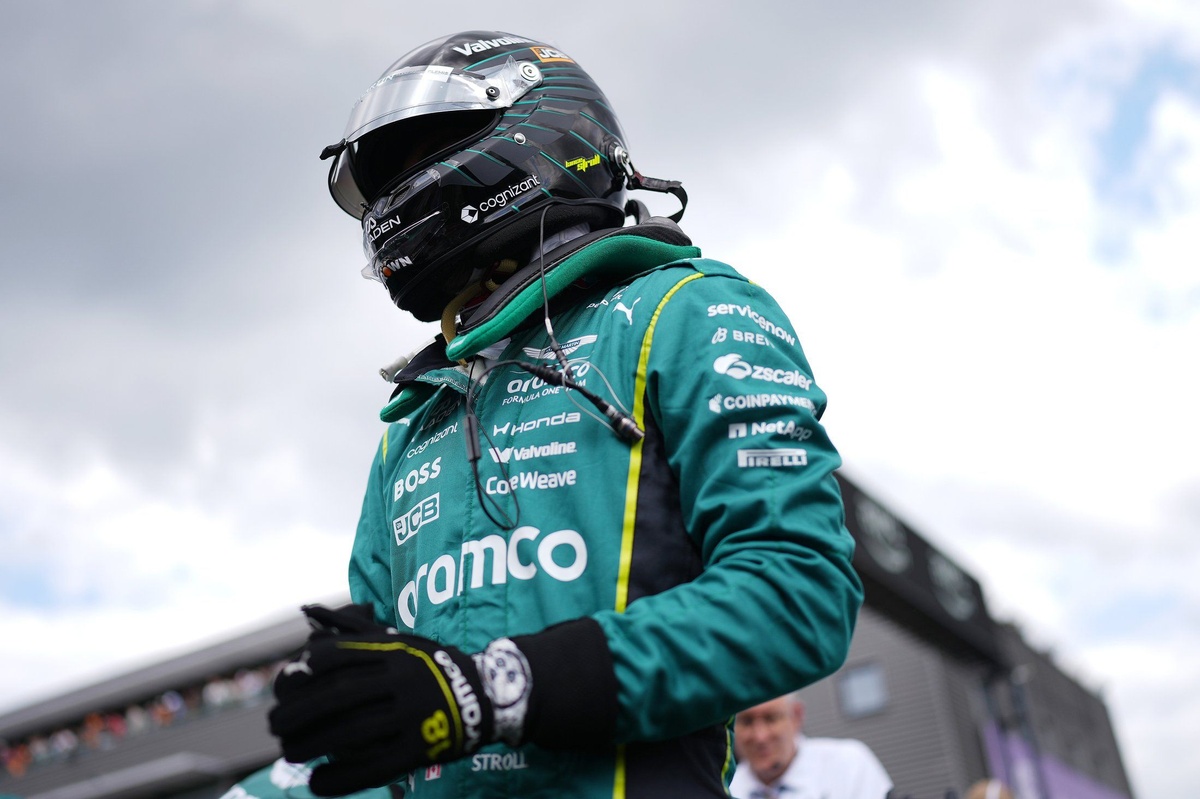
“One rumour I heard, the only thing that’s the same as the current car is the front suspension. Everything else is new. So let’s see.”
So Valtteri Bottas said on the eve of the Hungarian Grand Prix, where Aston Martin will reveal its first major upgrade package of the 2026 F1 season.
It’s a measure of the stakes and personalities involved in this project that the B-spec AMR26 is pretty much the only show in town this weekend. Owner Lawrence Stroll has invested massive sums in the business, building an entirely new factory and recruiting the finest technical brains money can buy – including Adrian Newey, the most successful engineer of the past three and a half decades on grand prix racing.
But Stroll is notoriously intolerant of failure, and there has been too much of that over the past few seasons. Some of those finest technical brains have come and gone already. It is understood that Stroll was warming up for another round of firings and hirings after the AMR26’s troubled debut in March, and was only persuaded otherwise by the assurance that a major revamp would transform it.
That hour has now come.
Traditionally the second weekend of a double-header, especially with the summer break looming, is a trifle sparse on new narrative elements, but the timing of the Aston upgrade has rolled a grenade under the door. Journalists and photographers have been skulking around in the pitlane since the track opened on Thursday morning, fighting to get spy shots of the car as it’s assembled.
Team owner Lawrence Stroll placed a big bet on bringing Adrian Newey to Aston Martin
Photo by: Joe Portlock / Getty Images
Given the rampant speculation, some disappointment is inevitable. It would be highly unusual, even for a nose-to-tail upgrade, to yield a lap time gain in the order of more than a second or so; last weekend the fastest Aston Martin of Fernando Alonso was 2s off the pace of the Cadillacs alone in qualifying, and nearly 6s off the ultimate pole time. Some of the gap to pole is a factor of track conditions improving, but only a relatively small proportion.
And the reality is that this is in effect a reset, given how much optimisation of the new package will be required. Understandably, then, Aston Martin has tried to position itself ahead of the curve.
“When you bring substantial upgrades, it’s something the track team will have to learn as quickly as possible,” said chief trackside officer Mike Krack. “We have no winter testing where you can just do some runs, some back-to-backs and all that. It puts a lot of emphasis on the quality of your data, on the quality of understanding your simulations.
“But we do not expect we will get everything out of it in the first run tomorrow. I think we need to learn how to manage this and how to get the best out of it. We have a good track team, we have a good support team from home that will go through that quickly. We will get the right conclusions quickly, but it will take a bit of time.
“I think the tests that we will have to do, basic tests, be it ride height, be it rakes and these kinds of things, will come over the next events.”
As Newey alluded in an interview with the team’s website last month, the upgrade focuses on aerodynamics and weight. It was his mention of the front suspension being revised only slightly, and the issue of weight being a factor of the rushed development cycle, which prompted some of the more extreme rumours about the revisions. Actually not only is the engine the same (for now; an upgrade is coming after the summer break), but also the troubled gearbox is being carried over. The budget cap dictates that only so much expense can be indulged.

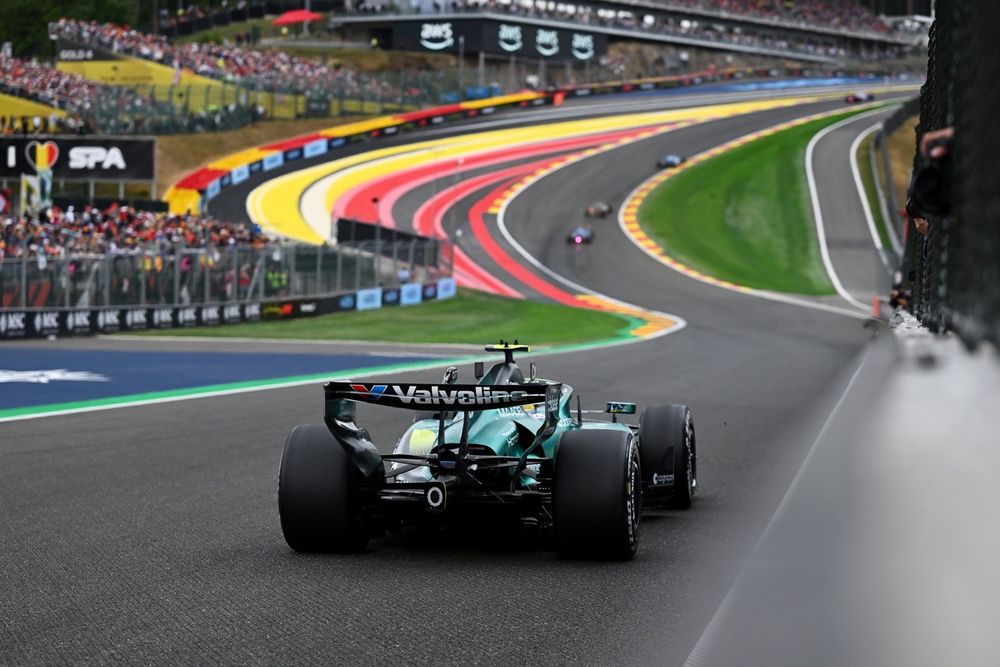
Lack of upgrades until this point has meant an already slow car has fallen off the back of the field
Photo by: Guido De Bortoli / LAT Images via Getty Images
A lot of the weight has come from the chassis, hence the monocoque has had to go through the crash testing process again – Alpine introduced a similar step in Miami. The rest of the bodywork, while also lighter where possible, will look very different. The majority of the aerodynamic surfaces from nose to tail have been revised.
In his interview, Newey conceded that after his arrival in March last year he pushed the aerodynamic concept in one particular direction, since the timelines didn’t allow for the rigorous evaluation of alternatives. A hallmark of that philosophy has been a return to the high-rake concept he began exploring at Williams in the mid-1990s and pushed to the limit at Red Bull during the 2010s.
“I wouldn’t say the direction we’ve taken is fundamentally wrong, but it has thrown up challenges we didn’t anticipate,” he said.
Asked by Autosport whether the experience of the first part of the season has prompted any reconsideration of the high-rake concept in this generation of car, Krack suggested this might be the case.
“You would have to ask the aero experts for the details,” he said. “But I suspect that we will move more in a different direction.”
Even if the update brings a substantial aerodynamic performance gain, on top of reduced weight, it will bring further challenges in terms of optimisation. This is because chassis dynamics and cornering performance are fundamentally interlinked with maximising the potential of the power unit under the current regulations. Higher cornering speeds mean the car uses its available energy differently and the driver inputs which the power unit’s software uses to build its ‘map’ of the circuit will change, so Honda will also have a lot of learning and adjustment to do once the car is running.
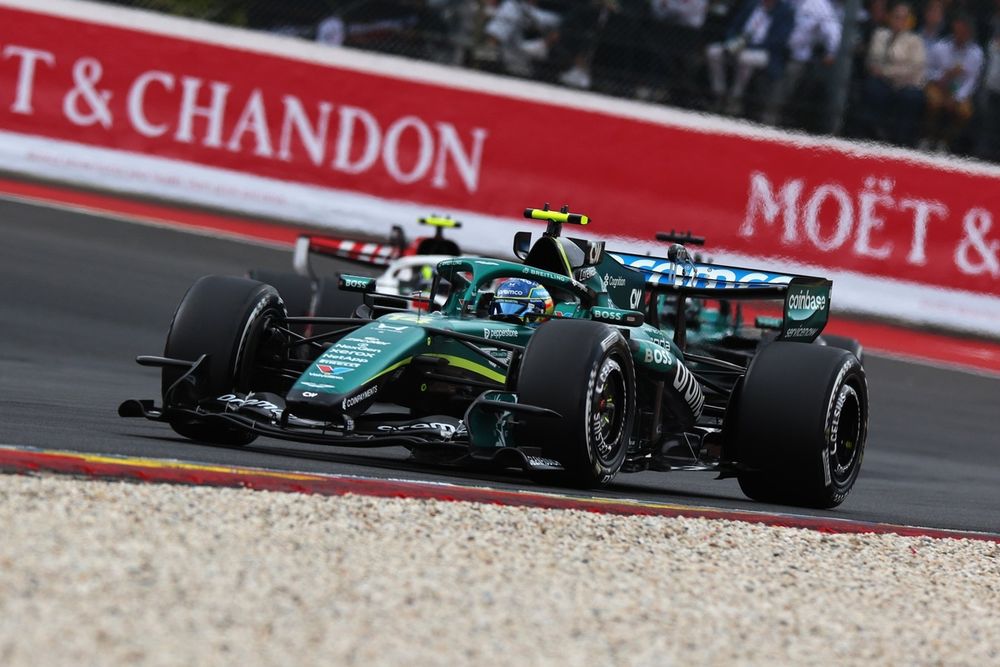
Fernando Alonso, Aston Martin Racing
Photo by: Alastair Staley / LAT Images via Getty Images
So what, ultimately, does a successful weekend for Aston Martin look like? It depends who you ask. Lawrence Stroll has been promised a great deal, and the likelihood is that the reality may not match his expectations.
For the team, the goal is more prosaic: not hanging off the back of the field.
“The reason we do this is to go racing – we have not been racing over the last events and this is what we need to return to,” said Krack. “So where we race in that big competitive field, we will see. This I can really not predict. But the key question is that we are back in the game because we were not before. I think we are all realistic. We had a plan and we worked to that plan.
“Success and setbacks are part of sport. We have been in a difficult situation or difficult spot before and we try to get out of it. But there are more steps needed and this is part of the development strategy.
“So I would not call it ‘make or break’. It is just the development that needs to continue.”
We want to hear from you!
Let us know what you would like to see from us in the future.
Take our survey
– The Autosport.com Team
Read the full article here


