





I distinctly remember the feeling after the Timberwolves lost to Denver in the first round of the 2023 playoffs.
Minnesota had been eliminated in five games, which on paper looked like another early exit for a franchise that had collected early exits like refrigerator magnets. There was no banner to raise, no deep postseason run to celebrate, and no reason for the rest of the league to spend much time thinking about a team that had just finished eighth in the Western Conference.
But the series did not feel like a typical five-game loss. The Wolves were without Naz Reid, who had broken his wrist late in the regular season. They were also without Jaden McDaniels, who broke his hand after punching a wall during the final game of the year (an incident that remains one of the purest expressions of Timberwolves basketball ever recorded). Minnesota had finally assembled a potentially dangerous playoff team, only to lose one of its most important reserves to injury and one of its best defenders to a hallway confrontation with cinderblock.
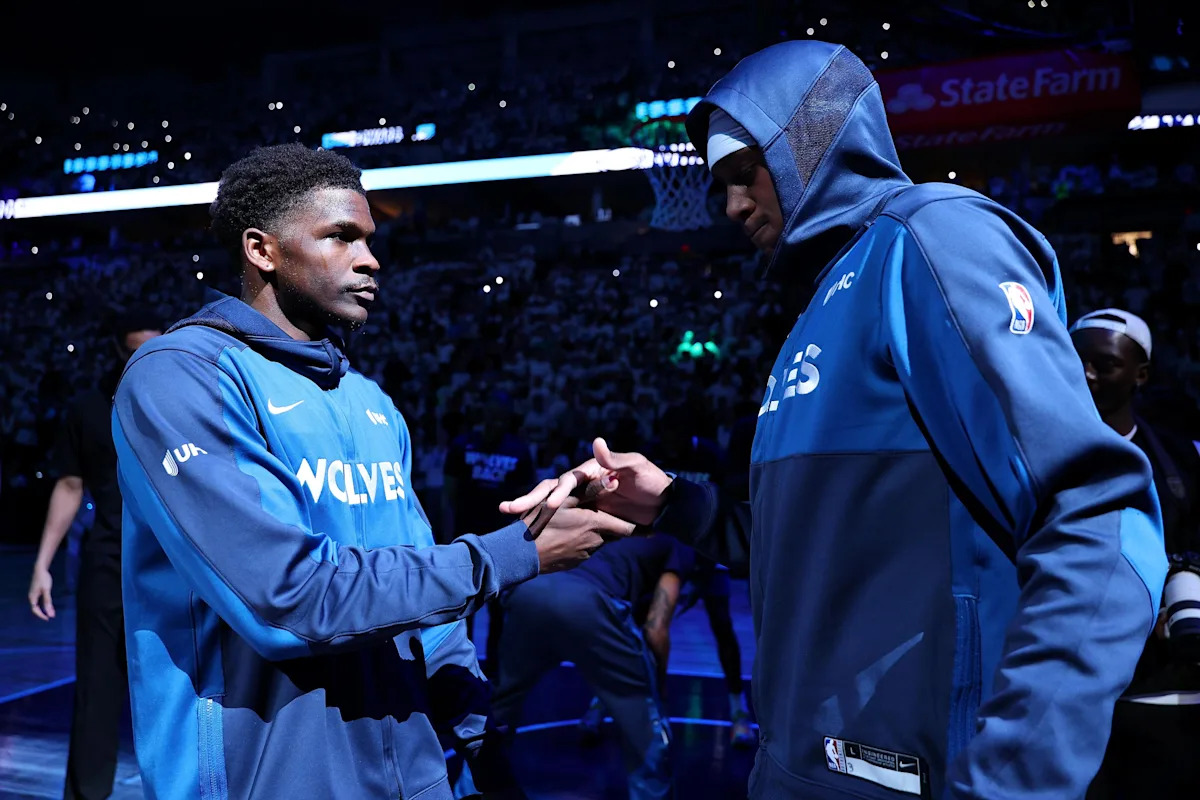
That Wolves team was incomplete, emotionally erratic, and nowhere close to fully mature. Anthony Edwards was still learning what it meant to carry a playoff offense. Karl-Anthony Towns was trying to find his footing after missing half of the season. Rudy Gobert was completing his first turbulent year in Minnesota. Chris Finch was still figuring out how the pieces fit together.
And yet the Wolves pushed the eventual champions harder than almost anyone expected. Denver reportedly viewed Minnesota as the toughest opponent it faced during that entire title run. That may have sounded like a consolation prize at the time, but it mattered. The Nuggets knew what they had survived. They had faced Edwards attacking a championship defense without fear, Minnesota’s size bothering Nikola Jokic, and a Wolves team that remained competitive despite playing without two essential rotation pieces.
That was the first time I looked at this group and thought: This team can compete for a championship. Not a respectable playoff team. Not another fun collection of talent destined to win 44 games before getting bounced by a real contender. A genuine championship foundation.
The following season proved that instinct correct. Minnesota entered the 2024 postseason healthy and immediately swept Kevin Durant, Devin Booker, and the Phoenix Suns. It was the franchise’s first playoff series victory in two decades, and the Wolves did not merely survive the series. They overwhelmed Phoenix. They looked like the team that understood the future had arrived while the Suns were still trying to explain why three expensive scorers had produced such a lifeless offense.
Then came Denver. The defending champions. The team that had ended Minnesota’s previous season. The team built around the best player in the world. The Wolves had them on the ropes, briefly lost control of the series, and then walked into Denver for Game 7 and erased a 20-point deficit on the road. It remains arguably the greatest victory in franchise history, overcoming that deficit against that opponent in that building with a trip to the Western Conference Finals at stake.
For a franchise that had spent decades training its fans to expect the floor to collapse, the Wolves were suddenly the team doing the collapsing. They eventually fell short against Dallas in the conference finals, but the larger breakthrough had already happened. Minnesota had established itself as a contender. The franchise had finally stopped asking whether it belonged in important games and started asking why it had not won them.
The next season brought a different version of the same ambition. Karl-Anthony Towns was traded in a cap-driven move that brought Julius Randle and Donte DiVincenzo to Minnesota. The logic behind the trade made sense financially, even if it was emotionally jarring. The second apron was looming. Towns’ contract was enormous. The Wolves needed greater flexibility and depth.
The basketball fit was less immediate. That team spent much of the season searching for cohesion and identity. Randle’s deliberate, isolation-heavy style did not always blend naturally with Edwards. DiVincenzo took time to settle into his role. Minnesota eventually landed the sixth seed, which felt disappointing after the previous year’s run. Then the playoffs began, and the Wolves once again reminded everyone that regular-season discomfort does not always define a team’s ceiling.
They eliminated LeBron James, Luka Doncic, and the Lakers. They followed that by knocking out the Golden State Warriors. The had overwhelmed two of the league’s signature franchises, two of its most recognizable stars, and earned another trip to the Western Conference Finals. Minnesota fell to the eventual champion Oklahoma City Thunder, but reaching the conference finals for a second consecutive season represented a monumental leap for this organization. Before Edwards arrived, the Wolves had won two playoff series in their entire history. They had now reached the final four twice in two years.
The Western Conference Finals were not the ultimate goal, but dismissing those appearances as failures would have ignored the scale of the accomplishment. This was not Boston or Los Angeles measuring another season against a wall filled with championship banners. This was Minnesota, a franchise that had historically treated competitive basketball after April 15 as an exotic concept.
Last season was supposed to be the year that continuity carried the Wolves forward. The roster had been together. The coaching staff understood the pieces better. Edwards was entering another stage of his ascent. The hope was that the inconsistency of the previous season would disappear and the Wolves would finally combine regular-season stability with postseason force.Instead, Minnesota experienced another roller-coaster campaign filled with impressive highs and baffling lows.
That inconsistency once again left them in the sixth seed. Then the injury luck that had largely favored Minnesota over the previous two seasons finally reversed. Minutes into Game 4 against Denver, Donte DiVincenzo tore his Achilles tendon. Shortly afterward, Anthony Edwards, already dealing with lingering knee issues, hyperextended his opposite knee, an injury that cost him the remainder of the series.
Losing two starters in the middle of a playoff matchup would normally end a team’s season. Instead, Minnesota battered Denver and eliminated its rival in six games. That result said something important about the Wolves’ depth, resilience, and institutional confidence. They still defended. They still competed. They still understood how to win ugly playoff games.
Eventually, however, the damage became too much to overcome. Minnesota entered the Western Conference Finals against San Antonio with Edwards limping, DiVincenzo gone, Naz Reid fighting through a shoulder injury, and Ayo Dosunmu limited by calf tightness. The Wolves were missing their best player, one of their best shooters, and portions of the supporting cast against a Spurs team that eventually won the West.
They still took two games.
That does not mean Minnesota would have won the series at full strength. San Antonio was excellent, and Wolves fans do not need to rewrite the matchup into something more comforting than it was. But a healthy series would have been close. Minnesota’s injury problems prevented a clean evaluation of that team’s true ceiling. At its best, it could compete with the league’s elite. Even diminished, it made the Western Conference champion work through six games. There was enough evidence to believe the Wolves belonged near the top, but not enough to claim they could win a title without favorable health, improved execution, and perhaps one or two lucky bounces.
That is the reality for almost every contender. Championships are not won through talent alone. Health matters. Matchups matter. Timing matters. Sometimes a team gets a fortunate bracket. Sometimes an opponent loses a star. Sometimes a role player turns into Ray Allen for four games. Sometimes a loose ball takes exactly the right bounce.
The Wolves, as previously constructed, could have won a title. But they would have needed the same kind of lightning in a bottle the New York Knicks captured during their championship run this past postseason. Tim Connelly apparently decided waiting around for lightning was not enough.
The NBA continues to evolve, and the salary cap now behaves less like a guidelineand more like a predatory animal lurking outside every contender’s front office. The second apron punishes expensive teams, limits flexibility, and turns every long-term contract into a referendum on whether a player can still help deep into May.
Connelly has rarely been afraid to act before circumstances force him. He sent Julius Randle to Brooklyn in a salary-clearing move, ending an uneven tenure that had produced strong stretches, frustrating habits, and another postseason disappearing act. Randle was talented enough to dominate individual games, but the moodiness, defensive inconsistency, and tendency to vanish during critical series made him a questionable long-term fit. Minnesota did not need another player capable of looking disengaged when the season reached its most important moments.
Then came the emotional gut punch. Naz Reid, the fan favorite and heart-and-soul figure whose name had become a citywide slogan, was traded to Charlotte for LaMelo Ball. There is no painless way to describe that move. Reid was more than a productive reserve. He was one of the most beloved players in franchise history, an undrafted success story who developed into a legitimate weapon and connected with fans in a way few role players ever do.
But Ball gives Minnesota something it has lacked for years: a dynamic offensive organizer who can create for others, manipulate defenses, and remove some of the burden from Edwards. The Wolves now possess the most exciting backcourts in the NBA, and perhaps the most unpredictable.
Edwards is a devastating downhill scorer with the strength to overwhelm defenders and the confidence to attack any matchup. Ball is a gifted passer who sees plays before they happen and treats conventional decision-making as a mild suggestion. Put them together and there may be nights when Minnesota’s offense resembles a basketball fever dream of full-court passes, transition threes, violent Edwards dunks, and possessions that begin chaotically but somehow end with Gobert standing alone beneath the basket.
Minnesota also re-signed Dosunmu, whose arrival at the trade deadline had initially been overlooked around the league. He eventually demonstrated why Connelly valued him, including a 43-point playoff performance against Denver that revealed just how much offense he could provide when opportunity and confidence aligned. Had injuries not overwhelmed the roster, the Dosunmu move might have been viewed as one of the defining transactions of the season. Instead, it became a glimpse of what he could be. Bringing him back establishes him as a core member of the rotation rather than a temporary addition.
Mike Conley departed in free agency, as did Kyle Anderson. Their production could be replaced in pieces, but their maturity and leadership will be harder to duplicate. Their exits leave a younger, more athletic, more explosive team, but also a team that must learn to steady itself.
The core is impressive: Edwards, Ball, McDaniels, Dosunmu, and Rudy Gobert.
Around them sits a collection of intriguing but unproven players. Terrence Shannon Jr. has shown flashes of brilliance. His athleticism, strength, and direct attacking style can change the energy of a game. He has also experienced moments when the speed of the situation appears to overwhelm him.
Jaylen Clark can enter like a rabid wolverine, pressuring ballhandlers, creating chaos, and supplying defensive energy. His offense remains limited, and opponents will test whether Minnesota can keep him on the floor during meaningful playoff possessions.
Joan Beringer is an extraordinary athlete with size, mobility, and enormous potential. He may be the most fascinating young player on the roster. He is also raw and unrefined. Expecting him to become a polished contributor immediately would be unfair.
Bones Hyland remains the definition of streakiness. When the microwave is hot, he can score in bunches and swing a game. When it is cold, things can get ugly quickly.
That supporting cast will require patience and coaching. They will also be essential. The modern NBA does not permit contenders to fill every position with expensive veterans. The second apron has made developmental success mandatory. Teams must find young players, teach them winning habits, and trust them before they are fully comfortable. A contender’s survival increasingly depends on whether the ninth player becomes useful, whether a second-round pick can defend, and whether a raw big can provide 12 competent minutes without detonating the scheme. Minnesota’s ceiling may be determined as much by Beringer, Shannon, and Clark as by the stars.
Then there is the DiVincenzo question. A torn Achilles is one of the most serious injuries in basketball, and no one should assume a smooth or rapid recovery. But there remains hope that DiVincenzo could return late in the season, perhaps on a timeline similar to Jayson Tatum’s. The Wolves desperately need what he provides. His hustle, shooting, and willingness to move without the ball would fit beautifully alongside Ball. Few things would be more natural than Ball advancing the offense, drawing attention, and finding DiVincenzo relocating for a catch-and-shoot three. A late-season return would give Minnesota another playoff-tested guard and expand Finch’s options. It would also introduce the challenge of integrating a player after months away.
The roster’s largest weakness remains impossible to miss. Minnesota has a glaring hole at power forward, one seemingly custom-built for LeBron James before he chose Philadelphia. The Wolves will now have to find another answer. Perhaps a role player such as Josh Green or Trey Lyles can handle the position. Perhaps Minnesota leans into smaller, positionless lineups and uses McDaniels as an unconventional four. Perhaps Beringer develops more quickly than expected. Perhaps Connelly makes another trade before the deadline.
None of the current options is ideal. Going small could improve speed and spacing while placing more rebounding responsibility on Gobert. Playing McDaniels at power forward might allow Minnesota to switch more aggressively, but it could also diminish the value of using him against elite perimeter scorers.
The situation resembles last season’s unresolved point guard problem. Minnesota cycled through patchwork solutions without ever finding the version that fully unlocked the roster. Finch and the coaching staff adjusted, but the offense often failed to lean into the team’s greatest strengths.
This season, the positional weakness has simply moved. That leads to the central question surrounding the Wolves: Are they still contenders?
Sixty-five percent of respondents to the latest SB Nation Reacts poll said yes. That is a solid majority, but it also suggests less confidence than the fan base probably carried during the previous three summers. We did not ask the same poll question last year, but it is easy to imagine the number being higher after consecutive conference finals appearances.
Perhaps optimism and homerism are doing some work to keep the number above 50 percent, but homerism is not the same as delusion. There are legitimate reasons to believe. The offseason is not over. Free agency may look fairly barren, but trades remain possible. Connelly has demonstrated an ability to make useful in-season moves, and another transaction similar to the Dosunmu deal could reshape the roster by spring.
The Wolves still possess enough talent to finish among the top teams in the West. Edwards is approaching his prime. Ball gives the offense a dimension it has lacked. McDaniels remains an elite defender. Gobert still supplies the structure for a championship-level defense. Dosunmu offers two-way scoring and flexibility.
The league is also unpredictable. Injuries happen. Young players develop faster than expected. Favorites lose cohesion. Salary pressure forces rivals to break apart.
Perhaps the Edwards-Ball partnership unlocks something magical. The Wolves have spent years building around size, defense, and physicality. This version may be smaller, quicker, and far more explosive offensively. The change could create matchup problems because few opponents are built to handle Ball’s passing imagination and Edwards’ violence in the same backcourt. Minnesota could become a team that keeps defenses spinning, attacks before opponents get set, and turns every turnover into a potential highlight.
There will be difficult stretches. The power-forward hole could prove costly. Ball’s health remains a concern. The young bench could struggle. Gobert’s limitations may become more pronounced in certain matchups without the release valve that Randle and Reid provided. Edwards must continue developing as a leader and decision-maker.
But at the very least, this team should be fun. After watching a roster that often looked disjointed offensively, that alone will feel refreshing. There is a real chance the Wolves rediscover some joy and unpredictability, that Edwards plays freer, that Ball elevates teammates, and that the offense finally stops feeling like it is dragging a suitcase through wet cement.
Sixty-five percent of Wolves fans believe this is still a contender. Maybe two-thirds of us are delusional. Maybe we are looking at the uncertain supporting cast, unresolved frontcourt, and incomplete rotation and choosing to see possibility because that is what fans do every summer.
Or maybe Minnesota genuinely has the pieces to produce something special. A title run is not guaranteed. Another conference finals appearance is not guaranteed. Even a top-four seed in the West is not guaranteed. What is guaranteed is that the future remains young, talented, and flexible.
Anthony Edwards is standing on the edge of his prime. LaMelo Ball is arriving to share the backcourt. The Wolves have already proven they can reach the Western Conference Finals, survive injuries, eliminate champions, and compete with the best teams in basketball.
The roster has changed. The challenge has not.
Minnesota is still chasing the breakthrough that once seemed impossible.
The difference now is that nobody laughs when Wolves fans say it might actually happen.
The Timberwolves 2027 Championship odds are now at +2500, at FanDuel Sportsbook. It looks like the LeBron decision cost us 300 points. But that just means the value is even better if you believe in the Wolves!
Read the full article here


