





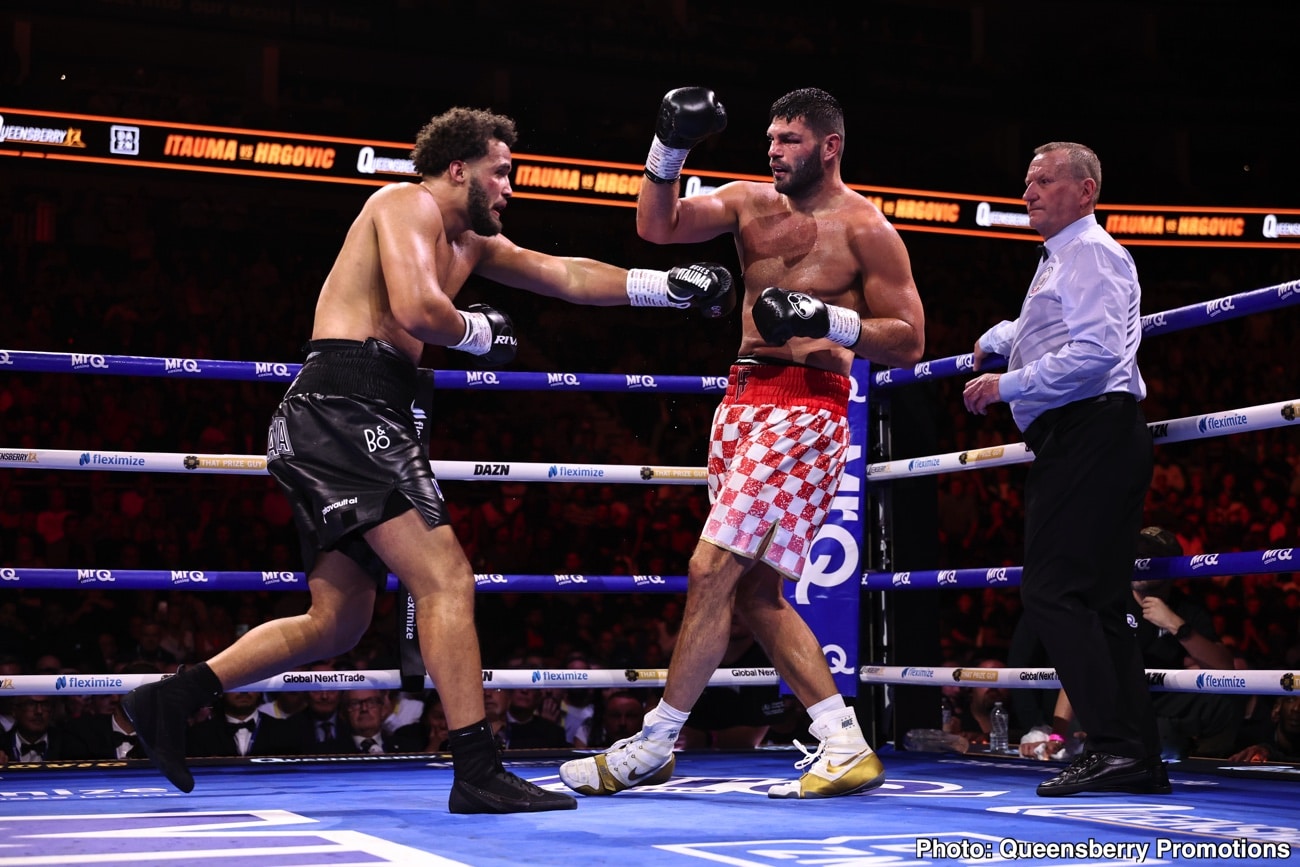


The uppercut was a good punch. Hrgovic taking it doesn’t mean Itauma lacks power. It does show that landing cleanly wasn’t enough to make this opponent stop advancing.
There was plenty of effort behind those shots. Itauma committed heavily, often overswinging instead of mixing lighter punches with his harder ones. After misses, he had to regain his balance or get away, adding more work to an already exhausting attack.
CROWD ANGLE! The moment that SILENCED the O2 😳 #MosesHrgovic 🤳 pic.twitter.com/b2tWdvjgdl
— DAZN Boxing (@DAZNBoxing) August 30, 2026
Itauma had never fought beyond six rounds. The two opponents who took him that far, Kevin Nicolas Espindola and Kostiantyn Dovbyshchenko, had losing records. Queensberry’s matchmaking had given him little experience of sustained return fire, much less handling it while tiring in unfamiliar later rounds. Hrgovic made him face both at once.
In his amateur fights, Itauma looked uncomfortable when bigger heavyweights pressed him. He would throw one punch, then move away before they could hit back.
Hrgovic kept following, giving him little time to rest. Even after the knockdown, he stayed patient and walked Itauma down. That pressure forced the younger fighter to spend energy moving and staying ready for punches, including when Hrgovic wasn’t throwing.
Once Hrgovic proved he could absorb those punches, Itauma needed to vary the force, stay balanced and save his hardest shots for better openings. Instead, he kept paying full price for punches that weren’t buying him enough breathing room.

Read the full article here


