

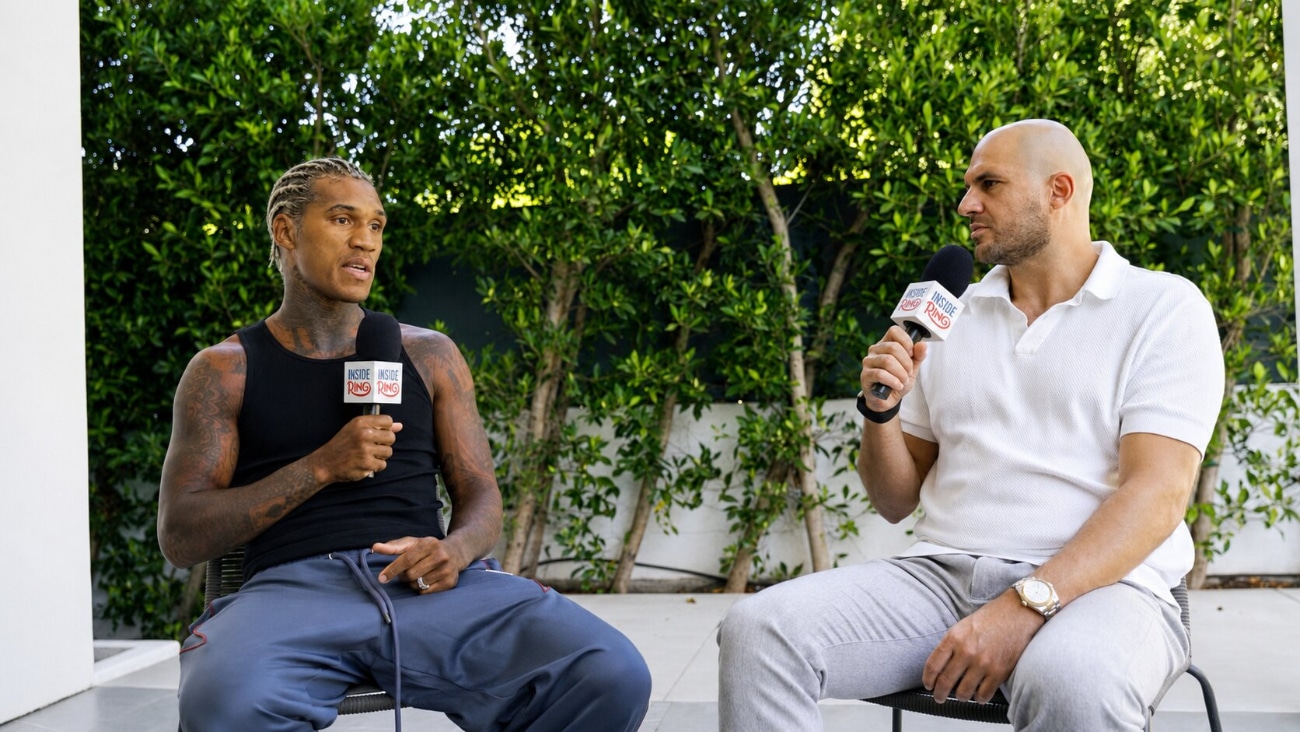

“Broner-Maidana. That’s how it’s going to play out,” said Benn to The Ring.
The comparison tells Ryan what will be coming at him in Las Vegas. Maidana bullied Broner with pressure, looping punches, and rough inside work in their 2013 fight. He refused to give Broner room to pose, counter, or control the pace.
Executing that approach takes more than aggression. Maidana rarely entered in a straight line. He lowered his elevation, moved his head, and stepped around the lead foot before driving Broner backward. Benn has a habit of charging upright, which would leave his chin exposed to Garcia’s left hook.
Garcia is dangerous when opponents follow him at a manageable pace. Predictable forward movement feeds into his best punch. Benn must hide his entry behind head movement, attack from an angle, and crowd Garcia before the counter can develop.
At close quarters, Benn needs to make the contact draining. Maidana used forearms, shoulders, hips, and his body weight to sap Broner’s legs. Similar tactics would test Garcia’s upper-body strength and prevent him from creating enough separation to load up. Garcia has looked uncomfortable when crowded against the ropes, particularly when an opponent takes away his lead hand and forces him to wrestle.
That strategy places heavy demands on Benn as well. He has called this the hardest weight cut of his career after spending his recent fights above 147 pounds. Maintaining a Maidana-style pace demands strong legs and a deep gas tank, two areas that can suffer after a severe cut.
He also must accept that Garcia will land while he closes the distance. Attacking the body brings his head into the check-hook lane. Maidana absorbed hard counters against Broner, but Benn cannot assume his punch resistance will remain intact after returning to welterweight.
If Benn gets close without taking serious damage, Garcia will be forced to fight in territory he would rather avoid. A rushed entry, however, may lead Benn onto Garcia’s best punch.

Read the full article here