

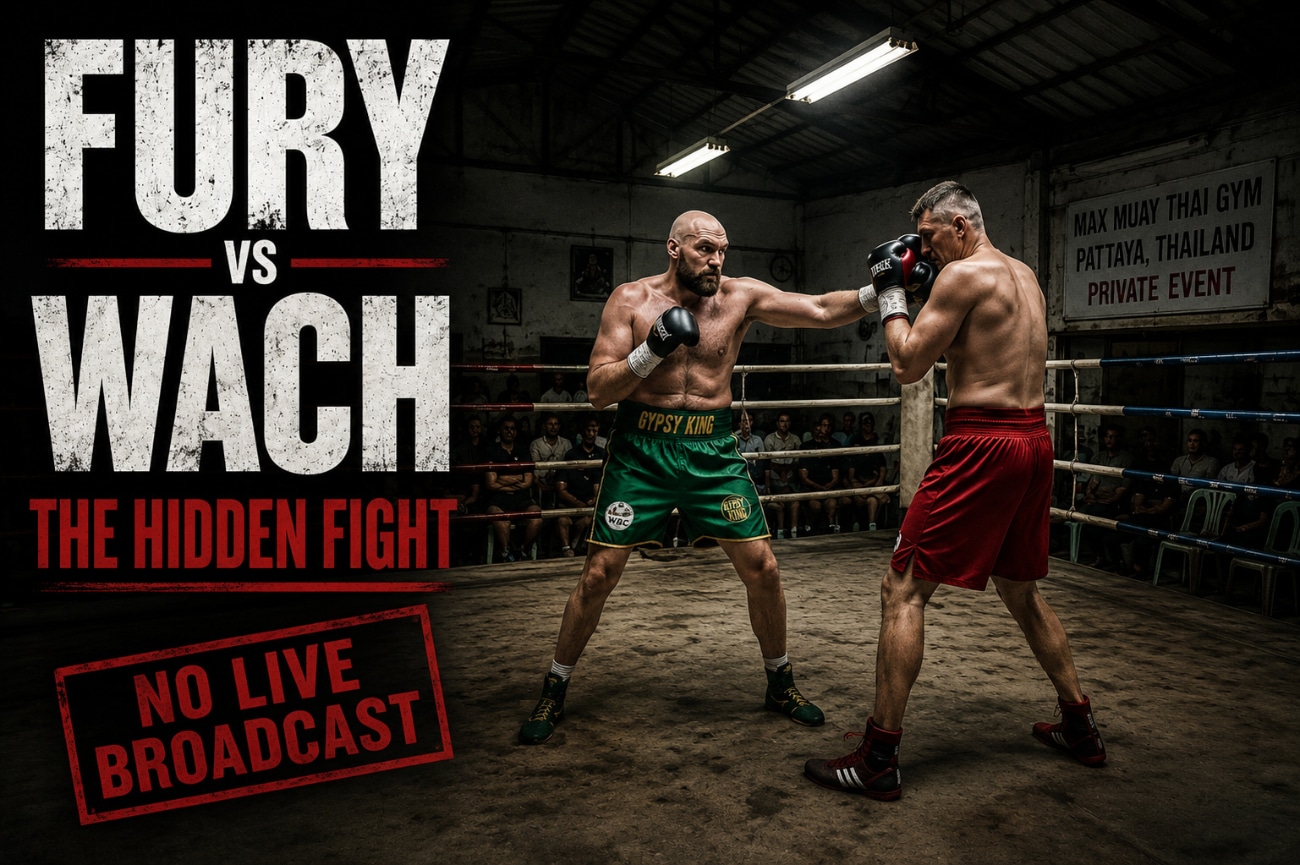

It’s an extraordinary arrangement for one of boxing’s biggest names.
Heavyweight stars typically use tune-up fights to reassure fans that they’re sharp before a major event. Fury has done the opposite, removing his final performance before Joshua from immediate public view while selecting an opponent who offers little competitive intrigue.
Wach has been a professional since 2005. Now 46 years old, the Polish veteran owns 13 career defeats and has gone just 8-12 in his last 20 contests. His best years are long behind him, making this one of the softest assignments Fury has accepted in recent memory.
If Fury destroys Wach, critics will point to the opponent’s age and declining form. If he struggles, questions about his readiness for Joshua would normally dominate the conversation. By taking the fight off live television, Fury avoids that immediate verdict.
Reports from ringside will emerge, but fans won’t be able to judge his timing, reflexes or conditioning for themselves. There has also been no announcement that the complete fight will ever be released. Fury has only stated that footage from the event will appear later in his Netflix reality series, leaving viewers to see an edited version rather than the contest as it unfolded.
While Anthony Joshua is putting his current form on full public display against Kristian Prenga in Saudi Arabia, Fury has chosen absolute isolation. This setup ensures that if the 37-year-old struggles to find his rhythm against a 46-year-old veteran, the boxing public cannot weaponize his performance.
The inclusion of the Netflix cameras for a future broadcast changes the dynamic completely. Instead of a live sporting event subject to immediate scrutiny, the fight becomes content for a reality series. This allows post-production editing to present the action in the best possible light, maintaining the aura surrounding the British heavyweight before the financial terms of the Joshua bout are finalized.
The decision by Tyson Fury to take his July 24 clash with Mariusz Wach off traditional broadcast networks is a masterclass in risk mitigation. By staging this event at the Max Muay Thai Stadium in Pattaya with a limited live crowd, Fury effectively controls the narrative at a critical juncture in his career.
To his credit, the Pattaya event is being promoted as a fundraiser, with proceeds from approximately 1,500 VIP tickets benefiting local orphanages and homeless children. Fury also revealed that the WBC plans to present a special humanitarian belt during the event.
The charitable purpose deserves recognition. So does the unusual way the fight is being presented.
Professional boxing has always featured carefully managed comeback fights and low-risk tune-ups. What it rarely sees is one of its biggest attractions taking that tune-up almost entirely out of public view just months before a blockbuster showdown. Whatever Fury’s reasoning, the blackout removes the immediate accountability that normally comes with a heavyweight star’s final audition before the biggest fight of the year.
That decision may prove smart from a promotional standpoint. It also guarantees that Fury’s choice of opponent—and the secrecy surrounding the event—will remain as much a talking point as the fight itself.
Read the full article here