

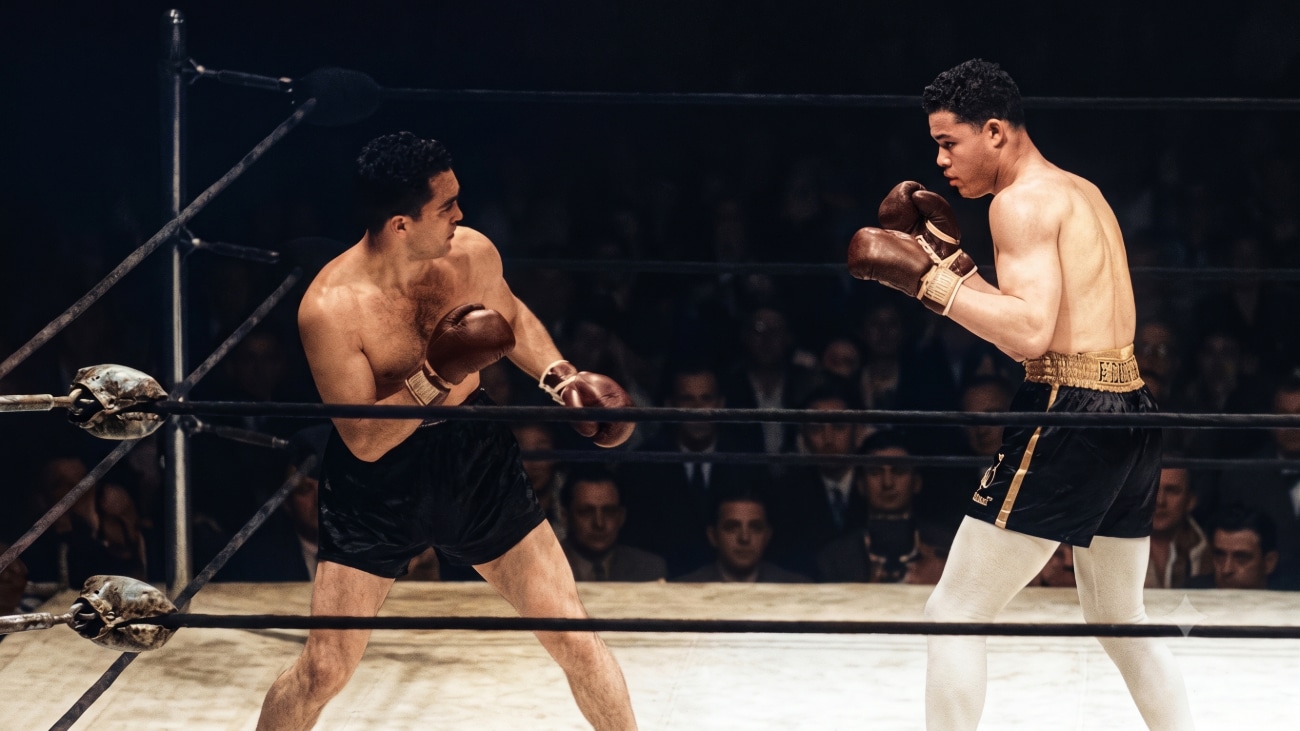

In their first meeting, Schmeling repeatedly countered Louis’ jab with right hands and scored a 12th-round knockout. The victory handed Louis the only defeat of his professional career and set the stage for a rematch that quickly became one of boxing’s biggest attractions.
The rematch carried political significance that neither fighter had originally sought.
The fight took place during a period of increasing tension between Germany and the United States. As a result, coverage of the rematch often focused on more than boxing.
The rematch drew more than 70,000 spectators to Yankee Stadium. Radio coverage reached an estimated 70 million listeners in the United States and more than 100 million worldwide.
Worldwide, the audience was believed to exceed 100 million.
Louis understood the importance of the rematch. A few weeks before the fight, he visited President Franklin D. Roosevelt at the White House. According to contemporary accounts, Roosevelt told the champion, “Joe, we need muscles like yours to beat Germany.”
Louis did not approach the rematch cautiously.
Seconds after the opening bell, he pressed forward and began landing hard shots. Schmeling attempted to recreate the strategy that had brought him success in their first meeting, but he was unable to establish his jab before Louis took control of the fight.
A crushing body shot visibly hurt Schmeling. Moments later, Louis sent him to the canvas with a right hand. Schmeling rose, but the punishment continued. Another barrage produced a second knockdown, and a third followed shortly afterward.
With Schmeling badly hurt and unable to defend himself, referee Arthur Donovan stopped the fight at 2:04 of the first round.
The official result was a first-round technical knockout for Louis.
The fight lasted just 124 seconds. Louis threw 41 punches and landed 31 of them, while Schmeling was credited with throwing only two punches during the bout. Schmeling was later hospitalized, where doctors discovered several cracked vertebrae in his back.
The result remains one of the most famous victories of Louis’ career and is still remembered as one of the quickest championship rematches in heavyweight history.
Louis continued his reign for more than a decade and made a record 25 consecutive heavyweight title defenses. Schmeling resumed his career and later gained recognition for helping Jewish families during the Nazi era.
Although they were once rivals, the two men became friends in later life. Schmeling regularly visited Louis in Las Vegas and later served as a pallbearer at his funeral in 1981.
Read the full article here