

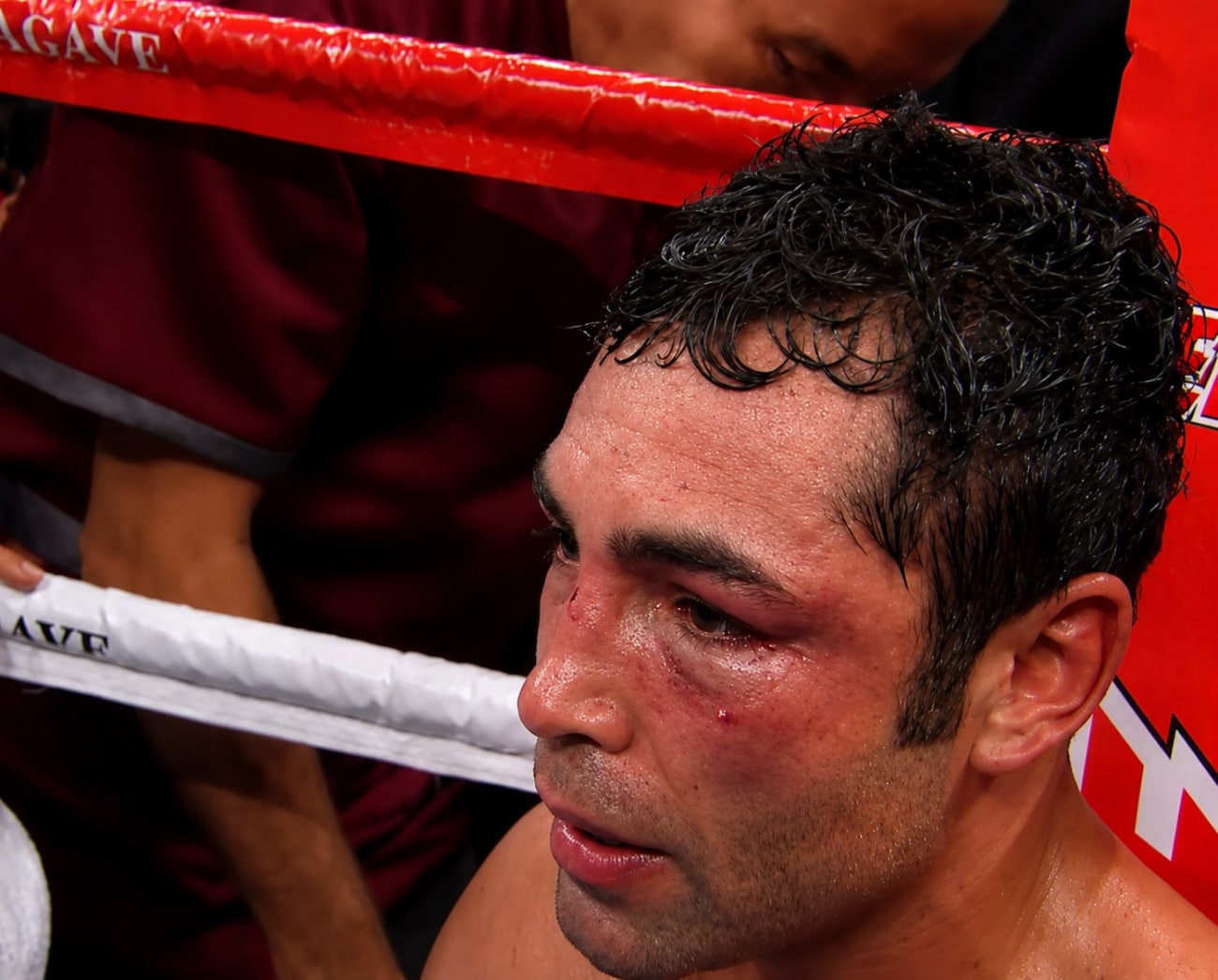

“So I get to training camp in Big Bear. This is my first time ever speaking about this, so Oscar, if I offend you, hey, the truth will set you free,” Ortiz said to Fighthype.
“Boom, I go ‘Okay, that’s an easy jab’, he throws a straight right. Boom. Dropped him, he’s on his knees.
“I go ‘Check this out, I’m gonna finish him’. Nacho’s saying, ‘Why are you hitting him so hard?’ I’m like, ‘I’m working with this guy, he’s the 10-time world champion. What are you talking about?’ Again, boom. Drops again. Gets out of the ring, takes all his stuff, leaves.”
If Ortiz’s recollection is accurate, the timing may explain what happened.
By late 2008, De La Hoya was no longer the fighter who had won Olympic gold and captured world titles across multiple weight divisions. The Golden Boy had already built a Hall of Fame career and become one of boxing’s biggest crossover stars.
Many observers believe his decline had begun years earlier. De La Hoya lost a decision to Shane Mosley in 2003 and escaped with a controversial unanimous decision over Felix Sturm in 2004, a fight many fans felt he lost. Later that year, Bernard Hopkins stopped him with a body shot in the ninth round.
The weight issue may have made matters worse. De La Hoya had campaigned at 154 pounds and even fought at middleweight before agreeing to face Pacquiao at welterweight. The 35-year-old reportedly dieted his way down to the division rather than relying on a traditional late weight cut, appearing notably thin at the weigh-in.
Pacquiao dominated the fight eight months after De La Hoya’s win over Steve Forbes, forcing his corner to stop the contest after the eighth round. De La Hoya announced his retirement the following year.
Ortiz, meanwhile, was a young contender entering his physical prime. He would go on to capture the WBC welterweight title in 2011 with a victory over Andre Berto.
Read the full article here