

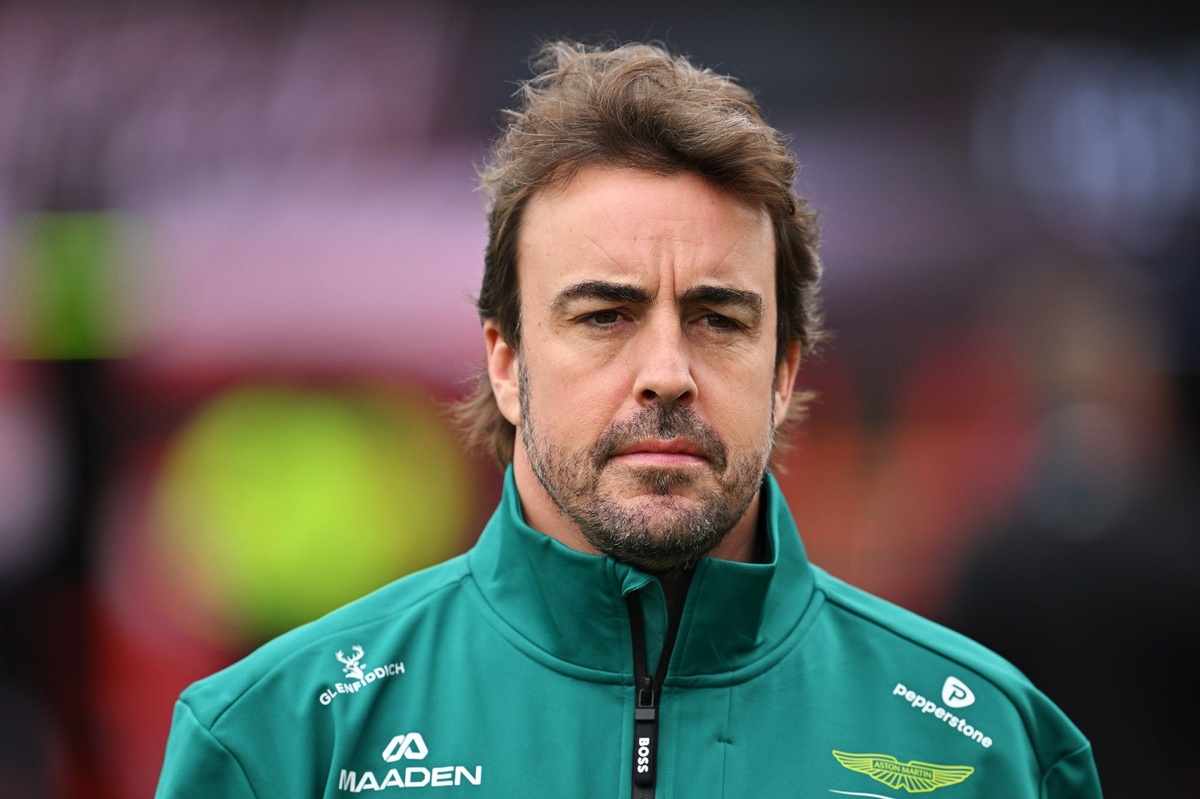
Since the start of the season, Fernando Alonso has never hidden his views on the 2026 regulations. As early as pre-season testing in Bahrain, he pointed out that a Formula 1 car so heavily dependent on energy recovery ends up reducing risk through corners – the area where a driver should still be able to make the difference.
Alonso reiterated that position ahead of the Canadian Grand Prix, while F1 was discussing possible changes for 2027. The idea is to move away from the near-50:50 split between the internal combustion engine and electric power and return to a more traditional 60/40 balance. However, such a scenario is far from guaranteed, as manufacturers have yet to reach an agreement, and the changes could be delayed until 2028.
Alonso believes F1 must go even further, and doubled down on his criticism of the current engine rules. In his view, even a rule change for 2027 would not truly alter the situation: next season would still feel like a transition year while waiting for the next technical cycle scheduled for 2031. More importantly, the two-time F1 champion repeated a belief he has held for a long time: that the hybrid era has deprived the series of a decade of genuine racing.
“The thing that the world went or thought to go into the electrification, that was thought to be the future, and that doesn’t apply to racing,” Alonso said. “Racing is a different animal. Now, we go a little bit back to the 60-40, and then in the future to less and less. Unfortunately, we had this period from 2014 with the turbo era, and now even more that we lost nearly one decade or even more of pure racing.”
But has Formula 1 really lost a decade of true racing because of hybrid power units?
There is no denying that the initial impact – both under the previous technical cycle and the current one – was not particularly exciting, and that is partly natural. In 2014, due to the hardware complexity of the new power units, reliability immediately became a central issue, with teams and drivers forced to deal with systems that were still immature and difficult to manage.
Fernando Alonso, Aston Martin Racing
Photo by: Maya Dehlin Spach / LAT Images via Getty Images
Since it was an entirely new technology, a trouble-free introduction was unrealistic. Over time, however, those power units became reliable and helped break record after record. Moreover, F1 cannot simply stop technological progress if it can add value to the series. Alonso’s point, though, is really about something else: the influence of electric power on racing itself.
First of all, there is the issue of weight. While it is true that new chassis safety measures have also contributed to increasing car weight, adding two electric motors and a battery inevitably adds mass. This makes the cars less agile – a sensitive issue for drivers, who have been asking for lighter, more responsive cars for years, closer to the era Alonso himself raced in two decades ago.
Anyone who lived through that era naturally remembers those cars fondly, with a degree of nostalgia. But there is another point: if electric power is not used simply as a KERS system but as an integral part of the powertrain – as it was through the end of 2025 and will continue to be in the new technical cycle – certain limitations arise. One of them is derating, the reduction in speed at the end of a straight when electrical energy runs out.
Under the previous regulations, this loss of speed was much less pronounced because the MGU-K was less powerful, making it easier to distribute energy over long straights. There was also the ‘invisible’ contribution of the MGU-H.
In some situations, teams could not begin a lap with the battery fully charged, stopping at around 90%, or during races they had to structure laps specifically to recharge before launching an attack. Managing energy intelligently was essential to maximise the approximately 160 additional horsepower provided by the MGU-K during overtaking.
It was a F1 that was very different from what fans had been accustomed to, but the limitations of that first hybrid generation remained relatively manageable.
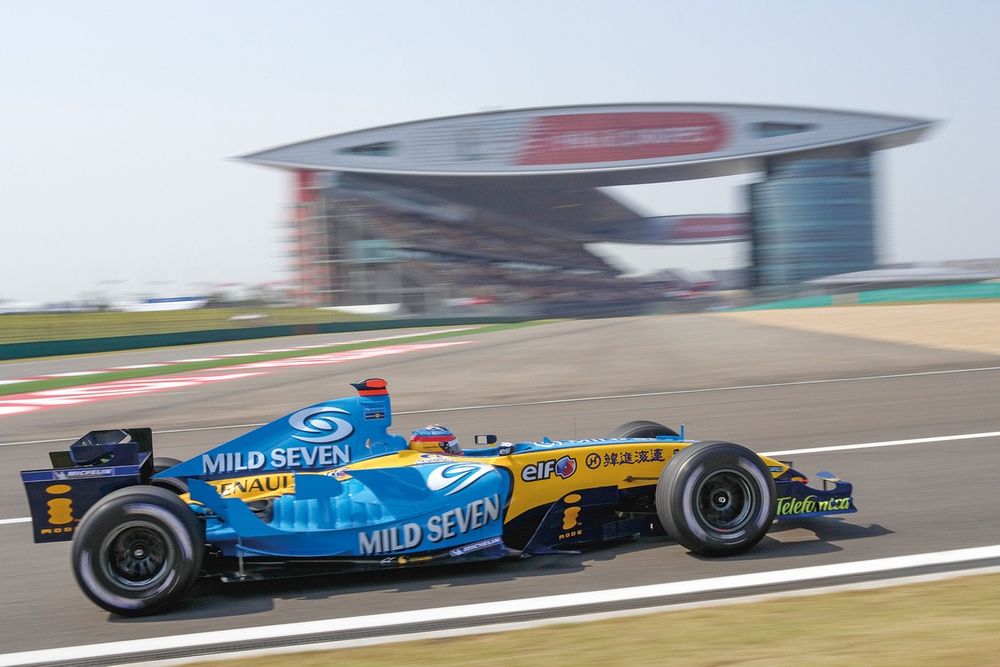
Alonso’s 2005 title-winning Renault, which boasted a screaming V10
Photo by: Rainer Schlegelmilch / Getty Images
“Even with the previous engines we had, which were 80-20 or 85-15 split, even at some circuits, we didn’t have full deployment everywhere,” explained McLaren’s Oscar Piastri in Montreal.
“We were very close, and at a lot of the circuits we did, but until you find a split where you can maintain that full electrical power everywhere, it’s always going to be a little bit odd for us as drivers on the straights. And no matter what the split is, you’re going to have these troubles with opening a qualifying lap, getting the battery in the right level.
“It’s such a fine and difficult balancing act of having the battery in the right state because, yeah, either you start the lap with not a full battery or you start it with no boost pressure in the turbo, and there’s not really a solution to that apart from changing the hardware.”
The underlying problem arises when compromises become necessary and hybrid technology stops being a support system and becomes a dependency. That is precisely the issue that has become even more apparent under the current technical regulations.
Having such a powerful electric component without the tools needed to support it – especially after removing the MGU-H while keeping battery capacity essentially unchanged – inevitably exposes the system’s compromises.
These limitations have translated into significant speed losses on certain tracks and a style of driving that forces drivers to think very carefully about throttle usage, especially in qualifying, even though the modifications introduced in Miami have helped mitigate some of these issues.
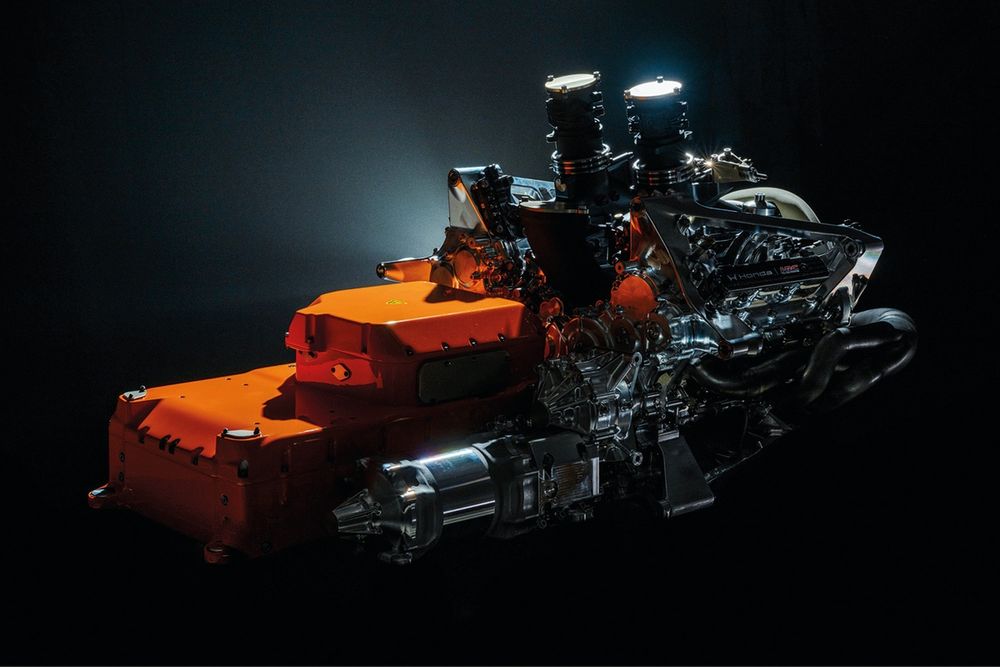
Honda Power Unit
Photo by: Take Itoh
It may seem surprising, but in Formula E such limitations and driving strategies are not as pronounced because the series was designed around electric power from the outset, with full awareness of its constraints.
Finding the right balance with hybrid engines is much more difficult, especially under a formula like the current regulations, which are themselves built around compromises. It is no coincidence that discussions are now focused on returning to a 60/40 split for 2027 or 2028.
Hybrid technology is not inherently flawed – not even in racing – but it must be used and supported in the best possible way given current technological limitations. It should be an addition to the powertrain rather than something the entire system depends on.
Not all drivers share Alonso’s view. Carlos Sainz, for example, has expressed a less extreme position, seeing the 2025 power units as a good endpoint that did not necessarily harm the spectacle of F1.
“I think for us drivers that will never be enough,” Sainz said. “I think we all love what we love which is if there is electrical it should be an add-on rather than a dependency on electrical power like we have now.
“In the past, we’ve had KERS, we’ve had the previous PU regulations which the electrical felt more like an add-on on top of already what it was, a solid PU. I think for drivers, purists, even I think journalists like you guys, I think we will all think, we will always believe a 60-40 probably still also not enough but at least something you can race with until real racing and real engines come back in 2030.”
We want to hear from you!
Let us know what you would like to see from us in the future.
Take our survey
– The Autosport.com Team
Read the full article here