

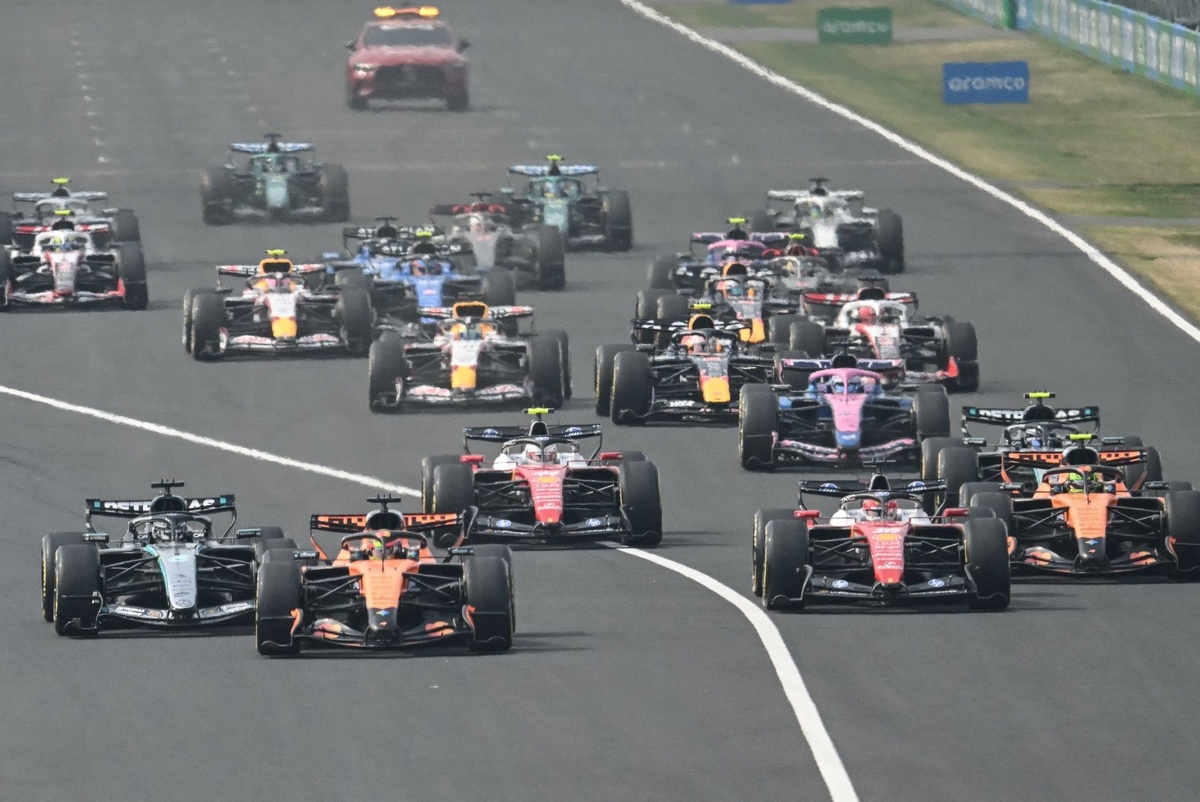
Unlike the Formula 1 summer and winter shutdowns, there are no rules preventing teams from powering on with developments during the unexpected April break due to the cancellation of the Bahrain and Saudi Arabian rounds.
Therefore each team has been hard at work, either back at base or on the track, to solve its most pressing problems, whether it is focused on its car, engine, software or procedural elements.
Even the drivers are finding ways to keep sharp during the five-week gap between the Japanese Grand Prix and the Miami event, which resumes the season on 1-3 May.
While some teams are able to stick to their prepared development schedules despite the lack of racing, others will have taken the opportunity to make fixes in time for Miami rarely afforded in the normal F1 race schedule with rounds every one or two weeks.
Here’s what each F1 team has focused on ahead of the resumption of the season.
On paper the task is simple: keep the performance margin over the rest of the field. Mercedes’ storming start to the new rules era saw it win all three grands prix and the sprint race in China before the break, providing an early comfortable advantage in both the drivers’ and constructors’ standings.
But Mercedes team boss Toto Wolff has already warned against complacency given the month of development open to all squads. Therefore the Brackley-based team will be looking to do the same to retain its gap over the field.
Individually, both drivers will be looking to improve their race starts with these new cars, but an extra emphasis will be on championship leader Kimi Antonelli given he suffered poor starts throughout the opening three rounds. The Italian has even had his steering wheel and its settings delivered to his home so he can figure out an ideal system with the settings and clutch controls.
Charles Leclerc, Ferrari, George Russell, Mercedes
Photo by: Andrew Caballero-Reynolds / AFP via Getty Images
Ferrari went into the break stating it was aiming to improve every area of its SF-26 F1 car, but didn’t wish to go too far into the details of what specific parts it will focus on. So, what upgrades it delivers in Miami will reveal the answer of what the Italian squad has identified as both its biggest areas to improve and where the quick fixes can be implemented, either with previously trialled developments or pieces already in the pipeline.
“We have tonnes of things to improve,” Ferrari team boss Fred Vassuer said in Japan. “Now we have good data after three races to understand the competitiveness of the car, where we are OK-ish and where we are not. It means that performance is coming from everywhere, but we have to do a step in every single area of the performance.”
Fundamentally, its race pace has been its biggest weakness to Mercedes, while it will be hoping others don’t solve their tardy start issues so it can retain that advantage for the upcoming rounds.
The defending F1 world champion squad always planned its first major upgrade package to arrive in Miami, compared to some rivals targeting the Middle Eastern races, so its development programme is unchanged.
However, McLaren is openly still getting to grips with optimising both its chassis through set-up and power unit operation, having seen Mercedes have a clear advantage over the opening rounds. The Woking-based squad made good progress on the power unit side in Japan, evidence by Oscar Piastri’s charge to second place, and further work along with upgrades will give the team optimism it can close the gap on Mercedes.
“I think this progress comes from the fact that we are getting a little bit more out of the chassis through the set-up,” McLaren team principal Andrea Stella said. “But mostly we are getting more out of the power unit. It’s positive that in qualifying we are there with Ferrari, but Mercedes is still one step ahead. We know that we have to improve the car and above all we have to bring some upgrades.”
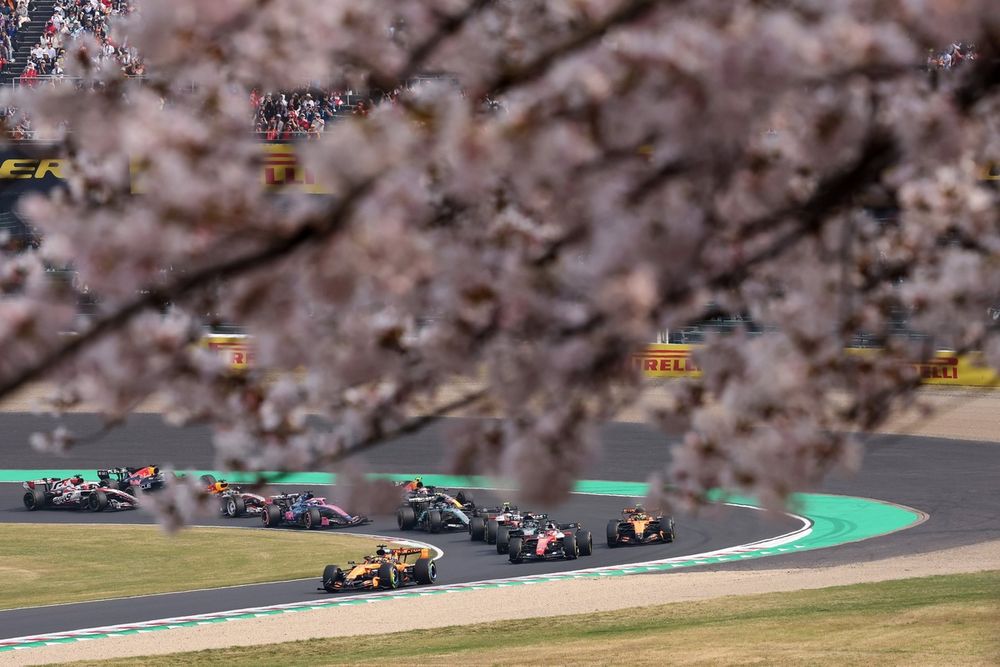
Charles Leclerc, Ferrari, Oscar Piastri, McLaren, Lando Norris, McLaren
Photo by: Lars Baron / LAT Images via Getty Images
Haas
Haas has arguably enjoyed one of the best starts to the season relative to its targets and size given it is the smallest team on the grid and sits a lofty fourth in the early F1 world constructors’ championship. Maintaining that position will be a huge challenge, particularly with the likes of Red Bull and Alpine both just two points back and with either greater scoop in facilities and resources or more time to develop through the sliding scales of aerodynamic testing permitted by the rules compared to Haas.
Aided by a solid power unit partner in Ferrari and two consistent drivers in Oliver Bearman and Esteban Ocon, the US squad will aim to keep up in the development race to match its impressive start to 2026.
“I don’t think we could have imagined a better start to the season, but now the real challenge is this development war,” Haas team principal Ayao Komatsu said before the Japanese GP. “Again, being the smallest team, we’re up against it, but I think as long as we keep our focus, keep working together, and having those open dialogue and transparency, I think we can develop the car.”
But Komatsu didn’t hide the fact that the break has come at the wrong time for Haas given its early momentum and profiting in this period before its rivals solve their own issues.
“I’d rather have had those two races [in Bahrain and Saudi Arabia], because we have a momentum, we have a strong car,” he said. “Bahrain testing, we are very happy with the car, so I expect Bahrain to be strong, and then Jeddah, I think our drivers are very strong. So, in a way, that’s a bit sad, from let’s say, a selfish point of view, that we cannot carry on this momentum, but at the same time, the amount of workload, physically and mentally, to get the car running in Fiorano and Barcelona has been huge. Then we’ve been non-stop coming to the Bahrain test, solving the problems, preparing for Melbourne, Shanghai and here [Suzuka].
“I feel like we can use this time to maximise, to make the foundation stronger, so that we are much better prepared when we are preparing for Miami.”
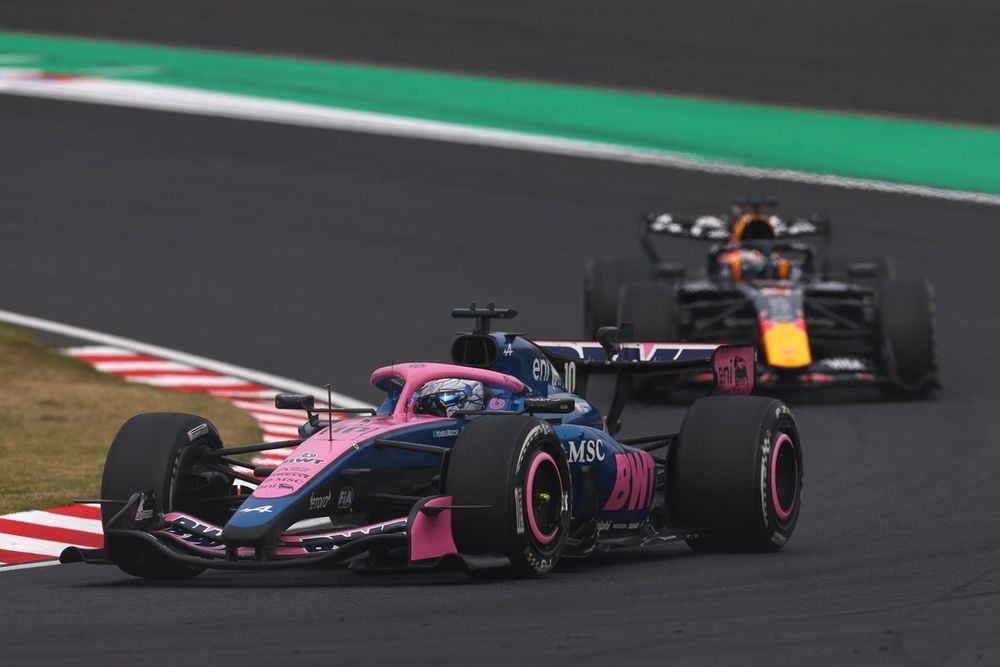
Pierre Gasly, Alpine
Photo by: Andy Hone/ LAT Images via Getty Images
Alpine
Following its impressive start to the new era, having made a relatively successful switch to Mercedes customer engines in the process, Alpine is focused on extracting the maximum from both its car and power unit package without focusing too strongly on one specific item.
Pierre Gasly called it “the best car I’ve had in my career” alongside his 2021 AlphaTauri and will be a key figure in leading the development of the A526 to keep pace in the midfield fight.
It will be vital if it is to maintain a chase of being the fourth-fastest team against Red Bull. “It was another positive weekend for the team, with another strong points finish to add in the early part of the season,” Flavio Briatore said after the Japanese GP. “Also, to repeat it at a different track configuration like Suzuka, confirms the gains we made in Shanghai and shows we’re in the mix with Red Bull as the fourth-quickest car currently.”
Red Bull
Unlocking the full potential and delivering effective upgrades in Miami will be paramount for Red Bull in order to rediscover its stronger pace shown in Australia compared to China and Japan. Put simply, Red Bull needs to deliver a competitive car to soothe Max Verstappen’s frustrations in F1. “I’m sure by the time we give him a fast car, he will be a much happier Max,” team boss Lauren Mekies said in Japan. “So, and by the time we give him a car, he can push and make the difference with, he will also be a happier Max.”
While the four-time world champion’s ire is aimed at the new rules and current racing, and not at the team, there’s no question that a more competitive car would go some way to satisfy Verstappen – whether it would be enough to influence his decision over his future is an entirely different question.
Both Verstappen and team-mate Isack Hadjar have pointed to the Red Bull car as the main point to find gains, having been pleasantly surprised by the debut of the team’s in-house, Ford-backed engine programme in comparison to the competition, so finding a palatable set-up and balance is the priority.
“We will use the break to make a very good step forward,” explained Mekies. “We need the time to deep dive into our data. We need the time to simulate back what we see in the data into the tunnel, into our simulator. Try some sensitivities and all of that we can do without racing.
“Does it mean you come to Miami and you have solved everything as a miracle? No. But again, am I confident that the teams will get to the bottom of that understanding and start bringing improvements already in Miami? I think that’s what you will see. But only the track and the lap time will give us an indication on whether we go into the right directions.”
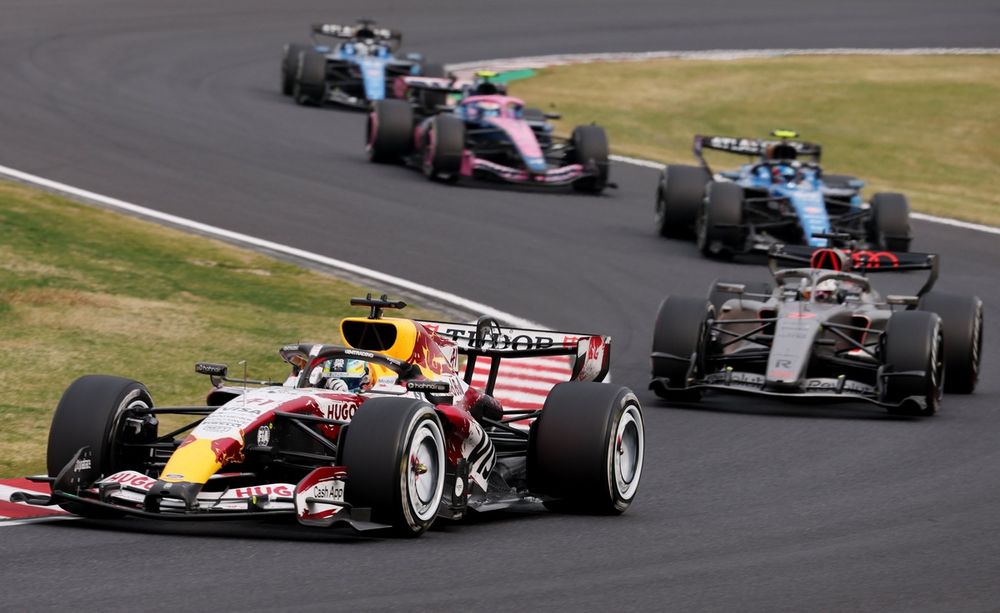
Nico Hulkenberg, Audi F1 Team, Arvid Lindblad, Racing Bulls
Photo by: Lars Baron / LAT Images via Getty Images
Conversely to its sister squad, Racing Bulls has found a comfortable fit for both drivers with the base level of its VCARB 02 and will focus on delivering upgrades with a similarly snug integration to push itself up the pecking order.
Arvid Lindblad has enjoyed a trouble-free start to his F1 career, reaching Q3 already and scoring points on his debut in Australia, while Liam Lawson is also rediscovering form with consecutive points finishes in China and Japan. So it will be a case of more of the same for the Italian squad, aided by the upgrades it can deliver in Miami.
Audi went into the start of its first F1 season openly acknowledging it was going to be a long road to reach the level of established performers and this has proven to be an accurate assessment, with the German brand’s power unit lacking efficient energy management and the ability to bolt off the line.
To emphasise that point, between Nico Hulkenberg and Gabriel Bortoleto the team has lost 26 places on the first lap across the opening three rounds – a stat somewhat softened by the fact that the team has suffered two DNS to chop off two opportunities to gain or, more likely, lose further places.
A pragmatic approach has been taken with Audi boss Mattia Binotto aware of the deficit and how the team aims to solve it. However, due to the power unit rules a quick fix to combat the issues isn’t likely going to be available in Miami, so it will be a steady recovery.
“We have a plan to recover. We cannot create miracles, but we are here to have proper plans to address and to improve in the future,” Binotto said.
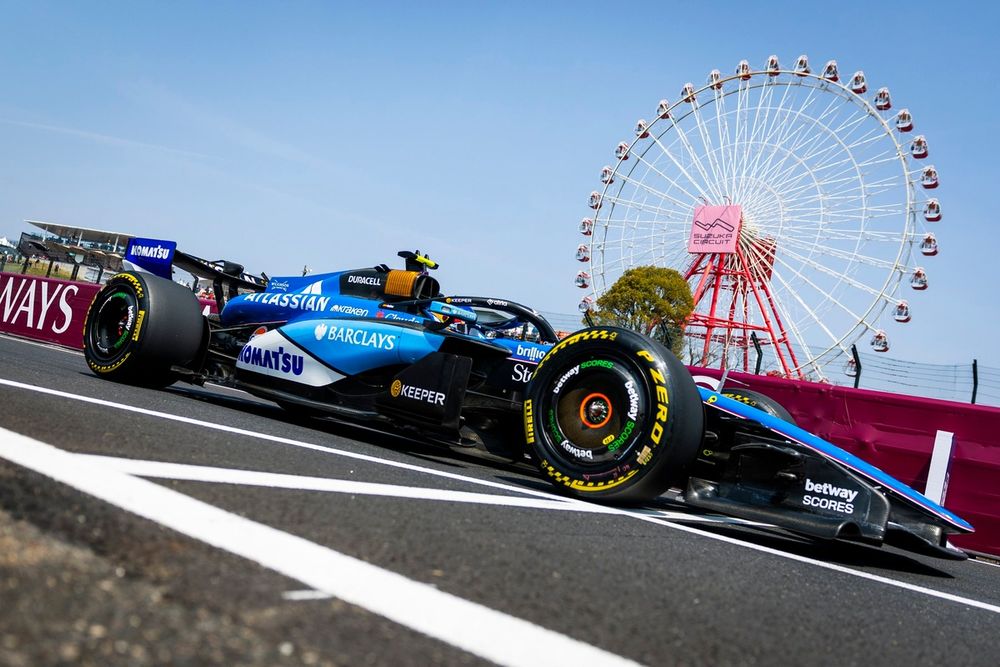
Carlos Sainz, Williams
Photo by: Sam Bloxham / LAT Images via Getty Images
One of the bigger disappointments relative to the expectations at the start of 2026, Williams has a weight loss and car upgrade plan it needs to deliver on in its bid to maintain its upward trajectory witnessed over the last two years. Therefore, the focus for Williams is purely on upgrades, either through performance or specification, to allow Carlos Sainz and Alex Albon to have a sharper tool to fight in the congested midfield.
Williams is also working on fully utilising the potent Mercedes power unit, but this is a target shared with the likes of McLaren and Alpine as customers to the German manufacturer.
It was always going to be a tall order for Cadillac to be competitive instantly in F1 starting from zero, and while the team hasn’t disgraced itself over the opening three rounds, there’s much room from improvement – again, hardly a surprise to the team or the rest of the grid. However, picking one topic to put at the top of its to do list is harder than for most teams given the vast potential it has to improve in all areas.
Development has been one its drivers have focused on and given Miami will be its first proper test of upgrades, that is probably where it needs to start. But, like everything else Cadillac has faced since its first days, there’s a voyage into the unknown given the lack of knowledge over its correlation between its CFD, wind tunnel and on-track testing for new parts.
“Develop means out-developing our rivals, which is quite a hard thing to do in Formula 1,” Sergio Perez summed up. “That’s the biggest challenge that Cadillac as a team faces. But I believe that we have a good structure, the team is in a good place, and hopefully when we start to develop, we can make significant steps.”

Valtteri Bottas, Cadillac Racing, Lance Stroll, Aston Martin Racing
Photo by: Andy Hone/ LAT Images via Getty Images
Aston Martin
The to do list for Aston Martin is long. Very long. But starting with reliability across its entire power unit package and how it integrates with the gearbox and the chassis is the number one target in order for the team to notch up the all-important mileage it needs to see where it stacks up against the competition and therefore what areas need most attention.
Given the team managed just one race finish over the three opening grands prix, the true potential of the car isn’t fully understood yet, even if it is clear it has a heavy and down on power and weak deployment engine.
But rather than spreading too thinly, even with its mighty resources across its Silverstone campus and Honda’s facilities in Sakura, producing a car that is reliable and can complete a race distance consistently is the start of a lengthy road to recovery.
We want to hear from you!
Let us know what you would like to see from us in the future.
Take our survey
– The Autosport.com Team
Read the full article here