

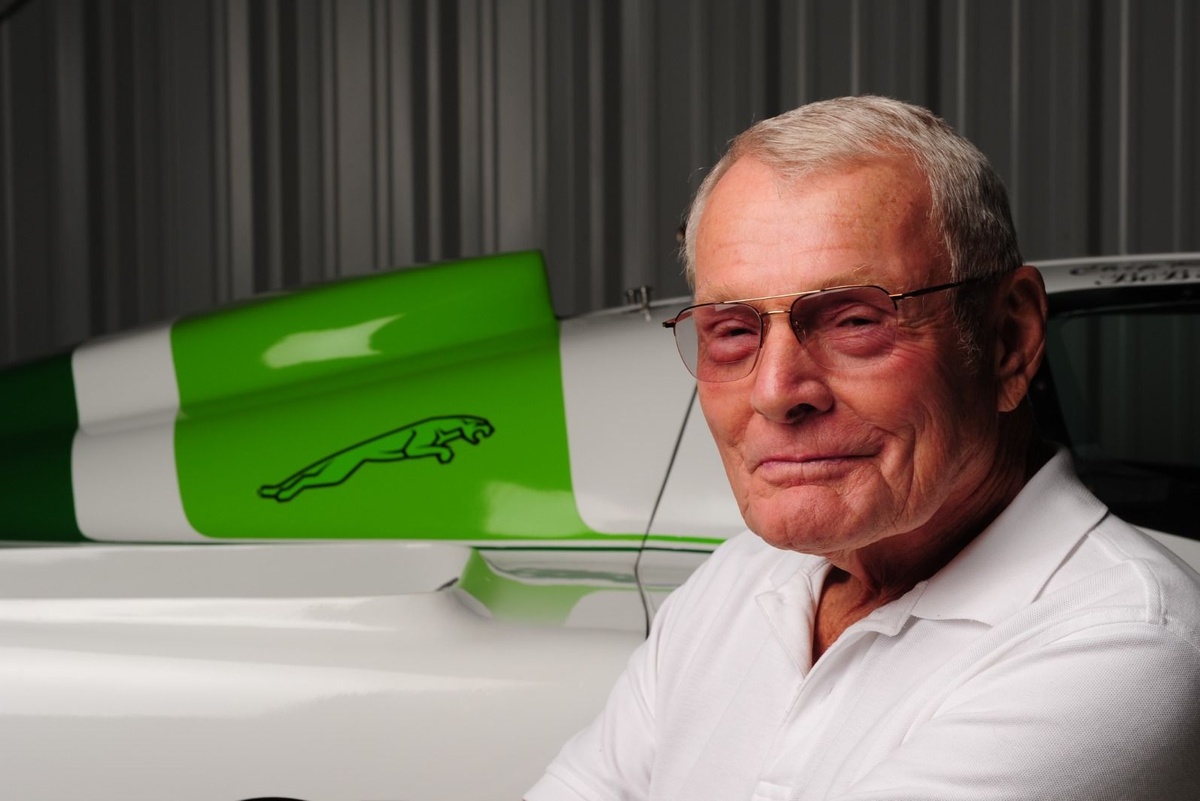
Bob Tullius kicked off a long association with the British motor industry when he started racing a Triumph TR3 he had bought for his wife. When the sometime drag racer decided to put a car she rarely used to good use at a local race school, little could he have known that just over 20 years later it would lead to him taking sister marque Jaguar back to the Le Mans 24 Hours. Nor that it would set it on course to add to its tally of five wins from the 1950s, without him.
Tullius, who has died aged 95, enjoyed immediate success with the Triumph with which he started competing at the beginning of the 1960s and forged a link with the British manufacturer. Given a TR4 by its US importer in 1962, two years before he established his Group 44 team in Winchester, Virginia, he went on to successfully race its machinery for the next 10 years.
He then switched to Jaguar, which like Triumph was part of the British Leyland conglomerate then in the throes of entering state ownership. Group 44 was back racing a Triumph, the TR8 in Trans-Am and then IMSA’s GTO class, when BL withdrew all its brands from the North American market with the exception of Jaguar at the start of the 1980s. The GTP prototype programme in the IMSA GT Championship masterminded by Group 44 was conceived to invigorate BL’s last marque standing in North America.
When the deal was cut with Jaguar boss John Egan, Tullius was told that he wouldn’t just be racing in his backyard. The industrialist credited with saving Jaguar — and who was knighted for his efforts – offered a parting shot. “I want you to know two things,” Egan told him. “First, you are going to take us back to Le Mans. Second, one day we are going to do this ourselves from the factory.”
Egan’s comments were recounted by Tullius to this author 25 years ago and the former turned out to be correct, because only in year three of a programme that had kicked off in 1982, Group 44 was on the grid at the Circuit de la Sarthe with its Jaguar XJR-5 powered by the marque’s V12 production engine.
The second part of Egan’s prophecy didn’t come to pass, though, Tullius never believed that the marque would really undertake a Le Mans campaign direct from its Browns Lane factory in Coventry. He correctly interpreted the comment to mean Jaguar would go into partnership with an operation closer to home, one based in Britain. That team ended up being Tom Walkinshaw Racing, and it was TWR and not Group 44 that would add further wins at the French enduro to Jaguar’s CV in 1988 and 1990.
Tullius competed at Le Mans with Jaguar in 1984 and 1985, the British marque would go on to claim victory in ’88 and ’90
Photo by: Getty Images
The Group 44 Jaguars were not frontrunners in their two years at Le Mans in 1984 and ’85. The fastest of the team’s cars, driven by Tullius, Brian Redman and Harry ‘Doc’ Bundy, qualified 14th in the first year, 18s off the pace of the pole-winning Lancia. It had its moment of glory, though. The car was short-fueled at the start and a quick top-up at its first pitstop ensured that it emerged in the lead as the faster runners stopped. The two Jags, the second driven by John Watson, Claude Ballot-Lena and Tony Adomowicz, were in and around the top six when they ran into technical problems. Both cars failed to finish.
The team’s second and final attempt at the big race was little better. Tullius always blamed contaminated fuel – “two-star”, he called it – for the engine problems that resulted in the only car to reach the finish crossing the line with one of its 12 cylinders blanked off as the result of a hole piston. The car shared by Tullius, Ballot-Lena and Chip Robinson was classified 13th. That represented a class win in GTP, though the car was 50 laps down on the winning Porsche.
By Le Mans ’85, TWR was already testing its new XJR-6 and would give the car a debut in the Mosport World Endurance Championship round two months later. Group 44 would race on in IMSA, though it would lose its deal to represent Jaguar on its home patch to the British team, too. TWR took over the IMSA programme for 1988, and a pair of victories at the Daytona 24 Hours followed.
PLUS: The disaster lurking behind Jaguar’s 1988 Le Mans win
Group 44’s efforts at Le Mans, insisted Tullius, were compromised by the requirement to design a car suitable for both IMSA’s short tracks and the long Circuit de la Sarthe where it would need to stretch its legs. It didn’t help that when the programme was signed off late in 1980, Jaguar’s grand plan called for it to be racing something the following year. That resulted in a return to Trans-Am with the XJS and, Tullius always claimed, a dilution of its efforts to get the XJR-5 into competition.
Group 44 was successful with Jaguar in the IMSA series. There were four wins in its first full season in 1983, Tullius sharing three with Bill Adam and one with Bundy. It was enough to give him the runner-up spot in the championship. There were a further five victories for the team through to the end of 1987, the last three of which were garnered with a new car called the XJR-7.
Tullius maintained that he wasn’t given a fair crack of the whip at Le Mans. “I’m egotistical enough to believe that we could have won the 24 Hours at Le Mans,” he said. “It was clearly going to take some time for us to become competitive because we came from a different environment. It would be like sending the New York Yankees over to play England at cricket.”
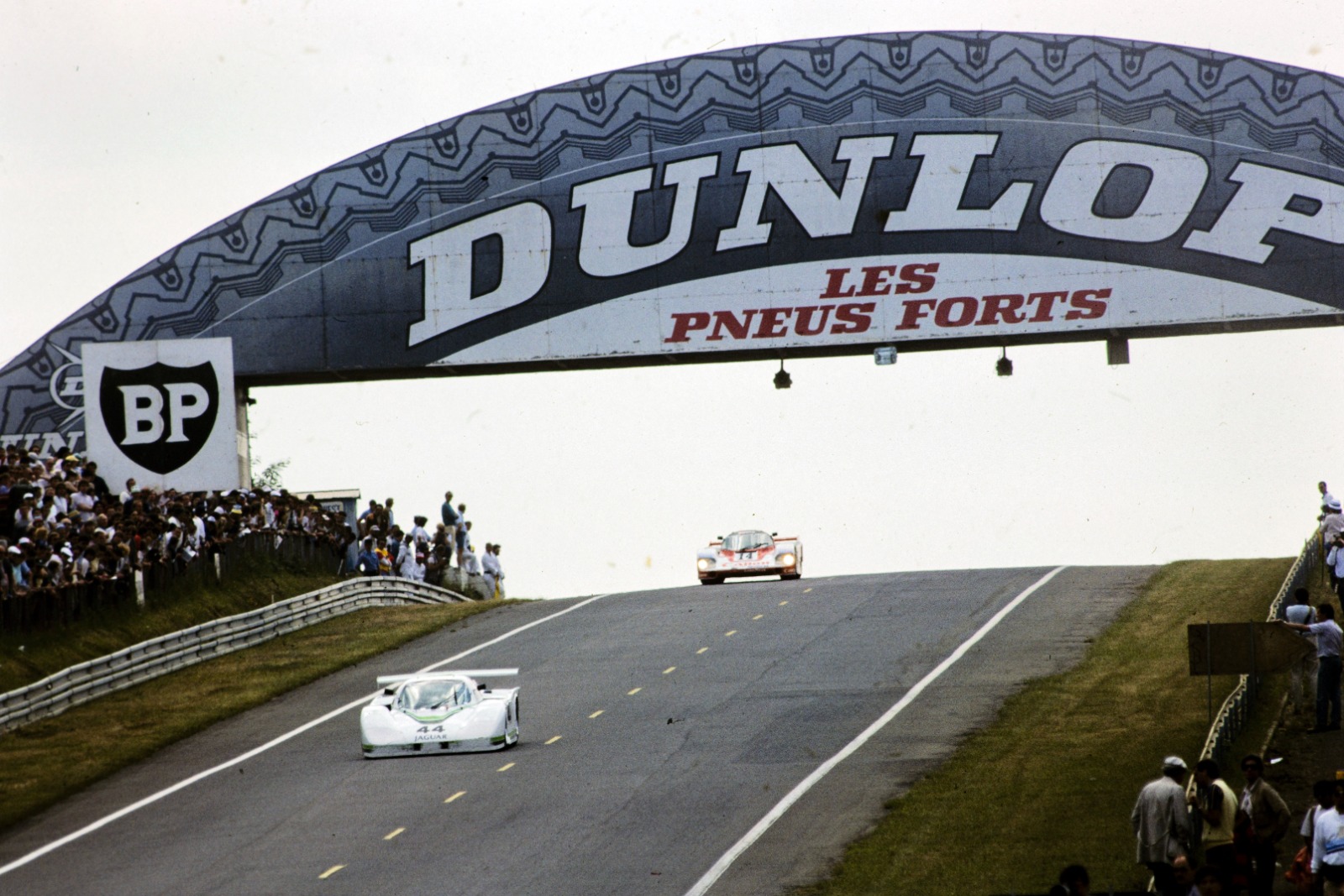
Much of his success came Stateside in IMSA rather than at Le Mans
Photo by: Getty Images
It was not a fanciful claim, reckoned Adam, who joined Group 44 on the TR8 programme in 1980. “I do think Bob would have been able to win Le Mans, because he brought such a high level of professionalism to everything he did,” said the Canadian. “He set entirely new standards that were met only years later by Roger Penske. Bob was so far ahead of his time. The cars were spotless and so well prepared – it gave you added incentive not to damage them.
“Everyone had to be so on the job, always dressed immaculately in the white Group 44 shirts and pants. You’d better not have any dirt on them, or you’d be sent to change. One guy from the team once said to me that Bob had missed his calling. He told me that he should have been drill sergeant. Bob would have made a good drill sergeant.”
Tullius had seen service in the US military in the US Air Force before becoming a sales rep for Kodak and then concentrating on Group 44. The team won no fewer than 14 Sports Car Club of America national titles and, at a higher level, took two drivers’ crowns in Trans-Am in 1977 and ’78 with its founder driving a Jaguar XJS.
Another followed when Group 44 was signed up to mastermind Audi’s Trans-Am programme with the 200 quattro in 1988. Hurley Haywood gained the title, but Tullius lost the deal with Audi for its move over to the IMSA GTO ranks with the 90 quattro the following year. The team continued until 1990 before Tullius focused on a PR and promotions business while indulging in his other great passion, aviation.
We want to hear from you!
Let us know what you would like to see from us in the future.
Take our survey
– The Autosport.com Team
Read the full article here