




It’s been discussed all offseason, but a transformative era for the Los Angeles Lakers finally starts this week with training camp.
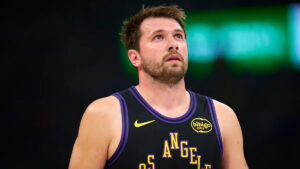
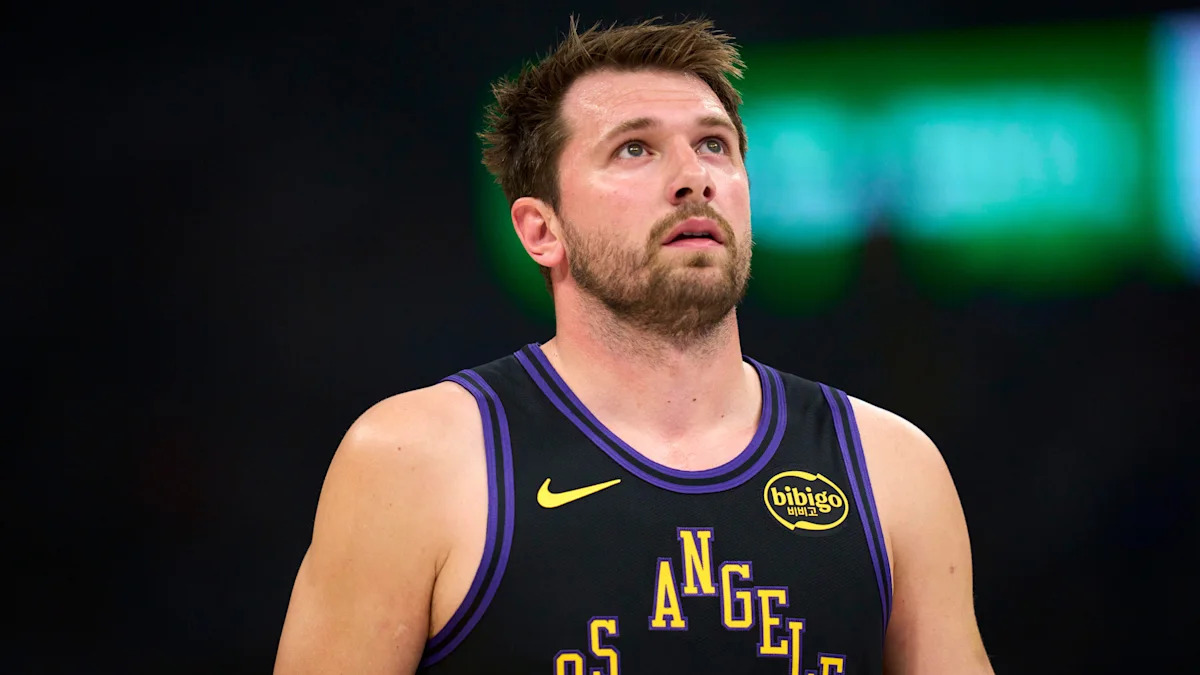
Head coach JJ Redick and President of Basketball Operations Rob Pelinka brought in the Luka Dončić era with a joint press conference on Thursday and answered many of the questions we’ve grappled with all summer. This week, though, we get to hear from the players, ask them questions and see the effects of a transitional offseason bear out on the court.
With that in mind, questions remain before preseason play commences in Sacramento on Oct. 5. Let’s hash a few out.
Just how complementary is this roster to Luka?
Pelinka laid out his plan ahead of the offseason, keying in on three pillars of what success in building a team around Dončić looked like to him and Redick once it became evident that LeBron James was not returning, saying, “Re-signing Austin, putting together a trade to acquire Walker Kessler and then building out our team with young players that could dribble pass, shoot and have brought the average age of our roster to around 26 or 27, which lines up so perfectly with Luka and building a team around Luka Dončić.”
Archetypally, he did it. Pelinka ensured Dončić had a dynamic shot creator in Reaves and a defensive stalwart in Kessler alongside him and surrounded the three with athleticism, defense, (some) shooting and youth. But are they talented enough?
The 2023-24 Dallas Mavericks not only laid out the blueprint of a Luka-led Finals team, but they also formed a roster loaded with talent through to the bench. It was a process that hadn’t been idealized until they traded for Daniel Gafford ahead of the season’s trade deadline.
BOSTON, MA – JUNE 17: Luka Doncic #77 of the Dallas Mavericks handles the ball during the game against the Boston Celtics during Game 5 of the 2024 NBA Finals on June 17, 2024 at the TD Garden in Boston, Massachusetts. NOTE TO USER: User expressly acknowledges and agrees that, by downloading and or using this photograph, User is consenting to the terms and conditions of the Getty Images License Agreement. Mandatory Copyright Notice: Copyright 2024 NBAE (Photo by Brian Babineau/NBAE via Getty Images) | NBAE via Getty Images
The Lakers still don’t have a fifth starter. Perhaps a similar midseason trade will jolt the team to the next level. But for now, we have to see if the pieces Dončić has around him are complementary enough to warrant that.
Is Redick’s shift to drop coverage exclusive to Kessler-featured lineups?
Los Angeles has been one of the league’s most switch-dependent teams through Redick’s tenure. In turn, the Lakers have sat around the bottom of the league in rim defense. Though up until now, given his personnel, Redick hasn’t had much of a choice.
Kessler changes that.
“I know that we have switched a lot, one through five, over the last two years,” Redick said. “That has been by necessity. We look at him as someone we want close to the basket, protecting the rim. … You guys watched the playoffs, you probably have a basic idea of how San Antonio used [Victor Wembanyama] and kept him low and kept him by the basket.”
Is this schematic shift exclusive to Kessler? Which other centers on the roster are capable of protecting the rim to his degree?
As it stands, Kevon Looney is slated to back up Kessler, but I’d expect Sandro Mamukelashvili to split time at the four and the five to limit the extent in which the Lakers have to rely on a degraded Looney down low.
Although the 6-foot-9 Mamukelashvili spent over 40% of last season guarding centers with Toronto, according to BBall Index, he was below average in rim protection (43rd percentile) and among the worst in the league in rim disruption (15th percentile) and rim deterrence (21st percentile).
A savvy way Redick could counteract this is by playing Mamukelashvili alongside Jarred Vanderbilt, who has shown a propensity to guard centers at an effective rate, but only if Redick trusts him enough to give him some burn.
Will the off-court chemistry translate on the court?
Dončić blessed fans with an inside look of the team’s five-day trip to Slovenia over the summer in a vlog posted to his YouTube channel — something Lakers fans haven’t really had since Javale McGee’s vlogs throughout the 2019-20 season and in the bubble (those were some good times).

My biggest takeaway from the video: the type of dynamic shown throughout the roster perhaps would not have been the same had there been a subset of players who were much older than the rest of the group. I mean, could you imagine Marcus Smart trying to engage in the type of Gen-Z banter being tossed around the entire trip? What are the odds LeBron ever had an inside joke with Adou Thiero or Dalton Knecht?
What the Slovenia trip really did was set the standard for the kind of connectivity the team will need moving forward. Anything less shines a bigger spotlight on the fact that, on paper, this Lakers roster isn’t as talented as the behemoths that run the West. That’s why chemistry is so important. And that’s why we all need to see if it’ll translate to a more connected team on the court.
Which role player is more inclined to pop?
Redick tossed out a few names that have stood out unprovoked during his presser, namely Ziaire Williams, Matisse Thybulle and Adou Thiero, each of whom is in contention for the fifth starting spot. He also mentioned in passing that everyone is competing for playing time in training camp.
The Lakers are a deeper team than they were entering the offseason. That Thiero and Cameron Carr have the same opportunity for real rotational minutes as the likes of Collin Sexton, Williams and Thybulle is a testament to that depth. But who has the best chance to pop?
Thiero and Carr come in the prospect of Los Angeles being a significantly better team if even one of them pops. Quentin Grimes, Mamukelasvili and (to an extent) Sexton come in with the comfort of substantial contracts. Williams, Thybulle and Kevon Looney come in trying to prove they’re worth more than a minimum deal. Jake LaRavia, Vanderbilt and Knecht come in with at least a season of experience in Redick’s system.
There are plenty of options, and the Lakers can benefit greatly from a few of their role players outperforming their projections.
How much does the ownership debacle trickle down?
In retrospect, it’s ironic that Pelinka and Redick preached continuity when the franchise is in the middle of one of the messiest sales in recent sports history. Pelinka, acknowledging multiple times that he’s not at liberty to discuss many aspects of the sale, did mention that there have been initial meetings with the group led by Bob Iger and Josh Kushner.
With all the dysfunction at the top of the brand, how does it not trickle down to the roster? Is it even as important to the actual play? We’ve already seen cases where the Buss family infighting found its way to LeBron in the middle of last season. Will it be any different with Jeanie Buss being dragged out as the last link to the family and the franchise?
Redick mentioned that some of the league’s most successful teams are the ones most connected. It’s not delusional as a fan to believe that also includes ownership.
A great deal of the Luka-era Lakers’ future rides both on the outcome of the pending sale and how functional the team can perform during and on the other side of it. Players can save face throughout training camp by saying the situation doesn’t affect them (which isn’t a difficult conclusion to come to). But the Lakers have historically been a franchise with steady ownership. It’s been a core foundation of the exceptionalism.
Soon there will be answers to all these questions. But in the meantime, it’s time to get the season officially started with Monday’s media day.
You can follow Connor on Twitter at @cmorenoNBA.
Read the full article here


