

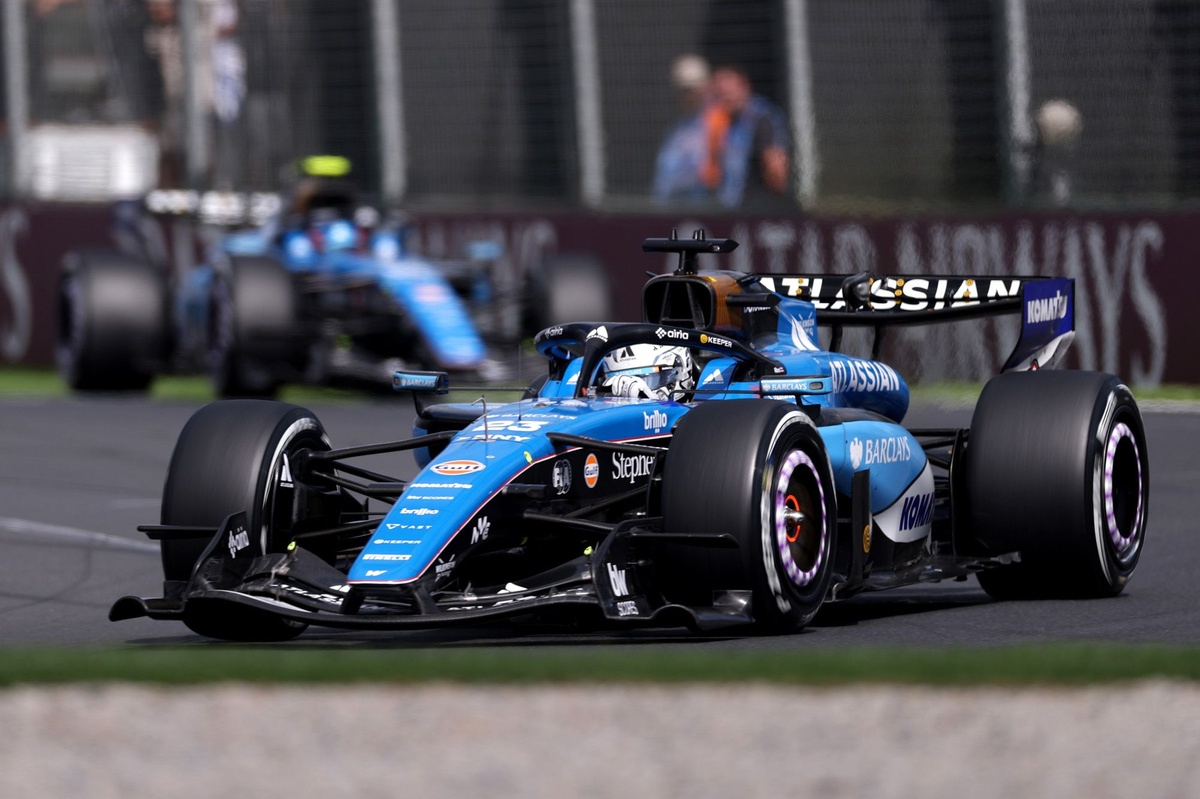
Last weekend’s Australian Grand Prix signified the end of Formula 1’s pre-season ‘phoney war’ as the teams which had been masking their performance dropped all pretences and the real competitive pecking order emerged.
Williams was not one of those outfits so its humble result was disappointing rather than genuinely surprising. The team has been behind the curve ever since it had to abort its presence at the Barcelona shakedown, ahead of which stories emerged that the car had failed its crash test and was 20kg or more overweight.
This accounts for a substantial amount of the FW48’s pace deficit to the frontrunners – although, as with the other Mercedes power unit customers, there is a knowledge gap compared with the works team in terms of how to maximise the power unit’s potential. Ahead of the season, team boss James Vowles described fifth in the constructors’ championship as the new baseline; but as things stand it will struggle to achieve the necessary top-10 finishes to retain that.
“It’s not complicated to bring it [the weight] down,” said Vowles on the Sunday of the Australian weekend. “Already what I have in my inbox today is all of the engineering steps to not just bring it down, but actually be underweight by a good amount. That exists to us.
“If this was a cost cap free world, I would execute it tomorrow. It would be done in a few weeks. It’s not.”
All composite components are rigorously “lifed” in terms of how long they remain on the car until they are replaced. The lifespan of each component is calculated based on how much operational stress it undergoes – unlike, say, metal, carbon fibre shows few outward signs of fatigue before it fails. There are various forms of non-destructive testing such as x-rays and ultrasound scans, but even these provide no guarantee of detecting imminent failure.
James Vowles, Williams
Photo by: Mark Sutton / Formula 1 via Getty Images
Vowles’ reasoning is that it’s more efficient under the cost cap to introduce weight-saving measures via planned in-season upgrades, and scheduled replacements for components reaching end of life, rather than do it all immediately. This is consistent with weight saving being a marginal gains process of paring weight all across the car, rather than one particular component being significantly overweight.
There is also a cost implication in terms of freighting new parts, since logistics costs now fall under the cap.
“It’s a complexity,” said Vowles, “But it’s a good complexity if you see what I mean. The cost cap is still net, very positive.”
Being overweight carries a greater penalty than before under the new power unit regulations because its effects on apex speed has an impact on energy harvesting, which in turn affects deployment elsewhere. Given that the energy store is constantly being depleted or recharged, the weakness has a tendency to compound through the lap.
“We’ve got an aggressive plan to get back on track,” said Alex Albon. “As aggressive as we can be, it’s still going to take time. But the team are working flat out.
“There’s a huge push back at the factory to get us back to where we should be. I think on paper it’s quite clear to us where the lap time is. If you just take the weights alone there’s clearly a good amount in there.
“The other side of things, the aero side of things, it’s been very interesting to see where other teams have positioned their cars. We’ve seen different concepts being used. I think we’re on an extreme side of one concept.”
Carlos Sainz, Williams
Photo by: Simon Galloway / LAT Images via Getty Images
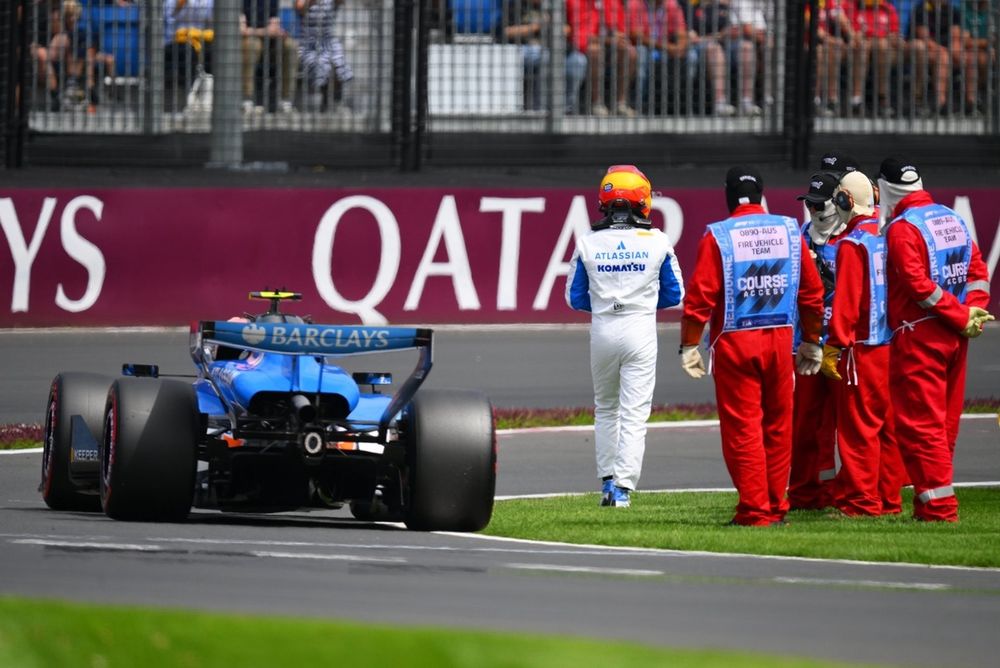
Another performance-related item which is perhaps more within the team’s gift to fix on a faster timescale is reliability. Carlos Sainz’scar ground to a halt at the pit entry during FP3 in Australia and couldn’t be fixed in time for qualifying.
That was the first time Mercedes’ customers had a chance to compare their electrical power strategies with the works team in completely like-for-like circumstances, so having only one of the two cars running on track proved costly – although, given the FW48’s weight issues, it was more a question of where Williams ended up relative to the other midfielders.
“It took a qualifying for us to really see just how off the pace we are in that regard [PU management],” said Vowles. “That’s probably three tenths, something in that ballpark.
“Then, I think when you only have one car running, you need to have both of them in order to really start bouncing off each other and learning how to deploy the energy.
“And that would be a little bit of a deficit we had yesterday [in qualifying] as well. But I think really the majority, the really big number, is weight.”
We want to hear from you!
Let us know what you would like to see from us in the future.
Take our survey
– The Autosport.com Team
Read the full article here