



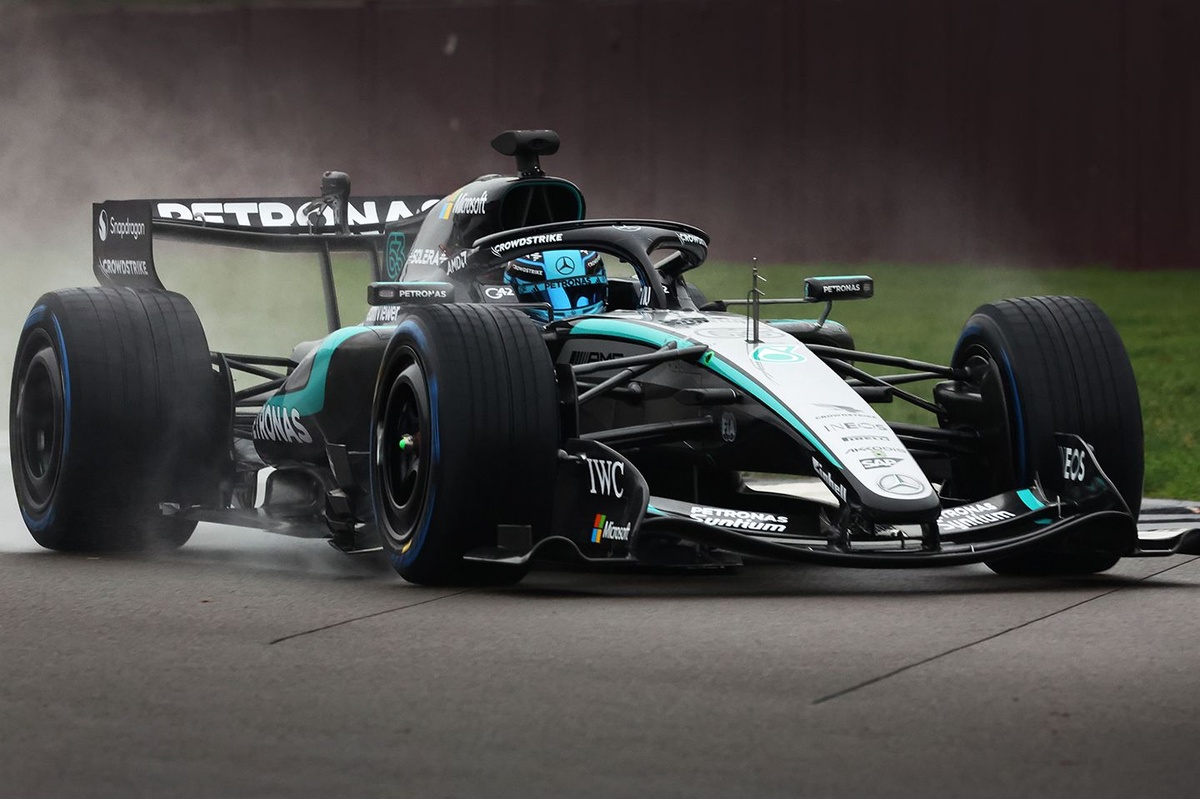
Formula 1 has constantly been in search of extremely close racing with lots of overtaking as almost every regulation change is designed to help further reach that goal – and 2026 is no different. This year will introduce what’s arguably the biggest rule switch in the championship’s history, with changes to both the chassis and power unit after four seasons of ground-effect cars where racing was often tight, but stale.
In the 2025 campaign, for example, a grand prix was won from pole on 16 of 24 occasions as such a level playing field made it tricky for drivers to gain the approximate 0.5-1s advantage needed to perform an overtake. What obviously didn’t help is how huge the cars became with the regulated minimum weight being 800kg – up 180kg from 2010 – while downforce levels were incredibly high as a result of the engineers constantly searching for that extra millisecond of performance.
Governing body the FIA therefore acted for 2026: a car chassis is down 32kg, with downforce levels also decreasing. The power unit, meanwhile, has become more electric with a near 50-50 split alongside the internal combustion engine to better reflect the direction of the automotive industry and attract new manufacturers like Audi and Cadillac – while also helping Honda to make a U-turn on its initial decision to leave.
So the racing promises to look drastically different, but a lot has been made of that as drivers will be forced into adopting a new style with active aerodynamics and energy management playing a much bigger role, potentially leading to downshifting on straights to preserve energy.
Naturally that’s a contentious topic: going slower to achieve a better lap time. And initially, many drivers warned of how bad that could look, but since the first collective on-track test of 2026 in last week’s Barcelona shakedown, the general mood has become more positive with championship favourite George Russell belonging to that camp.
“Following definitely does seem easier,” he told Autosport at his Mercedes team’s official 2026 launch event. “Especially in the high-speed corners, firstly because you have less downforce, you’re going through the corners slower, so there is naturally less wake.
George Russell, Mercedes W17
Photo by: Mercedes AMG
“As awesome as that was to experience these really high speeds in the high-speed corners, I think these cars actually feel nicer to drive through those corners – it just feels a bit more like a race car, a bit lighter. The cars before were just too big and it felt like a bit of a bus through those corners.”
So there’s obviously a lot for drivers to get used to ahead of the Melbourne opener in March, hence there being three separate pre-season tests, and one of the worries was that F1 would become much more like Formula E with the increased energy saving.
Races in the all-electric series are often dominated by drivers preserving their battery, so much so that they may deliberately drop back early on to launch a late attack to the front – coupled with the eight-minute attack mode assistance, giving drivers an extra 50kW of energy.
Russell is confident F1 isn’t going in that direction, however, even pointing out that it’s important for the championship to keep evolving as the driving styles used in recent years are still much different to the previous century when cars were not as high-tech.
“Definitely still is Formula 1,” the 27-year-old said. “It still very much feels like a race car and you’re still very much pushing the limits, but you are driving it differently.
“If you look back to the late ’80s and ’90s and you look at Ayrton Senna’s driving style, where he’s blipping the throttle through the apexes to spin the turbo, that’s also a unique way of driving.

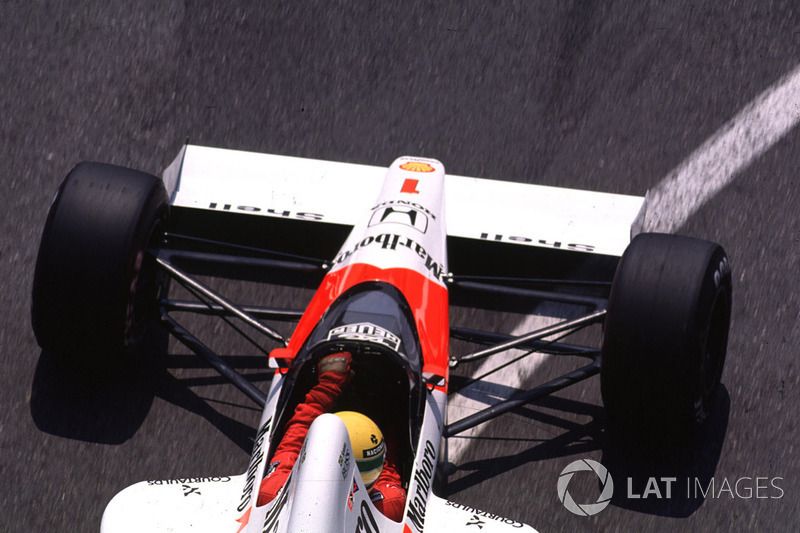
Ayrton Senna, McLaren MP4/5 Honda
Photo by: Motorsport Images
“And also in the same way as when you went from a gear stick to paddles on the back of your steering wheel, it’s just different and it changes. I think it’s important to remember this is test one of a two-, three-, four-year cycle of these power units.
“If we look at the progress, how much progress the previous generation of engines made from 2014 to 2025, the power difference, the drivability, the energy management in the previous V6 hybrid came such a long way. So I think we’re going to see big improvements over the course of this year.”
He even thinks the driving style changes will become much less of a topic as the season progresses, because with anything in life, people get used to change over time. “There’s a lot of things that can catch you out and there’s a lot of learning to be had at the moment,” said Russell.
“But I do believe after five or six races, this will just become second nature. At the moment, it’s all a bit of a surprise and understanding the small techniques that will gain you a couple of percent of energy re-harvesting.
“And just the small quirks around this new power unit race start are not easy to get everything in the right window, the energy at the right level, the turbo spinning at the right rate. So it is a real challenge, but I think the ones who put the most amount of work in today will come off best, especially in the early races.”
That even applies to the idea of switching to a lower gear down the straights, with Russell claiming it’s not as bad as first feared.
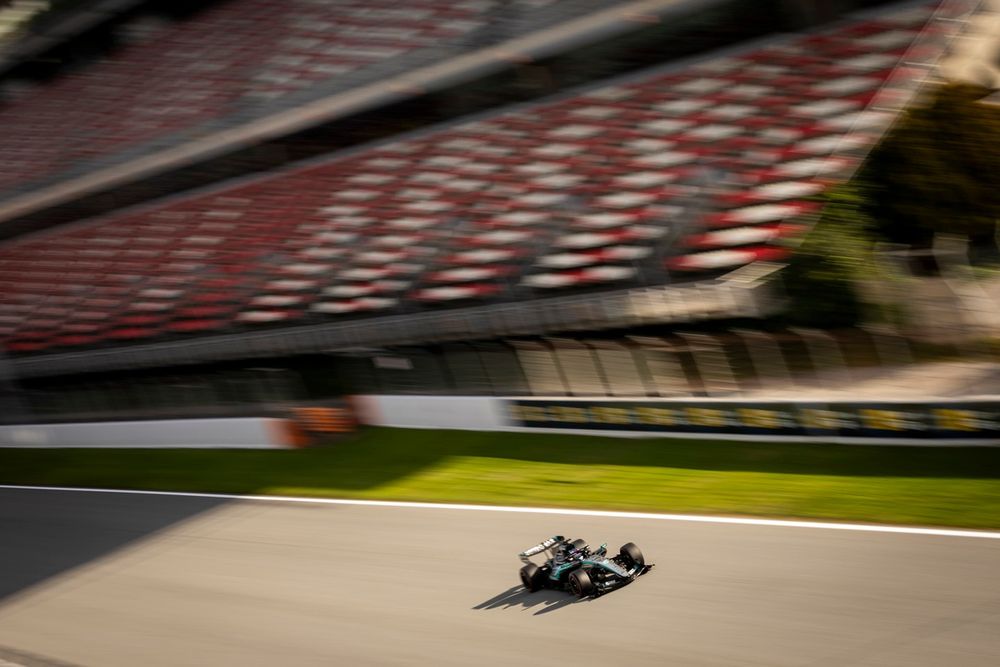
Andrea Kimi Antonelli, Mercedes
Photo by: Mercedes AMG
“From a power unit side, there was obviously lots of chat around potentially having a downshift in the straights in some circumstances. That will probably continue to be the case, but it doesn’t feel that abnormal to be honest,” said the five-time grand prix winner.
‘The way I would describe it is like if you’re driving your car up a hill, you’re still going flat out, but you’re losing a bit of speed and you may just downshift to give you a bit of extra revs to get up that hill.
“That’s how it sometimes feels when the engine is harvesting and you’re regenerating the battery. So there are occasions that you can downshift at the end of the straight even while you’re flat out, but it felt more bizarre in the simulator than it did in reality, to be honest.
“I spoke with a few other drivers and they actually commented the same, so that was quite intuitive.”
We want to hear from you!
Let us know what you would like to see from us in the future.
Take our survey
– The Autosport.com Team
Read the full article here


