

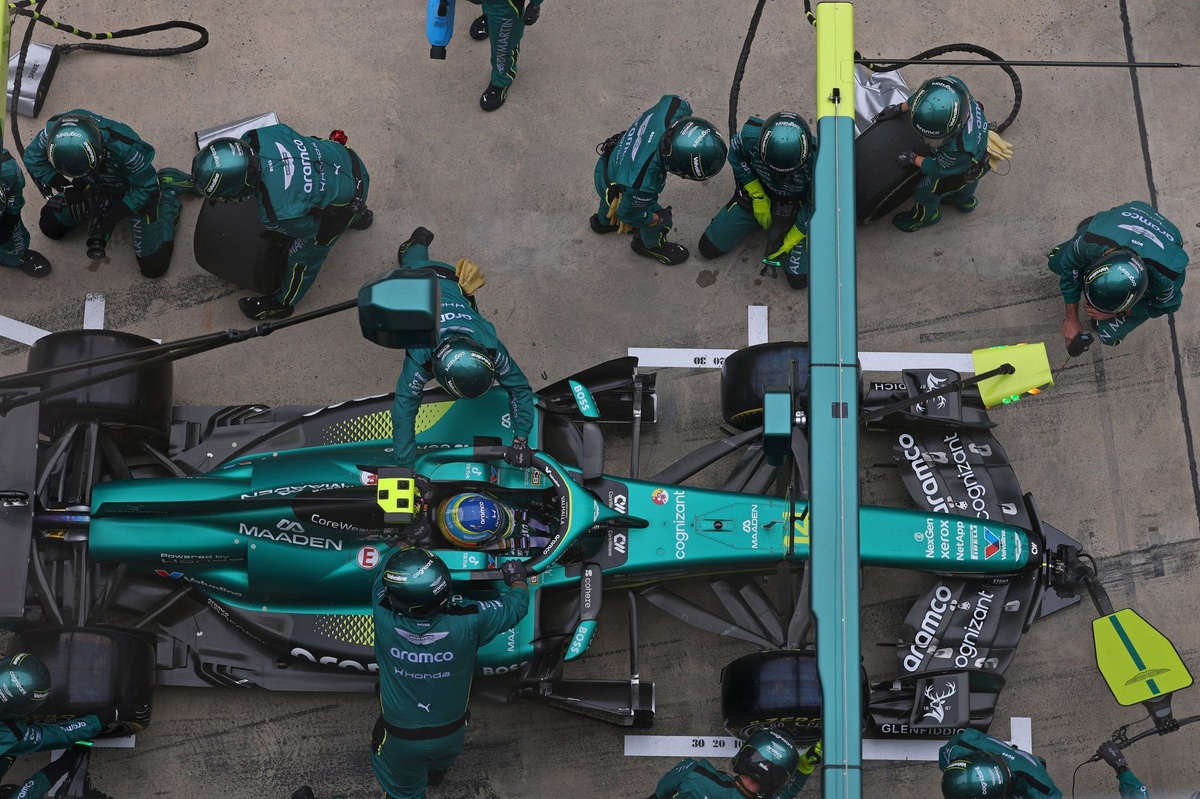
Aston Martin’s dismal start to the 2026 Formula 1 campaign has been well documented. It began at the beginning of 2025 when it commenced its windtunnel programme four months late, all the way to the Barcelona shakedown for which it started running on day four of five.
So of the teams there – Williams skipped Barcelona – it comfortably logged the fewest miles which continued into the Bahrain pre-season tests. The signs were ominous and, with it being in a battle against Cadillac to avoid the wooden spoon, this is not how the new era was supposed to go for the Silverstone outfit.
Pre-season expectations had been positive, championship leader George Russell labelled Aston as the squad he thought could challenge the top four teams, particularly with legendary designer Adrian Newey now being in charge alongside a new Honda works’ deal.
But ditching Mercedes power units for those of the Japanese manufacturer has been behind its downfall: excessive engine vibrations led to repeated battery failures, leaving no spares at the Melbourne season opener.
So it thought it was limited to just 25 laps of running at Albert Park, though it actually exceeded expectations as Lance Stroll ran over half the race consecutively before retirement. It might be clutching at straws, but that did present some kind of positive spin on an otherwise dire weekend, which started with just 54 laps across the three practices and Stroll not even running in qualifying.
It’s in times like this where teams must put on a brave face and that is exactly what Aston and Honda are doing. Particularly as it left China, round two of 2026, with some kind of progress given Aston produced a similar lap count [38] to others in the sole practice session, managed to complete the sprint race, though then had both cars retire from Sunday’s grand prix.
Nico Hulkenberg, Audi F1 Team, Fernando Alonso, Aston Martin Racing
Photo by: James Sutton / Formula 1 / Formula Motorsport Ltd via Getty Images
“We cannot be satisfied with the double DNF in the Chinese Grand Prix today,” said Honda general manager Shintaro Orihara. “However, if we focus on the more favourable areas, we ran more miles than in Melbourne which is encouraging. We also increased our reliability throughout the sprint weekend, but this isn’t yet enough to complete the full race distance.
“We have improved the vibrations on the systems side, but it’s still an issue for driver comfort. This is a key area to address as we look ahead to the next race in Japan.”
If Aston is to progress, then improving the AMR26’s driver feel is critical, as Fernando Alonso’s experience of the Chinese Grand Prix showed. The two-time F1 champion decided to retire after 32 laps because he “began to lose all feeling” in his hands and feet due to the vibrations, otherwise he could have gone on for longer.
“It was a discomfort,” said Mike Krack, formerly team principal, now chief trackside officer of Aston, whose other driver Stroll completed just 10 laps in Shanghai due to a suspected battery issue.
“I think it’s a new learning. Over the weekend, I think we did 19 in the sprint, and obviously in between you always have a break. I think he also said that if you fight for the win, it is possible to drive. We were not in a very strong position at that point, so it was a decision that was quite easy to make.”
So that is at least something for Aston to look at ahead of the Japanese Grand Prix in two weeks’ time, because as long as it can chalk up the miles, it should be able to pinpoint further improvements.
“You will probably be laughing if I say we have made progress, because today it did not look like massive progress. But when I look, for example, we have never done so many laps,” added Krack.
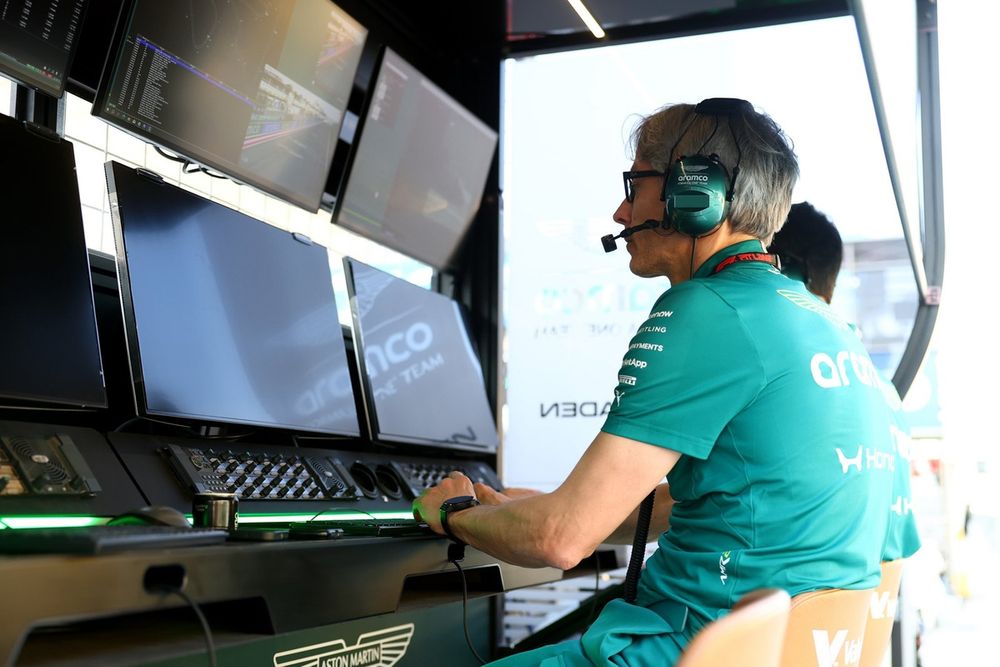
Mike Krack, Aston Martin Racing
Photo by: Zak Mauger / LAT Images via Getty Images
“On the energy side, it is something that I think every team will confirm, that you discover new things by running alone, but you also discover things when you run with others. We have seen things yesterday when we were in the sprint with cars together on lap one on a restart after a pitstop.
“So there is a huge amount of things that you learn. Also, you find bugs, to be honest. You find issues where you think: why did that happen now? You work through it and then you realise, it is this kind of setting or this part of the regulations that made this happen and you know for the next time.
“From that point of view, it is important to run, it is important to accumulate knowledge and it is not only on the energy, we have also a different tyre generation that is behaving differently. So all these things, if you are in the garage, you will never find out.”
We want to hear from you!
Let us know what you would like to see from us in the future.
Take our survey
– The Autosport.com Team
Read the full article here