



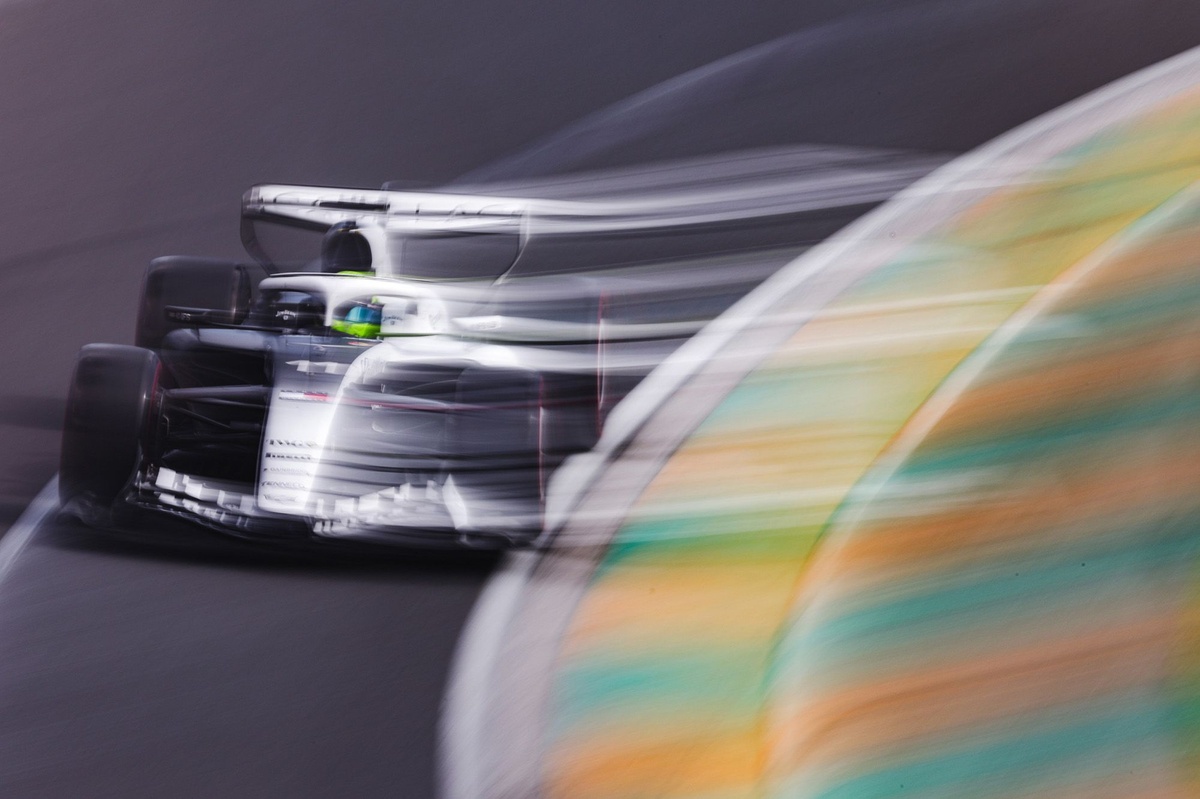
For any other Formula 1 team, having both cars qualify over four seconds off pole position for the season opener would be shaming. But for Cadillac, simply being there at all was an achievement – as a team set up from scratch, and which only had its entry guaranteed 12 months ago, it has faced headwinds both political and practical.
Ultimately, though, Cadillac isn’t on the grid to make up the numbers. It has long-term ambitions to compete for the world championship, although CEO Dan Towriss and team principal Graeme Lowdon have nimbly avoided the classic mistake of putting a timescale on it.
The next challenge is to keep up with the pace of technical development – which is expected to be savage, given that this is the first season of a very different set of technical regulations.
What’s interesting in this context is that Cadillac’s drivers seem to be framing these challenges very differently from rivals elsewhere on the grid, seeing the main issues as aerodynamic. Elsewhere the power unit and how to run it appears to be the only show in town.
“I think Ferrari proved that they can race towards the front end, so the power unit is decent,” said Valtteri Bottas ahead of the Chinese GP weekend. “And we should get all the help from them as well. We can see which kind of deployment they are using and we can easily just do the same if we want.
“So I don’t see the deployment as the limitation. It’s definitely our car. Especially on the aero side, we’re lacking quite a lot of load, especially on the rear end of the car, which now has kind of boxed us in with this mechanical setup a little bit, because we just need to do everything we can to protect the rear end.”
Valtteri Bottas, Cadillac Racing
Photo by: James Sutton / Formula 1 / Formula Motorsport Ltd via Getty Images
With the exception of Aston Martin, which is facing a unique set of problems, for most other teams the question of how to run the power unit at maximum efficiency is trumping the other traditional areas of focus. That’s particularly true of Mercedes’ customers, which have been looking enviously at what the factory team is achieving.
“We’ve probably not even spoken about the car that much,” said McLaren’s Oscar Piastri. “Because we’re so focused on how to get the most out of the power unit. I think one of the things we learned was the kind of difference you can make by optimising the power unit is an order of magnitude bigger than anything you can do with the setup of the car.
“In car set-up, there’s maybe a tenth or two, if you really turn things around. But I think it’s just understanding what you need from the car to get the most out of the power unit.
“That’s the biggest thing, but especially at the moment, so much of our time and capacity is taken up by finding those big gains from the power unit that anything we do with the car, unless it’s undriveable, we’ll deal with that later.”
Obviously there are caveats here in that McLaren’s MCL40 is much more aerodynamically sophisticated than Cadillac’s MAC-26, an inevitable consequence of the new team’s rush to make it to the grid in a compressed timeframe. The difference between the Cadillac and its peers is very pronounced, and you don’t have to walk from the front of the grid to the rear to make a comparison, given its proximity to Aston Martin’s edgy but troubled AMR26.
One old paddock hand rather rudely likened the MAC-26 to “a show car you might see in a shopping mall, or the airport”. An exaggeration for comic effect, perhaps – but as Bottas himself pointed out ahead of the Australian GP, many elements of the launch spec had to be signed off very early simply to be assured of being produced on time. Pushing deadlines is a luxury indulgence for teams with more in-house production experience, and even then it can go wrong, as evinced by Williams and Aston Martin this year.

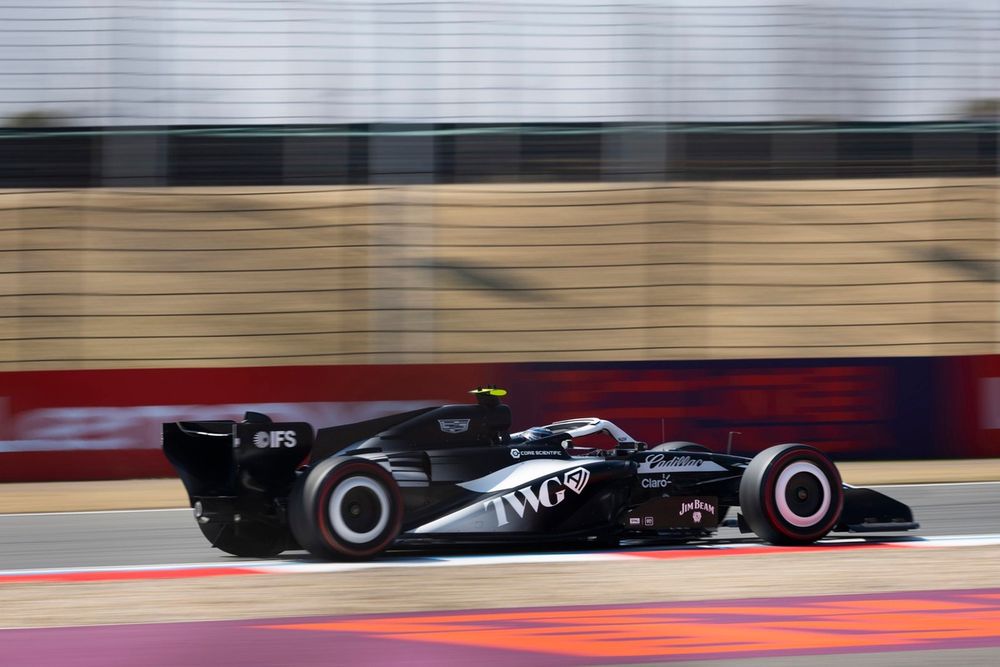
Rear end of the MAC-26 is relatively basic compared with rivals
Photo by: Sam Bloxham / LAT Images via Getty Images
But it would be a mistake to see aerodynamic efficiency, mechanical set-up and power unit operation as discrete elements of F1 car performance. In 2026, downforce, chassis balance and energy management are interlinked almost as never before.
This is because cornering speeds have a direct bearing on the amount of energy a car can harvest, and how it goes about that process. Take, for instance, the intrigue surrounding the Mercedes factory team’s performance relative to its customers. They’ve been complaining – some more loudly than others – that Mercedes hasn’t been as open or candid as it could be in terms of information sharing. Ferrari customers, Cadillac included, have been less critical of their supplier.
For its part, Mercedes says its advantage is built on aerodynamic efficiency and chassis dynamics as well as a strong power unit.
Essentially, what Mercedes showed in Melbourne was a different energy harvesting strategy built around different gear ratios and a greater proportion of super clipping to lift-and coast – but doing the super clipping while still in straightline mode (i.e. with the active aerodynamics minimising drag) to offset the effect on top speed. This entails a longer braking phase which requires well-sorted chassis dynamics and efficient aero, because carrying more speed into corners risks understeer which would sap momentum.
Though we have yet to see how Mercedes tackles the ‘energy rich’ circuits, the W17 car concept has clearly evolved to exploit this approach to harvesting and deployment. For this reason, much of the harrumphing from Mercedes customers about the ‘knowledge gap’ between the works team and them boils down to this: “Why didn’t we think of that?”
So aerodynamics and balance are more important than some of the teams are admitting openly. For Cadillac, the relative lack of rear downforce is triggering a set of problems which compounds over the lap.

Bottas insists downforce rather than power unit management is where lap time is to be found
Photo by: Mark Thompson / Getty Images
When Bottas talks about being “boxed in” on set-up, that’s a factor of being forced to dial in understeer to protect the relatively weak rear end, and maintain balance. Overall it translates to more sliding, which has an effect on tyre degradation, and slower apex speeds, which costs lap time in two ways: not just slower pace, but lower levels of energy harvesting, which compromises performance elsewhere.
In China, understeer brings an additional penalty because Shanghai is a ‘front-limited’ track with fast, variable-radius corners which put a lot of energy through the front-left corner.
So Cadillac’s priority in the short term is efficient downforce so it can bring itself into a space where it can start to maximise the potential of its power unit. Perhaps, then, it can start to pick holes in the quality and flow of information from Ferrari – if it feels that’s a productive use of management energy.
We want to hear from you!
Let us know what you would like to see from us in the future.
Take our survey
– The Autosport.com Team
Read the full article here


