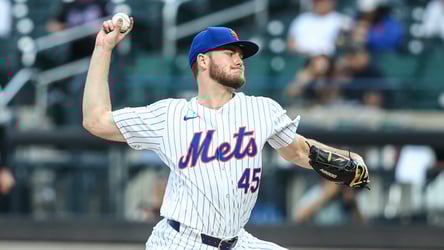


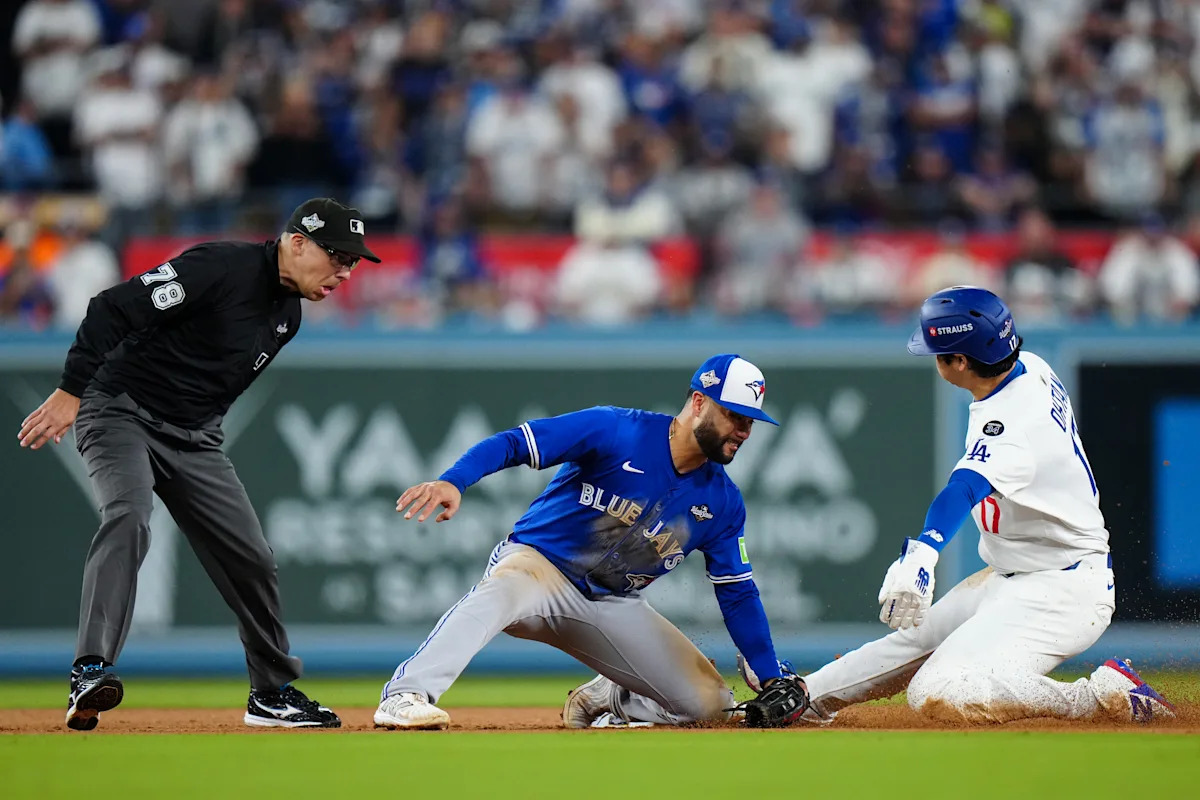
Let’s start by stipulating that this signing, player, and scenario are not necessarily what we would’ve chosen for ourselves.
But this is where we are now.
Certainly this isn’t the bat we wanted, but let’s lay that aside for the moment. Let’s think about defense, which is something the Red Sox themselves have pledged to devote more thought and effort to.
Before signing IKF, signs were pointing toward Marcelo Mayer staffing third base, with different reports predicting Nick Sogard, or a Romy Gonzalez/David Hamilton platoon at second.
My gut was telling me that IKF was the better option, defensively. Romy could bedazzle us from time to time, but he made me nervous. Hamilton doesn’t pass the eye test either and bounced down to Worcester accordingly. Same with Sogard.
Baseball Reference offers the Total Zone Total Fielding Runs Above Average metric which they define as “The number of runs above or below average the player was worth based on the number of plays made.” For simplicity, they stylize this as Rtot, so I will too.
Let’s take a look.
Isiah Kiner-Falefa
At second base in 2024, across two leagues (playing for both the Pirates and the Blue Jays), IKF had a fielding percentage of .990 which was above the MLB average of .984. IKF’s Rtot was 5 runs above average that year at second. Though he played only 56 games (376 innings) at that position, Baseball Reference extrapolates 17 Rtot over 1,200 innings (roughly 135 games, if he were slotted in there). Not bad.
In 2025 for the Blue Jays, over 13 games at second base, IKF’s fielding percentage was a glorious 1.000, though in a small sample size. His true Rtot was 1, extrapolated to 34 over 1,200 innings.
Romy González
Looking at the same Baseball Reference stats for Romy in 2024 with the Red Sox, we have:
130.1 innings at 2B, .964 fielding percentage compared to .983 league average, Rtot of -4, and Rtot extrapolated over 1,200 innings: -32. Ouch.
In 2025 at 2B: 288 innings, .978 fielding percentage compared to .982 league average, Rtot of -2, and Rtot extrapolated over 1,200 innings: -9.
I congratulate Romy on improving from the previous season, but the Red Sox new defense-first model shouldn’t tolerate any negative numbers here. Neither can the Red Sox afford it, with so many pitchers—particularly Crochet, Ranger Suárez, Sonny Gray, and Bello—inducing as many ground balls as they do. And besides roster-specific reasons, we’ve increasingly seen how thin the margins can be in getting to the playoffs. The Red Sox have needed to prioritize defense for a long time.
David Hamilton
Let’s look at David Hamilton.
In 2024 at 2B: 266.2 innings, .978 fielding percentage compared to .983 league average, Rtot of 5, and Rtot extrapolated over 1,200 innings: 21.
In 2025 at 2B: 401.2 innings, .973 fielding percentage compared to .982 league average, Rtot of 5, and Rtot extrapolated over 1,200 innings: 16.
Nick Sogard
Same exercise, but even smaller sample size.
In 2024 at 2B: 99 innings, 1.000 fielding percentage, Rtot of -1, and Rtot extrapolated over 1,200 innings: -12.
In 2025 at 2B: 65 innings, 1.000 fielding percentage, Rtot of 0-1, and Rtot extrapolated over 1,200 innings: -4.
I’m perfectly comfortable with IKF starting at second over González, Hamilton, or Sogard. I would much rather see him play there and be sure-handed, than mess around with regular platoons. (I say this even as I feel sure that one of the main reasons for acquiring IKF is his versatility in the infield.)
Yes, Romy’s bat is better against lefties, but he isn’t the regular answer in the infield. He’s a valued bench player. I have less confidence in Hamilton and Sogard, but they’re bench players too, if they make the team out of spring training. Give the keys to IKF.
Read the full article here