




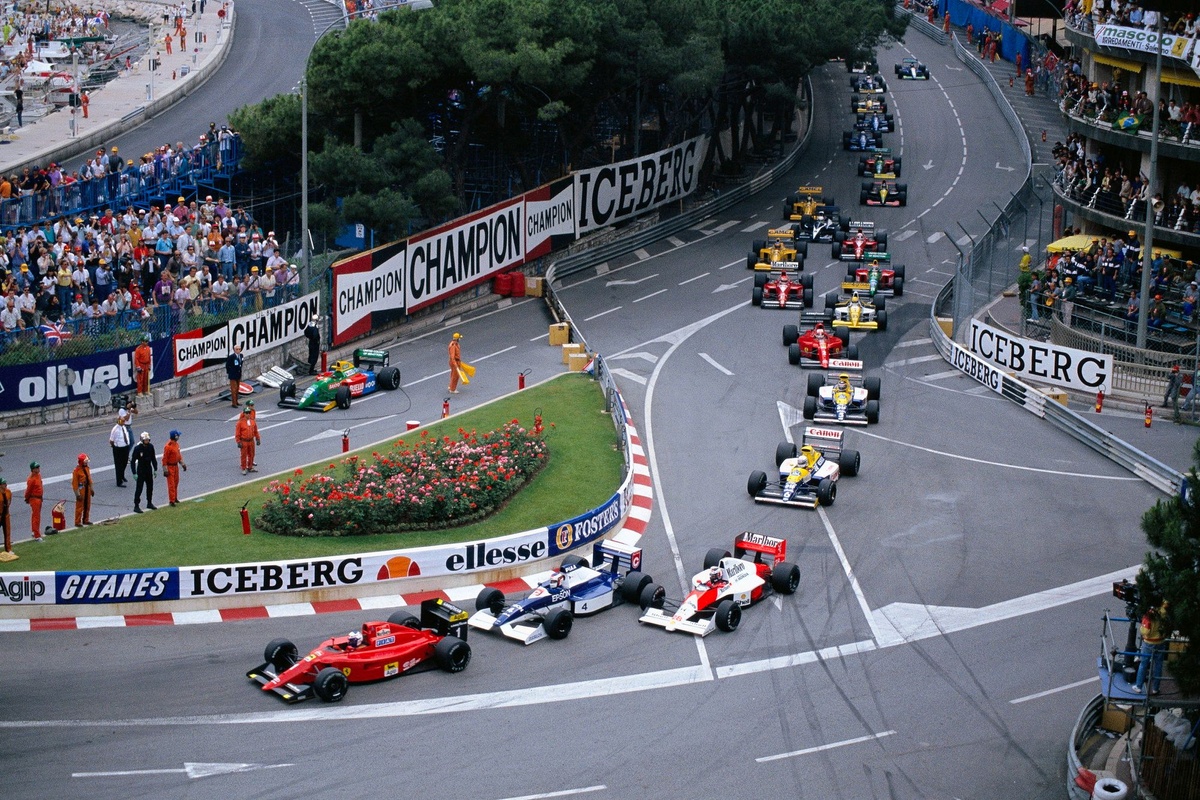
Ferrari, McLaren, Red Bull, Williams, Mercedes… The list of great Formula 1 teams contains some of motorsport’s biggest hitters – and that’s before we get on to those that are no longer active.
Just over 30 teams have won races in the F1 world championship. Some have long since gone, others have morphed into other squads, while several are still racking up successes.
Here are the 10 teams we feel are the greatest in the 75 years of the championship. The level of success achieved and longevity are key factors, but so is their overall impact on F1. Bringing innovations and dominant cars have to be considered.
This is a list of teams, as opposed to constructors. The two are one and the same now, but that hasn’t always been the case…
10. BRM
Hill takes victory in the BRM P57 at the 1962 Dutch GP
Photo by: Sutton Images
Wins: 17
Titles: 2 (1 drivers’, 1 constructors’)
This slot could have gone to Cooper. It won more titles (doubles in 1959-60) and scores big on significance because it led the rear-engined revolution. But its time at the pinnacle was brief – its first win came courtesy of Stirling Moss and the Rob Walker-run T43 at the 1958 Argentinian Grand Prix, the last at the 1967 season opener in South African with Pedro Rodriguez in the Cooper-Maserati T81.
While BRM’s early days with the ill-fated V16 were farcical at times, it did much to spur British efforts in F1 and BRM finally scored its first world championship success in the 1959 Dutch GP with the P25. BRM remained a frontrunner throughout the 1500cc era of 1961-65, beating Cooper in all but one of those years, and scored its final win at Monaco in 1972.
Following the title double for Graham Hill and the P57 in 1962, Tony Rudd’s P261 was the most consistent challenger to the pacesetting Lotus 25/33 of Jim Clark. It scored a Monaco hat-trick and was the car in which Jackie Stewart put in one of F1’s finest rookie seasons in 1965.
BRM went into the doldrums during the early stages of the three-litre era but had an Indian summer with the Tony Southgate-designed P153 and P160 models. BRM was second in the 1971 constructors’ championship despite the loss of Rodriguez and Jo Siffert during the campaign.
As a producer of engines, BRM also helped other teams on the grid, including Lotus, which gave the H16 its only victory in the back of Clark’s Lotus 43 at the 1966 US GP.
The team’s competitiveness dropped away thereafter and BRM faded into obscurity before disappearing in the mid-1970s but did help launch Niki Lauda’s career in 1973.
9. Tyrrell

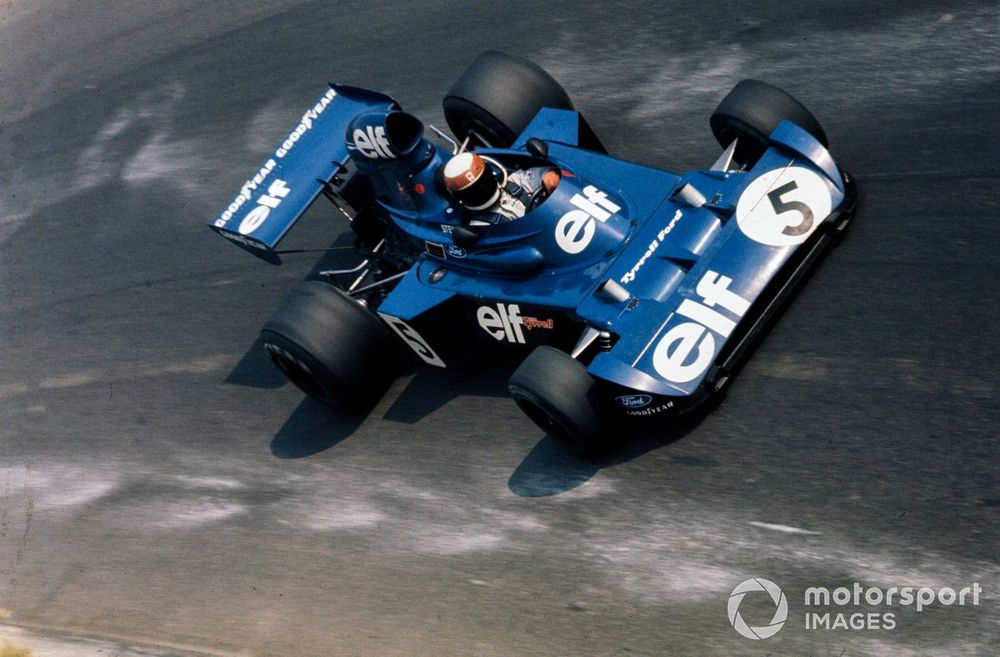
Stewart and Tyrrell were a formidable combination, while the team enjoyed fleeting success in later eras
Photo by: Motorsport Images
Wins: 33 (9 with Matra, 1 with March, 23 with Tyrrell chassis)
Titles: 5 (3 drivers’, 2 constructors’)
Tyrrell’s only world championships – a title double in 1969 with Matra chassis and the rest with its own cars – came during the Jackie Stewart era, but it was still a major player in F1.
Ken Tyrrell had been successful in F3 and F2 when he put a deal together with Matra, Elf, Ford and Stewart to enter F1. Run under the Matra International banner, Stewart’s MS10 was immediately a frontrunner, scoring three wins and finishing second in the drivers’ standings.
The 1969 MS80 is one of the great unsung F1 cars, Stewart dominating the season to take his first drivers’ crown, with Matra-Ford winning the constructors’ title.
Matra insisted on the team using the French company’s own V12 engines instead of Cosworth DFVs for 1970, so Tyrrell went its own way. Initially it used a customer March 701 chassis – which Stewart somehow managed to win the Spanish GP with – but Ken’s big plan was the car Derek Gardner was building in secret.
The Tyrrell 001 was rapid – if fragile – when it arrived at the end of 1970 and set the scene for Stewart’s dominant campaign in 1971. The Scot scored six wins and the title in 003, while team-mate Francois Cevert took the finale as Tyrrell took constructors’ honours in its own right this time.
The impact of a duodenal ulcer hampered Stewart’s 1972 challenge and he missed the Belgian GP, but he still finished second in the table – as did Tyrrell. Stewart secured his third drivers’ title the following year, though that was arguably more down to him than it was the 006, and the season was marred by the death of Cevert at Watkins Glen.
After Stewart’s retirement, Tyrrell gradually slipped back, though it remained capable of challenging for wins for the rest of the decade. There was also Gardner’s six-wheeled P34, which remains one of F1’s most distinctive cars and won the 1976 Swedish GP in the hands of Jody Scheckter.
The 1980s were more tricky for Tyrrell, which scored its last wins courtesy of Michele Alboreto in 1982-83. A lack of funding and modernisation, plus the controversies that led to its exclusion from the 1984 championship, pushed it back.
The highlights were winning the 1987 Colin Chapman and Jim Clark (with Jonathan Palmer) trophies as the top non-turbo runner and launching the careers of several up-and-comers, including Jean Alesi in 1989-90.
Tyrrell’s final F1 podium was Mark Blundell’s third at the 1994 Spanish GP and the team’s time came to an end in 1998 when it was bought by BAT.
8. Brabham
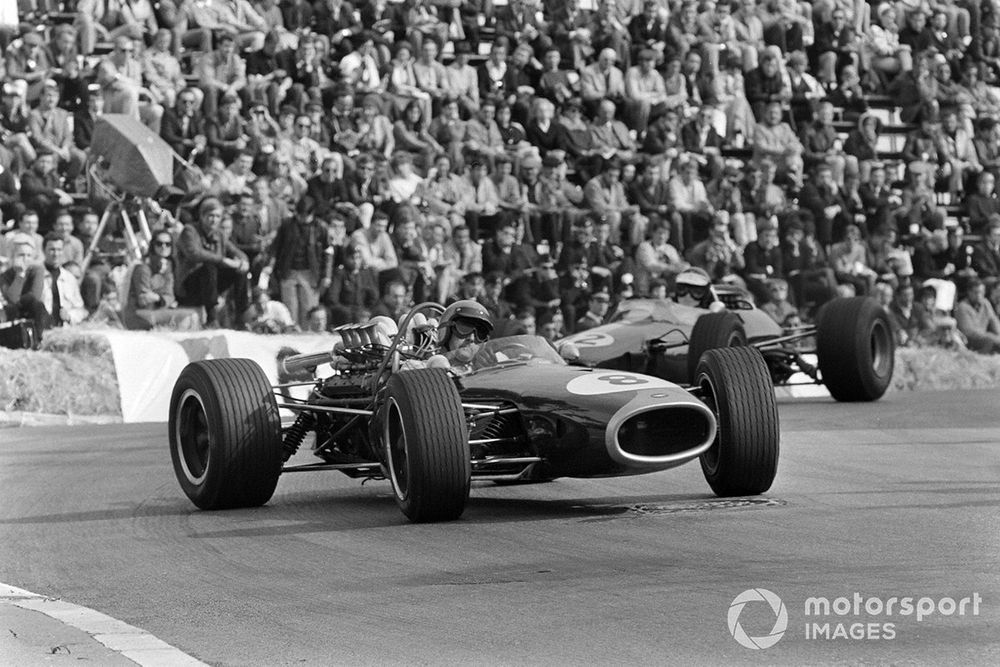
Brabham enjoyed two victorious eras across its F1 existence
Photo by: Motorsport Images
Wins: 35
Titles: 6 (4 drivers’, 2 constructors’)
Brabham was a major F1 player in two distinct forms – its original guise founded by Jack Brabham and designer Ron Tauranac, and the Bernie Ecclestone era, primarily with Gordon Murray as the design genius.
The Brabham team entered F1 in 1962, initially with a Lotus 24 before Tauranac’s BT3 was ready. Jack Brabham, at that time a double world champion, quickly made the BT3 a points scorer and added a second car for Dan Gurney, who took the team’s first win at the 1964 French GP.
The move to three-litre regulations provided an opportunity as Brabham’s pragmatism to use a reliable Repco engine proved a better bet than other projects that were either too ambitious or late. With Gurney off to do his own thing, Jack stepped up to take his third title and the first (and only one) for someone driving a car bearing their own name.
Lotus-Cosworth DFV fragility allowed Denny Hulme to take the 1967 drivers’ crown, with Brabham again taking a title double, but thereafter Brabham tended to play second fiddle, despite a fine final season from Jack in 1970.
Ecclestone took over in the early 1970s and Brabham was an occasional winner – and innovator, witness the 1978 BT46B ‘fan car’ – but couldn’t quite net a crown. That was until Nelson Piquet got into his stride with Murray’s BT49. Piquet took the 1981 title and, after hard work developing BMW’s turbo, added a second in 1983, though Brabham was beaten in the constructors’ table both times.
Thereafter the team went into decline, Piquet scoring what would be the Brabham’s final victory in the 1985 French GP. As Ecclestone’s focus shifted elsewhere, the team first lost Piquet and then Murray, with Ecclestone finally selling up in 1988.
The 1989 BT58 wasn’t a bad car, but reliability was poor and financial pressures pushed Brabham down the grid. After a series of failures to qualify, Brabham’s last race was the 1992 Hungarian GP, in which Damon Hill finished 11th, four laps down. It was a sad end to a twice-great team.
7. Benetton/Renault (‘Team Enstone’)
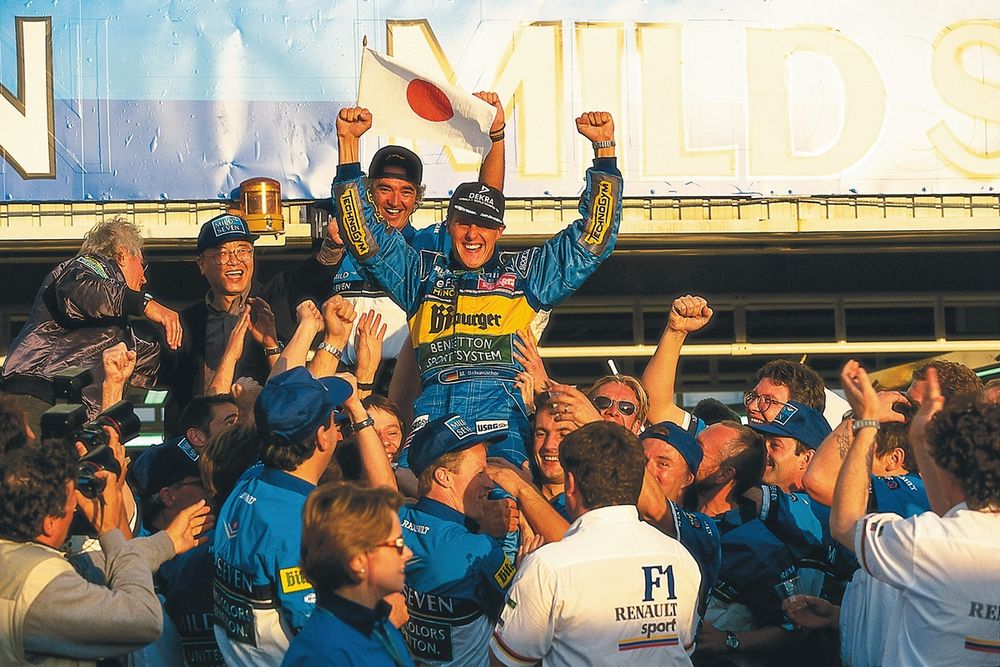
The team with many faces had two stints of F1 domination
Photo by: LAT Images
Wins: 50 (20 as Renault, 27 as Benetton, 2 as Lotus, 1 as Alpine)
Titles: 7 (4 drivers’, 3 constructors’)
Establishing the identity of this team is fraught. Renault and Benetton predecessor Toleman raced against each other in the 1980s. Given the success of ‘Team Enstone’, we’re looking at the Toleman-Benetton-Renault-Lotus-Renault-Alpine lineage and excluding the Renault turbo years as a separate entity: it is worthy of mention for starting F1’s first turbo era and scored 15 wins but never managed a title.
While Toleman, which arrived in F1 in 1981, sometimes punched above its weight and gave Ayrton Senna his F1 debut, the team’s first victory came after the Benetton buyout, Gerhard Berger winning the 1986 Mexican GP.
Benetton remained on the periphery of the frontrunners, taking the odd win here and there, over the next few years. It finally became a title contender during the controversial and tragic 1994 season, Michael Schumacher taking the drivers’ title after a clash with rival Damon Hill, though Benetton lost out to Williams in the constructors’ table.
It was a different story in 1995, Schumacher and Benetton easily taking the crowns despite the raw pace of Williams, and Johnny Herbert’s brace of wins took the B195’s victory tally to 11 from 17.
Schumacher left for Ferrari for 1996 and was soon followed by Ross Brawn and designer Rory Byrne, leaving Benetton to snipe for the odd win once again.
Renault bought the team and then rebranded it as Renault for 2002. With Flavio Briatore remaining, the team rose around Fernando Alonso. The Spaniard led the team to two title doubles, against a strong McLaren challenge in 2005 and Schumacher-era Ferrari the following year.
The team lost Alonso in 2007, went winless, then got the disgruntled ex-McLaren employee back in 2008. He took two wins, a brilliant one in Japan and a controversial success in Singapore after Briatore and Pat Symonds were implicated in a plan that included Nelson Piquet Jr deliberately crashing to aid team-mate Alonso’s strategy.
Genii Capital bought the team in 2010 and the squad briefly became known as Lotus in 2012-13. It was often a frontrunner, with Kimi Raikkonen scoring two wins. He was also third in the 2012 standings.
The team then entered a dip and was bought once again by Renault, which helped a rise from the back of the grid from 2016. A fairly regular points threat, the team – rebranded as Alpine in 2021 – has struggled to make the final step to the front of the field, though did score a victory with Esteban Ocon in the dramatic 2021 Hungarian GP.
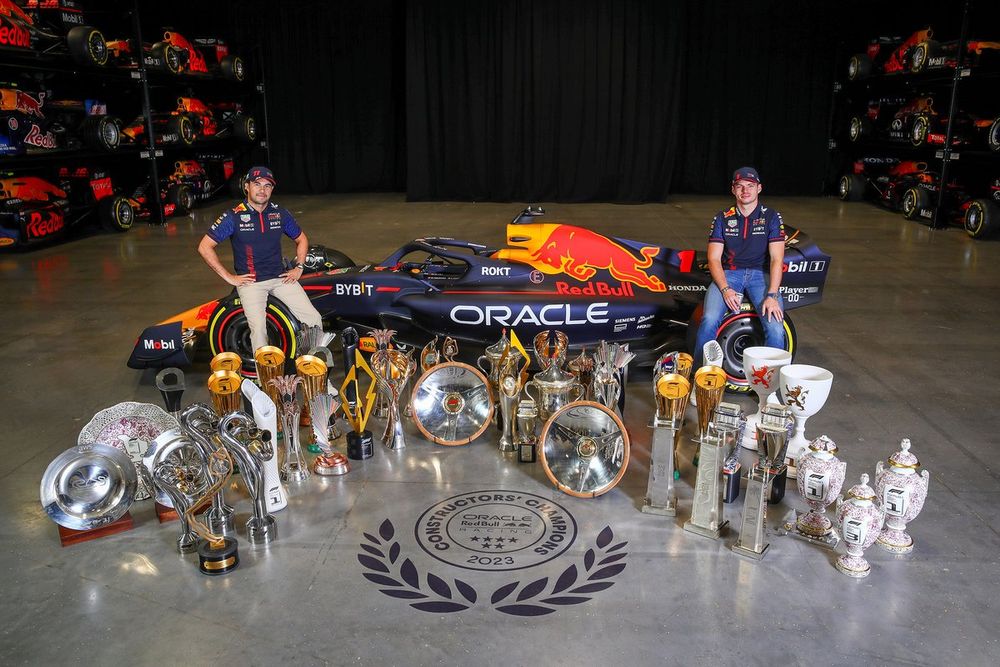
Red Bull produced one of the most dominant season of all time in 2023
Photo by: Red Bull Content Pool
Wins: 130
Titles: 14 (8 drivers’, 6 constructors’)
Red Bull has achieved a lot in a short space of time. It’s comfortably the newest name on this list and it’s easy to forget that it only arrived, born out of the failing Jaguar team, in 2005.
Red Bull boss Dietrich Mateschitz made sure the team was well-funded, had the right people and had a supporting young-driver programme. Adrian Newey was one of the key signings, joining in 2006, and Sebastian Vettel delivered the team’s first victory at the 2009 Chinese GP in the RB5.
That car set the template for the successful machines that followed, Vettel and Red Bull taking four consecutive title doubles between 2010 and 2013.
The turbo-hybrid era halted Red Bull’s march and it had to play second (and sometimes third) fiddle to Mercedes (and Ferrari), taking the odd win. But it did secure the services of rising star Max Verstappen and an apparently minor rules tweak helped give Red Bull an edge over Mercedes in 2021.
An epic, ill-tempered and controversial contest ensued. Verstappen beat Lewis Hamilton to the drivers’ crown in a farcical Abu Dhabi finale, though Mercedes pipped Red Bull to constructors’ honours.
Red Bull did the best job of the new ground-effect rules, taking title doubles in 2022 and 2023, the latter with one of the most dominant seasons of all time, its RB19 scoring 21 wins from 22 races.
The death of Mateschitz in late 2022 led to some internal turmoil and design genius Newey left during 2024. That coincided with McLaren’s rise, but Verstappen still took Red Bull’s eighth drivers’ crown and was the only consistent challenger to the papaya cars in 2025.
Strategically, Red Bull has been consistently strong for years, perhaps only matched by the Brawn/Schumacher eras at Benetton and Ferrari.
Red Bull has also pushed the limits, an intrinsic part of F1. It has perhaps overstepped the mark on occasion and has often struggled to keep its lead drivers in check, but there can be no doubt it has showcased an extraordinary level of excellence and performance in 21st century F1, when the level of competition has been extreme.
5. Mercedes
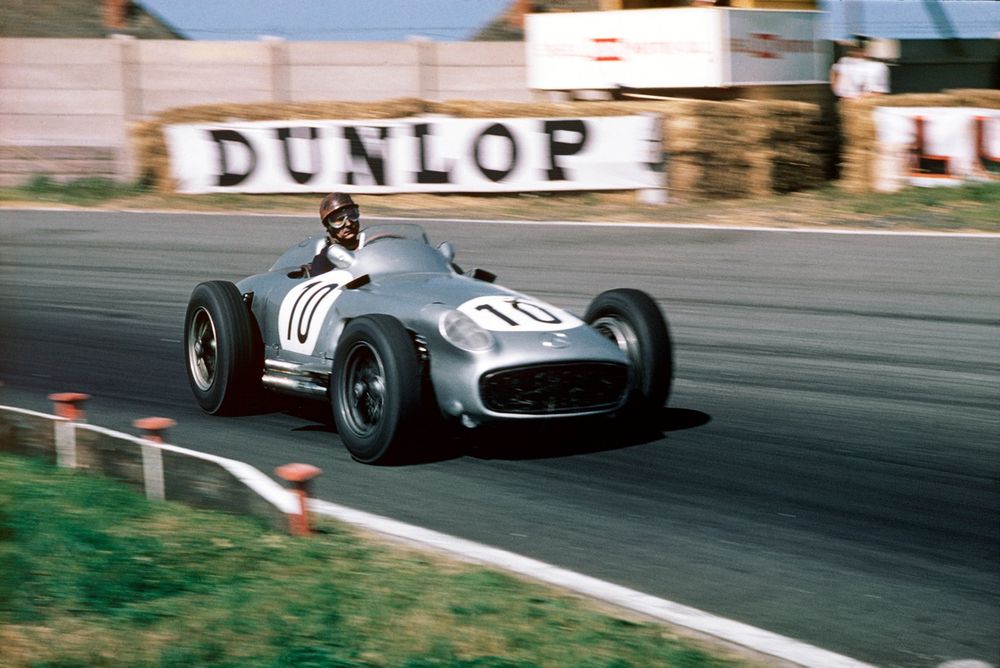
When Mercedes has competed in F1 as a team entry, it has dominated more than any other squad
Photo by: LAT Images via Getty Images
Wins: 131
Titles: 17 (9 drivers’, 8 constructors’)
Until F1’s second ground-effect era, Mercedes had an extraordinary strike rate. Its two seasons in 1954-55 yielded two drivers’ crowns (the constructors’ championship hadn’t yet begun) and, having returned in 2010, it was the dominant force between 2014 and 2021. That means it had 17 titles from a possible 26. Even now, it has the best wins strike rate on this list, 38%.
Mercedes returned to GP racing, having been a dominant force before the Second World War, at the 1954 French GP. The streamlined W196s made the opposition look old-fashioned and Mercedes’ level of preparation was a cut above: Juan Manuel Fangio led a 1-2, a lap clear of the field…
That set the tone for the next year and a half, the W196 (in streamlined and open-wheel form) winning nine of the 12 world championship races it entered.
Mercedes withdrew from F1 at the end of 1955, following the Le Mans disaster, and stayed away for more than 50 years, at least as a constructor. As an engine supplier, Mercedes won four drivers’ titles (three with McLaren, one with Brawn) and two constructors’ crowns (one each for McLaren and Brawn).
It returned in 2010, taking over the title-winning Brawn operation. After a shaky start, it became a contender for victories, finishing second in the constructors’ table in 2013 before embarking on its run of eight crowns, led by Hamilton.
Mercedes found things tougher in F1’s second ground-effect era, but has remained a frontrunner, winning seven races and twice finishing second in the constructors’ table. Can it return to dominant ways in F1’s new ruleset from 2026? If so, it could climb higher on this ranking.
4. Williams
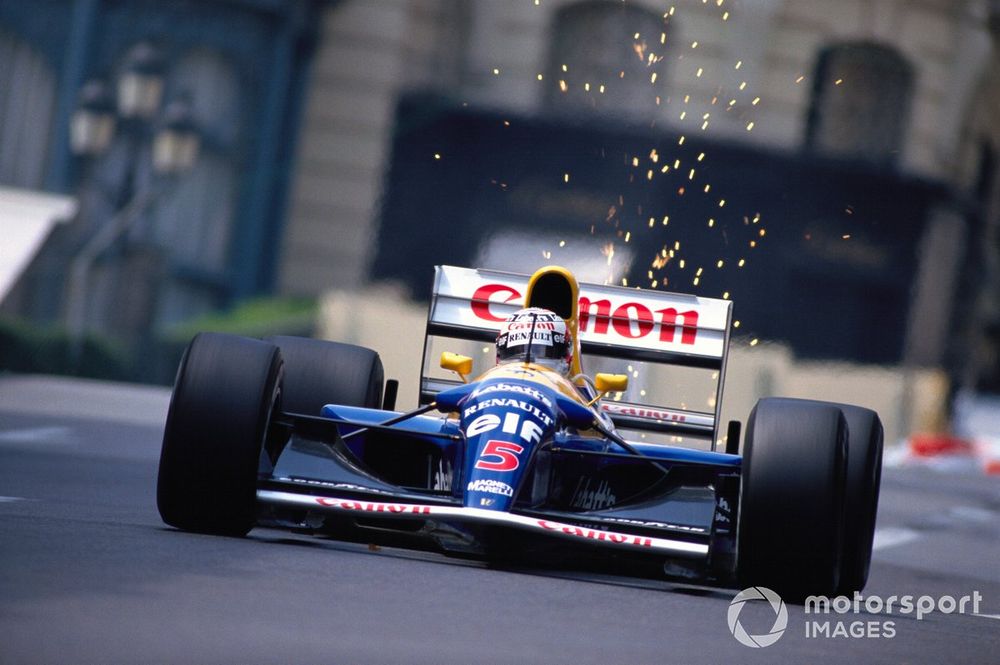
Williams’ golden era of the late 1980s and early 1990s is a period it hopes to replicate in the future
Photo by: Rainer W. Schlegelmilch / Motorsport Images
Wins: 114
Titles: 16 (7 drivers’, 9 constructors’)
The team founded by Patrick Head and Frank Williams remains a fan favourite despite more than a decade passing since its last victory and nearly 30 years since its last championship success.
Having started by running a March chassis, Williams Grand Prix Engineering came of age with Head’s FW07. It was often the fastest car in the second half of 1979 and Alan Jones took it to a title double the following year.
Williams won the constructors’ crown, always more of a priority, in 1981, though Jones and Carlos Reutemann lost out to Piquet in the drivers’ contest. It was the reverse in 1982, Keke Rosberg taking the drivers’ title with one victory as Ferrari secured the constructors’ championship.
Teaming up with Honda in 1984 reaped its rewards once initial glitches were ironed out. The FW11/11B was the best package across 1986-87, scooping three titles.
Only the rivalry between Williams team-mates Piquet and Nigel Mansell, a little bad luck and great campaign from McLaren’s Alain Prost in 1986 denying Williams a double-double. That season also featured the emotional return of Frank Williams after the road accident that left him a tetraplegic.
Honda’s move to McLaren put Williams back, but it soon built a relationship with Renault. It also signed Newey and pressed forward with innovative technology, including traction control and active suspension.
The result was domination for much of the 1990s, which yielded drivers’ titles in 1992-93 and 1996-97 for four different drivers, plus five constructors’ crowns. Williams also produced one of the most iconic F1 cars in the FW14B, and the most sophisticated prior to the banning of gizmos (the FW15C), as well as having to recover from the loss of Senna – and subsequent trial.
Williams lost Newey and Renault in short order and 1997 remains its last title. Often behind in the aero stakes, it was a championship challenger with BMW power in 2003, but relations with the German manufacturer eventually soured.
Financial difficulties didn’t help and, despite a brief revival with Mercedes engines at the start of the turbo-hybrid era in 2014-15, Williams has generally struggled to break out of the midfield in recent seasons.
Now owned by Dorilton Capital and under the stewardship of former Mercedes man James Vowles, Williams has started to modernise and is now arguably in a better position than it has been for nearly a decade.
3. McLaren
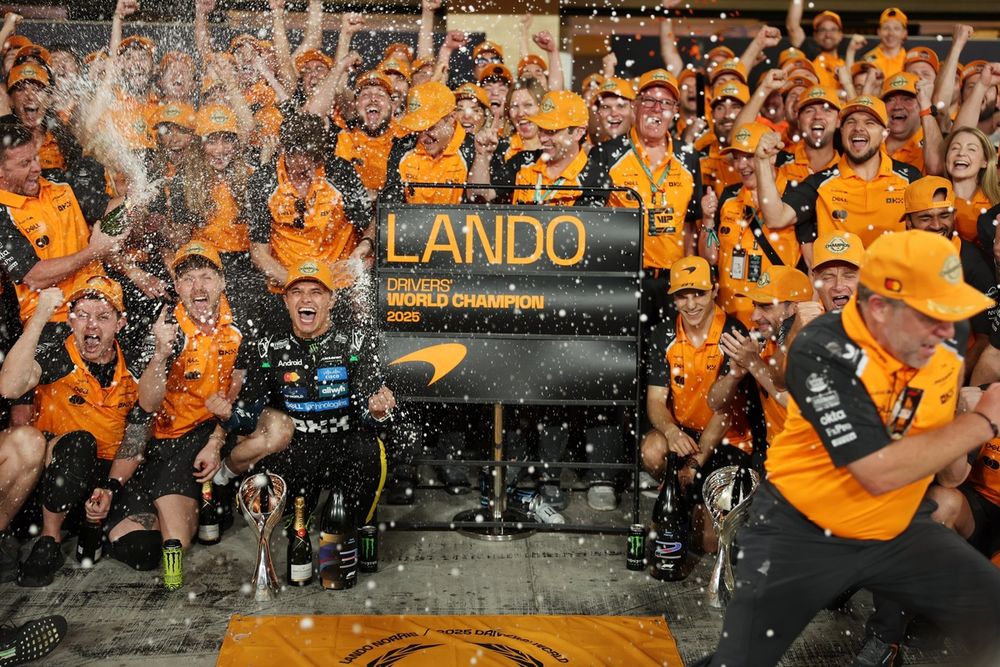
McLaren returned to the top in F1 in 2025 with a world title double
Photo by: Andy Hone/ LAT Images via Getty Images
Wins: 203
Titles: 23 (13 drivers’, 10 constructors’)
More wins and titles than all but Ferrari, which had a headstart of a decade and a half, and several distinct periods of success make McLaren one of the greatest teams in F1 history.
Cooper driver Bruce McLaren founded his eponymous outfit in 1963. He gave the team its F1 world championship debut in the 1966 Monaco GP and its first victory, at the 1968 Belgian GP.
McLaren was a sporadic frontrunner thereafter but really hit the front with Gordon Coppuck’s M23, which gave McLaren its first titles in 1974, with Emerson Fittipaldi leading the charge. James Hunt then took the drivers’ crown in 1976, making it three championship successes for the M23.
Thereafter McLaren under Teddy Mayer went into decline until Ron Dennis and his Project Four operation joined the party ahead of 1981. Dennis brought designer John Barnard with him, who introduced several innovations, including the carbon fibre tub and the ‘coke bottle’ rear end.
McLaren set new standards in the 1980s, the combination of Barnard’s design, Porsche power and Marlboro backing allowing Lauda – brought out of retirement by Dennis in 1982 – and new signing Prost to dominate in 1984 with the MP4/2.
Prost and McLaren took a title double in 1985, then managed another drivers’ crown the following year against the might of Williams-Honda. Williams could not be stopped in 1987, but McLaren secured Honda engines and Senna for 1988.
Though the Prost-Senna relationship deteriorated over the next two seasons, with the Frenchman eventually leaving for Ferrari, McLaren was the team to beat, winning four consecutive title doubles from 1988-91.
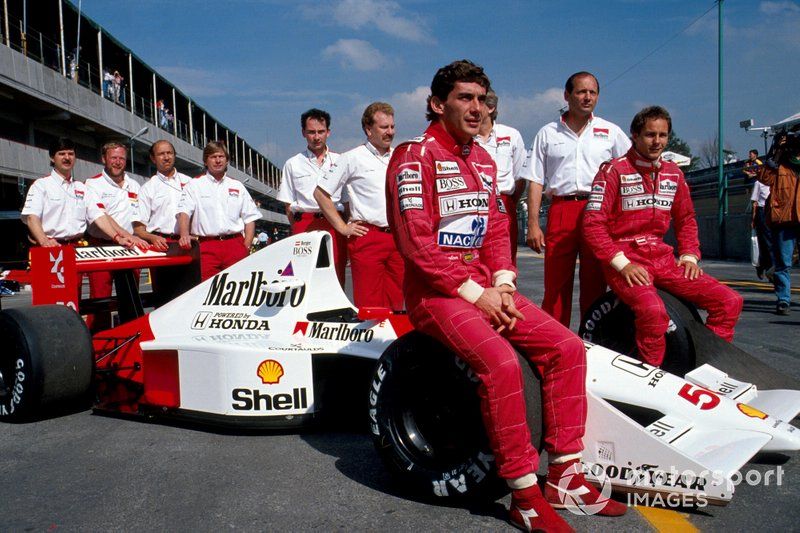
Senna, Honda power and McLaren engineering made for the powerful combination
Photo by: Sutton Images
The rise of technological pioneer Williams-Renault put McLaren on the defensive in the early 1990s. It lost Honda at the end of 1992, then Senna to Williams after the following season. McLaren entered a rut but started to rebuild with Mercedes power from 1995.
David Coulthard took McLaren’s first wins for more than three years in 1997. Newey’s arrival and new rules for 1998 heralded a new McLaren era, with Mika Hakkinen securing a drivers’ title double in 1998-99.
McLaren remained one of the biggest rivals to the Schumacher/Brawn/Jean Todt Ferrari steamroller in the early 2000s. Even after losing Newey, McLaren was perhaps unfortunate to lose both titles in 2007, when it partnered rookie Hamilton with double champion Alonso in what proved to be an explosive combination, but did take the 2008 drivers’ crown with Hamilton.
There were wins and championship challenges over the next few years but McLaren couldn’t quite match Red Bull, not helped by some reliability issues that contributed to Hamilton leaving for Mercedes in 2013.
McLaren went into the doldrums and a revived partnership with Honda was disastrous. Even after a switch to Renault power and with Alonso’s services, McLaren struggled and there were significant management changes.
Zak Brown led the post-Dennis era and McLaren managed to score its first win in nearly nine years at the 2021 Italian GP. The team didn’t get off to the best start in F1’s second ground-effect era, but huge progress in 2024 allowed it to snatch the constructors’ crown, setting up a championship double in 2025 as McLaren long-termer Lando Norris ended Verstappen’s run of drivers’ crowns.
2. Lotus
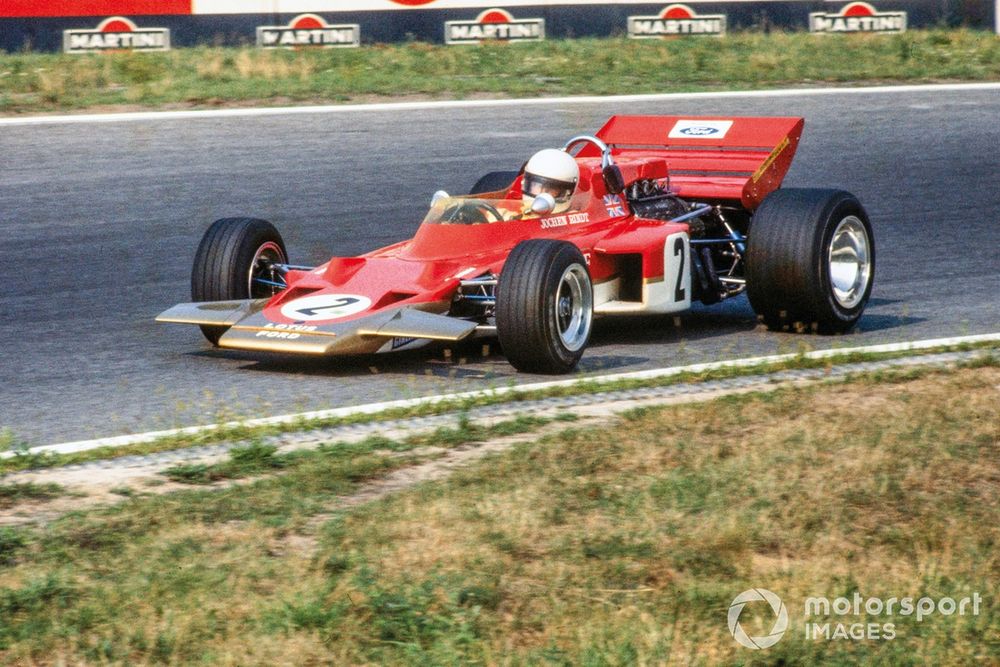
Rindt in the iconic Lotus 72
Photo by: David Phipps
Wins: 74 (plus five wins for Lotuses run by Rob Walker)
Titles: 13 (6 drivers’, 7 constructors’)
No team or manufacturer has shaped what an F1 car looks like more than Colin Chapman’s Lotus. The monocoque chassis, using the engine as a stressed member, the wedge shape/side radiators and ground effect were all innovations that Lotus either pioneered or made stick. And that’s before we throw in Chapman’s role in F1’s greatest engine, the Cosworth DFV, and part in bringing more sponsorship to grand prix racing.
For much of the 1960s and early 1970s, Lotus set the pace and even briefly overtook Ferrari as the most successful F1 constructor in terms of wins despite starting nearly a decade later.
Though Lotus first became a winner as a constructor thanks to Stirling Moss and Rob Walker’s private entries, Team Lotus really got into its stride with Jim Clark and the Lotus 25 in 1962.
The trend-setting monocoque chassis and Clark’s ability made Lotus the team to beat across 1962-65, with only reliability problems – Lotuses were often regarded as fragile – denying the Scot four consecutive titles. As it was, Clark and Lotus still took championship doubles in 1963 and 1965.
Clark and the DFV-powered Lotus 49 should have won the title in 1967, only to be denied by unreliability. Graham Hill put that right the following year, picking up Lotus following the death of Clark in an F2 crash.
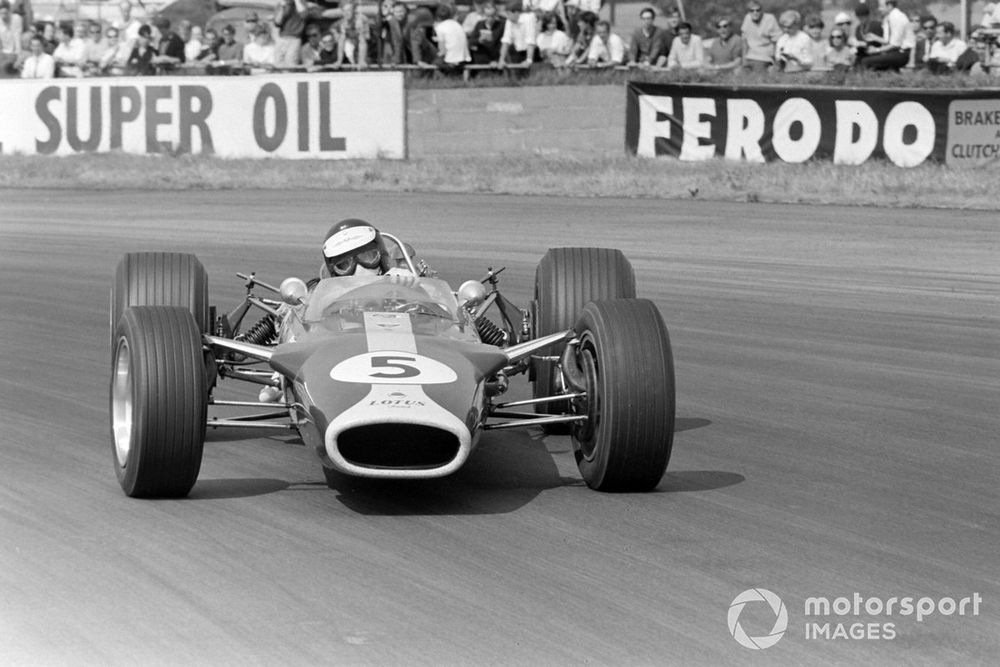
Fragility was arguably the biggest weakness for Lotus
Photo by: Sutton Images
After initial problems, the 72 changed the game again. Lotus won both titles in 1970, despite losing lead driver Jochen Rindt at Monza. Another double followed in 1972, courtesy of Fittipaldi, while the 72 took its fifth championship by topping the constructors’ table in 1973.
Struggles thereafter led Chapman to set up a working group that culminated in the arrival of ground effect in F1. Mario Andretti and the Lotus 78 should have won the title in 1977, while the American did get the job done the following year with the 79 despite the sad loss of team favourite Ronnie Peterson.
Lotus was never to win another title, with Chapman getting frustrated with F1’s increasingly restrictive rules before his death in 1982. Senna’s arrival in 1985, plus the design efforts of Gerard Ducarouge, helped keep Lotus at the front, scoring six wins over three seasons, but after 1987 the team went downhill.
The 107 showed promise in the hands of Hakkinen and Herbert but couldn’t prevent the team’s financial decline that led to its closure at the end of 1994.
We’ve excluded the Lotus wins scored in 2012-13 by ‘Team Enstone’, which we regard as an entirely separate entity (see above).
1. Ferrari
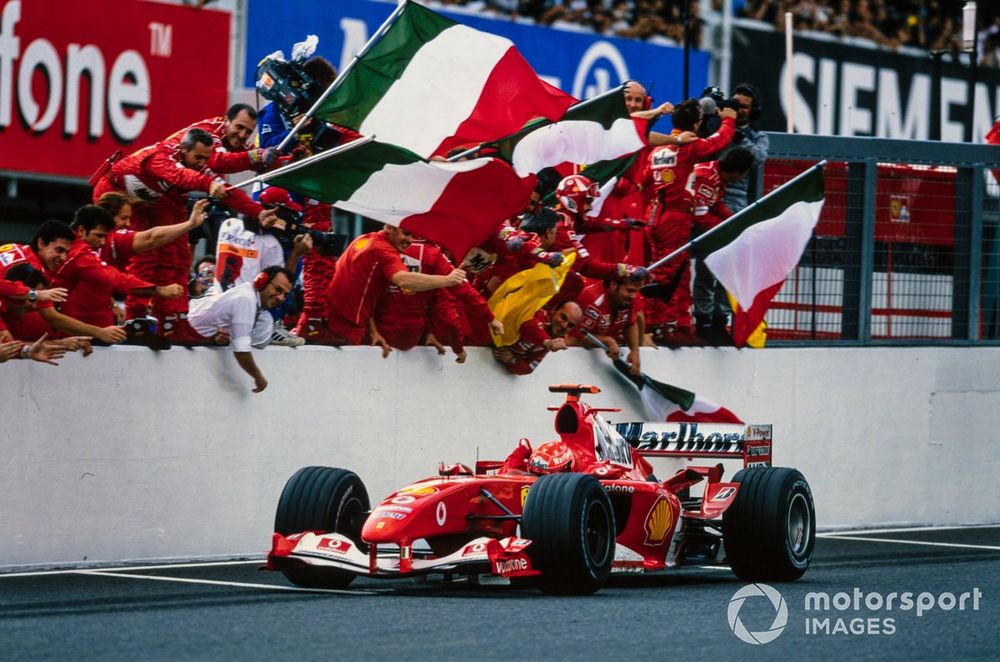
The team with the most wins and most titles and the only one to have competed in every single season of F1
Photo by: Motorsport Images
Wins: 248
Titles: 31 (15 drivers’, 16 constructors’)
It has to be Ferrari, doesn’t it? We thought long and hard about Lotus and McLaren, given both have strong strike rates and have contributed more when it comes to F1 innovation. There’s also an argument to be made that Ferrari has underachieved for long periods, particularly given the resources at its disposal.
But the fact is that Ferrari has more wins and titles than any other team, has been in the world championship almost from the start, and is one of the few continuous threads that binds 75 years of motorsport history together.
Ferrari missed the very first world championship race but a year later ended Alfa Romeo’s domination at Silverstone. Alberto Ascari then dominated to take Ferrari’s first two drivers’ titles, during the championship’s F2 era.
Ferrari was saved from its subsequent rut when it inherited Lancia’s D50s, Fangio winning the title in 1956. Ferrari missed out on the first constructors’ championship to Vanwall in 1958, though Mike Hawthorn scooped its fourth drivers’ crown with the Dino 246.
Though late to the rear-engined revolution, Ferrari nailed the switch to 1.5-litre engines in 1961, winning the constructors’ title for the first time as Phil Hill took the drivers’ laurels, albeit in tragic circumstances at Monza following the death of team-mate Wolfgang von Trips and 15 spectators.
The British teams getting their acts together and a walkout at Ferrari contributed to a sharp decline, but John Surtees soon led a revival and the team took another double in 1964 with Mauro Forghieri’s 158.
Ferrari was then overshadowed for several seasons, often by Lotus innovation, despite getting close to both championships in 1970. After a disastrous 1973, a revamp and the arrival of Lauda heralded a new period of success. With Forghieri’s 312T and 312T2, the Austrian won the 1975 and 1977 crowns, and Ferrari won a constructors’ hat-trick despite Lauda’s horrendous Nurburgring crash in 1976.
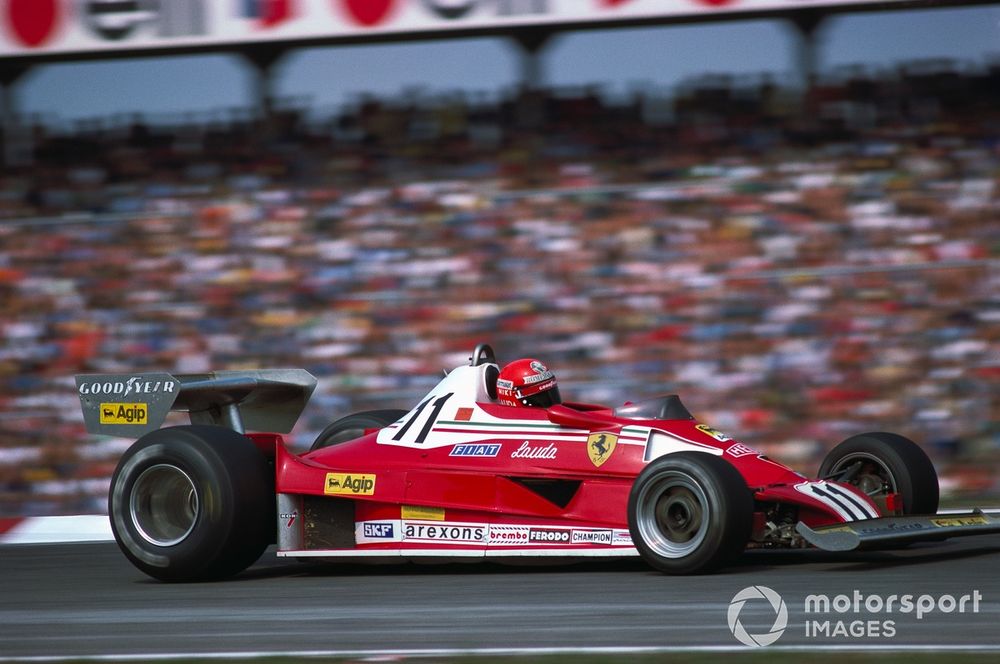
Lauda helped revitalise Ferrari in the 1970s
Photo by: Motorsport Images
A 1-2 for Jody Scheckter and Gilles Villeneuve in 1979 was followed by a dismal couple of years as the team struggled with the ground-effect revolution, though Ferrari favourite Villeneuve conjured two 1981 wins with the powerful, turbocharged 126CK.
A tragic 1982, in which Villeneuve was killed and championship leader Didier Pironi severely injured, still resulted in another constructors’ crown, which Ferrari retained the following year.
It struggled to keep pace with McLaren and Williams – and sometimes Lotus – for much of the 1980s. Barnard’s 640 brought the semi-automatic gearbox to F1 in 1989 and Prost put together an ultimately unsuccessful title challenge in 1990, but the team had to wait until the arrivals of Jean Todt, Schumacher, Brawn and Byrne before becoming a consistent championship contender.
After three near-misses – and a constructors’ success in 1999 – Ferrari finally took its first drivers’ title in more than two decades in 2000 as Schumacher beat Hakkinen. It was the start of an unprecedented level of success, Schumacher taking five consecutive drivers’ titles, with the 2002 and 2004 seasons being among the most dominant in history.
Ferrari remained a threat – taking a title double in 2007 and the constructors’ trophy again in 2008 – until new aero rules arrived in 2009. It has failed to win a championship since, despite the best efforts of Alonso, Vettel and Charles Leclerc, though has usually been a race winner during that time.
At various points and often due to political machinations, Ferrari has missed races or threatened to leave F1, but such spats have rarely lasted for long. Does F1 need Ferrari as much as Ferrari needs F1? Hard to say, but there’s no doubt that each has hugely enriched the other.
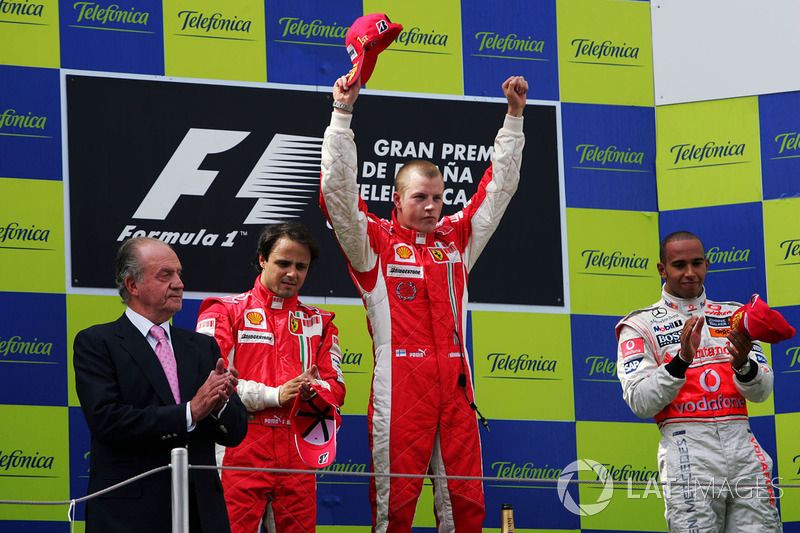
It is almost 20 years since Ferrari’s last F1 world title of any kind
Photo by: Sutton Images
We want to hear from you!
Let us know what you would like to see from us in the future.
Take our survey
– The Autosport.com Team
Read the full article here


