

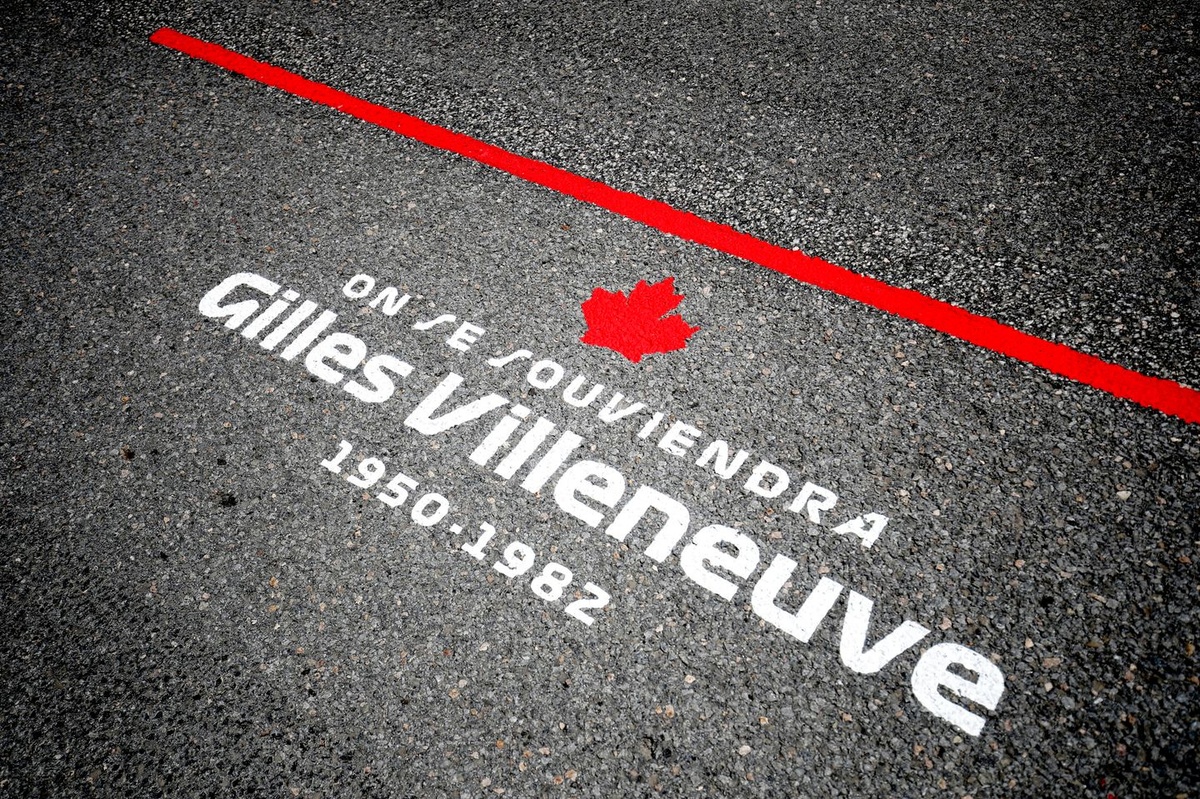
When stars die young, they inevitably become trapped in the popular consciousness in a state of eternal youth, embodying romanticised notions of heroic nobility and sacrifice.
For motor racing fans, Gilles Villeneuve’s spectacular and aggressive style came to represent the epitome of what a racing driver should be. His death at the age of 32, during qualifying for the 1982 Belgian Grand Prix at Zolder, crystallised the myth of the tragically fallen hero. The background to the accident of rancour behind the scenes with team-mate Didier Pironi remains a controversial topic to this day.
The truth of the man behind the legend is rather more nuanced, of course, which accounts for why his son Jacques was so resistant to comparisons when he arrived in Formula 1 in 1996.
A new biopic telling the untold story of his father, Villeneuve: Rise of a Legend, will receive its world premiere at the Toronto International Film Festival on 19 September, ahead of a theatrical release in Quebec in November. Global release is scheduled for next year, 50 years after Gilles made his F1 debut in a McLaren at the 1977 British Grand Prix.
It will focus on the years before Gilles became a Ferrari icon, an eventful journey full of personal and professional setbacks. Jacques’ sister Melanie is the executive producer.
Gilles Villeneuve with his wife, Joanna, and children Melanie and Jacques, at the 1978 Italian Grand Prix
Photo by: Getty Images
“Talking about my dad was never an issue,” Jacques told Autosport. “The issue was those people [journalists] were not interested in my answer. Or my way of thinking.
“They could not care less. All they were wanting to hear is, ‘I’m carrying on the flame because of what my dad did not finish, and that’s why I’m doing it’. No, I’m racing because I love racing. Simple.
“I loved my dad. I’m proud of him – he was amazing, what he achieved. But I’m doing my own thing. I’m not racing because I want to be the continuation of Gilles Villeneuve. That’s okay.
“And they were getting angry. So that’s when I said, ‘OK, I’m not even wanting to talk about him anymore because it’s pointless. There’s not a constructive discussion. You don’t actually care.’”
This week F1 visits Madrid for the first time since 1981, when the last Spanish Grand Prix to be held at Jarama was the scene of Gilles Villeneuve’s final victory, a masterclass of defensive driving in an ill-handling Ferrari.
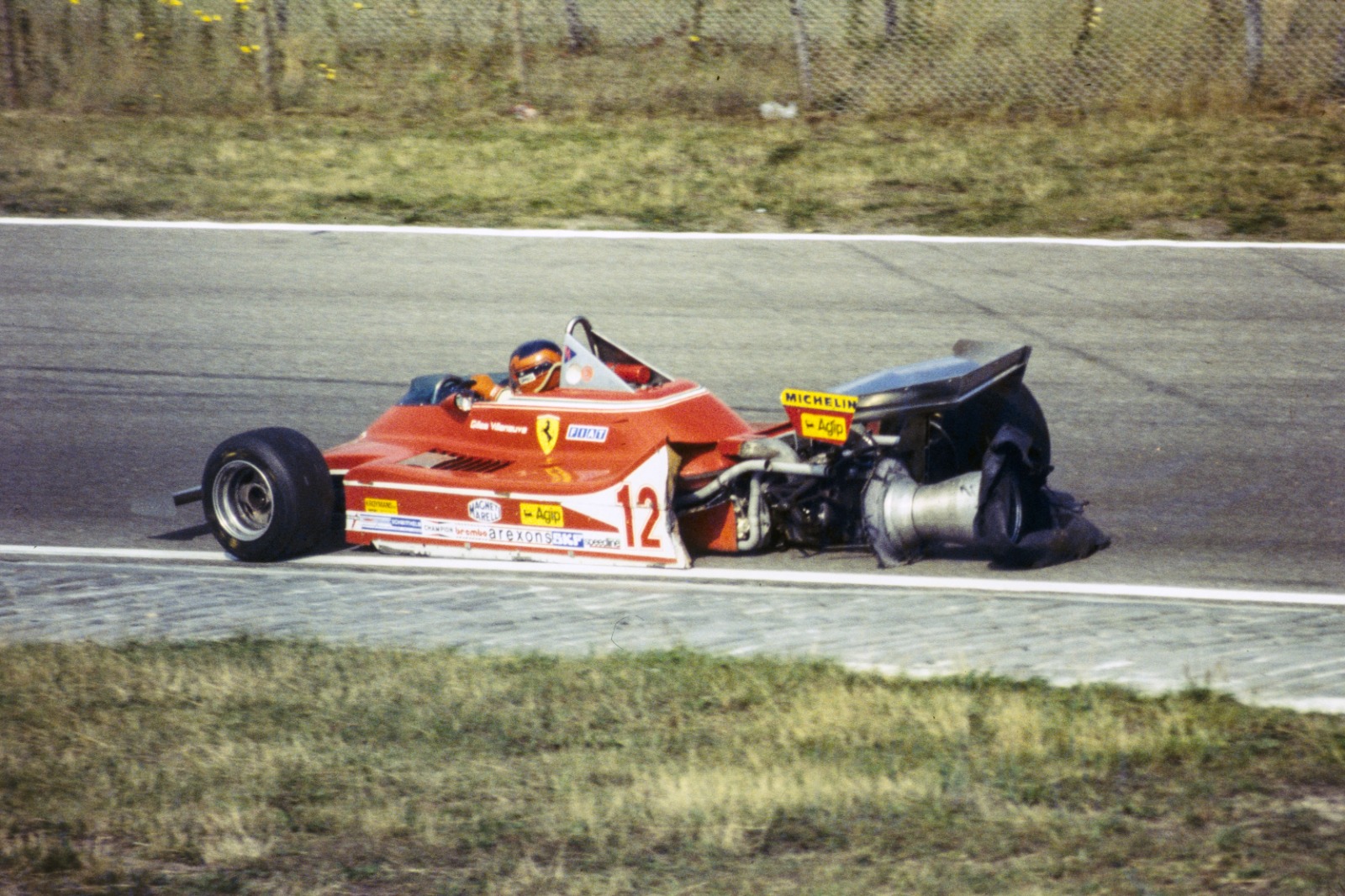
One of Gilles Villeneuve’s abiding characteristics was his refusal to give up – as at Zandvoort in 1979, when he tried to drive back to the pits on three wheels
Photo by: Getty Images
Jacques had just turned 11 when his father died and spent many of his formative years at a boarding school. His parents’ marriage was under strain as Gilles focused obsessively on his racing career.
“When he passed, I hadn’t seen him for a year or two, really,” said Jacques. “He wasn’t really living with us. It was really an odd situation.
“So I never know if it’s a real memory, or a memory I was told growing up, mainly by my mother at the time. So that’s very confusing.
“So right now, it’s nice to be able to put some dots on the thing. And I think that the movie is quite accurate on those formative years.”
Villeneuve is one of just three world champions who were sons of glorious F1 drivers. All of them actually had different reasons for going into motor racing and conflicted relationships with their fathers’ legacies.
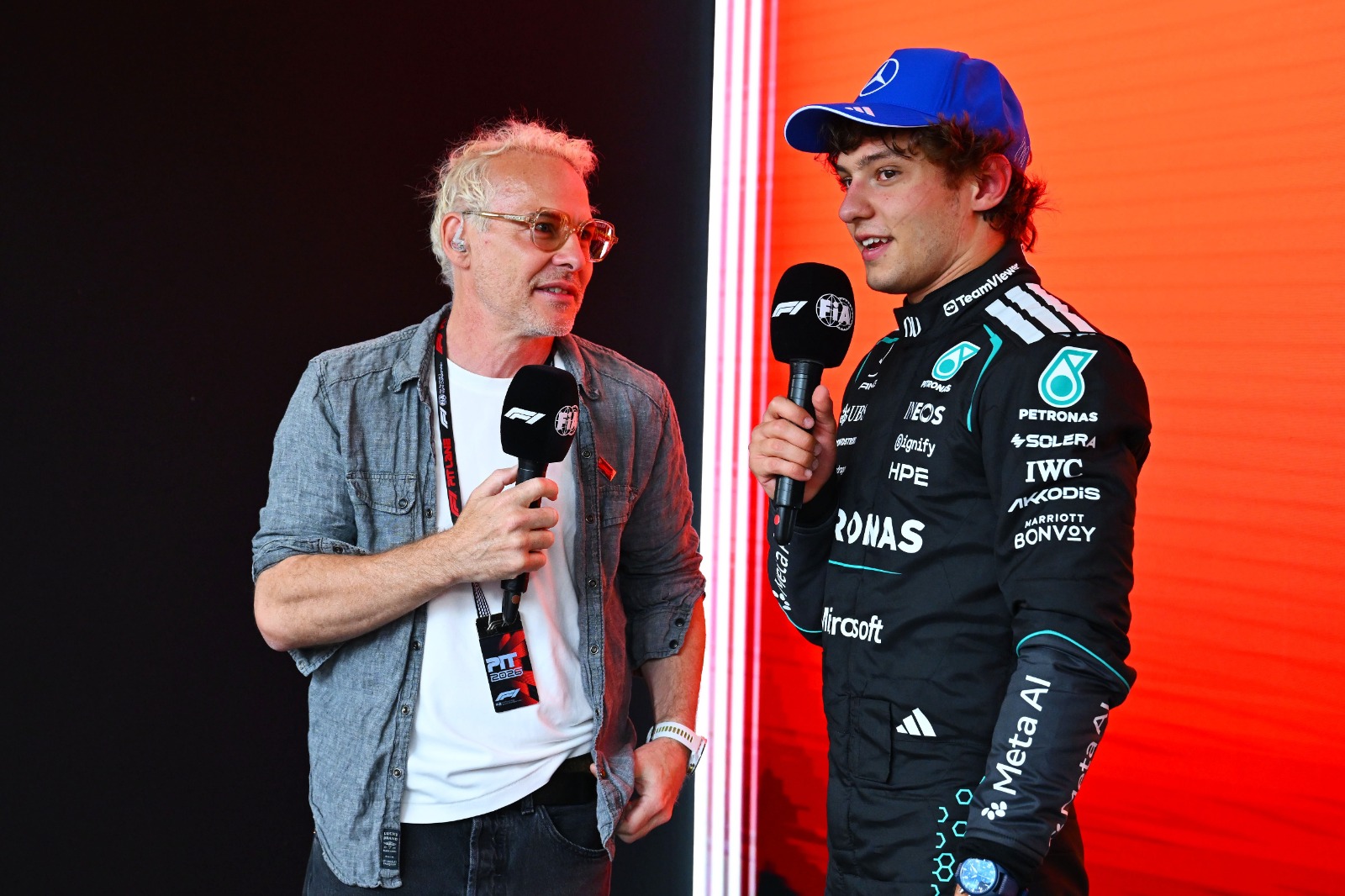
Jacques now works as a pundit
Photo by: Getty Images
Jacques’ former team-mate Damon Hill, for instance, spent time working as a motorcycle courier because litigation after his father Graham’s death in a plane crash brought financial ruin on the family. Nico Rosberg’s father Keke, the 1982 world champion, had arm’s-length input in Nico’s karting career and maintained a low profile thereafter. Nico could have gone into engineering, but declined an offer from Imperial College London to focus on racing.
People whose parents were successful racers often struggle with the burden of expectations when they try to pursue a similar career.
“If you’re doing this sport for the wrong reason, you’ll never achieve it,” said Villeneuve. “You have to really, personally, yourself, deep down, love it. Willing to take the punches because you get a lot of punches.
“You get put back in place very easily on the clock. It’s very simple. How will you react to that?
“Mostly in your formative years, when you start in Formula 3. That’s when you take the biggest beatings. So you need to build some kind of carapace around you.
“That’s why it happened like that. But then that gave me the freedom to just be me and not really carry it.
“I think that’s something I took a lot from my dad without knowing. Not because of who he was as a racer, but who he was when he was not in the race car – which was exactly the same guy. He was at home exactly the same way as he was at the racetrack in the race car.
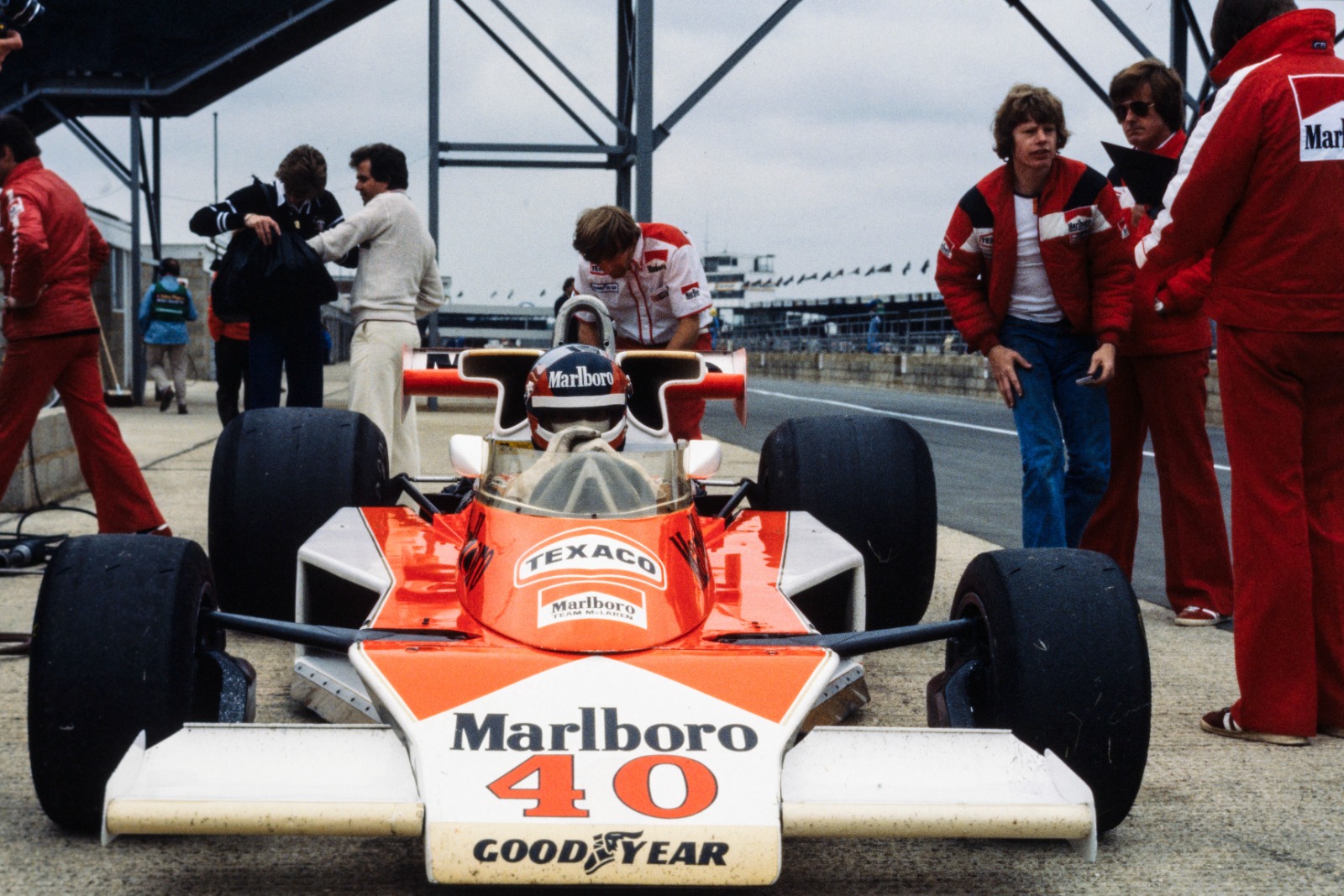
Talent-spotted by 1976 world champion James Hunt while racing in Formula Atlantic, Gilles made his F1 debut in a McLaren
Photo by: Getty Images
“Whatever he was doing was always very selfish in what he was wanting to do. He did love his family and so on, but he was very selfish in the fact that he’s the only one who wants to play on his pickup truck when he wants to climb a mountain. And that’s all that mattered.
“And we could play with him if we did his things with him. That was it. As a boy that was super cool when I could go on his pickup truck with him at the same time, I was in paradise.
“But then I could see his attitude towards risk, pushing the limit, but with respect. With respect to the opposition. And just always wanting to beat the next challenge.
“And often doing it just showed the other guys, ‘I can do it, you can’t’. Because that was his life story basically: ‘I can do this, you can’t’.
“And even when he bought his chopper he was trying to do loop-the-loops because he’d been told it couldn’t do it. Stuff like that.
“I took a lot from him on that aspect. But with a different education. So I think it allowed me to calculate the risk just a little bit better.
“But I don’t have a lot of memory of him as a father. I don’t know if it’s because they don’t exist or because I’ve just put them away when he died and that was my way of surviving.
“What’s amazing is how over the last few years, people have opened up about their time with my dad. Even [Alain] Prost, or other people that used to race with him, that never dared before, I guess. And the picture I’m getting is so different than the one I got from my mother.”
The Toronto International Film Festival will host the global premiere of Villeneuve: Rise of a Legend on 19 September, with a theatrical release in Quebec in November, ahead of a global release next year.
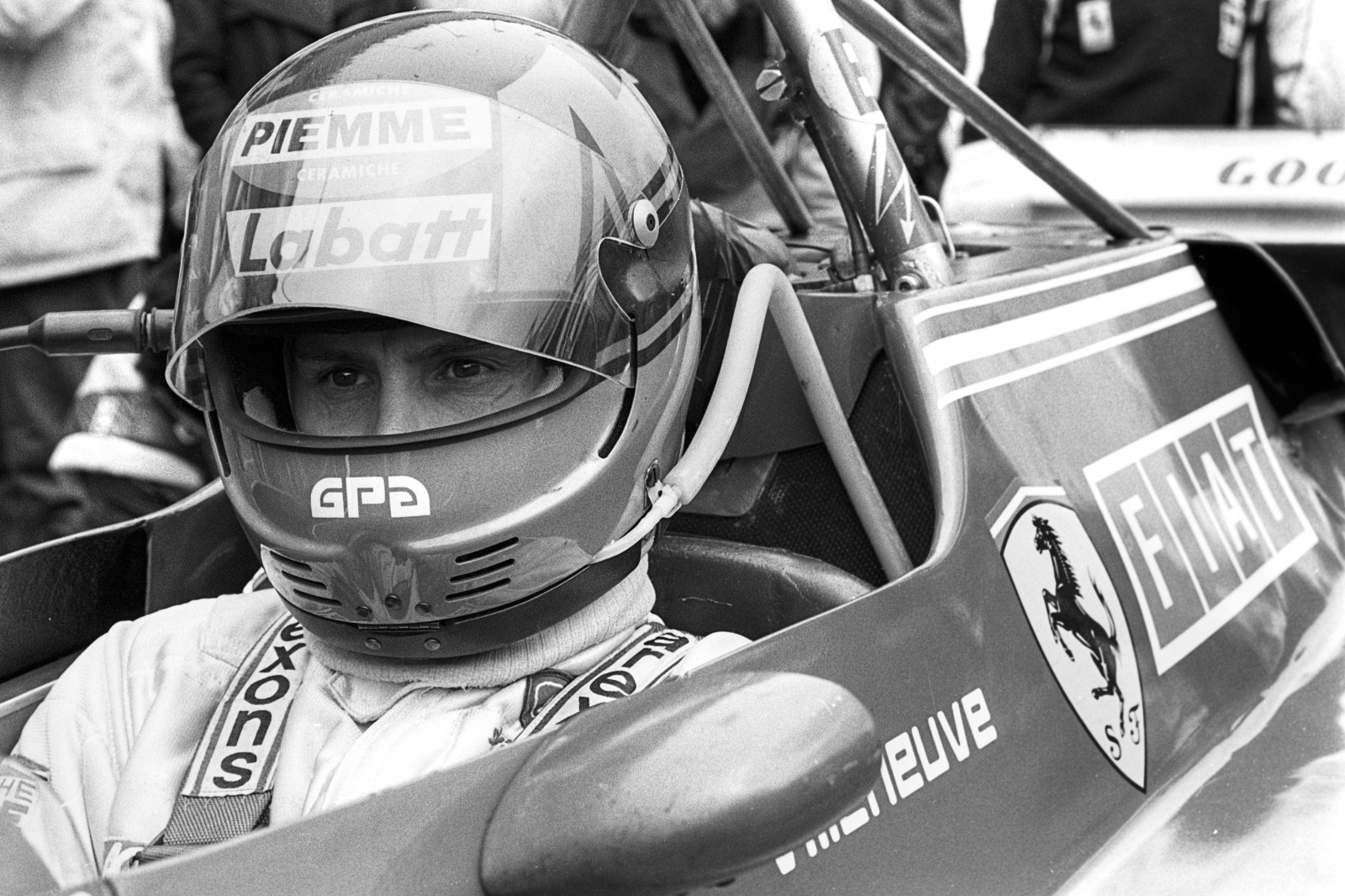
One of the last images of Gilles, shortly before his fatal accident in qualifying for the 1982 Belgian GP
Photo by: Getty Images
We want to hear from you!
Let us know what you would like to see from us in the future.
Take our survey
– The Autosport.com Team
Read the full article here