



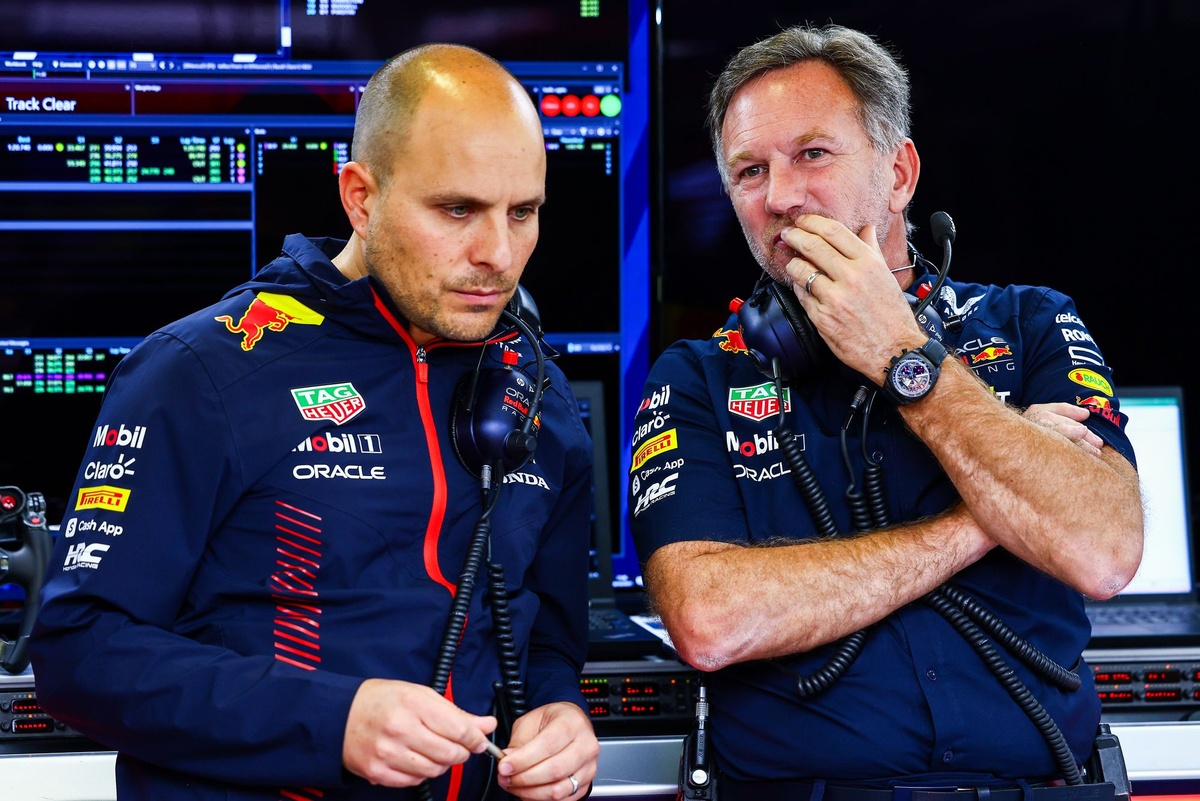
Despite its historic period of dominance in Formula 1 between 2022 and 2023, Red Bull has since gradually seen its key figures leave, sometimes under murky circumstances. Here is a look back at all the major departures from the team over the past three years.
Rob Marshall, chief engineer
Photo by: Mark Sutton / Motorsport Images
The announcement of Rob Marshall’s move to McLaren was made back in May 2023, ahead of the 2024 season. This was the first major departure from Red Bull in recent years, as he had spent 17 years with the Milton Keynes-based team. Having joined in 2006, he served alongside Adrian Newey as chief designer until 2015, playing a key role in the team’s successes in the early 2010s.
He was subsequently promoted to chief engineer and played a part in the team’s resurgence, while also becoming involved in other company projects. “We will miss his influence,” Christian Horner said following the announcement of his departure to become chief technical officer and chief designer at the Woking-based team.
An influence that many considered crucial to the recent successes of McLaren, as part of his new partnership with Peter Prodromou (who was Newey’s number two), himself a former Red Bull team member.
Lee Stevenson, chief mechanic

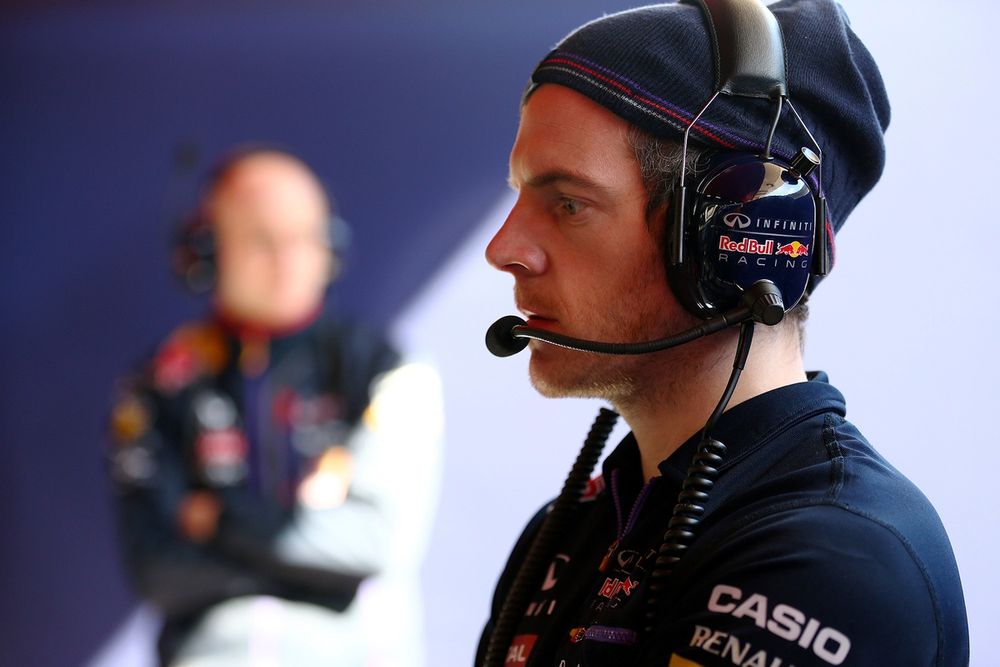
Photo by: Dan Istitene / Getty Images
He may not hold as high a position as others on this list, but he is a familiar face to the public : Lee Stevenson announced in March 2024 that he was leaving Red Bull, after 18 years with the team.
Starting his career in F1 at Jordan as a mechanic, he joined Red Bull in 2006 and from there he rose through the ranks to become the chief mechanic on Daniil Kvyat’s car in 2015.
In early 2016, when Verstappen replaced the Russian, the rapport between the two was excellent and he retained this role until 2020, when, at his request, he was promoted to the position of deputy chief mechanic, before being appointed chief mechanic in 2023.
Although he subsequently left the Red Bull, he did not abandon his role: he became chief mechanic at the Sauber team, before being promoted to team manager at Audi in 2026.
Adrian Newey, chief technical officer
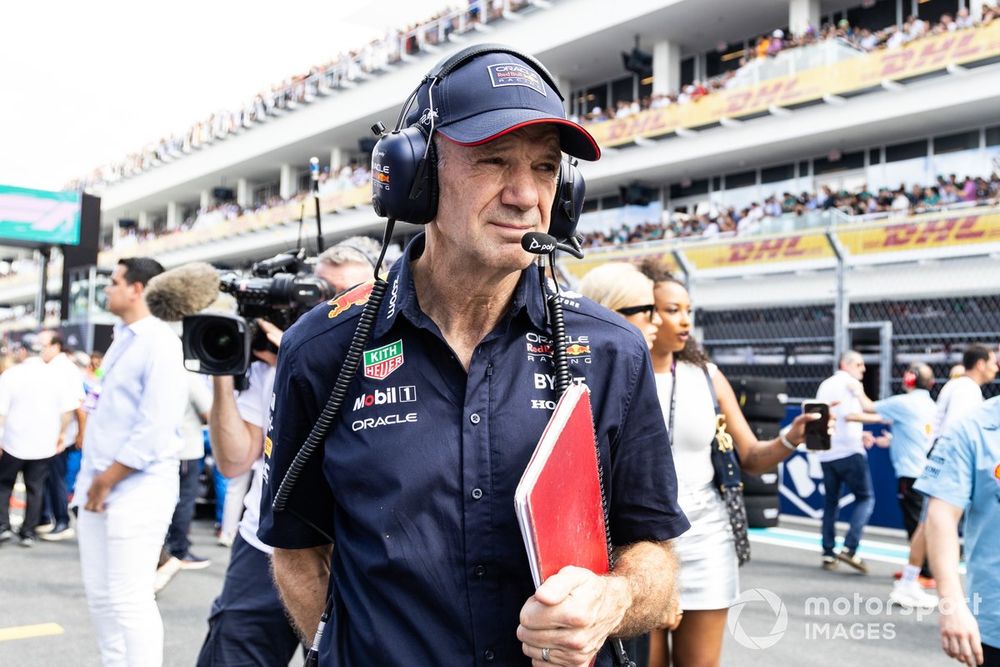
Photo by: Alexander Trienitz
Having already contributed to the world titles won by Williams and McLaren in the 1990s, Newey chose to join Red Bull in 2006. It took him just three years to help the team become a title contender with the RB5, the car that laid the foundations for the Red Bull’s first championship-winning line-up between 2010-13.
He then fell victim, like the entire team, to the failed transition to the V6 turbo hybrid era, due to Renault’s shortcomings and, at times, to his own chassis department and a lack of coordination. The rest of his career at Red Bull saw him take a slightly more backseat role, somewhat weary of the dominance of engines over aerodynamics, while participating in projects outside of F1.
Ultimately, it was not until the switch to Honda engines that Newey regained the opportunity to participate in the design of title-fighting cars – with Pierre Wache as full technical director from 2018 onwards – achieving success between 2021 and 2024.
However, although he had a contract extension with Red Bull in 2023, the Horner affair and the internal power struggle that came to light in early 2024 prompted him to leave the team in May of that year. Symbolically, the announcement of his departure – the timing of which was criticised by Newey himself due to its coincidence with the 30th anniversary of Ayrton Senna’s death – came at the very moment the RB20 was beginning to show signs of weakness.
In early 2025 he joined Aston Martin as managing technical partner, mainly focused on the team’s preparation for the new rules era the following year.
Jonathan Wheatley, sporting director
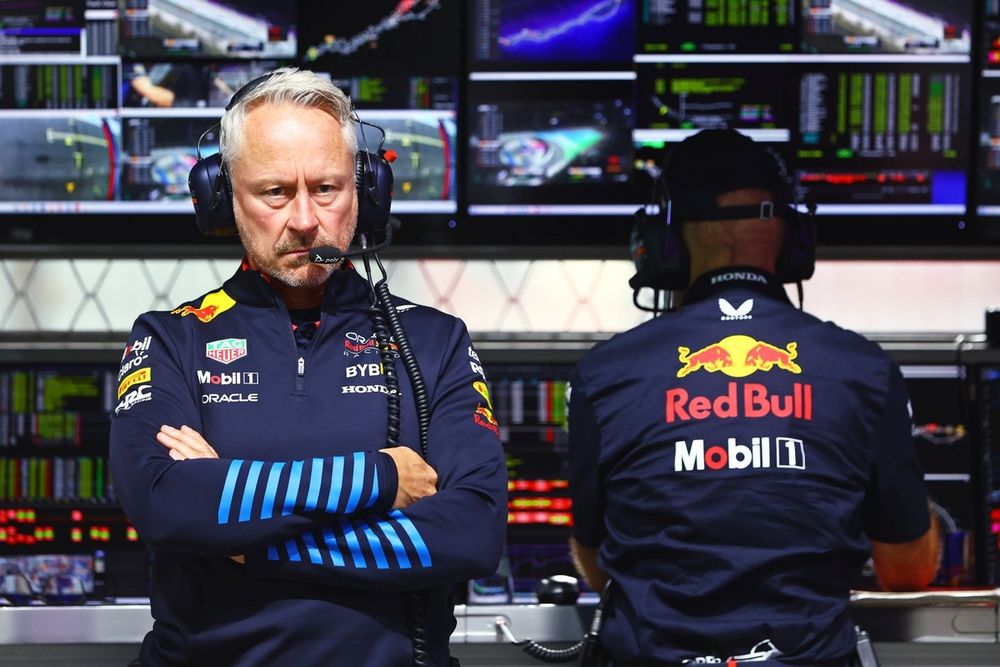
Photo: Red Bull Content Pool
Although less prominent than Newey, Wheatley has nonetheless been a key figure in his team’s successes. Arriving in 2006, after serving as chief mechanic at Benetton and then Renault, the Briton was initially team manager before becoming sporting director in 2014.
In this role, which he held from the pitwall, he notably oversaw the well-oiled machine that Red Bull’s pitstop team had become, while managing dealings between the team and the FIA.
In 2024, aged 57, he wanted to take his career to the next level, but Christian Horner’s presence as team principal made internal progression difficult. He therefore had to look beyond the Red Bull fold, and it was Sauber – which would become Audi in 2026 – that Wheatley decided to join.
However, after just two rounds at the helm of the team under the four-ringed manufacturer’s banner, Wheatley left and is now tipped to join Aston Martin.
His departure from Red Bull had prompted a shake-up in the hierarchy and a series of internal promotions at the time, notably with a more significant and broader role being given to Gianpiero Lambiase, Max Verstappen’s race engineer.
Will Courtenay, head of strategy
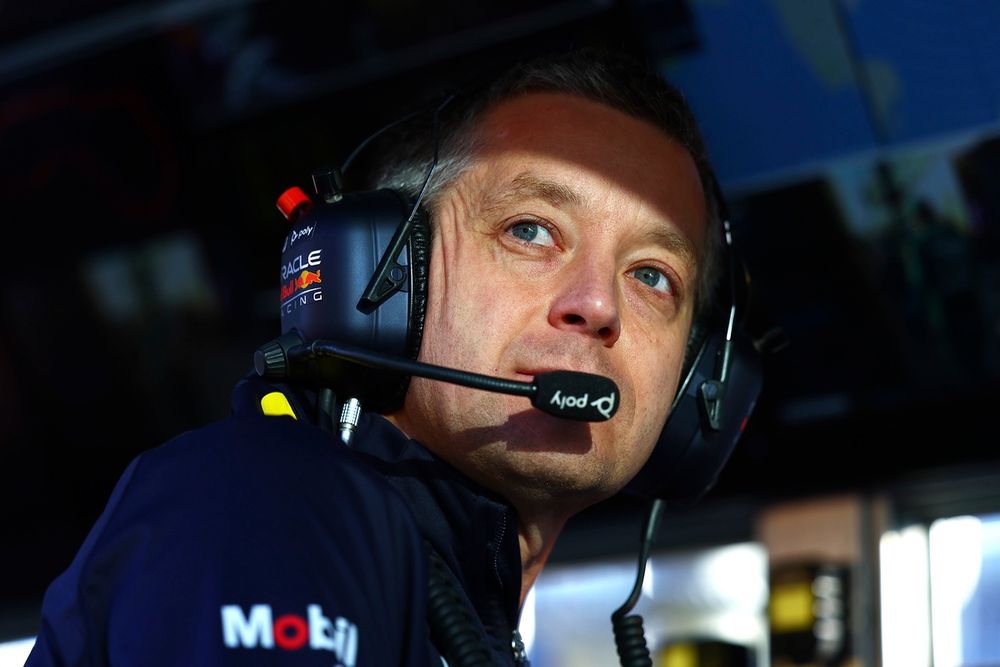
Photo by: Mark Thompson / Getty Images
Having joined Jaguar back in 2003, Courtenay remained with the team despite its takeover by Red Bull. A strategy engineer and then analyst between 2005 and 2010, he became head of race strategy in June 2010, a role he held until the end of last year before joining McLaren.
The announcement of his departure came shortly after the 2024 Singapore Grand Prix, with Courtenay preparing to take up the role of sporting director at McLaren.
However, unlike in the case of Wheatley, who joined a team that was not in the same league as Red Bull, the Austrian outfit was not particularly keen to fast-track the process. Courtenay was nevertheless allowed to join Woking at the start of 2026, despite a contract that ran until the middle of the year.
Christian Horner, CEO and team principal
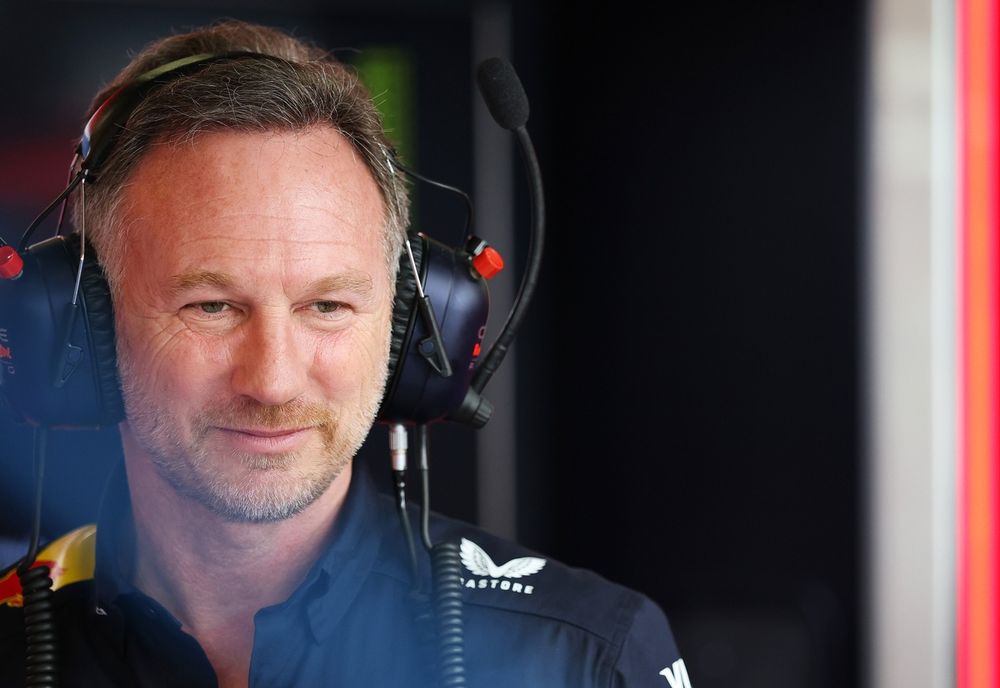
Photo: Red Bull Content Pool
On board from day one with the confidence and support of Red Bull co-founder Dietrich Mateschitz, Horner was just 31 when he joined F1’s ‘Piranha Club’ in 2005, alongside legends such as Jean Todt, Ron Dennis and Frank Williams.
Despite his inexperience at this level, he quickly laid the foundations for his team’s future successes by surrounding himself with a competent and dedicated team; the star signing of this period was, of course, Adrian Newey, a designer already widely regarded as one of the best of his generation.
The gamble paid off fairly quickly, as Red Bull became a force to be reckoned with by the late 2000s, navigating the regulatory changes introduced in 2009 with great skill. Between 2010 and 2013, the team and its driver Sebastian Vettel swept up every title.
Horner would then impose his management and communication style, while guiding his team’s rise to the ranks of F1’s superpowers. After a difficult period due to the switch to hybrid turbo engines – albeit one marked by sporadic successes – the Austrian manufacturer would bounce back by taking a new gamble: an alliance with Honda.
The drivers’ world title was regained in 2021, before the team dominated the 2022 and 2023 seasons. The latter year proved particularly impressive for Red Bull, which dominated F1 like never before with Max Verstappen.
Yet it was immediately after this campaign that the dominant team built by Horner began to crack, with the outbreak of the scandal over alleged inappropriate behaviour towards a female employee. While he was cleared of wrongdoing and remained in his role after an internal investigations, tensions will rise within the team against a backdrop of a power struggle, whilst performance declines. Not enough to lose the drivers’ title in 2024, but enough to permanently weaken Horner who had been at the helm of the team for over 20 years.
His surprise departure, announced in early July 2025, was accompanied by that of two other senior figures at the team, far less prominent than other personalities but who were close to Horner: Oliver Hughes, the group’s director of marketing and commercial affairs, and Paul Smith, the group’s communications director.
Dr Helmut Marko,motorsport advisor
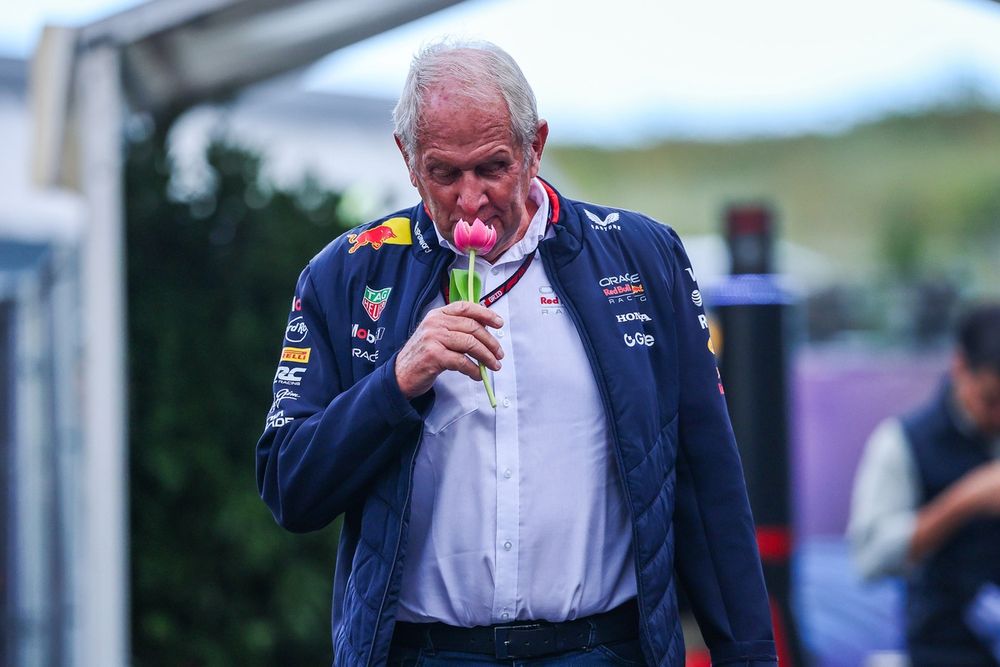
Photo by: Kym Illman / Getty Images
Having always held the unusual position of ‘advisor’ responsible for motorsport within the energy drink giant, Dr Helmut Marko has thus been one of the guiding figures at Red Bull and behind the rise of the Austrian empire in the F1 paddock, alongside the other long-standing members mentioned above.
Serving as both Mateschitz’s right-hand man and his insider at the team, he was given the full confidence and freedom required to simultaneously establish the team’s junior programme, which notably enabled the progression of young drivers through the ranks to F1.
His greatest achievement will undoubtedly be the career of Sebastian Vettel, the first Red Bull-backed world champion (2010-13), after had supported him in his rise through the junior ranks prior to his arrival at Toro Rosso. The case of Max Verstappen , also a four-time world champion with Red Bull (2021-24), is different because the Dutchman had already made a name for himself before joining the fold, which he only did thanks to Marko’s guarantee of a full-time F1 seat from 2015 onwards.
Beyond these two drivers, the system for identifying, training and promoting drivers to F1, established around the ownership of two teams in the championship – Red Bull as the flagship team and ToroRosso/AlphaTauri/Racing Bulls as the junior team – has enabled a plethora of promising drivers to enter F1, some of whom are still in the championship despite having left the team (Carlos Sainz, Alexander Albon and Pierre Gasly).
Marko’s influence at Red Bull was not, however, limited to the junior programme, and he played a leading role as a manager, notably alongside Horner, in supporting the team’s major successes. In recent years, he had been a key figure alongside Max Verstappen and his entourage in the internal power struggle, to the extent that he was openly backed by the driver in early 2024 during the turmoil caused by the Horner affair and had his contract extended until 2026.
Over the years, his management style and public statements have often sparked controversy, one of the most recent controversies being his conspiracy theory-laden remarks against Kimi Antonelli after the Qatar Grand Prix, which triggered a wave of online harassment against the Italian and forced Marko – a rare occurrence – to backtrack.
It was against the backdrop of Red Bull’s confirmed decline – despite a last-ditch effort at the end of last season – that he claimed to have made the decision himself to leave the team after the 2025 finale. However, some sources at the time suggested it was a decision imposed on him, due both to the Antonelli affair and an unauthorised attempt to recruit Alex Dunne into the Red Bull fold.
Gianpiero Lambiase, head of race engineering
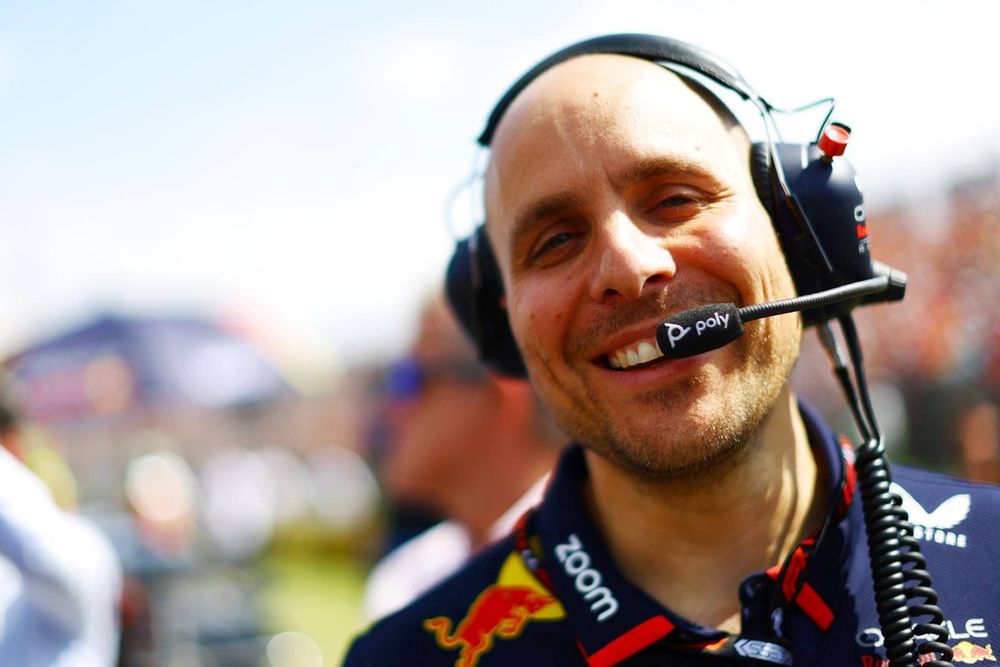
Photo: Red Bull Content Pool
After starting his career in 2005 at Jordan, spending 10 years with the team under its various names (Midland, Spyker, Force India), he joined Red Bull in 2015 as Daniil Kvyat’s race engineer. When Kvyat was demoted to Toro Rosso and replaced by Verstappen, Lambiase retained this role.
His collaboration with the Dutchman would lead to an immediate success at the 2016 Spanish Grand Prix, remaining with Verstappen has he charged to his four world titles 2021-24.
During his time at Red Bull, he gradually rose through the ranks internally, taking on the role of chief race engineer in 2022 before being promoted to the position of racing director in the wake of the reorganisation following Wheatley’s departure.
In early April 2026, while his future within the organisation had already been called into question due to links with other teams, it was announced that he would be leaving Red Bull at the end of his contract in late 2027 to join McLaren from 2028 in the role of chief racing officer, reporting to Andrea Stella.
We want to hear from you!
Let us know what you would like to see from us in the future.
Take our survey
– The Autosport.com Team
Read the full article here


