
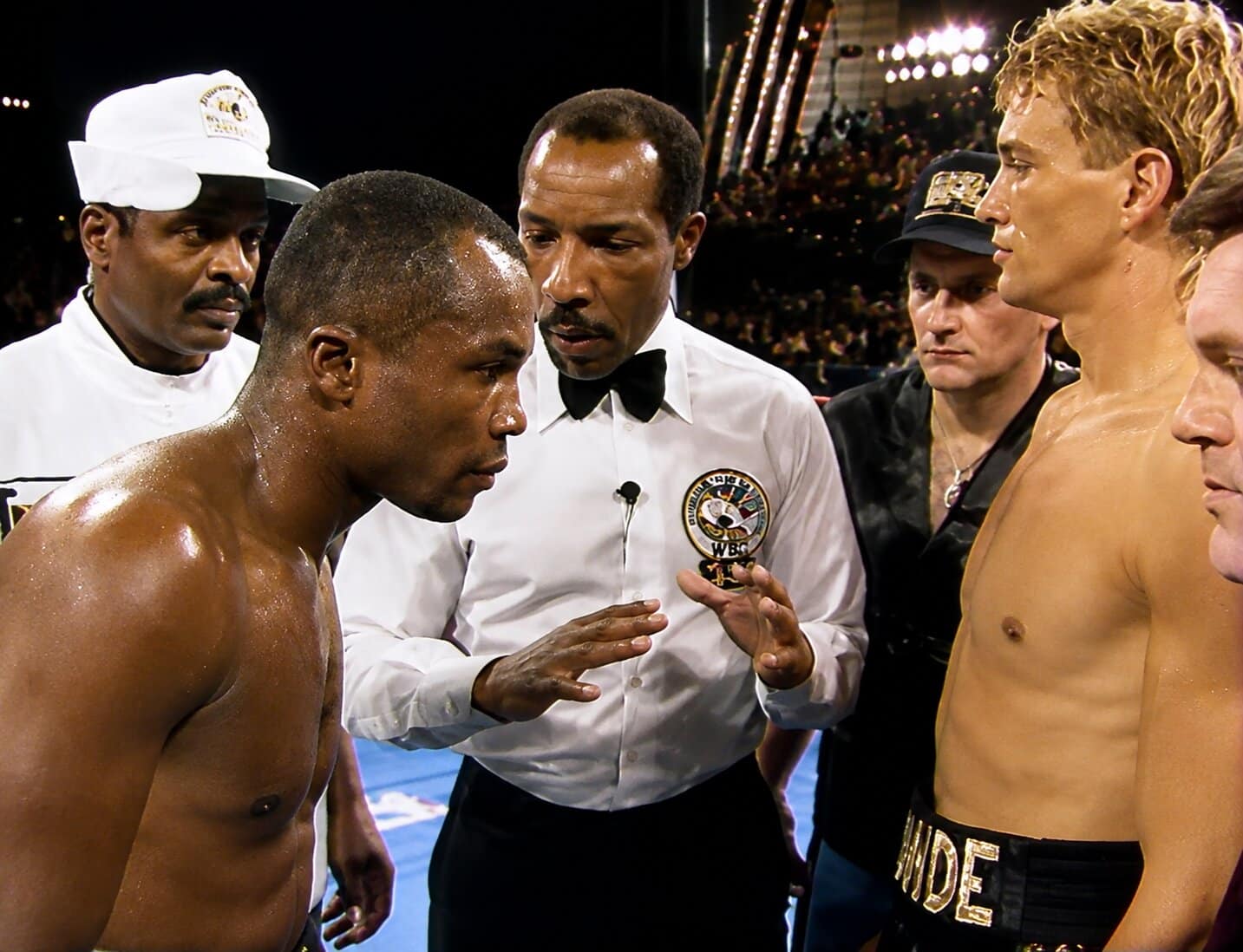

It was a brilliant piece of business. As a sporting achievement, it was considerably less convincing.
Lalonde was a natural light heavyweight who had to surrender seven pounds from his division limit. Leonard was not moving up to 175 to challenge the champion in a standard divisional bout. He brought the champion down to him while still receiving credit for winning Lalonde’s 175-pound belt.
There was little indication Leonard intended to remain in the division, either. He had fought Marvin Hagler in April 1987, then stayed out of the ring for 19 months before facing Lalonde. Long layoffs had become part of Leonard’s late-career routine.
Trying to remain WBC champion would have meant eventually facing full-sized light heavyweights without controlling their weight. For a former welterweight fighting sporadically, that was a far different proposition from getting Lalonde at 168.
Leonard soon vacated the light heavyweight belt.
What makes the entire arrangement more interesting is that the supposedly favorable opponent nearly wrecked it.
Lalonde was not regarded as a particularly sophisticated champion. A serious problem with his left shoulder contributed to his reputation as essentially a one-handed fighter. His dangerous weapon was the right hand, and everyone knew it.
He had demonstrated what that right could do five months earlier by stopping former WBA light heavyweight champion Leslie Stewart in five rounds. Lalonde didn’t possess an elaborate offensive arsenal. He didn’t need one when he landed his best punch. Leonard knew what was coming and still couldn’t stay away from it.
Lalonde dropped him with a right hand in the fourth round and caught him with several more during the fight. This was not the comfortable coronation the contract might suggest. Leonard looked rusty and found himself in a difficult, physical fight against an opponent who had already made the major concession before entering the ring.
That makes Lalonde’s performance more impressive. He had been brought down from the light heavyweight limit, faced one of boxing’s greatest fighters under terms largely dictated by Leonard’s camp, and still managed to put Leonard on the canvas.
The ninth round was where Leonard’s greatness rescued the night. After Lalonde had success early in the round, Leonard attacked with the fast combinations that had carried him through his greatest fights. A left hook dropped Lalonde, and Leonard finished him after he got back up. The stoppage came at 2:30.
That part was genuine.
Leonard was in trouble, yet he fought his way out of it. He found the opening, hurt a bigger man, and finished him decisively. Whatever advantages had been negotiated beforehand couldn’t throw those punches for him.
The separation is important when evaluating the five-division claim. Leonard clearly beat Lalonde and produced a terrific comeback to do it. But winning a light heavyweight championship from a titleholder required to weigh no more than 168 is not the same achievement as moving to 175 and beating the champion there.
The dealmaker engineered ideal terms to make history. The fighter then discovered that even a carefully constructed opportunity could go badly wrong once the contracts stopped mattering and the punches started landing.
Leonard’s ninth-round finish earns genuine respect. His light heavyweight championship deserves the asterisk.

Read the full article here
