

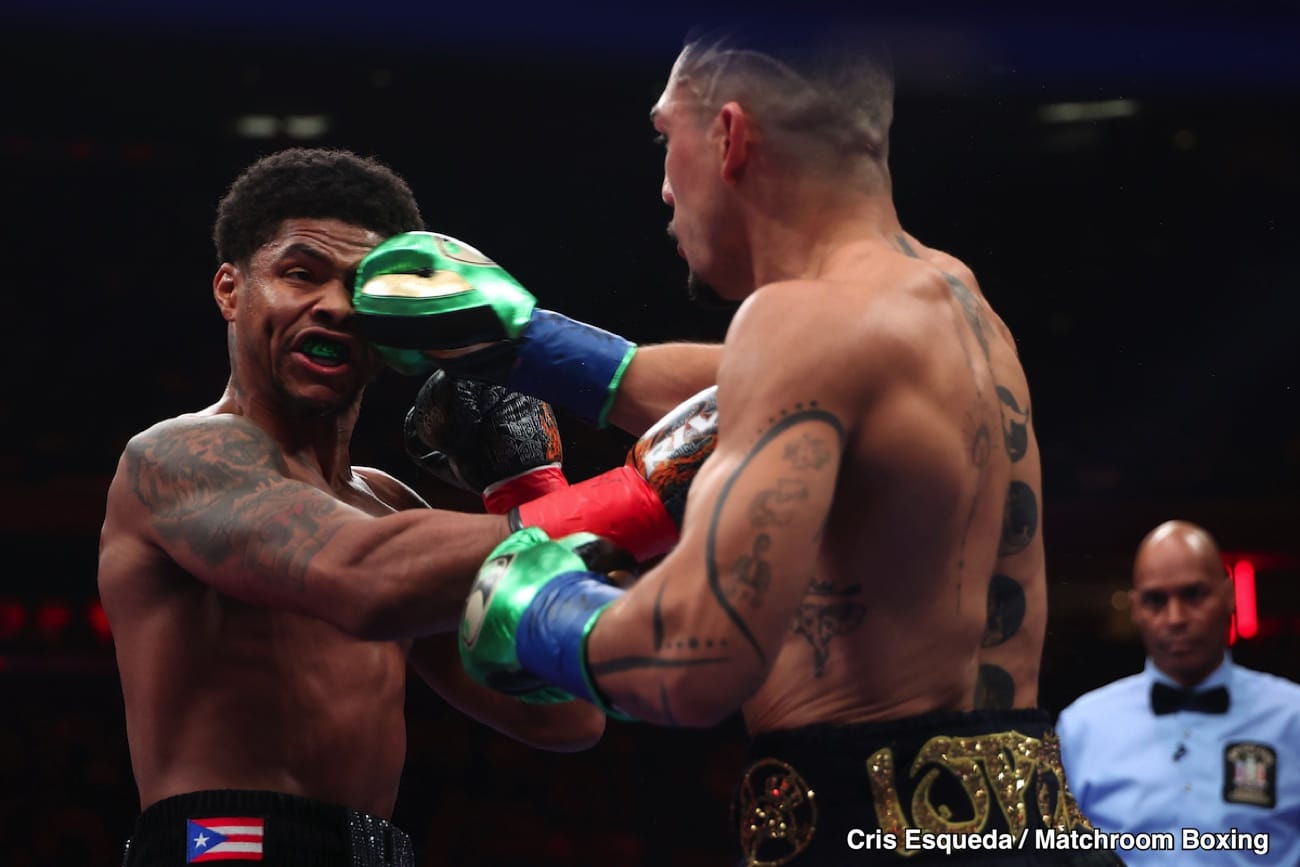


Benn was not shouting from the aisle or talking to a camera backstage. He was placed in the ring, face to face with the new champion, while the broadcast was still live and the crowd was still there.
The exchange itself was short. Stevenson dismissed Benn’s chances on ability. Benn explained it as a fight Stevenson would not be able to avoid. Neither man tried to be clever. Both sounded ready to move on from talking.
There was no promoter stepping between them. No soft pivot to another name. No reminder about weight or timelines. Stevenson asked for the contract. Benn did not object. The moment was allowed to breathe. That is usually how the next fight is introduced.
From a matchmaking perspective, it lines up cleanly. Stevenson has just taken a title at 140. Benn has been looking for a marquee fight that repositions him after a turbulent stretch. Both are marketable. Both bring different audiences. One brings control and defense. The other brings pressure and noise. The contrast sells itself.
Stevenson just delivered a performance built on distance, timing, and denial. Benn represents the opposite idea. Forward pressure, physical presence, and a promise to make the fight uncomfortable. Whether that promise holds up is secondary, but the pitch is simple enough for everyone to understand.
Allowing Benn into the ring said the quiet part out loud, signalling to fans that the wheels are in motion for this fight to happen next. This is not a long-range plan.
Stevenson did not look surprised to see him, nor did Benn look out of place. When a fighter is granted ring access after a title win, it is rarely symbolic. If this fight does not happen next, it will be because something broke down after the cameras shut off.

Read the full article here