

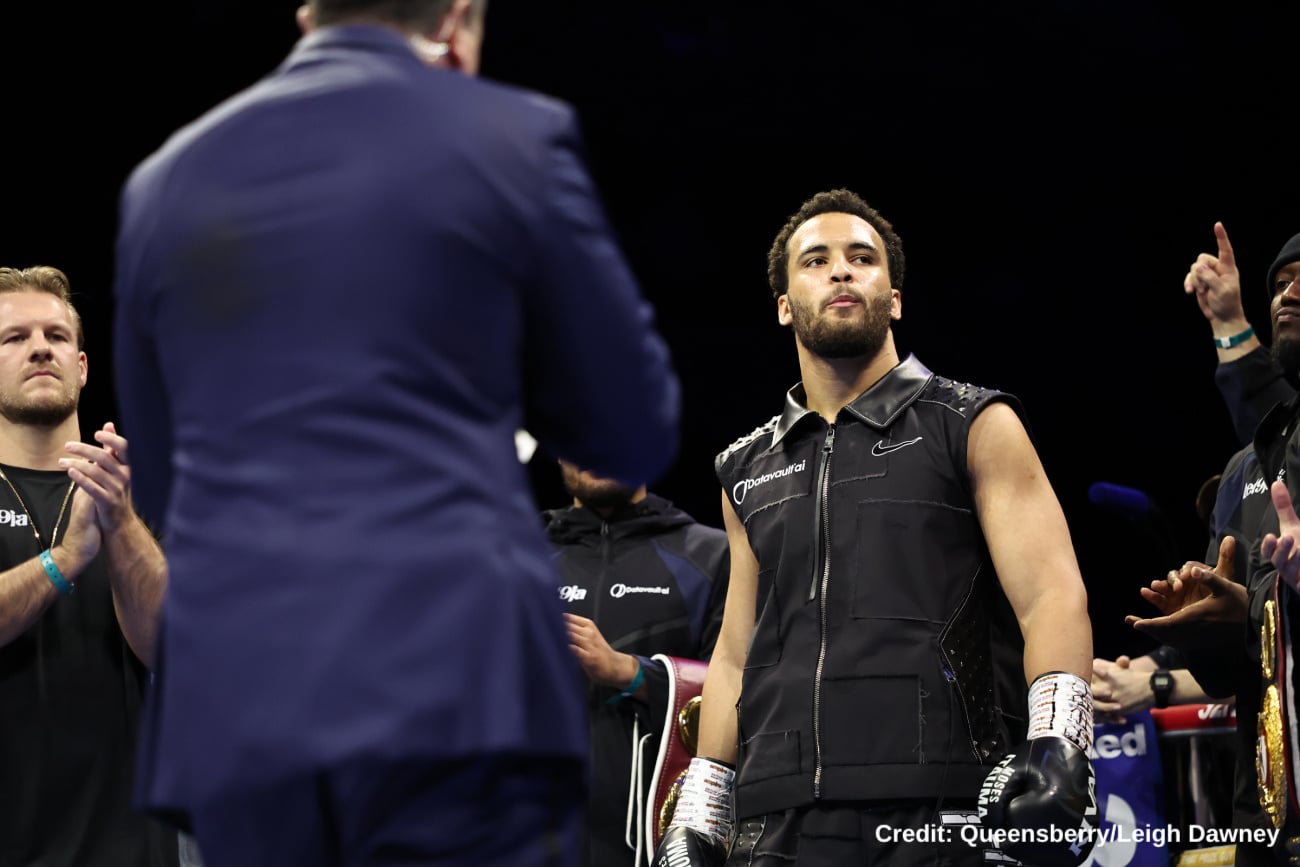

Franklin is a tough out, but he’s essentially a gatekeeper. Beating him should move a prospect into the top 10, sure, but vaulting to #1 suggests that beating a gatekeeper is equivalent to being the best challenger in the world.
The WBO and WBA are currently using their rankings to speculate on potential. Seeing Moses Itauma at #1 after just 14 fights, ahead of guys like Filip Hrgovic, Zhilei Zhang, or even Anthony Joshua in the WBO, is a massive leap that bypasses the traditional “proving ground” phase. It’s a way for the organizations to attach themselves to the “next big thing” early.
Being #1 should mean you are the most dangerous person in the division besides the champion. Right now, Itauma is being ranked on what people think he will become, not what he has actually proven he can do against world-class opposition.
The sanctioning bodies ranking Itauma at #1 after just 14 fights, largely against lower-level opposition, says a lot about their value. It points to a systemic issue where commercial viability and promotional influence often outweigh a fighter’s actual body of work.
In an ideal world, a #1 ranking should be a badge of “proven” status. It should mean you’ve navigated the shark-infested waters of the top 10 and come out on top.
If Itauma faces a seasoned heavyweight like Zhilei Zhang or the Wardley-Dubois winner right now, those technical flaws he showed against Franklin, the slow feet, and the defensive lapses could turn that #1 ranking into a very painful lesson.
The Shakur-like step back Itauma uses, his version is nowhere near as fluid. If fans are seeing it in slow motion, that’s a red flag for when he faces a fighter with elite closing speed or a high-volume engine.
Getting tagged by an out-of-shape Jermaine Franklin suggests that Itauma’s defense relies heavily on his youth and reflexes rather than sound technical positioning. A top-tier contender wouldn’t just hit him; they’d exploit those footwork gaps to trap him.
Read the full article here