



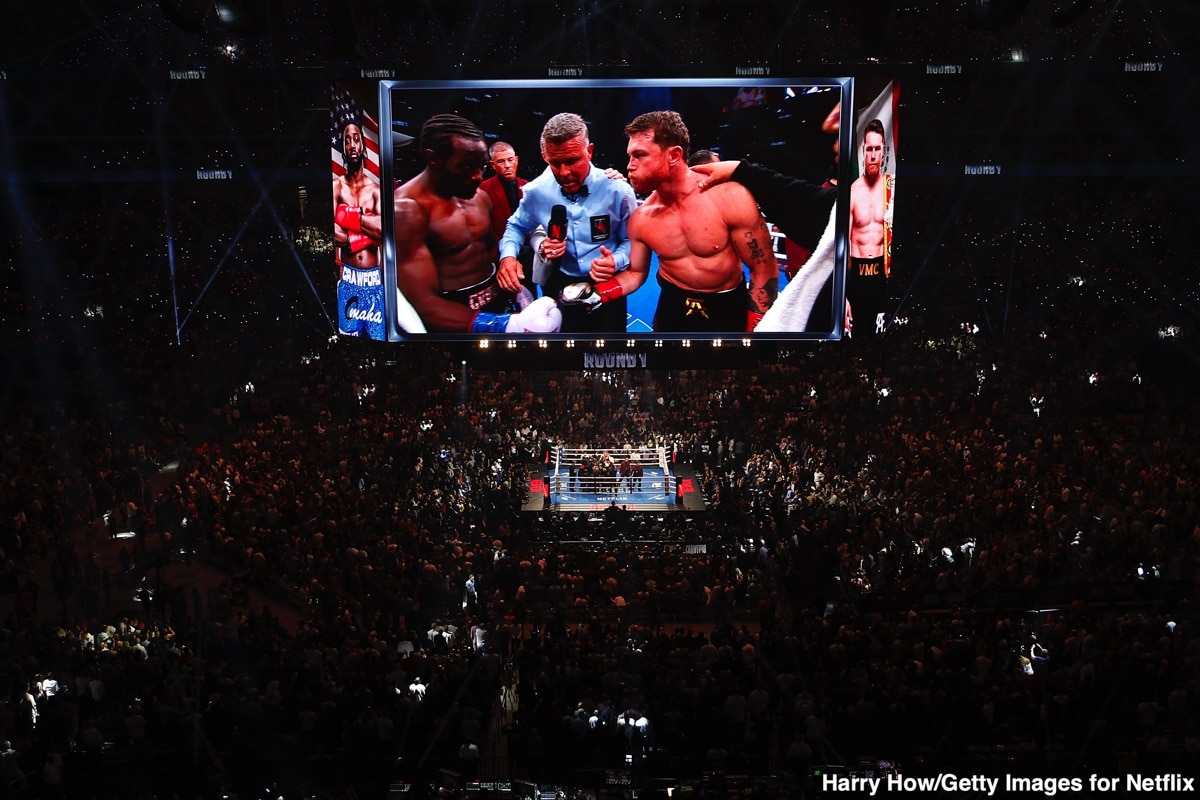


- Canelo Alvarez
- Osleys Iglesias
- Christian Mbilli
- Lester Martinez
- Diego Pacheco
- Jose Armando Resendiz
- Caleb Plant
- Hamzah Sheeraz
- Jacob Bank
- Bektemir Melikuziev
“You have to look at the body of work. One loss doesn’t knock you,” said Max Kellerman to the InsideRingShow, defending why The Ring didn’t drop Canelo Alvarez from the #1 spot after his loss to Terence Crawford last September.
While I get the “body of work” argument, rankings are usually meant to reflect who the best fighter in the division is right now. If Canelo didn’t look like a #1 or even a #2 in his loss to Crawford, keeping him at the top starts to feel more like a lifetime achievement award than a sports ranking.
Canelo’s “body of work” at 168 comes down to wins over many contenders that weren’t considered special. If we’re to keep Alvarez at #1 due to his past wins at super middleweight, it’s a big stretch that his best victories came against these fighters: William Scull, Jaime Munguia, Edgar Berlanga, Jermell Charlo, Callum Smith, and Gennadiy Golovkin. GGG was at the end of his career when he fought Canelo at 168 in their trilogy match.
“The way they used to do it. If the champion lost, a lot of times, they wouldn’t be ranked #1 because there were a lot of guys waiting for a title shot. So, they’d be dropped to 2, 3, or 4 to give the top guys that had been waiting a shot to get to the title. You can drop Canelo, but look what he’s done at super middleweight.
When you look at the names beneath him, there’s a real sense of stagnation: Guys like Christian Mbilli and Osleys Iglesias are destroying everyone in front of them. Keeping them stuck behind a fighter coming off a loss can make the rankings feel “clogged.”
A lot of Canelo’s “body of work” involves beating guys who moved up from 154 or 160 (like Charlo or an older GGG). If he isn’t dominant against a peer at 168, the #1 spot feels more like a marketing tool than a merit-based position.
Read the full article here


