



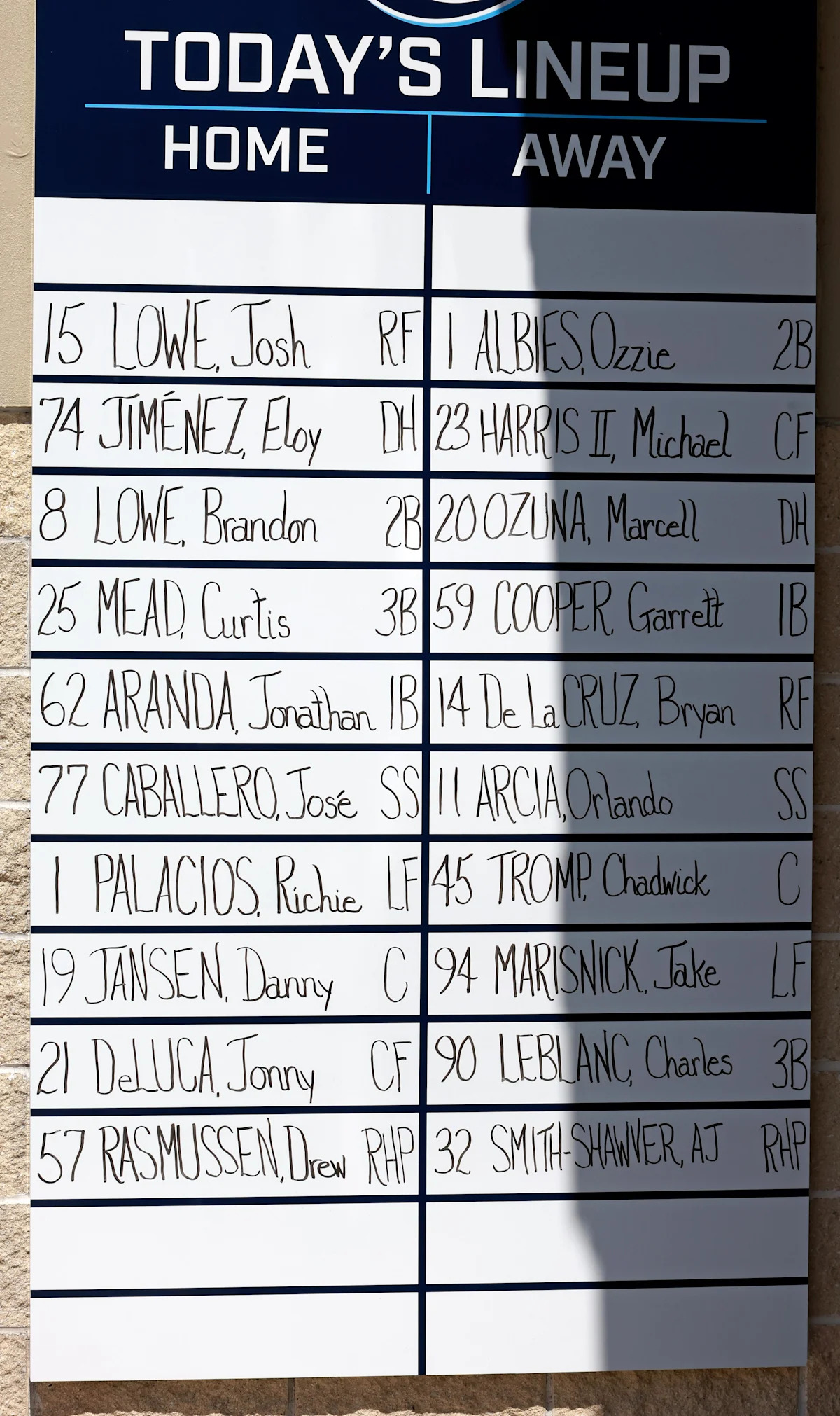
Is Junior Caminero getting pitched around because neither Jonathan Aranda nor Yandy Diaz are hitting behind him in the lineup to “protect” him? How much influence does Caminero have on the number of pitches the batter ahead of him sees in the zone?
Inspired by an article examining the statistical significance of lineup protection, I wanted to explore those question with a slightly different approach.
For this analysis, lineup protection refers specifically to whether a power hitter (Hitter B) meaningfully changes the percentage of pitches in the strike zone seen by the hitter directly ahead of them (Hitter A). Here are the parameters I set:
-
Use the top 15 ISO numbers in qualified seasons from 2024-2025 to isolate the most extreme power threats, where lineup protection should be most detectable if it exists
-
Hitter A is any batter that saw at least 250 pitches in a season while batting ahead of Hitter B to ensure the sample reflects a meaningful portion of a season rather than a handful of games
-
Compare the in-zone rate Hitter A saw when batting ahead of Hitter B in a given lineup with their in-zone rate when they were not batting ahead of Hitter B to isolate the effect of lineup position rather than the hitter’s overall profile
-
Define a “Protection Value” as the difference between Hitter A’s zone rate when batting ahead of Hitter B and their zone rate in all other lineup configurations. Positive values indicate more strikes; negative values indicate fewer
-
This analysis does not control for count, game state, or handedness, all of which could influence zone rate independently of lineup position
Here’s what I got:
Across the sample, hitters batting directly ahead of elite power hitters saw roughly 1% more pitches in the strike zone than they did in other lineup configurations. So for every 1,000 pitches a hitter sees, they’ll get about 10 more in zone when hitting ahead of a power threat. Most full-time players will see 2,400 to 2,600 pitches in a given season, so that would be 24-26 more pitches in the zone across an entire season, or 0.15-0.16 more pitches in the zone per game. That’s hardly significant. A difference of 0.16 pitches per game is so small that it would take nearly a weeks of games for the average hitter to accumulate even one additional pitch in the strike zone.
We can also see that Hitter B’s ISO has a low influence on Hitter A’s zone rate:

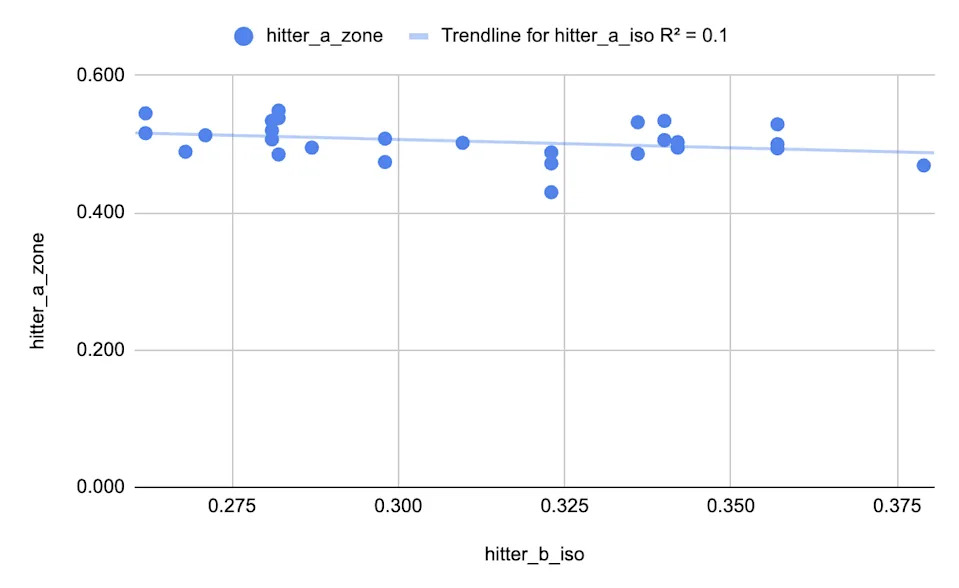
An r^2 of 0.10 means Hitter B’s power explains only 10% of the variation in Hitter A’s zone rate – a weak relationship in baseball data. In practical terms, 90% of the variation is being driven by other factors. This is consistent with modern sabermetric findings: lineup protection may exist, but the effect is quite small.
A hitter’s own ISO actually has a greater impact on the rate at which they see pitches in the zone:

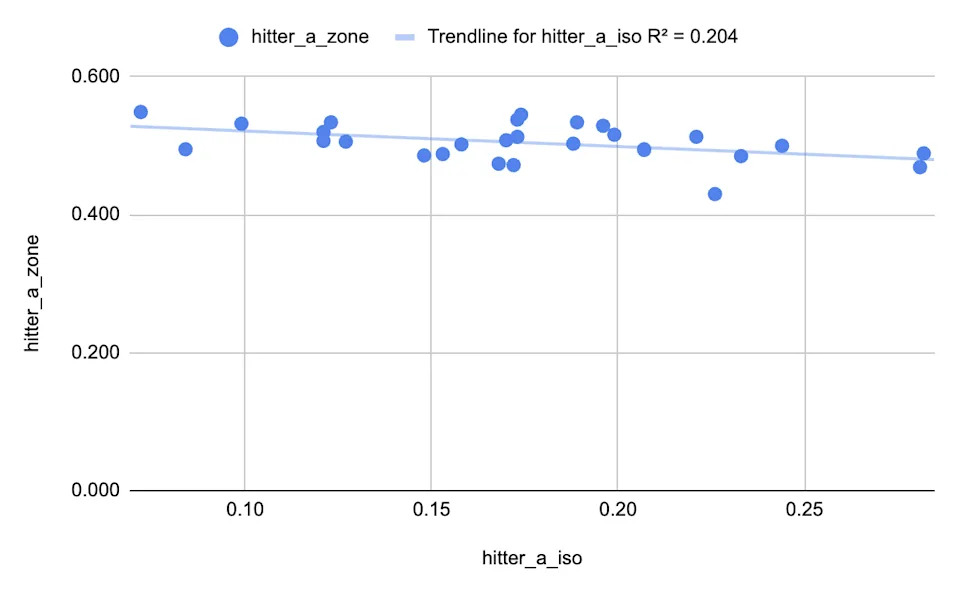
Hitter A’s own power explains roughly twice as much of the variation in zone rate as the power of the hitter behind them.
In other words, pitchers appear to react more strongly to the hitter they’re facing than to the hitter waiting on deck. Even then, the relationship remains fairly modest.
If these findings apply to Caminero, they suggest that any reduction in strikes he sees is driven far more by his own offensive reputation than by the absence of a traditional “protector” behind him in the lineup.
The biggest takeaways:
-
Even among the 15 biggest power threats in baseball – the situations where lineup protection should be strongest – the effect remains small enough that it is unlikely to meaningfully influence lineup construction decisions
-
Comparing this analysis with the study I linked at the beginning does allow us to see that lineup protection is slightly more significant when a power threat is looming – but even that influence is trumped by a hitter’s own power
-
A hitter’s own power potential can influence how often they see pitches in the zone, but even that is fairly noisy
-
This analysis focuses on zone rate, which is only one dimension of pitcher behavior. Future work could examine pitch quality, pitch mix, or chase rate. Controlling for handedness of the batter pairings is also worth exploring; pitchers generally have different approaches for right-handed batters and left-handed batters and those distinct approaches may lead to differing zone rates
Managers should prioritize maximizing plate appearances for their best hitters rather than rearranging lineups in search of protection effects. The effect appears to exist, but it’s far too small to outweigh the value of simply giving a team’s best hitters more opportunities to bat. For the Rays, that means if Caminero is seeing fewer strikes than expected, the explanation probably lies in how pitchers view Caminero himself rather than who is batting behind him. His own profile appears to matter far more than any potential protection effect.
Read the full article here


