

The 2026 Formula 1 campaign is debuting an entirely new set of regulations with changes to both the chassis and engine, the latter of which has become the biggest talking point.
That’s because an F1 power unit is now more reliant on electrical energy with a near 50-50 split against the internal combustion engine, meaning battery management is playing a greater role than ever.
It might often include a driver going against the techniques they have traditionally used to set the best lap time possible, as cars may now lift and coast or downshift along a straight as a means of harvesting energy.
That’s obviously been quite a contentious topic – Max Verstappen famously labelled the 2026 regulations as “Formula E on steroids” – especially because of how complex the new rules cycle is, with concerns that it might cause fans to be disinterested.
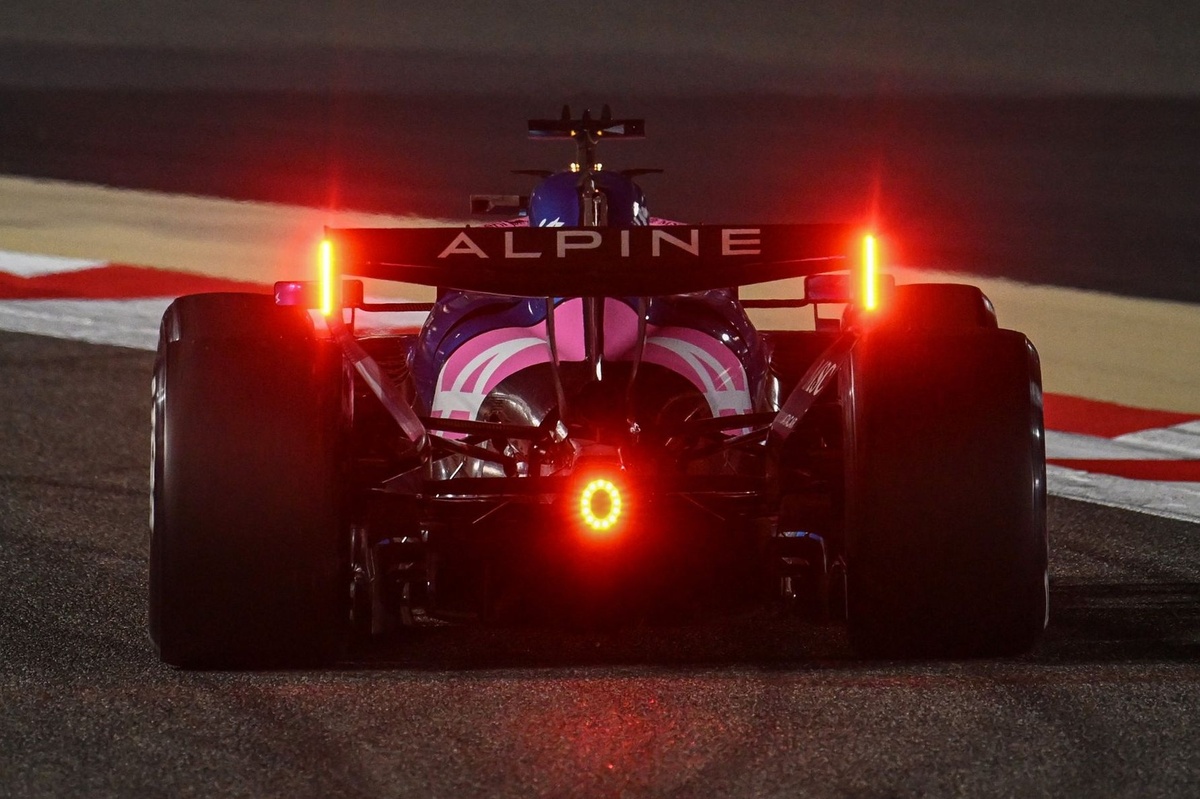
But one way in which viewers can grasp a better understanding of what’s going on, particularly in regards to energy management, is by looking at the rear LED lights, which have taken on a much broader role than they had in the past.
Previously, they were activated when the MGU-H was recharging or, during braking, when the MGU-K was recovering energy. Now that the MGU-H has been removed, the central rear light has been redesigned and, alongside the two lights on the rear wing endplates, can help identify which phase of energy management a car is in.
Photo by: Gianluca D’Alessandro
When the lights flash once, it means that the MGU-K is still supplying energy to the system but at a level below the permitted 350kW. In practice, from that moment on, the acceleration of the car may vary and no longer be as fast as when the electric motor generator delivers the maximum power allowed by the regulations.
When the LEDs flash twice, the MGU-K is effectively off as, not only is it no longer supplying energy to the system, but it’s also not recovering any. At that stage, the car is powered solely by the ICE which, in 2026, exceeds 500bhp.
Finally, when the rear lights are continuously flashing rapidly, the MGU-K is in full recharge mode while the ICE is still delivering full power. This means the car is super clipping, which refers to when it is harvesting energy despite still being at full throttle.
In this instance, during high-speed areas there will be moments when the driver will keep the throttle fully open, but the MGU-K will work against the ICE to generate energy and recharge the battery. So this will give drivers behind an immediate indication of the energy levels for their rival, but the main reason for these changes is safety.
When the MGU-K starts recharging, especially during super clipping, sudden drops in speed can occur. So, it was felt that a warning was needed for the car behind to help it react in time and avoid any dangerous scenarios.
Regardless, there is no doubt that teams will carefully analyse the behaviour of the rear lights on other cars to gain information about the energy profile. By cross-referencing these signals with telemetry data, it is possible to know how much power the MGU-K is delivering, or one can identify areas where the battery is recharging.
Outside of that, the rear lights can also be used in much wider scenarios such as signalling a safety car phase, a double yellow flag sector, indicating that the engine has stalled on track or that the car is using wet tyres.
We want to hear from you!
Let us know what you would like to see from us in the future.
Take our survey
– The Autosport.com Team
Read the full article here