





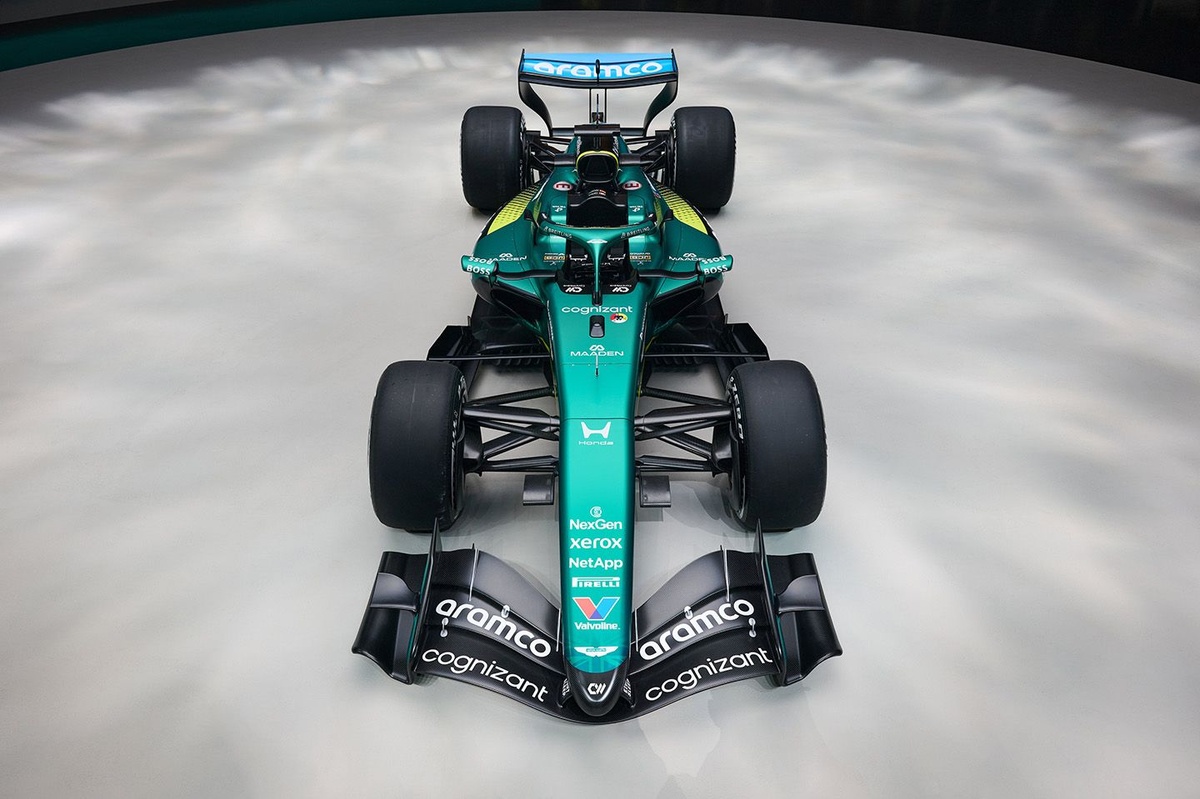
Speaking on stage at the launch of Aston Martin’s hotly anticipated 2026 Formula 1 challenger, Adrian Newey confirmed an essential truism of the creative process: you can take the engineer out of the office, but you can’t take the ideas out of their head.
Newey, architect of 12 constructors’ championship winners, admitted that he spent his contractually obliged ‘gardening leave’ from Red Bull mulling over car concepts for the regulatory regime now coming into force. In itself this is hardly a surprising revelation, since F1 engineering is a fundamentally creative process and it would be unrealistic to expect high-powered individuals to completely ‘switch off’ between employers.
The notion of gardening leave is at best a contractual fudge, especially in disciplines dependent on the power of thought. And in taking a run-up at the new regulations rather than attending to his gladioli, Newey has only been doing something he has done before – with great success.
“The philosophy really, I suppose, came in my gardening leave time [from Red Bull] from late April [2024], when I was effectively out of the [Red Bull] Formula 1 team,” Newey said.
“We all knew what the regulations were, they were published, so I just tried to sit back and think, ‘OK, I’ve got to just think from first principles with these regulations. What could be a possible solution?’
“I came up with a philosophy and then when I started at the [Aston Martin] team on 2 March [2025], kind of discussed that philosophy with the aerodynamicists and designers at Aston Martin. We all agreed that seemed a viable proposal and that’s what we’ve followed ever since.”
Aston Martin AMR26
Photo by: Aston Martin
For some time after signalling his departure from Red Bull, Newey remained technically attached to non-F1 projects (such as the putative RB17 road car), and his move to Aston Martin was only announced in early September 2024. While his contractual obligations would have forbidden actual contact with Aston Martin personnel before his official start date, there was nothing to prevent him jotting down ideas in his own time.
It’s often said that Newey can “see air” and visualise its flow over an F1 car; the man himself plays down that notion. In any case, aerodynamics is such an iterative process that any shapes one can lay down on paper are only ever going to be starting points.
In Newey’s autobiography How To Build A Car, he outlined what he did between leaving Williams in November 1996 and joining McLaren on 1 August 1997, an era in which teams were pivoting towards a new ruleset enshrining narrower cars with grooved tyres – another of FIA president Max Mosley’s brute-force attacks on car performance through slashing downforce.
“I couldn’t have any meetings with the technical people at McLaren prior to my starting,” he wrote. “That would have been in breach of my Williams contract, which was still in litigation [Newey had accused Williams of breaking his contract and the team was counter-suing to prevent him starting at McLaren until his contract had run to term].
“But I got hold of a drawing board, a copy of the new rules and I began sketching at my home in Fyfield and trying to understand what the car should look like to best suit these new rules. It was something of a ‘comfort blanket’ having it there. I took a kind of solace from it, as I still do.
“I like to work in silence and I’ve developed the ability to concentrate fully over the years. Occasionally I might break for a coffee and a biscuit (Hobnob) if I’m stuck and feel I need to walk away and have a break.

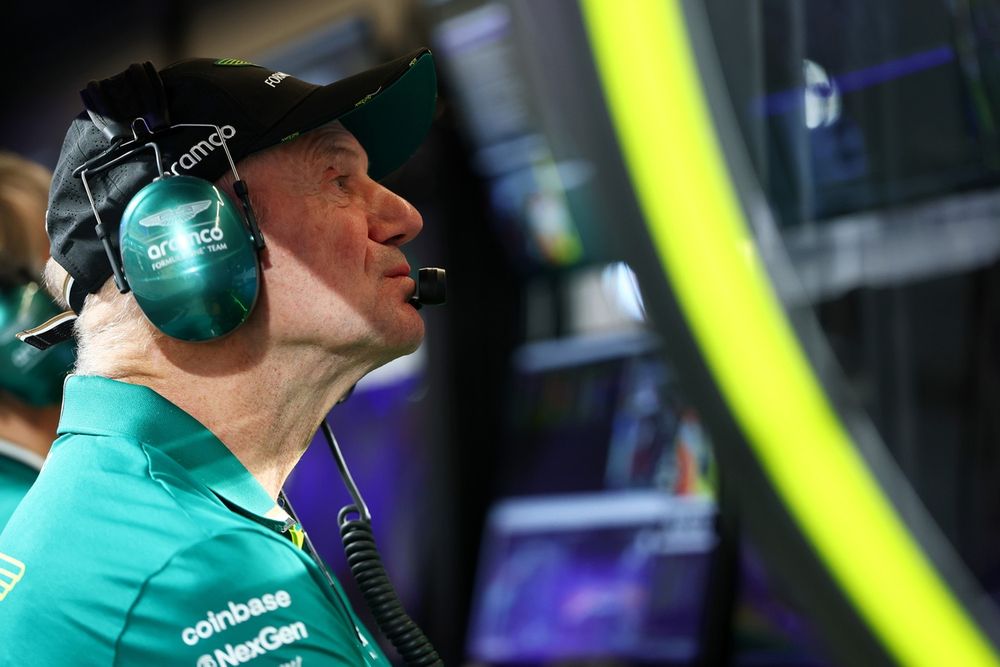
Adrian Newey, Managing Technical Partner of Aston Martin F1 Team
Photo by: Mark Thompson / Getty Images
“Just a five-minute break is often enough to spark fresh thoughts. I use a 0.7mm HB propelling pencil for freehand sketching on A4 and a 0.3mm 4H pencil for technical drawing on the board onto transparent film.
“Roughly 25% of my time at the board is spent on general layout drawings, trying to find solutions for mechanical and aerodynamic conflicts; the rest is spent purely on aerodynamic shapes.”
Obviously August is very late to start on a following year’s car, so when Newey clocked in at McLaren for the first time (then based in a gaggle of industrial units next to the main train line from London Waterloo to Woking, rather than the Norman Foster-designed ziggurat of today), its engineers already had a relatively mature design in progress. In his book he admitted that when the product of his gardening-leave sketches went into the tunnel for the first time, the results were “at least 10% or more down” on the model developed by the existing aero team led by Henri Durand.
But various elements of Newey’s initial concept were profitably retained: he felt that the car should have a longer wheelbase than the 1997 cars, rather than scaling it down in proportion with the width reduction; and, crucially, he had identified loopholes in the rules enabling McLaren to run lower-profile head rests for the driver, and maintain a slight v-shape to the front of the chassis.
“In retrospect,” he wrote, “it was more than a little arrogant to think that a new shape based on my thoughts in the bedroom would outperform what McLaren had spent months developing in the wind tunnel.”
Over the following weeks Newey oversaw a hybrid version of the two concepts which matured into the MP4-13 in which Mika Hakkinen dominated the 1998 world championship. And, famously, he infuriated team boss Ron Dennis by repainting his grey office in a more jaunty shade of duck egg blue.
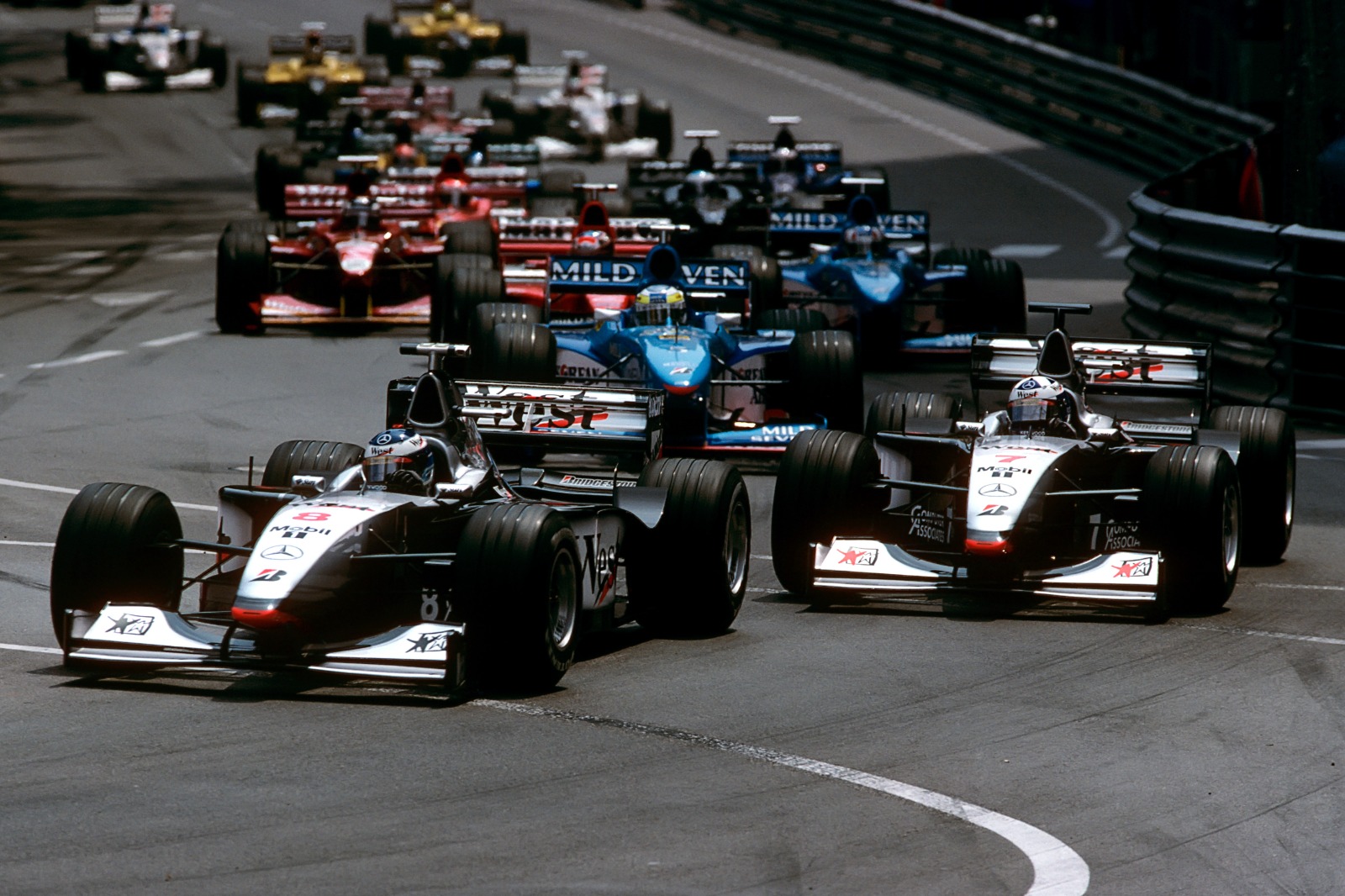
Newey’s McLaren MP4/13 dominated a 1998 season in which cars were 20cm narrower and had grooved tyres.
Photo by: Getty Images
Formula 1 has changed much in the 30-odd years which have elapsed since that time; aerodynamic resources have grown more sophisticated, each element of the car is more complex, and engineering staff levels have grown to accommodate this demand. The AMR26 may not bear much resemblance to the sketches with which Newey arrived at the Aston Martin Technology Campus, and whether it is a race winner remains to be seen.
But Newey hasn’t had to waste any time choosing a new colour for his office walls…
We want to hear from you!
Let us know what you would like to see from us in the future.
Take our survey
– The Autosport.com Team
Read the full article here


