





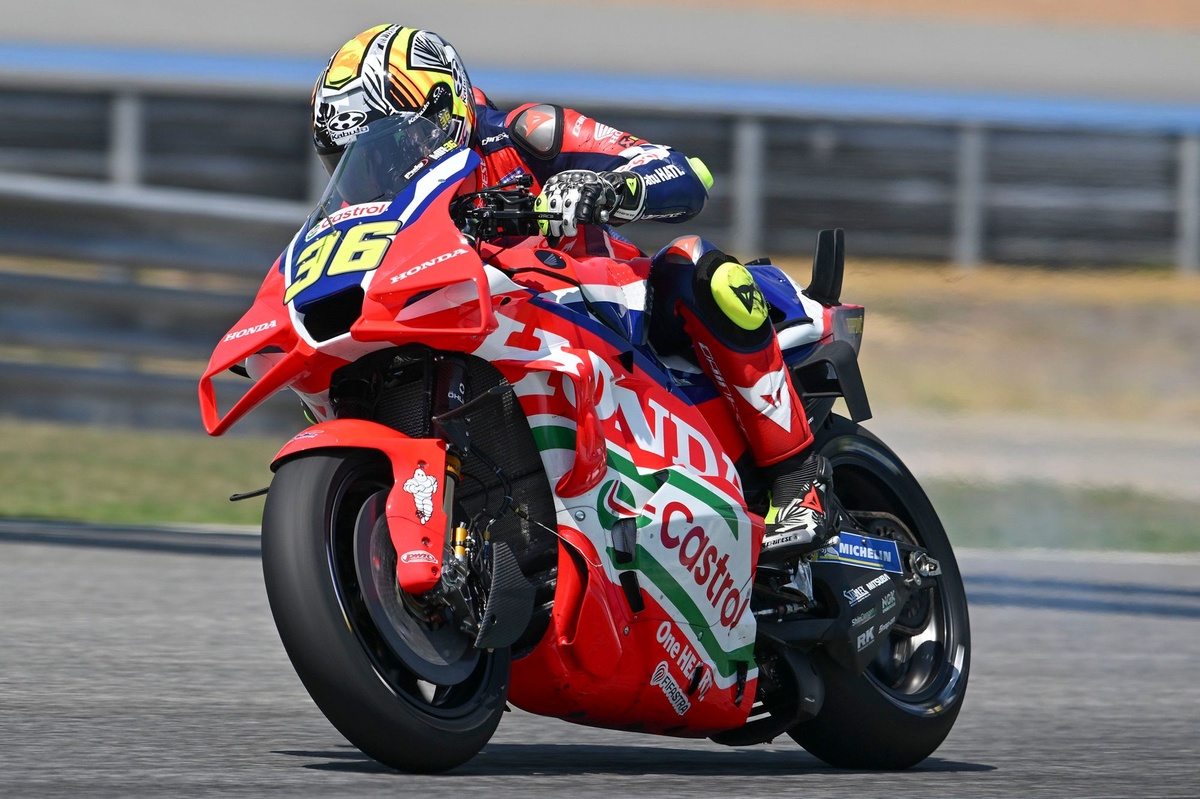
The shortcomings of Honda’s Formula 1 engine that are currently hampering Aston Martin could have a direct impact on the Japanese manufacturer’s MotoGP operation, which for the past five years has been integrated under the same Honda Racing Corporation (HRC) structure that oversees both its two- and four-wheel racing programmes.
Being the most powerful manufacturer in the MotoGP paddock brings clear advantages. For instance, Honda has been able to remain largely on the sidelines of the tensions that have emerged in recent months between the championship’s manufacturers’ association (MSMA) and MotoGP Sports Entertainment (previously Dorna), the series promoter.
Both sides have been negotiating the terms of a new commercial agreement that will bind them from 2027 to 2031. Yet Honda has preferred to keep some distance from the bloc formed by Ducati, Yamaha, Aprilia and KTM, behaving almost as if the matter did not concern it directly.
But, as is often the case, things are rarely black or white. Belonging to one of the world’s 10 most powerful automotive groups provides financial strength, but it can also expose a brand to problems that originate outside its immediate sphere of influence.
Right now, the fire Honda most urgently needs to extinguish is burning in F1. Aston Martin has found itself in deep trouble as a consequence of the power unit fitted to its AMR26, supplied by Honda from this season onward.
The F1 campaign began last weekend in Australia, where the Silverstone-based squad effectively went through a public catharsis. Adrian Newey – the engineering guru recruited by team owner Lawrence Stroll to lead Aston Martin to the top – openly highlighted the shortcomings of the power unit.
Fernando Alonso, Aston Martin Racing
Photo by: Joe Portlock / Getty Images
The renowned British designer did not mince words when explaining the root cause of the reliability issues that prevented the team from completing a normal pre-season programme. Across the six days of winter testing in Bahrain, Aston Martin’s two Honda-powered cars managed only 2,111km – compared to Mercedes’ 21,551km (across eight cars) and Ferrari’s 16,121km (six cars).
According to Newey, engine vibrations are damaging the batteries and transmitting through the chassis and steering wheel to the drivers’ hands.
“I don’t know how you can compare it. I guess just electrocute yourself on a chair or something like that, not far off,” said Lance Stroll. Neither the Canadian nor Fernando Alonso ended as classified finishers in the opening round of the 2026 season, which heads next to Shanghai this weekend.
For now, Honda has limited itself to absorbing the criticism without attempting to mitigate the potential damage to its image and reputation. While it is taken for granted that alarms have been triggered at HRC’s headquarters in Sakura to find a solution as quickly as possible, another arm of the racing department is already bracing for the collateral damage of the F1 crisis.
“In MotoGP, this will definitely have an effect,” a Honda executive with direct links to both the two- and four-wheel divisions told Autosport. “We share the same structure with F1, and the immediate efforts will now be focused on solving that problem.”
Even the relatively healthy performance of Honda’s motorcycle sales division – in contrast with the broader slowdown affecting the automotive sector – may not be enough to strengthen the arguments of MotoGP bosses Yuzuri Ishikawa and Taichi Honda once Hikaru Tsukamoto steps down from his position on 1 April.
“The idiosyncrasy of Japanese corporate culture makes it very unusual for a subordinate to question an order coming from above,” a source accustomed to working with Japanese teams explained.
Ironically, the F1 ‘fire’ has erupted at a time when Honda had begun to show clear signs of progress in MotoGP, at least according to the numbers. Last season it was the manufacturer that improved the most compared to 2024, scoring 35% more points – an increase that lifted it from concession rank D to C.

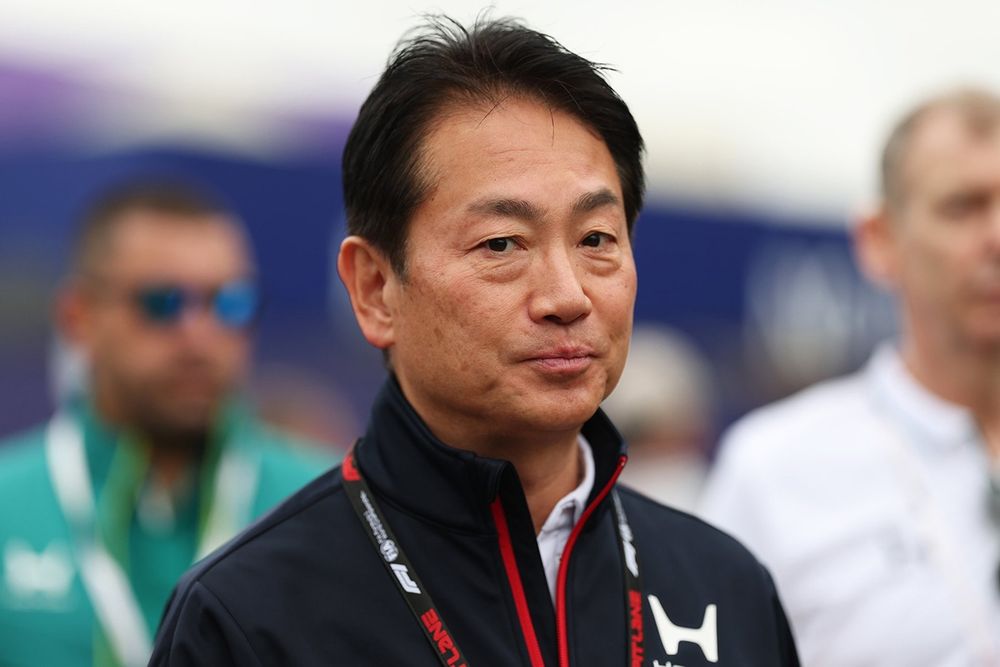
Koji Watanabe, President, CEO and Representative Director of Honda Racing Corporation
Photo by: Sam Bloxham / LAT Images via Getty Images
Two weeks ago in Thailand, at the opening round of the MotoGP season, a particularly competitive Joan Mir was battling VR46 Ducati’s Fabio Di Giannantonio for fifth before the rear tyre on the Spaniard’s bike collapsed with five laps remaining.
Riding that wave of positive momentum – and with a major regulation overhaul looming in 2027 – it is understandable that Honda’s MotoGP staff are uneasy about the decisions HRC’s leadership might take, as it seeks to untangle the complex situation currently unfolding in F1.
The seat carrying the greatest responsibility belongs to HRC president Koji Watanabe. Under his leadership, Honda decided in 2022 to bring its two- and four-wheel racing programmes under a single structure in order to optimise resources and create technical synergies – particularly to help MotoGP, which at the time was stuck in a deep competitive slump.
“We have started to use HRC’s facilities in Sakura – a development centre for F1 engines, power units and chassis for four-wheel vehicles – for our two-wheel projects as well,” Watanabe told Autosport in October 2024. “Having the two- and four-wheel divisions working together is very beneficial.”
At the time, Red Bull was charging toward a fourth consecutive world title with Max Verstappen – powered by Honda engines – a stark contrast to the ordeal Aston Martin now finds itself enduring.
We want to hear from you!
Let us know what you would like to see from us in the future.
Take our survey
– The Autosport.com Team
Read the full article here


