

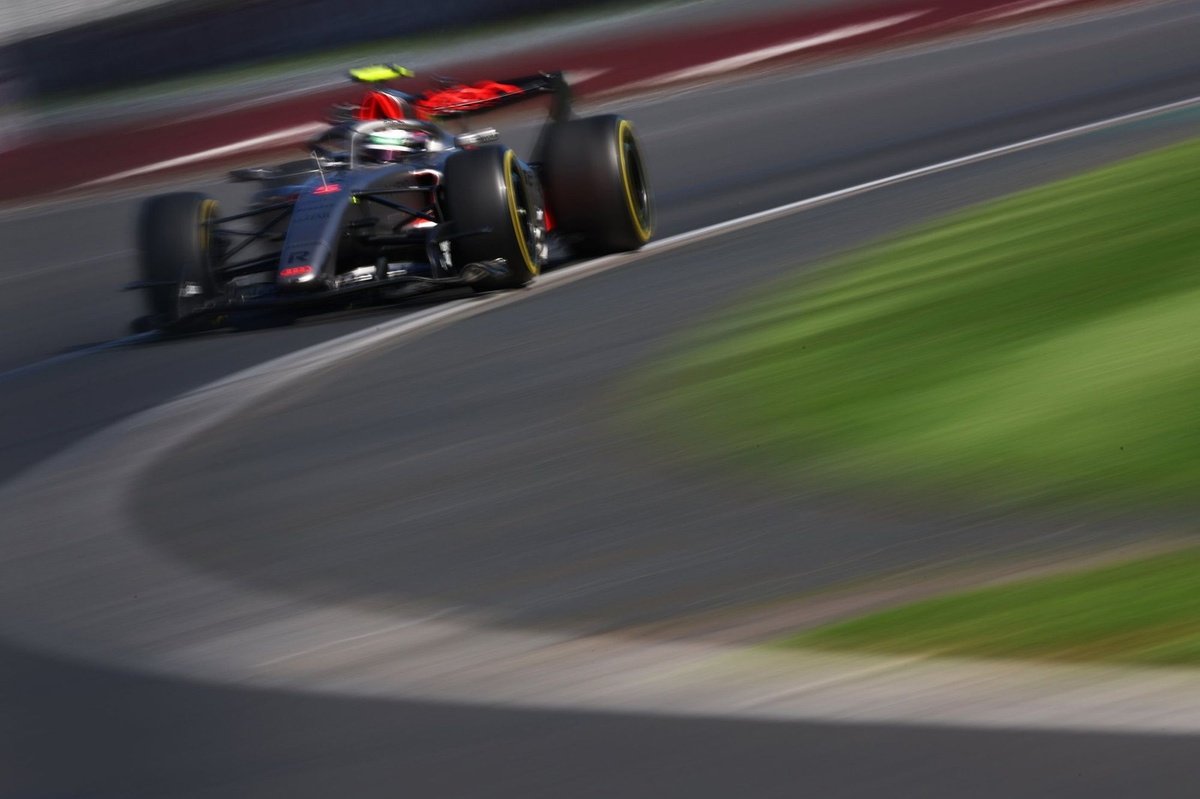
Two and a half hours before the start of the final free practice session at Formula 1’s Australian Grand Prix, teams were informed about what would effectively be a modification of the circuit. The FIA deemed it necessary for safety reasons to remove straight mode 4 – the zone between Turns 8 and 9.
The initial intervention came after the drivers’ briefing on Friday evening, during which some drivers had indicated that it would be dangerous to take that zone – including multiple kinks – flat-out with the front and rear wings open. According to Nikolas Tombazis, the FIA’s single-seater director, seven of the 11 teams would have a downforce problem to varying degrees, but judging by the political unrest that followed the matter turned out to be more nuanced than that.
Several teams pushed back against the FIA intervention on safety grounds, after which the measure was eventually reversed less than an hour before the start of FP3.
“We had a meeting yesterday with the drivers and some expressed a concern that the downforce in that area was a bit too low, especially if they were fighting for position with other cars and they felt they could risk losing control of the car in such conditions,” the FIA’s single-seater director explained before the decision was reversed.
Audi was one of the teams pushing for change, although Tombazis emphasised the bigger picture went beyond the request of just one team.
“I think it’s about seven of the 11 teams, so for a big proportion the downforce they had on the front wheels following our three parameters was less than we had anticipated and made what looked like a safe choice transpire to be unsafe.”
After criticism from other teams, that final point was placed in a different light. The FIA is now of the opinion that teams that encounter problems in this part of the track should solve those themselves with their straight mode choices or set-up rather than through collective intervention.
George Russell, Mercedes
Photo by: Martin Keep / AFP via Getty Images
What was the effect on the competitive picture?
Such an intervention would have affected the competitive picture, which is why other teams were so strongly opposed. It would have benefited those who did not have enough downforce with straight mode open to take the kinks flat-out, without any risk. Those teams might have a competitive disadvantage in that particular section compared to teams for which that section is easily flat-out with straight mode open – which in any case includes the four top teams.
“Some teams may argue it penalises those who have taken that factor into account. And that is true. But we acted on the basis of safety, so we couldn’t go and say: ‘well, you’re losing too much and you need to make a change, and your car is okay’. We didn’t feel we had a good enough criterion to do that,” Tombazis said.
An hour later, however, collective action was abandoned. This was because several teams in the paddock considered it too much of an artificial leveller.
Teams criticise challenge posed by last-minute change
An even bigger objection raised by teams was related to the timing of the proposed intervention. After the subject had been raised during the drivers’ briefing, the FIA analysed data overnight – during the European daytime. Teams were only informed at 9:45am Australian time, meaning they would have had just two-and-a-half hours before FP3.
“It’s going to be hard work for the teams, no doubt. I’m not in any way claiming it’s a walk in the park,” Tombazis said. “We informed them, I think it was about quarter to ten this morning, or something like that, approximately that time, give or take 10 minutes.”
This happened without consulting the teams’ technical directors, which meant the announcement came as a surprise to most of them to most of them – and that surprise would have had enormous consequences if the measure had gone ahead. Firstly, teams would have had to adjust their set-ups, as the trade-off between drag and downforce would have changed.
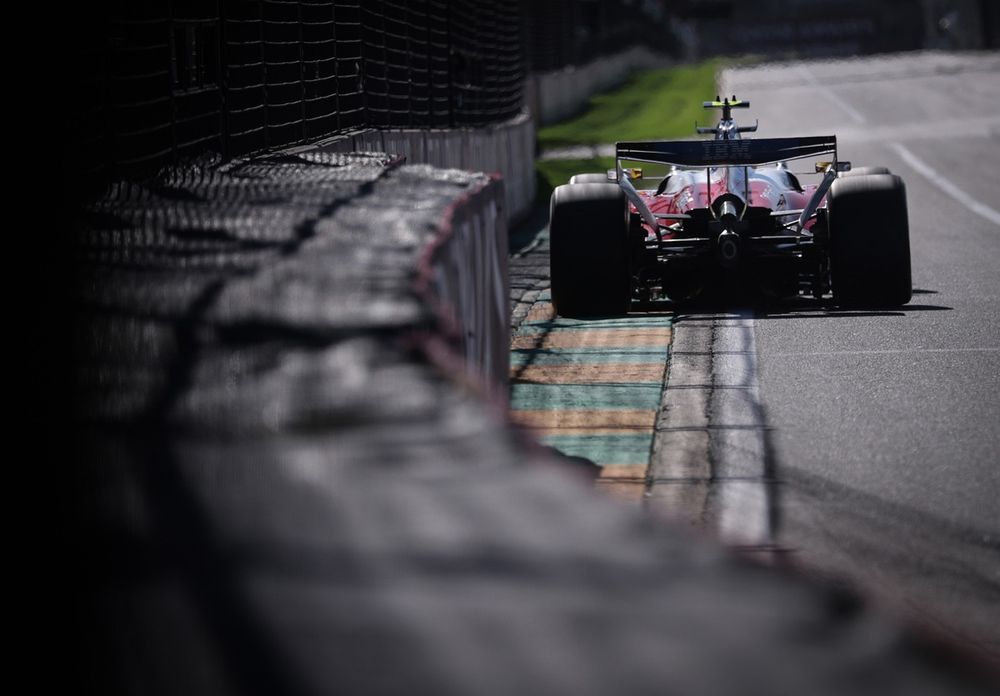
Lewis Hamilton, Ferrari
Photo by: Lars Baron / Getty Images
In addition, it would have had major implications for energy deployment. According to multiple teams, power unit manufacturers have spent weeks or even months to find the ideal deployment strategy for each circuit. That ideal deployment would have changed due to the intervention, meaning teams would have had to adjust their settings at the last minute.
What would it have meant for the overall show in Melbourne?
The final factor – and one that should not be underestimated – is that such an intervention would have made the overall show even more complex. Melbourne is what Andrea Stella described as a “harvesting-poor track”, and precisely that would have been pushed to further extremes by removing a straight mode zone.
By removing zone 4, drivers would have run with significantly more drag in that section – meaning more energy would be consumed. This affects both the deployment and harvesting sides of energy management. Because of the different drag levels, drivers would arrive at the braking zone for Turn 9 at lower speeds, meaning they would recover less energy there.
“It is worse for energy recovery, because they will arrive at the braking zone at a lower speed and hence recover less energy,” Tombazis admitted. “On the other hand, on balancing factors, we felt that we needed to be on the side of caution. Going forward in the future we believe that A, we’ve learned, so hopefully we will avoid such a surprise for future races, and B, we feel that we could take more desirable decisions in the future based on how strong the straight mode zones can be.
“What I mean is that this is a rather draconian solution here, at the time we have received the comments, but we feel there will be better ways to act on this matter going forward.”
That draconian measure was reversed, although it above all shows that these new regulations are still very much a work in progress. Much to the frustration of teams, that process even seemed to be happening during a race weekend – with some paddock sources speaking of “moving the goalposts” – although after a turbulent morning in Melbourne it ultimately did not come to that.
We want to hear from you!
Let us know what you would like to see from us in the future.
Take our survey
– The Autosport.com Team
Read the full article here