






During the opening weekend of the 2026 Formula 1 season, much of the media attention was on the number of batteries that Honda had to its disposal in Melbourne.
But that Friday, Adrian Newey made an unrelated, even more interesting comment. The legendary designer revealed that Aston Martin did not know until November 2025 that Honda’s F1 project was in a completely different state compared to the glory years with Red Bull.
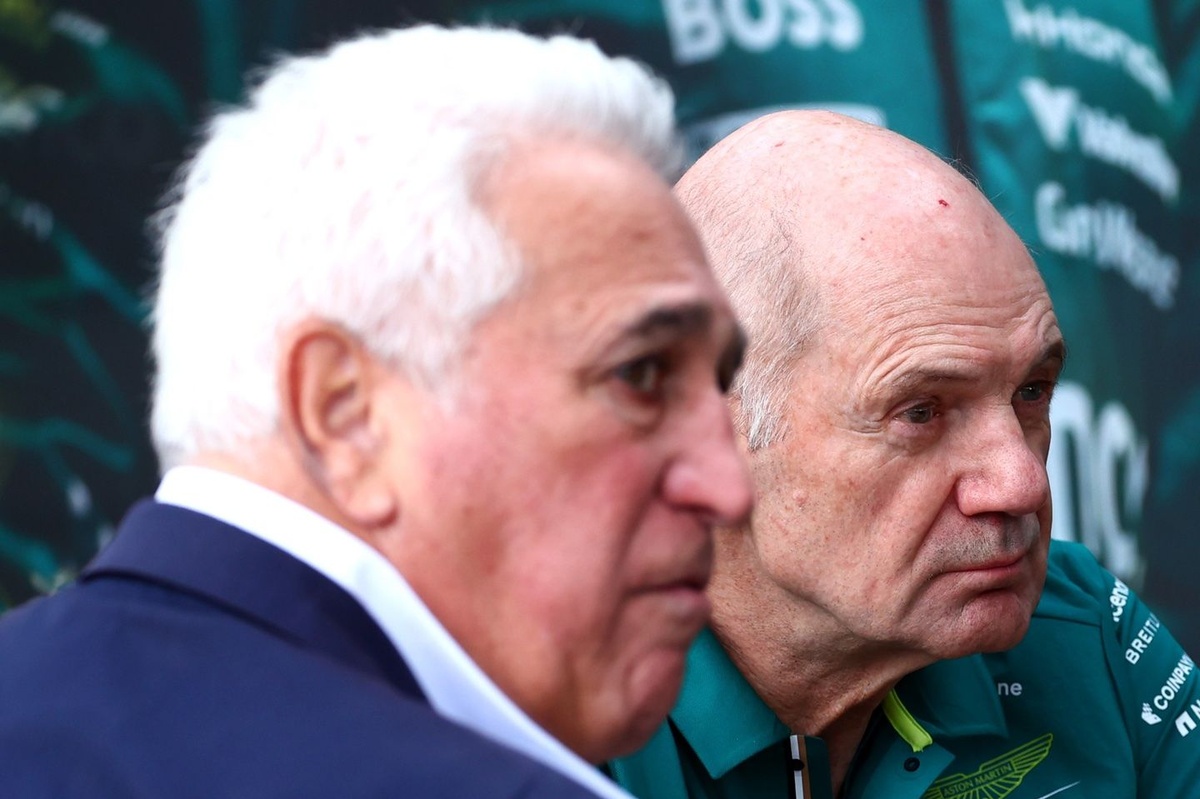
“No, we weren’t [aware of that],” Newey replied in Australia. “We only really became aware of it in November of last year when Lawrence, Andy Cowell and myself went to Tokyo to discuss rumours starting to suggest that their original target power they wouldn’t achieve for race one.
“And out of that came the fact that many of the original workforce had not returned when they restarted, so no is the answer.”
It sounds surprising given the deal was formally announced as early as May 2023. Newey’s words imply that Aston Martin did not fully know what it was signing up for at the time, although team members stress that the situation is more nuanced than that and that several leadership changes at Aston Martin have played a role.
What is behind the “misunderstanding” mentioned by Honda?
Furthermore, when asked about it by Autosport in Suzuka, Honda Racing Corporation president Koji Watanabe explained that the situation partly came down to what he described as “a misunderstanding”.
“Yes, basically I think that it’s a misunderstanding,” he said. “Basically, our policy is to rotate the engineers of the motorsport [projects] regularly to mass production or more advanced technologies like jet, eVTOL, hydrology or something like that. So that is [part of the explanation], we continued to rotate from the beginning.”
Koji Watanabe, President, CEO and Representative Director of Honda Racing Corporation
Photo by: Sam Bagnall / Sutton Images via Getty Images
“Also, as I said, to rebuild the organisation took a bit of time. That was his worry, I think, but now we have sufficient organisation and talent.”
Watanabe’s words require some explanation. Part of the misunderstanding is that expectations from the outside world were too high. Those expectations were still based on the success with Red Bull and Max Verstappen, but the reality at Honda had changed significantly since then.
“We stopped the Formula 1 activities at the end of 2021 and announced to return to Formula 1 in 2023, so there is some period that our Formula 1 activity was quite limited,” Watanabe admitted. “It also took a bit of time for us to rebuild the organisation to restart Formula 1 development.”
In the intervening period, many employees were reassigned to other divisions within the broader company. This mainly concerned the mass production of road cars, but also motorbikes, racing motorbikes, reusable rockets and even solar panels – something Newey jokingly referred to in Melbourne.
For various reasons, including personal ones, many members of the original F1 team did not return to the project afterwards.
This means that the team now has a significantly different composition and lacks F1 experience from the Red Bull years. A second consequence is that rebuilding the project has taken more time than Honda initially anticipated.
Aston Martin could logically not have known the latter when it signed the deal back in 2023, and exactly this is part of the “misunderstanding” that Watanabe referred to in Suzuka.
Vibrations not fully visible on Honda’s F1 dyno

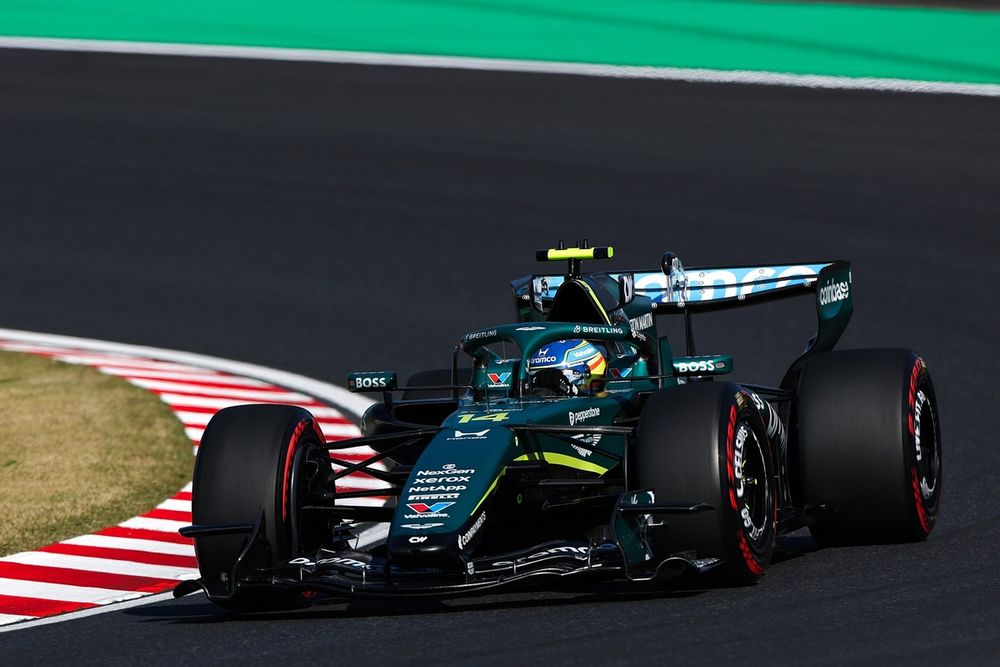
Fernando Alonso, Aston Martin Racing
Photo by: Simon Galloway / LAT Images via Getty Images
However, the HRC president emphasised that the collaboration between Aston Martin and Honda was now fully up and running after a challenging build-up phase.
“The relationship between Aston Martin Aramco and Honda is quite good,” he continued. “So, between the actual development team, like in the case of Honda, [Tetsushi] Kakuda is the project leader of the power unit, and also Enrico-san [Cardile] on the Aston Martin side, they closely work together. Also myself and Mr Stroll, myself and Adrian Newey, we have quite a good relationship, so I have no worry about that.”
Having said that, there is still a lot of work to be done, both in terms of reliability and in unlocking pure performance for both 2026 and 2027. Aside from the human aspect, the current situation has also been affected by the fact that not all of Honda’s issues were visible in their pre-season simulations.
“The most difficult point is that we started the development a bit later compared to the others,” Watanabe explained. “Also, in the tests on the dyno the vibration is on an acceptable level, but once we integrate it in the actual chassis, that vibration is getting much more than the tests on the dyno. So, of course only the PU cannot solve the problem. We are working really closely together with Aston Martin Aramco to solve the problem, not only on the power unit but also together with the chassis.”
We want to hear from you!
Let us know what you would like to see from us in the future.
Take our survey
– The Autosport.com Team
Read the full article here


