



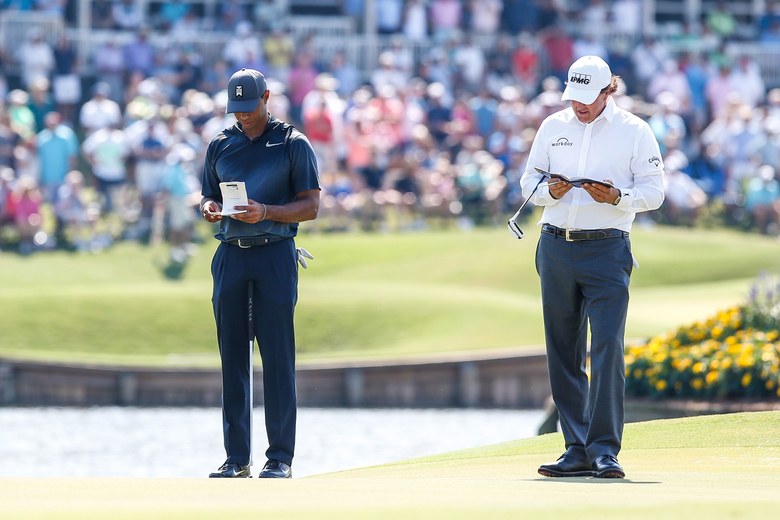
Golf has created a reputation of being a sport built on patience and accuracy, with the slightest misjudgement in a shot having severe consequences. Despite the quiet nature of golf, fierce rivalries have created some of the most entertaining and iconic moments in sports history. Some sports rely on physicality and heated arguments, but in golf, the best rivalries have been built on the players’ determination and mental strength to be the best player that they can be. These rivalries have helped to push the best players to the limit of their ability, while bringing in a bigger fan base to the sport.
The biggest rivalries in golf have single-handedly drawn in new fans who may not have once considered watching golf. They brought emotion to a sport that, for a long time, was simply known for its incredible difficulty and grace.
Jack Nicklaus and Arnold Palmer
During the 1960s and 70s, golf was dominated by two stars who couldn’t have been more different if they had tried. Jack Nicklaus was well-known for his calm and methodical approach to golf, meaning that even under the most intense pressure, he could still perform. In comparison, Arnold Palmer was notorious for being bold and charismatic. Palmer played into the crowd and fed off their energy when performing on the course. Whenever these two were paired against each other, their clash in styles and personalities made for an entertaining clash every time.
Nicklaus and Palmer became the faces of golf during a time when television was just starting to become mainstream, meaning people from across the world could watch them compete. Their rivalry gave fans a reason to care about tournaments beyond the scorecard; it also gave non-golf fans a reason to tune in and witness history unfold in front of them. Palmer represented the people’s champion, a man who played with emotion and flair. Nicklaus, often seen as the more serious figure, earned respect through consistency and incredible records.
In many rivalries, there is hatred and little respect shown, but what made them so amazing was the mutual respect they shared. They pushed each other to the best of their abilities to reach new heights while maintaining respect for one another’s skills. Nicklaus went on to win a record number of major championships, but Palmer’s influence on the popularity of golf is impossible to measure. Together, they created an era that lifted the sport to global recognition.
Tiger Woods and Phil Mickelson
When Tiger Woods burst onto the scene in the late 1990s, he transformed golf completely. In an early interview, he was branded as cocky and arrogant, but as we know today, everything he said would come true. His power and mental toughness set a new standard. Yet, it takes two to tango, and the great Phil Mickelson filled that role. Known for his creativity and left-handed swing, Mickelson’s fearless approach made him one of the few players who could truly challenge Tiger during his peak. At the height of their rivalry, major tournaments generated a level of anticipation that reminded many fans of how certain daily routines, such as checking the 49s, became small rituals of the day.
Their rivalry went on for decades and became the storyline that dominated the headlines in modern golf. Woods was often the player to beat, but Mickelson’s determination and flair ensured that every major championship had an edge of unpredictability. Their contrasting personalities also fascinated fans. Woods was reserved and calculated, while Mickelson was expressive and enjoyed taking risks.
At times, the tension between them was noticeable, especially in their early years when both were at the height of their powers. However, as time went on, the mutual respect between the pair grew. Especially when they teamed up in team competitions and charity events, fans saw a different side to their relationship. What began as a fierce rivalry evolved into one of the most memorable partnerships in the sport’s history. Their competition raised the quality of golf for an entire generation and inspired countless players to follow in their footsteps.
Seve Ballesteros and Nick Faldo
In the 1980s and early 1990s, European golf was dominated by two very contrasting figures. Seve Ballesteros was unpredictable and loved for his flair around the greens. Nick Faldo, on the other hand, was disciplined and known for his focus and preparation, especially on the big stage. When these two met in major tournaments or Ryder Cup battles, it felt like a clash of personalities as much as a contest between players.
Ballesteros represented the heart of European golf, bringing emotion and creativity to every match. His style captured the imagination of fans, and his energy helped Europe challenge the dominance of the United States in team competitions such as the Ryder Cup. Faldo, on the other hand, was the perfectionist who believed that success came through control and consistency.
Their rivalry gave European golf an identity and helped elevate the continent’s reputation in the global game, which for a long time was dominated by the US market. They were completely different in temperament, yet their shared hunger for victory united them as symbols of golfing excellence. Both men inspired new generations of European golfers to believe they could stand toe-to-toe with the best players in the world.
The Power of Rivalries
Rivalries have a unique place in golf because they combine skill and psychology. When two elite players compete repeatedly over the years, they begin to understand one another’s strengths and weaknesses better than anyone else. This familiarity creates tension that draws in fans and heightens every tournament’s drama.
Unlike other sports, golf rivalries are rarely built on hostility. They are grounded in appreciation for one’s ability and the desire to win fairly. Even when players compete fiercely, they share a connection that comes from understanding the demands of their profession. Every rivalry adds a new chapter to golf’s long history, reminding fans why the sport has remained popular through generations.
Read the full article here