

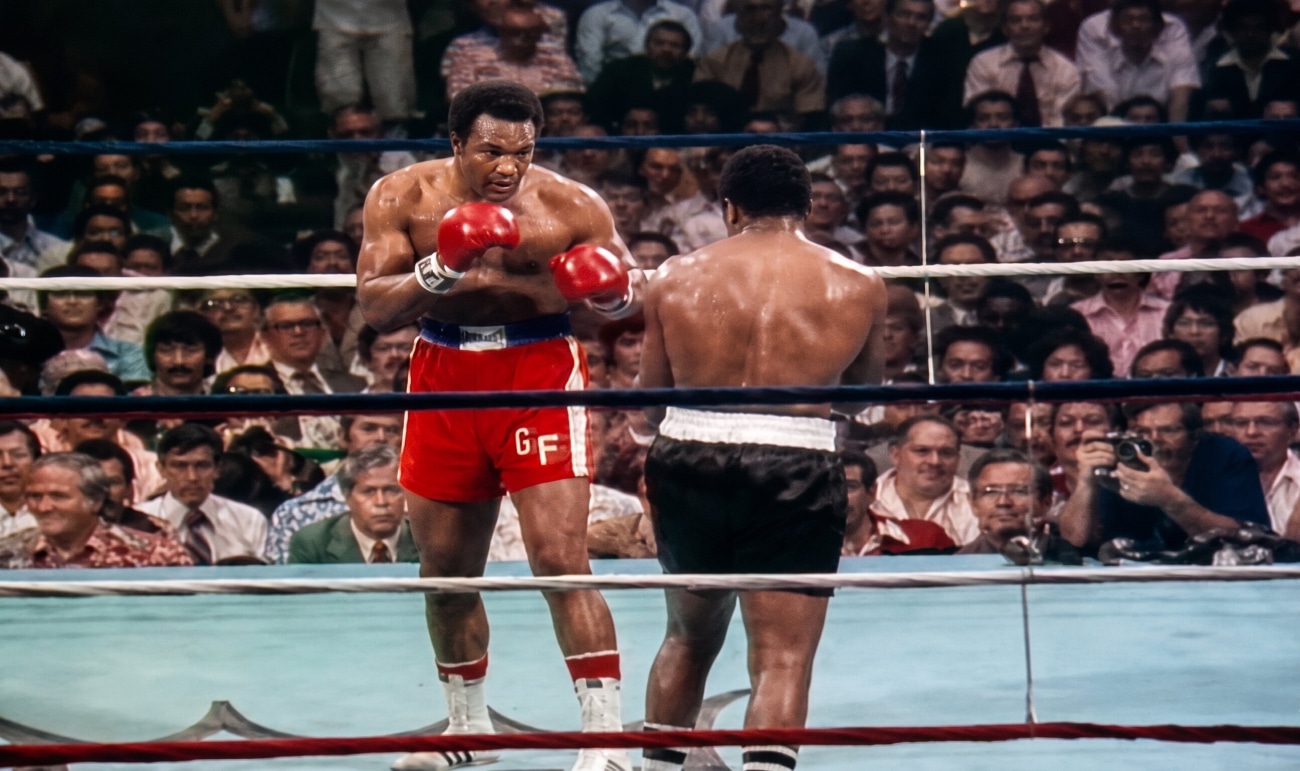

Gil Clancy later explained that Foreman had become preoccupied with techniques introduced by another trainer. Clancy recalled watching Foreman carry his hands unusually high and attempt tactics that did not suit his natural fighting style.
After six rounds, Clancy had seen enough. He instructed Foreman to abandon the experimentation and pursue the knockout.
The change was immediate. Foreman attacked with conviction in the seventh. A heavy left hook left Young barely conscious. Young later admitted he was effectively out while remaining upright and believed Foreman could have pushed him over with one finger.
Young survived through clinching, movement, and desperation. Foreman had finally created the crisis that might have ended the fight earlier, but the San Juan heat was already draining his energy.
The delay proved disastrous. Every quiet round allowed Young to grow more comfortable while keeping Foreman inside an oppressively hot arena. Foreman wasted strength following him, wrestling during clinches, and pursuing a knockout after his best opportunity had passed.
Young returned to his defensive rhythm. Foreman became increasingly exhausted during the later rounds as Young scored with jabs and right-hand counters. In the 12th, Young dropped him with a right hand and secured a unanimous decision.
The result became the greatest achievement of Young’s career and his final win over a major heavyweight. He lost a WBC eliminator to Ken Norton eight months later before dropping consecutive decisions to Ossie Ocasio.
Foreman’s defeat did not prove that Young had discovered a dependable formula for beating elite heavyweights. The conditions came together perfectly for him. Foreman surrendered six rounds, the referee penalized his rough work, and the heat punished every minute he had wasted.
When Foreman finally fought like himself, he nearly finished Young. He had waited six rounds too long.
Read the full article here