

If you ask professional athletes, they’ll tell you. Losing is no fun. But in Major League Baseball, losing big can be especially tedious.
An MLB seasons boasts a whopping 162 games (twice as many as the NBA and NHL) and even the best hitters fail two-thirds of the time at the plate. If a pitcher wins half his starts, he’s an All-Star. Because of that, says decorated starter Jamie Moyer, a losing campaign takes on a particular consequence.
“It’s like pulling a tractor trailer with no tires behind you all season,” Moyer tells the Guardian. “It’s just heavy!”
Moyer would know. The former All-Star and World Series champion saw it all over his 25-year career. He was on the team with the best regular-season record in baseball history (the 2001, 116-game-winning Seattle Mariners) and he was on some dogs (the 64-98 2012 Colorado Rockies). Winning covers over a team’s ills. But losing only exacerbates them, he says.
“When you’re not playing well, having a tough season, whether it’s individually or as a team, things tend to rear their ugly heads a little differently,” Moyer offers.
But while casual baseball fans may think to change a losing season from bad to better takes a well-timed home run or a ninth-inning comeback, Moyer, who retired in 2013 as the oldest player in MLB history ever to record a win, says it’s about subtler things.
For example: maybe a player notices his teammate isn’t running to first base fast enough on a ground ball. When a lack of effort like that is shown, the player might call the other guy out on it. “Maybe it’s happening far too often,” Moyer says. “Somebody might grab somebody and take them down into the tunnel. I’ve seen it happen a lot of different ways.”
Moyer says he’s seen guys come into the dugout after making a lazy effort to first and another teammate yells, “Hey, blankety-blank-blank-blank! Are you hurt? Then why aren’t you running hard out there?”
Anything from a brief conversation to fisticuffs may ensue afterwards. “It goes on from there based on the answers,” Moyer notes. “I’ve been on teams where a guy didn’t hustle to first base and the manager, as soon as he got back into the dugout, would walk over to him and say, ‘Hey, I’m going to replace you right now, have a seat.’”
In baseball, a number of factors determine the outcomes of games – almost too many. Talent, chemistry, preparedness, resilience. Then there are umpires, the weather, and whether or not the team made it to the hotel the night before to get enough rest on a road trip. For Moyer, success (and sanity) comes down to controlling what you can control. For him, that meant looking in the mirror.
“There are times in my career when I felt it,” says Moyer, who finished his time in the majors with a record of 269-209. “We’ve lost four games in a row and now it’s my turn in the rotation. I’m having that self-talk, like, ‘Hey, pal, it’s on you tomorrow. If you want to contribute to your team, wow, what a great time to do it.’”
Most players will say baseball is more a mental game than a physical one. It’s often what’s between the ears that gets a player through a long year. For former All-Star catcher Alex Avila, to sustain a long campaign, it’s essential to avoid wallowing when things get tough.
“It’s easy to fall in a trap of feeling sorry for yourself, feeling sorry for the team when things are going poorly,” the former Detroit Tigers backstop says.
But Avila has a cure – a mantra to remember when the future looks bleak.
“It’s always important for major league players to remember – when you’re in the big leagues, you’re the best of the best,” Avila says. “When you’re at that level, you’ve never that far away from turning it around.”
A pro’s pro, the catcher knows that whether or not a team achieves the overarching goal of making the playoffs, there are always little wins to shoot for.
“There were some years that by the middle or end of the season we knew we weren’t in contention,” Avila says. “And that’s a difficult pill to swallow. But there’s still quite a bit to play for throughout the rest of the year.”
Every team wants to win the World Series, but it doesn’t simply happen by wishing. “How do you get there?” muses Avila, the son of a former MLB GM. “You can’t just snap your fingers. You have to be able to work toward those goals. Stepping stones.”
As a catcher, Avila knew it was his job to play well on offense and defense. It was also his job to help others play well. Sometimes that meant dealing with personalities, sometimes that meant calling impromptu team meetings when a dark cloud hung over the team.
“There were times we struggled with the Tigers even during some of our best years,” Avila says. “We’d have player-only team meetings. Not something formal or announced. It’s just that we had a tough game and now six or seven of us are in the clubhouse figuring out what we need to do, how we can change it.”
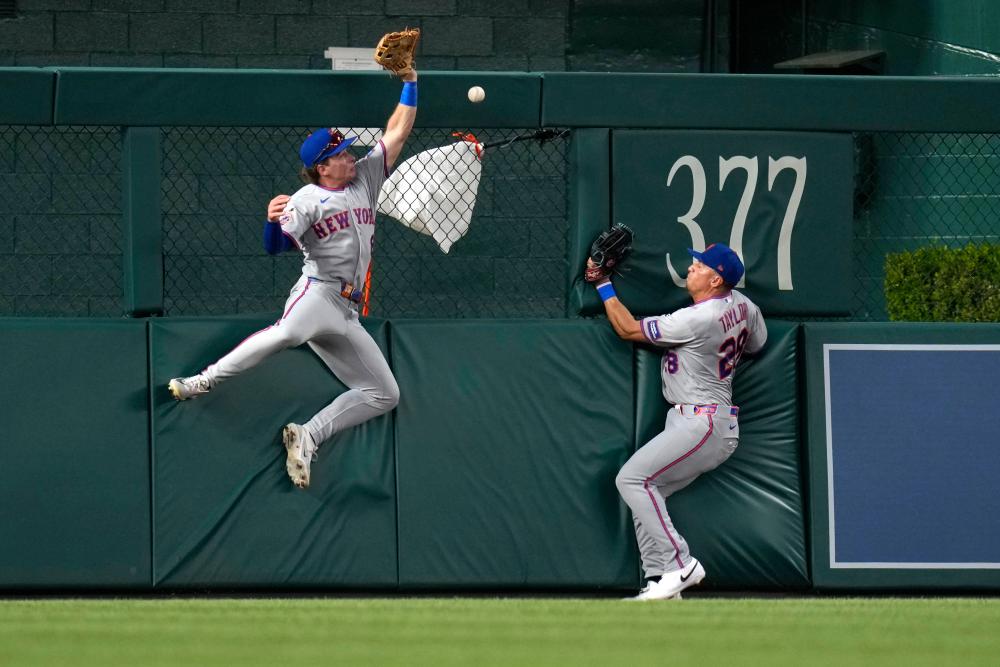
More than any other sport, the baseball season is a slog. Moyer calls it a “marathon”. This season, the Mariners and the (expensive) New York Mets have endured painful losing stretches that have affected their standings. Other teams, though, including the Tigers and the Boston Red Sox, have seen bad springs turn into fruitful summers.
Playing for the Phillies in the late 2000s, Moyer says he learned a lot from his manager, Charlie Manuel, about dealing with the peaks and valleys. He picked up tips on how to navigate poor stints – and even how to stave them off before they arrived. Again, it was about smaller interactions.
“He would pull players aside or talk to you early in the afternoon at the ballpark,” Moyer remembers. “Like, ‘Hey, how you doing? Hey, did you ever think about this or about that?’”
When Moyer got to Philly in 2006, the team just missed the postseason. In 2007, they lost to a buzzsaw Colorado team. But all the work and all that time sitting with the bitter taste of loss helped the team win it all in 2008.
“Failure,” says Moyer, “propelled us into ’08.”
But that mental edge is key not just in good times, but in lean ones, as well.
“Pre-game, during a bad year,” Moyer says, “I’m not thinking about losing. Whether you believe it or not, I have to believe I’m going to be successful. I have to believe the four days of work between starts has gotten me to the point where I’m ready to make my next one.”
Part of that work comes off the field. Dealing with planes, hotels, workouts. Enduring that marathon season can drain a person. But Moyer tries to put it all in perspective. “I liken it to somebody working in a mill,” Moyer says. “You can’t compare playing baseball to putting out a fire or operating on a human being. I didn’t look at it as drudgery.”
That veteran mentality can keep a team’s season afloat even in choppy waters. Sometimes there is no controlling a bad season – fate may yield a result no one intends. But that can’t stop a roster from trying to right the ship.
“Young guys would seek out my advice,” Avila says. “A season is long – 162 games is a lot. You never really know how to navigate it until you actually have to go through it. It’s a grind. But it’s a great grind.”
Read the full article here