

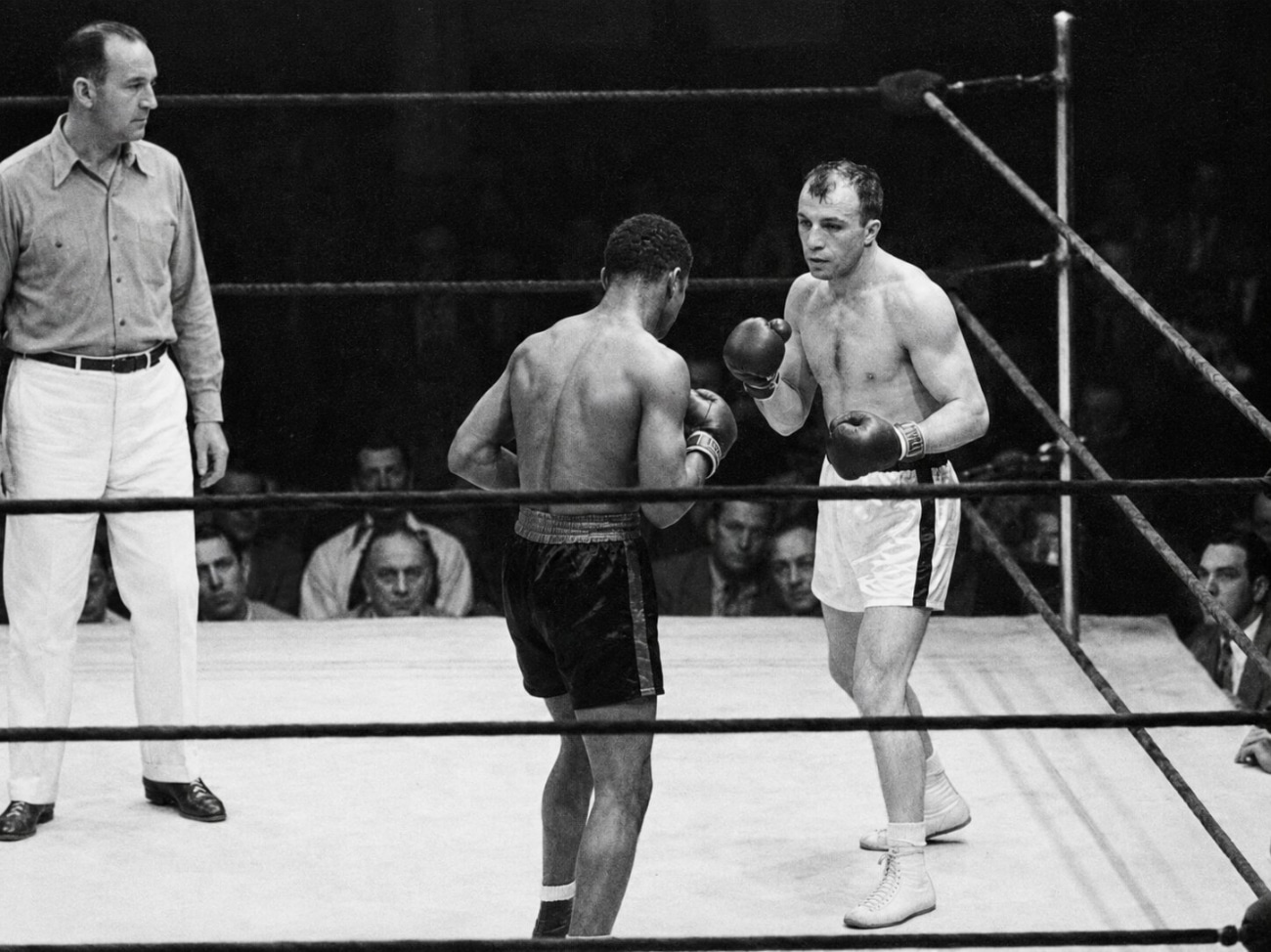

Ambers (89-8-7) was one of the sport’s top lightweights. Known as “The Herkimer Hurricane,” he had built his reputation through victories over elite opposition and entered the bout as the undisputed champion. Armstrong (88-10-7) already held the featherweight and welterweight championships as he pursued an unprecedented third world title. Both men would later be inducted into the International Boxing Hall of Fame.
From the opening bell, Armstrong fought in the relentless style that earned him the nickname “Homicide Hank.” From the opening bell, Armstrong applied constant pressure, forcing Ambers to fight at a fast pace. Ambers landed counters and combinations, but Armstrong continued moving forward and forcing the exchanges.
The challenger gained a major advantage during the early rounds. Late in the fifth, Armstrong landed a crushing right hand that sent Ambers to the canvas. The bell arrived before Armstrong could fully capitalize, allowing the champion precious time to recover. One round later, Armstrong dropped him again for an eight-count before launching another sustained attack to the head and body.
Even after suffering two knockdowns, Ambers refused to break. Even after suffering two knockdowns, Ambers remained in the fight. He began landing more counters and won several rounds as the bout progressed.
Armstrong’s aggression came at a cost. He was penalized three rounds for repeated low blows, deductions that ultimately played a significant role in one of the closest championship decisions of his career.
Armstrong also fought through severe injuries, including a badly cut mouth and cuts around both eyes. Blood poured from his mouth throughout the contest, and referee Billy Cavanagh reportedly considered stopping the fight. Armstrong refused to quit, even discarding his mouthpiece during the closing rounds while swallowing blood to remain in the fight.
Ambers finished strongly, particularly during the championship rounds. His late rally energized the Madison Square Garden crowd, many of whom believed he had done enough to retain his title.
After 15 exhausting rounds, the judges were divided. Two officials scored the fight for Armstrong, while the third favored Ambers, giving Armstrong a split-decision victory despite the point deductions for low blows.
The verdict drew an angry reaction from many spectators. Fans who believed Ambers had earned the decision showered the ring with debris after the result was announced.
Armstrong later described the contest as the toughest fight of his career, saying he was nearly overcome by pain after the final bell. The bout was later named The Ring magazine’s 1938 Fight of the Year.
The victory completed one of boxing’s greatest achievements. Armstrong became the first and still the only fighter to simultaneously hold world championships in the featherweight, lightweight and welterweight divisions. He soon vacated the featherweight title because making 126 pounds had become impossible, but continued an active reign as welterweight champion.
Ambers received another opportunity the following year and gained revenge by defeating Armstrong via unanimous decision to reclaim the lightweight championship.
Their first meeting remains one of boxing’s defining championship fights. It combined elite competition, relentless action and a historic accomplishment that has never been duplicated, with Armstrong’s victory standing as one of the sport’s greatest achievements.
Read the full article here