

Goodbye, second round. Hello, first round.
Sure, we’re beginning at the back end of the first round, but the draft has operated under this structure for more than 20 years now. That gives us a pretty healthy sample size to evaluate what these draft positions have historically produced and what teams can reasonably expect when selecting in this range.
This is typically where the league’s most successful teams draft. If you finish with the best record in the NBA, you’re selecting 30th overall. If you’re consistently competing for championships, you’re often living in this neighborhood of the draft. As a result, success in this range is heavily dependent on an organization’s ability to identify talent, develop players, and find contributors who can outperform their draft position.
That’s easier said than done.
Many of these players are ultimately traded before they ever have a chance to contribute. Championship contenders often need proven veterans more than they need rookies, making first-round picks valuable trade assets rather than developmental projects. It’s one of the reasons this portion of the draft can be so fascinating to study.
The players who do break through often find themselves in ideal situations. They join stable organizations, earn opportunities, develop properly, and eventually become contributors to winning basketball. When you look at the best players drafted at the back end of the first round, that’s a common theme you’ll see over and over again. Talent matters. Opportunity matters too.
Before we begin our journey through the final 30 picks of the first round, let’s take a moment to look back at where we currently stand and the players who earned the title of best player selected at each draft position from No. 31 through No. 60.
|
Pick |
Player |
Year |
|---|---|---|
|
60 |
Michael Cooper |
1978 |
|
59 |
Pat Cummings |
1978 |
|
58 |
Kurt Rambis |
1980 |
|
57 |
Manu Ginobili |
1999 |
|
56 |
Amir Johnson |
2005 |
|
55 |
Luis Scola |
2002 |
|
54 |
Sam Mitchell |
1985 |
|
53 |
Anthony Mason |
1988 |
|
52 |
Rasual Butler |
2002 |
|
51 |
Kyle Korver |
2003 |
|
50 |
Steve Kerr |
1988 |
|
49 |
Eddie Johnson |
1977 |
|
48 |
Marc Gasol |
2007 |
|
47 |
Paul Millsap |
2006 |
|
46 |
Jeff Hornacek |
1986 |
|
45 |
Bob Dandridge |
1969 |
|
44 |
Malik Rose |
1996 |
|
43 |
Michael Redd |
2000 |
|
42 |
Stephen Jackson |
1997 |
|
41 |
Nikola Jokic |
2014 |
|
40 |
George Gervin |
1974 |
|
39 |
Khris Middleton |
2012 |
|
38 |
Steve Blake |
2003 |
|
37 |
Nick Van Exel |
1993 |
|
36 |
Mauric Cheeks |
1978 |
|
35 |
Draymond Green |
2012 |
|
34 |
Carlos Boozer |
2002 |
|
33 |
Jalen Brunson |
2018 |
|
32 |
Rashard Lewis |
1998 |
|
31 |
Danny Ainge |
1981 |
Got that? Okey dokey. Let’s get into the First Round…
Honorable Mentions:
Suns Taken at 30:
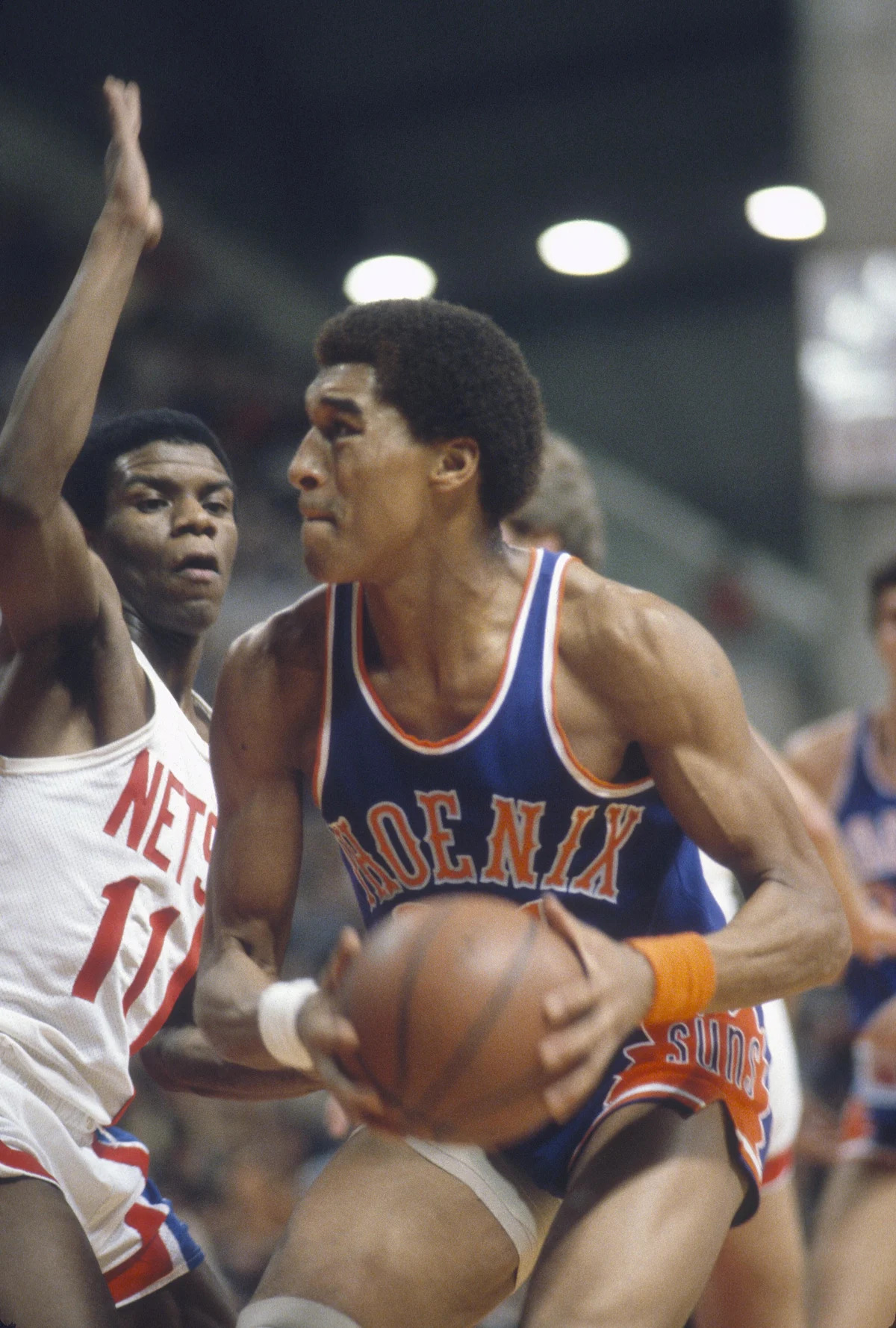
There were some good names drafted 30th overall. In fact, there are a few players who have strong arguments for this spot and who put together impressive NBA careers. Jimmy Butler is the answer, however. The reason is simple. He’s been the driving force behind two teams that reached the NBA Finals, and that level of impact is hard to ignore.
The Chicago Bulls selected Butler with the final pick of the first round in 2011. He wasn’t an immediate star, but it didn’t take long for him to establish himself as a valuable player. By his second season, he was already making a meaningful impact. By his third season, he earned All-Defensive Second Team honors, showcasing the toughness and competitiveness that would eventually define his career. Butler won the NBA’s Most Improved Player award and earned the first of four consecutive All-Star selections with Chicago. He had evolved from a role player into a franchise cornerstone, becoming one of the league’s premier two-way wings.
His career path would eventually take him to Minnesota, where things became complicated. Butler famously wanted out, frustrated by what he perceived as a lack of urgency and competitiveness from some of the team’s younger stars, including Karl-Anthony Towns and Andrew Wiggins. It’s funny looking back on that now. Both Towns and Wiggins eventually won championships. Butler still hasn’t.
After Minnesota, Butler landed in Miami in 2019, and that’s where his legacy truly took shape. He immediately transformed the culture of the Heat and led the franchise to two NBA Finals appearances. While Miami ultimately fell short both times, Butler’s postseason performances became the stuff of legend. He wasn’t merely making the playoffs. He was dragging teams deep into them.
Even now, at 36 years old, Butler remains one of the league’s most respected competitors. Before his injury-shortened last season, he was still averaging 20 points per game and proving that he could impact winning basketball at the highest level.
The résumé speaks for itself. Six All-Star appearances. Five All-NBA selections. Five All-Defensive Team selections. A Most Improved Player award. A steals title in 2021. Multiple Finals appearances as the best player on his team.
For the 30th overall pick, that’s an incredible return. Jimmy Butler may not have the championship ring that some of his peers possess, but when it comes to maximizing a draft position, few players have ever done it better.
29. Dennis Johnson (1976)
Honorable Mentions:
Suns Taken at 29:
*traded to the Nets on draft day for Landry Shamet
**traded to the Hornets on draft day for Mark Williams
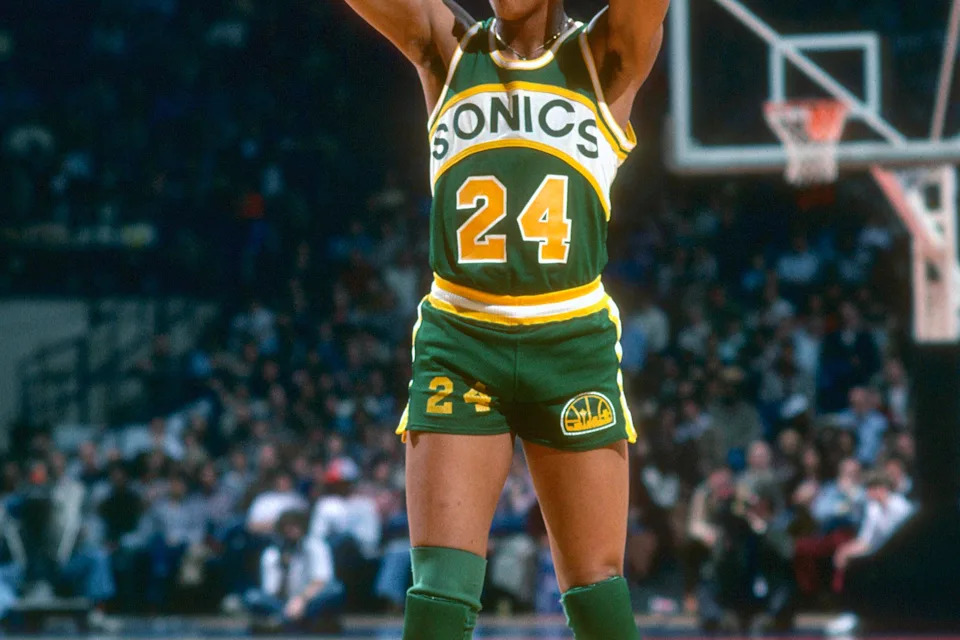
Dennis Johnson is one of those players who, as NBA history rolls on, tends to get lost in the shuffle. Part of that is probably because he passed away far too young at age 52. Part of it is because there aren’t endless highlight packages floating around social media showcasing what he did between 1976 and 1990. And part of it is because he wasn’t the loudest star on the floor. He wasn’t somebody who demanded attention. He simply won.
If I’m being honest, my guess is that if I had been old enough to watch Dennis Johnson play in real time, he would’ve been one of my favorite players. He feels like the type of guy I would’ve gravitated toward. The unsung hero. The player who does all the little things. The guy who shows up every night and gets the job done.
The Seattle SuperSonics selected Johnson 29th overall in the 1976 NBA Draft, and it didn’t take long for him to establish himself as one of the league’s premier guards. By his third season, he was already an All-Star and a First Team All-Defensive player. He spent four seasons in Seattle, and his final year there was his best. In 1979, the SuperSonics won the NBA championship, and Johnson was named Finals MVP.
Then came the trade that brought him to Phoenix. In the summer of 1980, Seattle dealt Johnson to the Suns in exchange for Paul Westphal. Once he arrived in Phoenix, he continued playing at an elite level. In his first two seasons with the Suns, he earned two more All-Star appearances, an All-NBA First Team selection, and two additional First Team All-Defensive honors.
He was everything you could want from a guard. He could score. He could facilitate. He could defend. Most importantly, he could win.
Unfortunately for Suns fans, his time in Phoenix didn’t last long. After only three seasons, the organization traded Johnson to the Boston Celtics in exchange for Rick Robey. Looking back, it’s one of the most painful trades in franchise history. Boston essentially acquired the final piece of its championship puzzle.
Johnson immediately became a critical component of Celtics teams that won championships in 1984 and 1986. Surrounded by Larry Bird, Kevin McHale, and Robert Parish, he did exactly what he had always done. He defended, facilitated, made winning plays, and elevated everyone around him.
If you want to build a championship team, Dennis Johnson is exactly the type of player you want on your roster. And for the Suns, it’s another reminder of where they failed to identify that unique trait, and it ultimately hurt their trajectory for a few seasons.
Need the résumé? Five-time All-Star. Three-time NBA champion. NBA Finals MVP. Two-time All-NBA selection. Nine-time All-Defensive Team selection. Naismith Memorial Basketball Hall of Fame inductee.
His career may not get the shine it deserves, but for 14 seasons, Dennis Johnson was a force in the NBA. The stars got the headlines. DJ got the wins.
Honorable Mentions:
Suns Taken at 28:
*draft rights acquired from the Nets
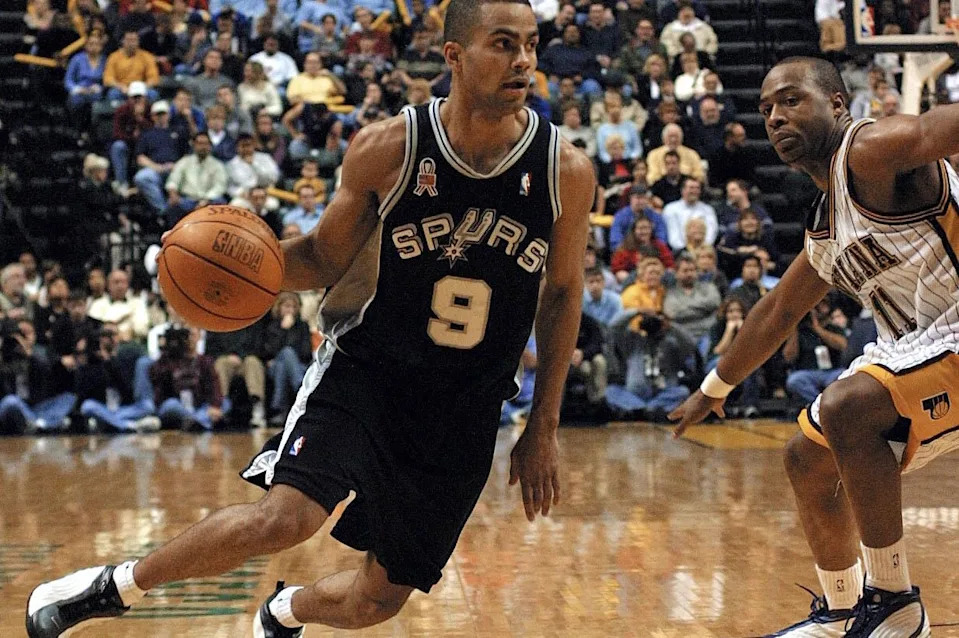
How did the San Antonio Spurs win five championships? A big part of the answer is Tony Parker.
Selected 28th overall in the 2001 NBA Draft, Parker became another example of the Spurs’ ability to identify talent where others weren’t looking. Yes, San Antonio had already won a championship in 1999. That title felt like the culmination of the David Robinson era, even if Tim Duncan had already become the driving force behind the franchise.
But great organizations don’t stop after finding one star. They continue finding talent.
The Spurs were one of the NBA’s early pioneers when it came to identifying international players and giving them opportunities to succeed. Parker arrived from France as a skinny teenager with plenty of talent and plenty of questions surrounding him.
The questions didn’t last long. Parker developed into one of the smartest and most efficient point guards of his generation. He wasn’t overwhelming physically. He wasn’t a great three-point shooter. He simply understood how to play the game. He knew how to attack defenses, get to his spots, and make winning plays. Most importantly, he won. Again and again.
Parker spent 18 seasons in the NBA, 17 of them with the Spurs. During that time, he earned six All-Star selections, made four All-NBA teams, won four championships, and became one of the defining players of an era of San Antonio basketball.
His crowning achievement came in 2007. The Spurs defeated the Cleveland Cavaliers to capture their third championship in five seasons, and Parker was named Finals MVP. For a player selected 28th overall, that’s the kind of accomplishment most franchises can only dream about finding.
His best statistical season came in 2008-09 when he averaged 22.0 points and 6.9 assists per game while finishing among the league’s most efficient guards. Night after night, he carved up defenses with that devastating first step and relentless ability to get into the paint.
And if you’re a Suns fan, you probably remember all of it. Parker always seemed to be a thorn in Phoenix’s side. Every time the Suns needed him to miss a shot, make a mistake, or have an off night, he usually delivered the opposite. He was clutch, composed, and frustratingly effective.
That’s why he’s the perfect example of what happens when elite organizations draft well at the back end of the first round. The Spurs found a future Hall of Famer at No. 28. And the rest of the league paid for it for nearly two decades.
27. Dennis Rodman (1986)
Honorable Mentions:
Suns Taken at 27:
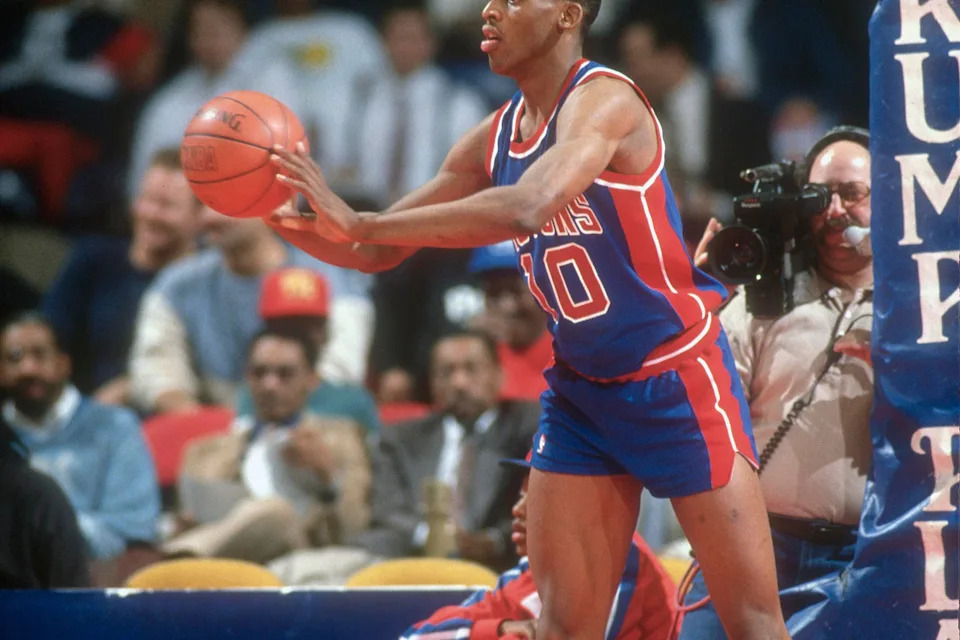
Pascal Siakam. Rudy Gobert. Kendrick Perkins. Those are all nice players, and each had a meaningful impact on the NBA. But when it comes to the greatest player ever drafted 27th overall, this isn’t much of a debate. The answer is Dennis Rodman.
The quiet, lunch pail forward out of Southeastern Oklahoma State was selected by the Detroit Pistons with the third pick of the second round, 27th overall, in the 1986 NBA Draft. What the Pistons received was one of the most unique players the sport has ever seen.
Rodman couldn’t score. At least not compared to the stars of his era. What he could do was completely take over a game without scoring. His ability to rebound, defend, and disrupt opponents was unlike anything the NBA had seen before.
Early in his career, Rodman was relatively quiet. The colorful hair, off-court antics, and larger-than-life personality came later. Initially, he was simply a relentless worker who attacked every possession as if his life depended on it. And nobody rebounded like him.
Rodman led the NBA in rebounding seven different times during his 14-year career. Seven. That’s an absurd accomplishment when you consider the Hall of Fame big men he competed against every night. His dominance on the glass translated directly to winning.
Rodman won championships with the Detroit Pistons in 1989 and 1990 as part of the Bad Boys era. After a few turbulent seasons and plenty of headlines off the court, he eventually found himself joining Michael Jordan and Scottie Pippen in Chicago at age 34. It was a perfect basketball marriage. The Bulls didn’t need Rodman to score. They needed him to do everything else. So he continued doing what he had always done, attacking rebounds, defending multiple positions, and making life miserable for opponents.
The result was three more championships.
When his career was over, Rodman had won five NBA titles, made two All-Star teams, earned eight All-Defensive Team selections, and captured Defensive Player of the Year honors twice. He also put together one of the most absurd rebounding résumés in league history.
His best season came in 1991-92 with Detroit when he averaged 18.7 rebounds per game. Think about that for a second. Not 18.7 points. 18.7 rebounds. And that wasn’t the only season he averaged more than 18 rebounds a game. As a Suns fan, it’s almost impossible for me to process those numbers. The best rebounding season in franchise history belongs to Paul Silas, who averaged 12.5 rebounds per game in 1970-71. Rodman was grabbing six more rebounds than that every single night.
That’s how impactful he was. That’s how he affected winning. And that’s why Dennis Rodman isn’t merely the best player drafted 27th overall. He’s one of the greatest values the NBA Draft has ever produced.
26. Vlade Divac (1989)
Honorable Mentions:
Suns Taken at 26:
-
Phoenix has never drafted from this position
It’s funny how you’ll look at one draft slot and find four or five players that send you down completely different rabbit holes. You end up comparing résumés, accolades, championships, and impact, trying to determine who truly deserves the spot. Then you arrive at a pick like No. 26.
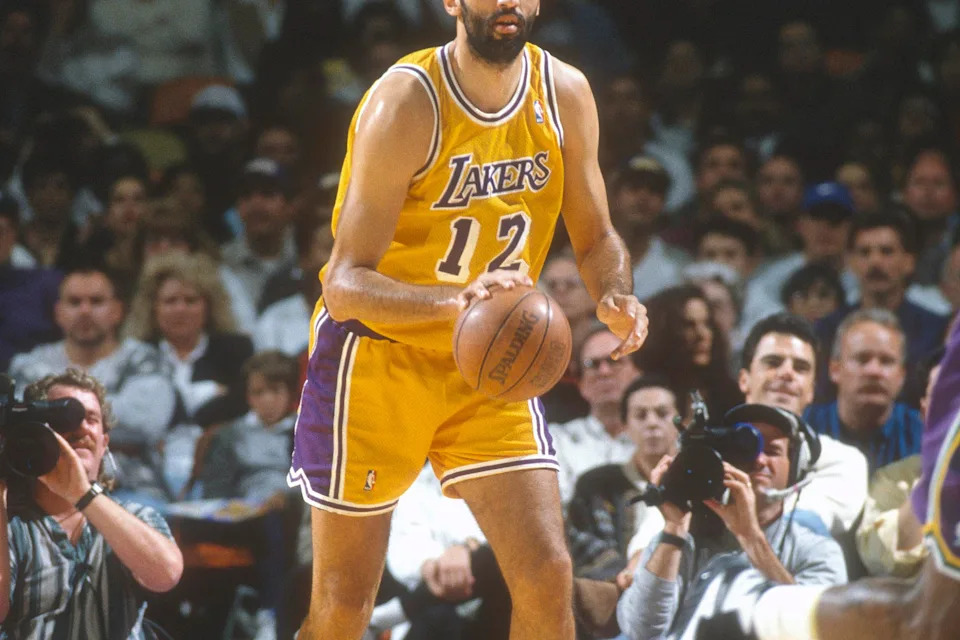
Don’t get me wrong, there are some good players here. Heck, we’re about to discuss a Hall of Famer. It simply doesn’t feel as loaded as some of the other draft positions we’ve covered. That Hall of Famer is Vlade Divac.
The Los Angeles Lakers selected the big man out of Serbia with the 26th overall pick in the 1989 NBA Draft, arriving at the tail end of the Showtime era. The timing couldn’t have been better. Kareem Abdul-Jabbar had retired following the previous season, leaving a massive void in the middle. The Lakers didn’t waste any time throwing Divac into the fire. He became their starting center almost immediately.
For those of us who watched basketball in the 1990s, Divac is a player we all remember. He was skilled, intelligent, and one of the first international centers to demonstrate that passing and playmaking could be part of a big man’s game. He also happened to be what many of us considered the original flopper. At the time, it felt like he brought a soccer mentality to basketball, constantly exaggerating contact and searching for whistles. Looking at today’s NBA, it’s funny how much the game has eventually evolved in that direction.
Divac spent eight seasons with the Lakers before becoming part of one of the most famous trades in league history. On draft night in 1996, Los Angeles sent him to the Charlotte Hornets in exchange for the rights to a teenager named Kobe Bryant. That worked out pretty well for the Lakers.
Divac’s career, however, was far from over. After a stint in Charlotte, he found a second act with the Sacramento Kings. Those Kings teams became one of the most entertaining groups of the early 2000s, challenging the Lakers year after year in the Western Conference playoffs. And we all know how that story ended. The Lakers advanced, although many Kings fans will forever argue that outside influences helped determine the outcome.
Divac earned the lone All-Star appearance of his career in 2001 with Sacramento and remained a key contributor deep into his 30s. By the time he retired, he had played 16 seasons in the NBA while averaging 11.8 points and 8.2 rebounds per game.
The numbers aren’t overwhelming. The impact was. Divac helped pave the way for future generations of international players, enjoyed a long and productive NBA career, and ultimately earned induction into the Naismith Memorial Basketball Hall of Fame. And he taught the NBA how to flop and get rewarded.
25. Mark Price (1986)
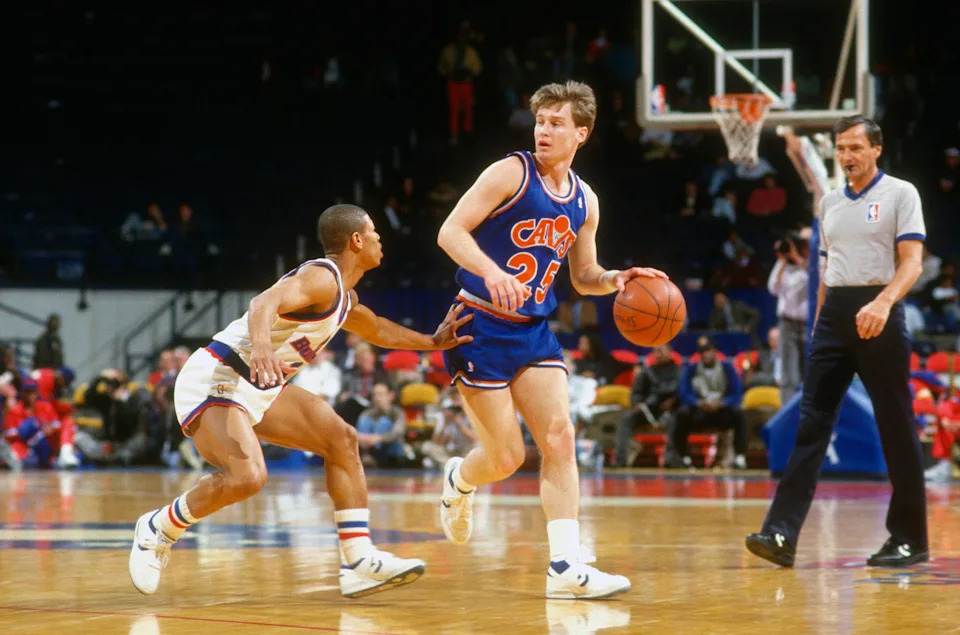
LANDOVER, MD – CIRCA 1987: Mark Price #25 of the Cleveland Cavaliers dribbles the ball while defended by Muggsy Bogues #1 of the Washington Bullets during an NBA basketball game circa 1987 at the Capital Centre in Landover, Maryland. Price played for the Cavaliers from 1986-95. (Photo by Focus on Sport/Getty Images) | Getty Images
Honorable Mentions:
Suns Taken at 25:
The best player ever drafted 25th overall? The Price is Right, Mark Price. The 6’0″ point guard out of Georgia Tech was one of those players who, if you followed Eastern Conference basketball in the late 1980s and early 1990s, you knew all too well. He was a shooter, and he was incredibly productive.
Unfortunately for Price, he played in an era loaded with heavyweights. The Eastern Conference featured the Detroit Pistons, the Boston Celtics, and eventually Michael Jordan’s Chicago Bulls. Breaking through that gauntlet was nearly impossible, which is one of the reasons Price’s teams never reached the mountaintop. That doesn’t diminish how good he was.
Ironically, Price was originally drafted by the Dallas Mavericks in 1986. Dallas quickly traded his rights to the Cleveland Cavaliers for a 1989 second-round pick, a move that turned into one of the better acquisitions in franchise history. Price spent the next nine seasons in Cleveland and became the engine behind some of the best teams the Cavaliers had ever assembled. Alongside players like Brad Daugherty and Larry Nance, he helped transform Cleveland into a perennial playoff contender.
His individual accomplishments were impressive. Price earned four All-Star selections, made the All-NBA First Team once, and landed on the All-NBA Third Team three times. He averaged 15.2 points, 6.7 assists, and 1.2 steals per game during his career while establishing himself as one of the premier point guards of his generation.
What truly separated Price, however, was his shooting. Long before the three-point revolution changed basketball, Price was demonstrating the value of elite perimeter efficiency. He was one of the best shooters the game had ever seen, particularly from the free throw line. He led the NBA in free-throw percentage three different times and retired with a career mark of 90.4%, one of the highest percentages in league history.
While he may not receive the same recognition as some of the superstars from his era, Mark Price was a terrific player, an elite shooter, and one of the best point guards of the late 1980s and early 1990s.
24. Sam Cassell (1993)
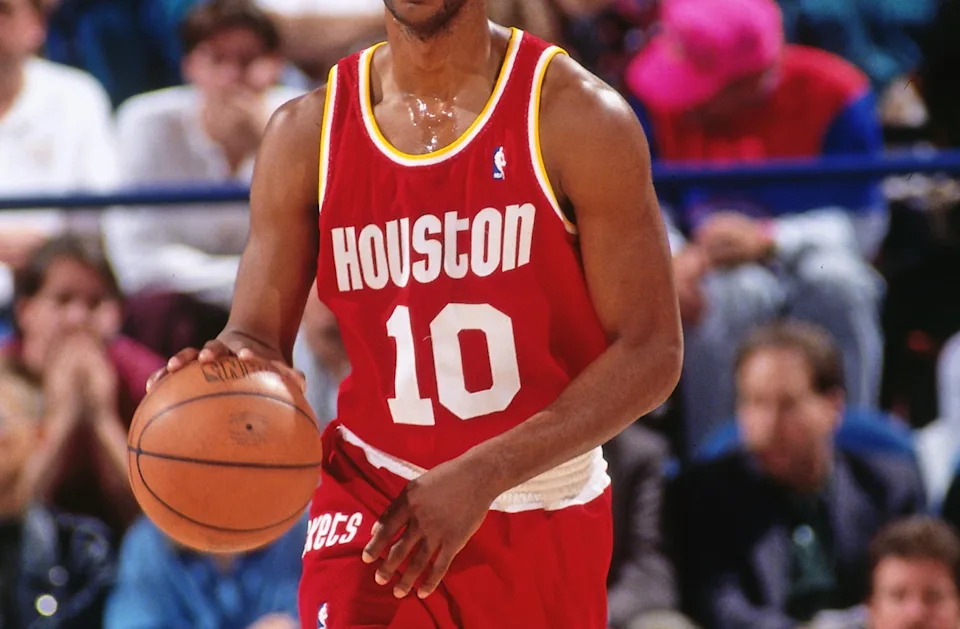
SACRAMENTO, CA: Sam Cassell #10 of the Houston Rockets dribbles the ball up court during a game against the Sacramento Kings circa 1994 at the ARCO Arena in Sacramento, California. NOTE TO USER: User expressly acknowledges and agrees that, by downloading and/or using this Photograph, user is consenting to the terms and conditions of the Getty Images License Agreement. Mandatory Copyright Notice: Copyright 1994 NBAE (Photo by Rocky Widner/NBAE via Getty Images) | NBAE via Getty Images
Honorable Mentions:
Suns Taken at 24:
*opted to stay in the ABA
Okay, now we get to have some fun. When you arrive at the 24th overall pick, the debate becomes a lot more interesting. This isn’t one of those draft slots where there’s an obvious answer sitting at the top. There are multiple players with legitimate cases, and whichever direction you go, you can make a compelling argument.
You could make the case for Sam Cassell. You could make the case for Kyle Lowry. Latrell Sprewell deserves consideration. So does Arvydas Sabonis. Honestly, none of those answers would be wrong.
If you’re talking strictly about peak performance, Sprewell has a strong argument. For a stretch of about seven years, he was one of the most dynamic guards in basketball. He could score, defend, and carry an offense. At his best, he was a problem.
If you’re looking at longevity and accolades, Kyle Lowry deserves plenty of attention. He’s a six-time All-Star, an All-NBA selection, an NBA champion, and one of the most accomplished point guards of his generation. He also produced the most points over the course of his career among this group.
Then there’s Sabonis. His NBA career doesn’t compare statistically because he arrived in the league after much of his prime had already passed. But if you’re willing to include his international accomplishments, the conversation changes dramatically. In that context, he might be the strongest candidate of all.
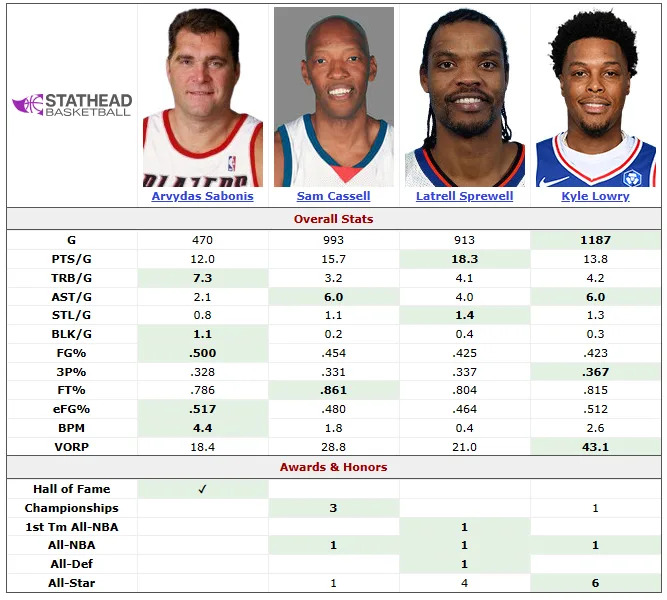
So who did I choose? I went with Sam Cassell.
Part of it is the championships. Three rings matter, especially when you consider that two of them came during his first two seasons in the NBA with the Houston Rockets. He entered the league out of Florida State and immediately found himself contributing to championship teams. And he hurt my feelings along the way. So there is that bias.
Years later, he would add a third title with the Boston Celtics. Granted, he wasn’t a primary contributor on that championship team, but the ring still counts.
What ultimately pushes Cassell over the top for me is the totality of his career.
He wasn’t merely a role player riding shotgun on great teams. He became an All-Star, an All-NBA selection, and one of the toughest, smartest point guards of his era. Everywhere he went, he won. Whether it was Houston, Milwaukee, Minnesota, Los Angeles, or Boston, Cassell consistently found ways to impact winning.
That’s why he gets the nod. In a draft slot filled with worthy candidates, Sam Cassell is my choice as the greatest player ever selected 24th overall. But the question is…who do you think should get it?
23. Alex English (1976)
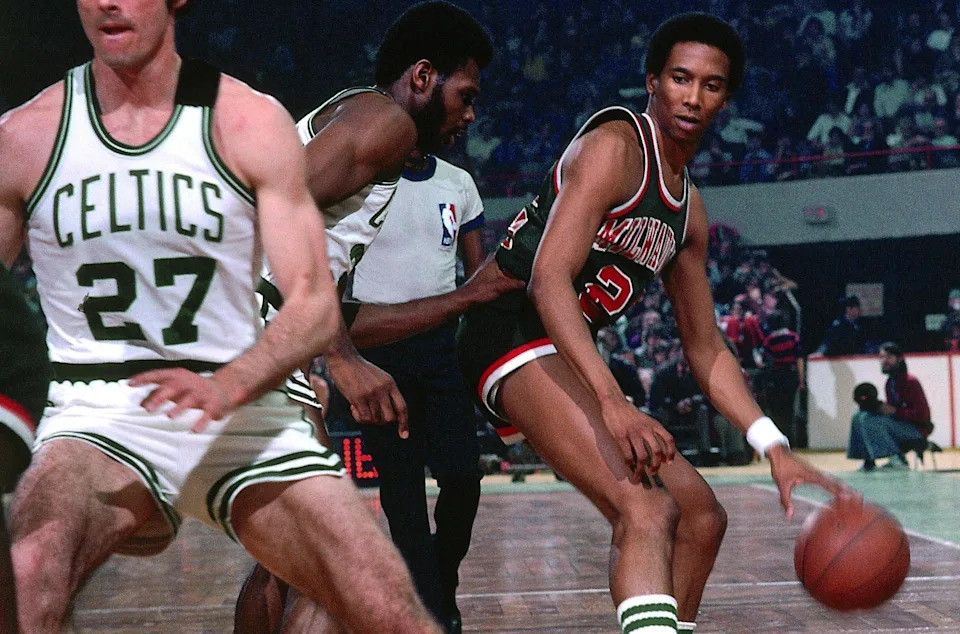
BOSTON – 1976: Alex English #23 of the Milwaukee Bucks drives against the Boston Celtics during a game played in 1976 at the Boston Garden in Boston, Massachusetts. NOTE TO USER: User expressly acknowledges and agrees that, by downloading and or using this photograph, User is consenting to the terms and conditions of the Getty Images License Agreement. Mandatory Copyright Notice: Copyright 1976 NBAE (Photo by Dick Raphael/NBAE via Getty Images) | NBAE via Getty Images
Honorable Mentions:
Suns Taken at 23:
I began writing this series in early June in preparation for draft week, and I did have to circle back and revisit the 23rd overall pick after watching what OG Anunoby accomplished during the NBA Finals. That being said, Alex English still gets the nod.
The Milwaukee Bucks selected English with the 23rd overall pick in the 1976 NBA Draft as they attempted to navigate life after Kareem Abdul-Jabbar. He showed flashes during his time in Milwaukee, but not enough to convince the organization he was part of its long-term future. After two seasons, the Bucks moved on.
English signed with the Indiana Pacers in 1978, spending two years there before being traded to the Denver Nuggets in 1980 for George McGinnis (more on him very shortly). That transaction changed everything.
Once he arrived in Denver, English became the face of the franchise and spent the entirety of the 1980s filling up the stat sheet. Night after night, season after season, he produced at an elite level. To this day, he remains Denver’s all-time leader in games played, minutes played, field goals made, field goal attempts, and points scored.
The accolades followed. English was an eight-time All-Star, the NBA scoring champion in 1983, and a three-time All-NBA selection. During his 837 games with the Nuggets, he averaged 25.9 points per game, establishing himself as one of the most prolific scorers of his era.
When people think about 1980s Nuggets basketball, they think about Alex English. He wasn’t merely a great player who happened to play in Denver. For an entire decade, he was Denver.
22. George McGinnis (1973)
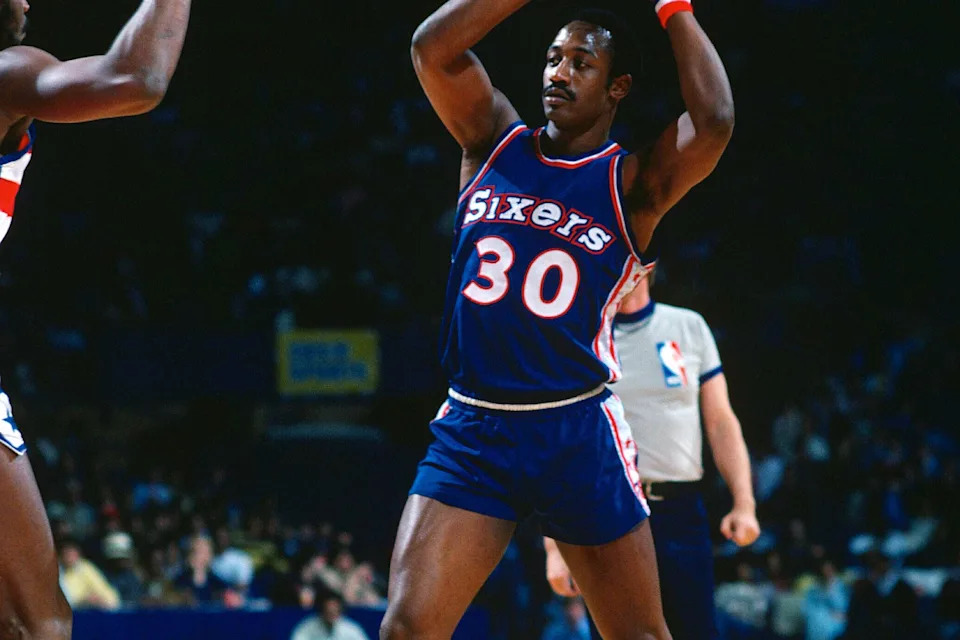
BALTIMORE, MD – CIRCA 1978: George McGinnis #30 of the Philadelphia 76ers looking to pass the ball against the Washington Bullets during an NBA basketball game circa 1978 at the Baltimore Civic Center in Baltimore, Maryland. McGinnis played for the 76ers from 1975-78. (Photo by Focus on Sport/Getty Images) | Getty Images
Honorable Mentions:
Suns Taken at 22:
*draft rights traded for Ryan Dunn
George McGinnis has one of the more impressive collections of nicknames you’ll find on Basketball Reference. Big Mac. Baby Bull. McGinnis the Magnificent. Big George. The Hammer. The 6’8” power forward out of Indiana University lived up to every one of them.
McGinnis was originally selected 22nd overall by the Philadelphia 76ers in the 1973 NBA Draft. But like many talented players of the early 1970s, he chose the ABA over the NBA, beginning his professional career with the Indiana Pacers. What followed was an incredible start to a career.
The Pacers won ABA championships in each of McGinnis’ first two seasons. During the 1973 postseason, he was named ABA Playoffs MVP after averaging 23.9 points and 12.3 rebounds per game en route to a title. He quickly established himself as one of the league’s premier players, earning three ABA All-Star selections while becoming the face of the Pacers franchise.
By 1975, McGinnis had reached the peak of his ABA career. That season, he shared the league’s final MVP award with Julius Erving, cementing his place among the greatest players the league ever produced. When the ABA began collapsing, McGinnis signed with the team that had originally drafted him, joining the Philadelphia 76ers in 1975.
His success continued in the NBA. McGinnis earned two more All-Star selections with Philadelphia while adding an All-NBA First Team selection and an All-NBA Second Team honor. He remained one of the league’s most productive forwards before the 76ers traded him to the Denver Nuggets.
His stint in Denver lasted only a season and a half, but he still managed to earn another All-Star appearance before being traded back to Indiana in 1980. The player Denver received in return was Alex English, a trade that would have a lasting impact on both franchises.
He finished his career as a six-time All-Star, a two-time ABA champion, a two-time All-NBA selection, an ABA MVP, and an ABA Playoffs MVP. And despite Basketball Reference assigning him only a 1.1% Hall of Fame probability, he ultimately found his way into the Naismith Memorial Basketball Hall of Fame.
21. Rajon Rondo (2006)
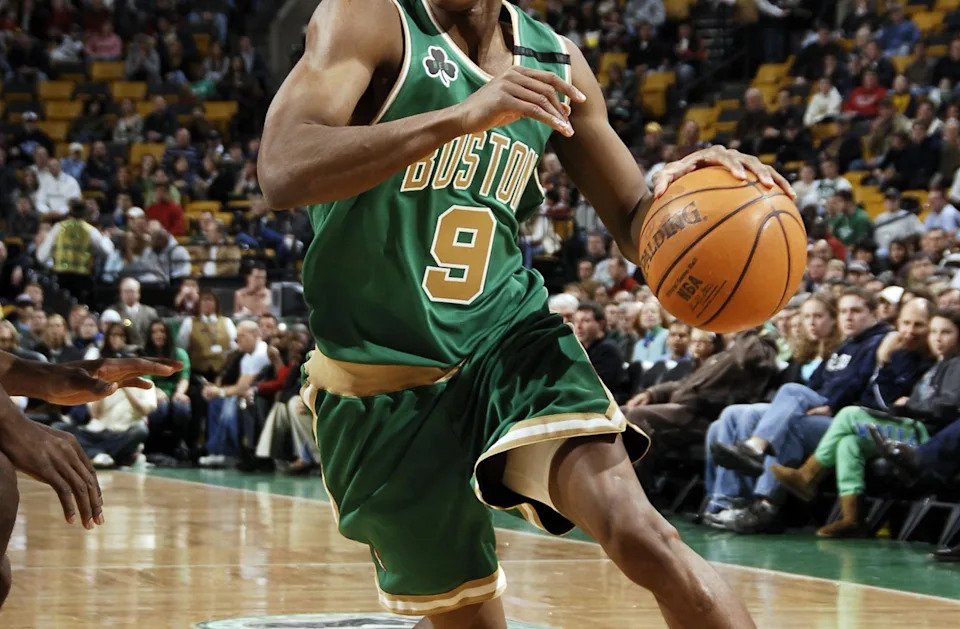
BOSTON – MARCH 11: Rajon Rondo #9 of the Boston Celtics drives to the basket against the Chicago Bulls at the TD Banknorth Garden March 11, 2007 in Boston, Massachusetts. NOTE TO USER: User expressly acknowledges and agrees that, by downloading and/or using this Photograph, user is consenting to the terms and conditions of the Getty Images License Agreement. Mandatory Copyright Notice: Copyright 2007 NBAE (Photo by Brian Babineau/NBAE via Getty Images) | NBAE via Getty Images
Honorable Mentions:
Suns Taken at 21:
*traded on draft night to the Knicks for Kurt Thomas
**traded on draft night for future FRP
Pick No. 21 gives us some interesting names, and plenty of them have ties to the Phoenix Suns. Michael Finley was drafted here. Boris Diaw, a key piece of the Seven Seconds or Less era, was drafted here. So was Mark Bryant, who not only played for the Suns but later coached for them.
And while Tyrese Maxey may ultimately claim this spot one day if his career trajectory continues, my choice is Rajon Rondo.
What’s funny is that Rondo was technically drafted by the Phoenix Suns. The Suns selected him with the 21st overall pick in 2006, a time when the organization was pinching pennies despite fielding one of the most exciting teams in basketball. Rather than investing in a young player who could help sustain the team’s future, Robert Sarver chose to save money. The rights to Rondo were dealt to the Boston Celtics on draft night in exchange for a future first-round pick, effectively kicking the decision down the road.
The irony, of course, is that the eventual return never amounted to much. The Suns ultimately turned that asset into Rudy Fernandez, who never played for Phoenix. His rights were later moved, along with James Jones, to Portland for cash considerations. Meanwhile, Rondo became exactly the kind of player the Suns could have used for years.
When you think about what Phoenix lacks today, Rondo checks a lot of those boxes. He was a pass-first point guard who controlled the pace of a game, distributed at an elite level, rebounded well for his position, and could score when the situation demanded it. His primary gift, however, was making everyone around him better.
Three times he led the NBA in assists per game. Over a 16-year career, he averaged 8.5 assists against only 2.8 turnovers per game. He earned four All-Star appearances, led the league in steals in 2010, made an All-NBA team, and was selected to four All-Defensive teams.
Rondo was a key cog in the machine that helped the Celtics win the 2008 championship. In his second season, he started every playoff game and averaged 9.3 points and 6.7 assists during the NBA Finals. More than a decade later, he added a second championship with the Los Angeles Lakers in the bubble.
Everywhere he went, he impacted winning. By the time his career ended, Rondo had played 16 seasons for nine different teams. He wasn’t always easy to coach, and he wasn’t always easy to play with. But he was productive, intelligent, and fiercely competitive. He was the type of player every contender wanted, and every opponent hated facing.
What a career. And what a reminder of what might have been for the Phoenix Suns.
The deeper we move into the first round, the harder these decisions become. The talent pool gets stronger, the résumés get longer, and the debates become a lot more subjective. That’s what makes this part of the draft so much fun. There isn’t always a clear answer. Sometimes it’s championships. Sometimes it’s peak performance. Sometimes it’s longevity. And sometimes it’s the painful reminder of a player the Suns once drafted, traded, or passed on altogether.
One thing is certain, though: if the first 10 picks have taught us anything, it’s that draft position matters a lot less than what an organization does with it once the card is turned in.
Read the full article here