

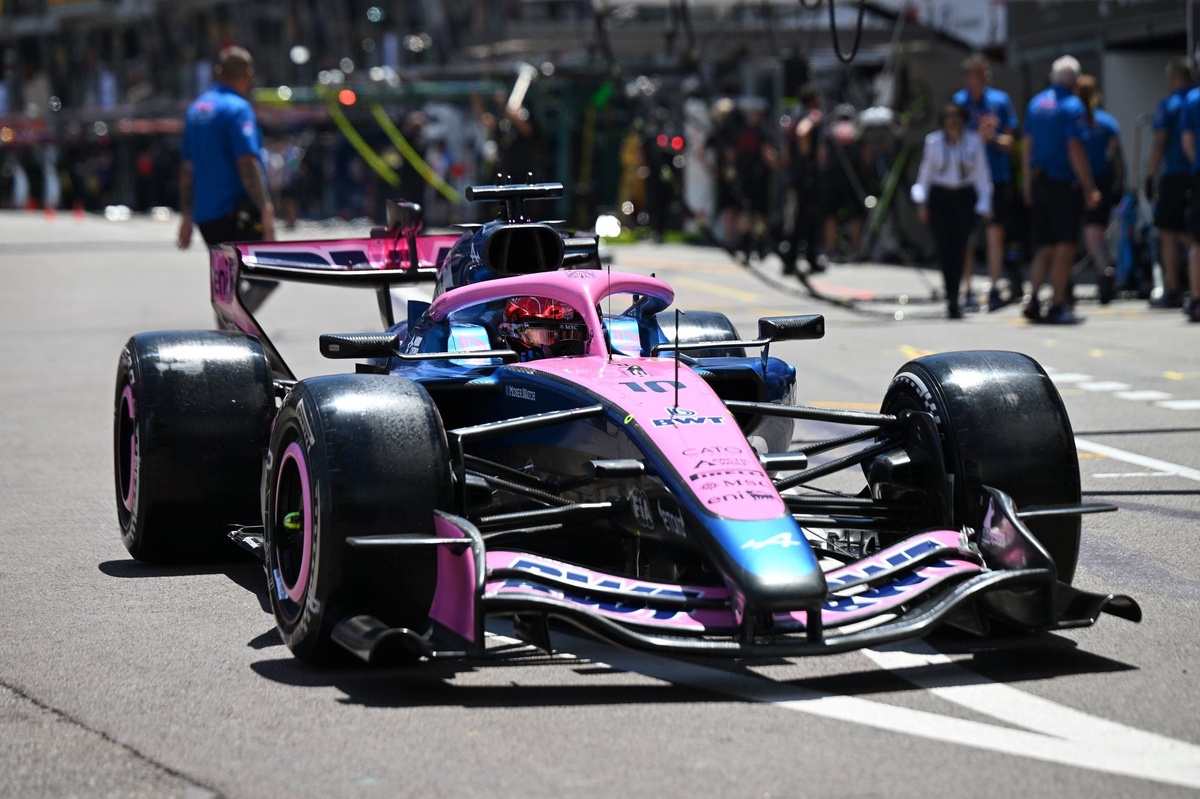
Pierre Gasly swears he did nothing wrong to earn the two penalties in Monaco that ultimately cost him a podium finish – and that is a very good reason not only to be angry and frustrated, but also to push together with his team to get the race result overturned. Yet, should Alpine’s inquiry deliver a satisfactory outcome, it could open a whole can of worms.
Gasly was not the only driver penalised for something he believes he did not do. The Monaco penalty fest also caught one of the main championship contenders, meaning the implications stretched far beyond Gasly losing what could have been his sixth career F1 podium.
Thursday’s hearing, scheduled for 1pm CET with the Monaco stewards in attendance alongside Alpine representatives, may add further fuel to the drama surrounding the Monaco penalties.
There are still a lot of unknowns about what actually happened. But the sheer number of speeding penalties is a strong indication that the likelihood of something being wrong with the measurement system is far greater than five drivers suddenly forgetting when to press the right button.
Gasly himself was adamant after the finish in an emotional post-race interview that not only did he know for a fact he had not exceeded the speed limit, but that he had taken extra precautions by pressing the limiter button earlier than necessary when entering the pitlane. Other drivers who received the same penalty were equally clear that they had not been speeding.
The main culprit appears to be the pitlane itself – or, more specifically, the timing system used to monitor pitlane speed limits.
Simply placing a few radar guns down the road would not do the job, as there would be significant potential for exploitation. If you do not want to get caught speeding on the motorway but know where the cameras are located (word is there are some clever apps for that, at least in Germany), you only need to slow down when approaching them. The system used in F1 is designed to prevent that. It effectively measures the time taken between checkpoints in the pitlane and flags anyone who covers the distance quicker than would be possible while remaining below the speed limit.
Following the late restart, Gasly moved up to fourth, with George Russell still yet to serve his penalty
Photo by: Andrej Isakovic / AFP via Getty Images
It’s worth noting that the entire timing infrastructure, including the pitlane timing system, is provided by Formula One Management, which adds another layer of complexity to identifying the root cause of the issue. It is generally an efficient and robust system. But it appears Monaco may have exposed one of its weaknesses due to the unique characteristics of the pitlane.
The most likely explanation for the large number of speeding offences is that drivers were shortening their route through the pitlane. It remains unclear exactly where the system was triggered, but it is likely either on pit entry, where drivers turn right across the white line and then immediately left – with many cutting the small area in front of the FIA garage – or on pit exit, where drivers cut across the white lines shortly after the Cadillac garages.
Interestingly, it appears Alpine personnel are not entirely certain where exactly Gasly was deemed to have exceeded the limit. But team representatives insist that the speed limiter setting on both cars was conservative, restricting drivers to no more than 59.5km/h – half a kilometre per hour below the permitted limit.
“To be honest, we don’t understand why we got those,” Alpine’s boss Steve Nielsen said after the race. “We don’t understand why a lot of teams got those. I think six infringements, three by our team, one by Ferrari [Lewis Hamilton], one by McLaren [Oscar Piastri], one by Mercedes [George Russell], which is very, very unusual. That’s the sort of number you would expect to see across a season, and we saw them all in one race today.
“So we’ve asked the FIA for a process called a Right of Review. It’s not a protest or an appeal, it’s different. It allows us to compile all our data and evidence, and it allows us to sit with the FIA and fully understand how they came to the conclusion that we transgressed the pitlane speed limit. Because we don’t think we did. But we’re open to being shown if we did, so it’s really an open conversation with the FIA about what we could’ve done differently. Or perhaps what they could have done differently.”
That is an interesting choice of words, as Nielsen points out that he wants the FIA to demonstrate why the stewards issued the penalty.
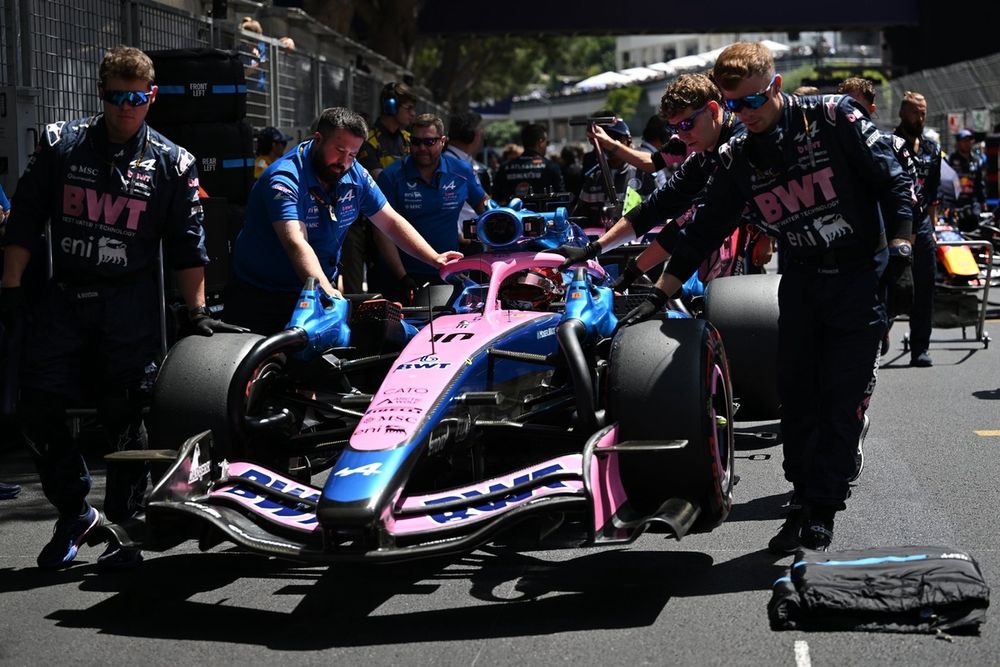
Pierre Gasly, Alpine
Photo by: Sam Bagnall / Sutton Images via Getty Images
The stewards are, of course, relying on data generated by the system, and any trigger from it results in a fairly straightforward response. It is only after multiple offences that one would begin questioning whether there might be a wider issue – but that is almost impossible to establish during the race itself. In that situation, the stewards had little choice but to continue penalising drivers flagged by the system.
The problem is that the regulations state that a “speed limit will be imposed in the pitlane”, but they do not specify that drivers must complete the distance between checkpoints in a certain amount of time.
From the teams’ perspective, the rules may therefore not have been broken, as the cars never actually exceeded 60km/h. At the same time, there is no detailed definition in the regulations of what constitutes “speeding”. There are similarities with average-speed enforcement systems used on some motorways, but the comparison only goes so far because there is no practical way to shorten your route on a public road.
The debate may not even reach the point of discussing what the speed limit actually represents, because Alpine first faces an even bigger hurdle: proving the existence of significant and relevant new evidence.
Telemetry or GPS data could potentially support its case. The team is adamant that Gasly never exceeded the 60km/h limit at any point, and proving that through car data is unlikely to be difficult. But the petition could still be dismissed on the grounds that such information was available during the race, even if not directly to the stewards themselves.
That remains the most likely outcome of Thursday’s hearing. And perhaps the least damaging one too.
Because if the stewards accept that Alpine has a valid case and then rule in its favour, a whole new set of questions emerges – most notably what should happen to all the other penalties.
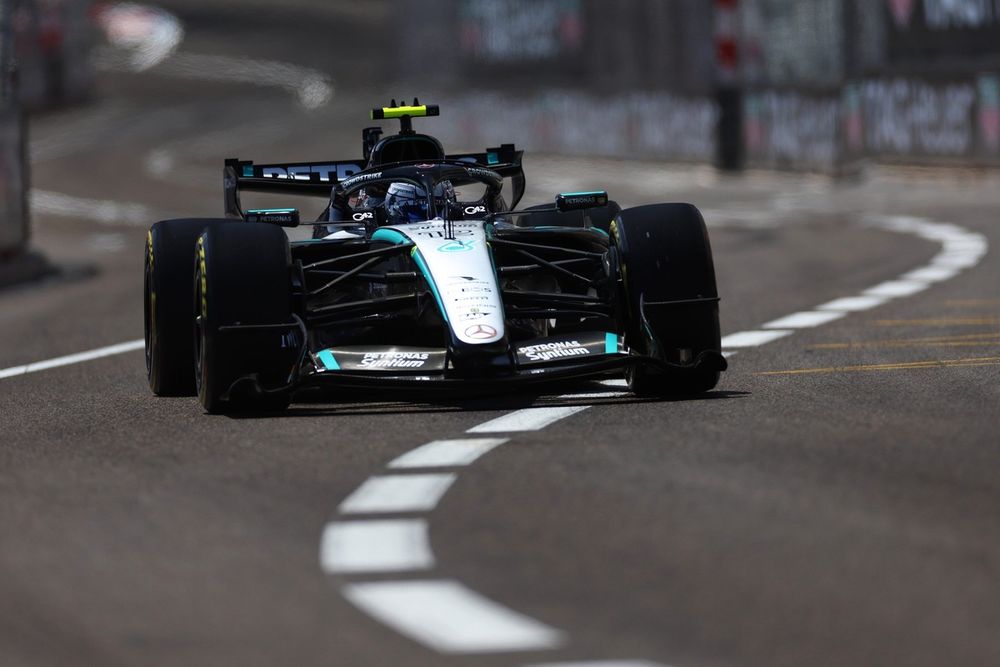
George Russell endured a difficult afternoon in Monaco
Photo by: Alastair Staley / LAT Images via Getty Images
Russell not only received a speeding penalty but also another one for failing to serve it correctly, costing him a significant number of points. In his case, simply reinstating race time would not be enough to restore the “original” outcome.
There also appears to be disagreement over whether teams were made aware of potential issues with the pit limiter configuration. The FIA believes they were informed, while Alpine in particular appears to think otherwise. Nielsen’s repeated insistence that “we don’t understand” strongly suggests the team’s position.
There was no mention of any such warning in the FIA documents, and it remains unclear exactly what was different compared to previous Monaco races, given this is the first time the issue has surfaced.
The closest precedent dates back to the 2009 Singapore Grand Prix, when Sebastian Vettel received a drive-through penalty for speeding in the pitlane. He later explained that he had not actually exceeded the limit but had shortened his route on pit entry – and called for changes to the system at the time.
An important point is that stewards are neither FIA nor Formula 1 employees. They operate as an independent body, meaning it would be wrong in principle to assume their objective is to avoid creating further difficulties for either the FIA or Formula 1.
Their role is to assess the evidence presented. So the possibility of them accepting Alpine’s case is not zero. It is not for them to worry about whether the system failed to function as intended in Monaco.
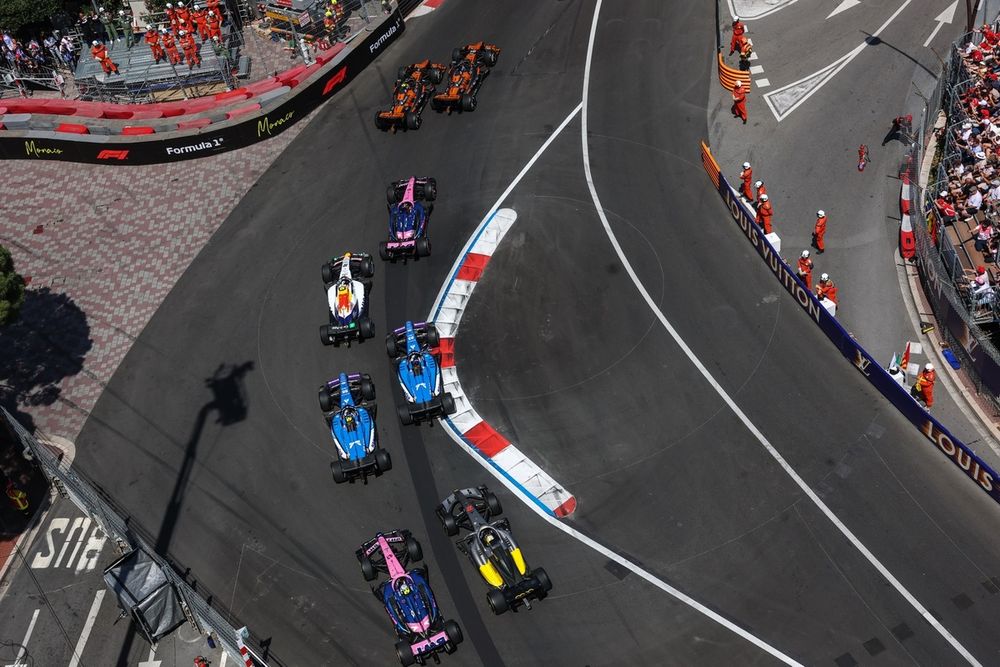
Starting ninth on the grid, Gasly overtook Lando Norris on the opening lap
Photo by: Steven Tee / LAT Images via Getty Images
Stewards’ verdicts routinely include the standard statement: “Decisions of the Stewards are taken independently of the FIA and are based solely on the relevant regulations, guidelines and evidence presented.”
Nor is it entirely unprecedented for stewards to criticise the FIA, track facilities or the systems used to enforce the regulations.
Following the United States Grand Prix in 2023, stewards described the mechanisms used to police track limits as “completely unsatisfactory” because CCTV cameras did not provide a sufficiently clear view to determine whether infringements had occurred.
On that occasion, Haas attempted to gain positions for Nico Hulkenberg through the same Right of Review process – arguing that other drivers had repeatedly exceeded track limits and should have been penalised. But the onboard footage it presented was dismissed as not new, despite being considered “significant”, because it had been available during the race.
One possible argument in Monaco is that the stewards were not provided with the appropriate tools to enforce the regulations. The system is intended to supply accurate information on whether penalties should be applied. In this case, Alpine may argue that it was simply not fit for purpose – and the stewards may ultimately agree.
Whether the Monaco Grand Prix stewards were aware of potential issues with the system flagging drivers as speeding despite not actually exceeding the limit is an interesting question in its own right.
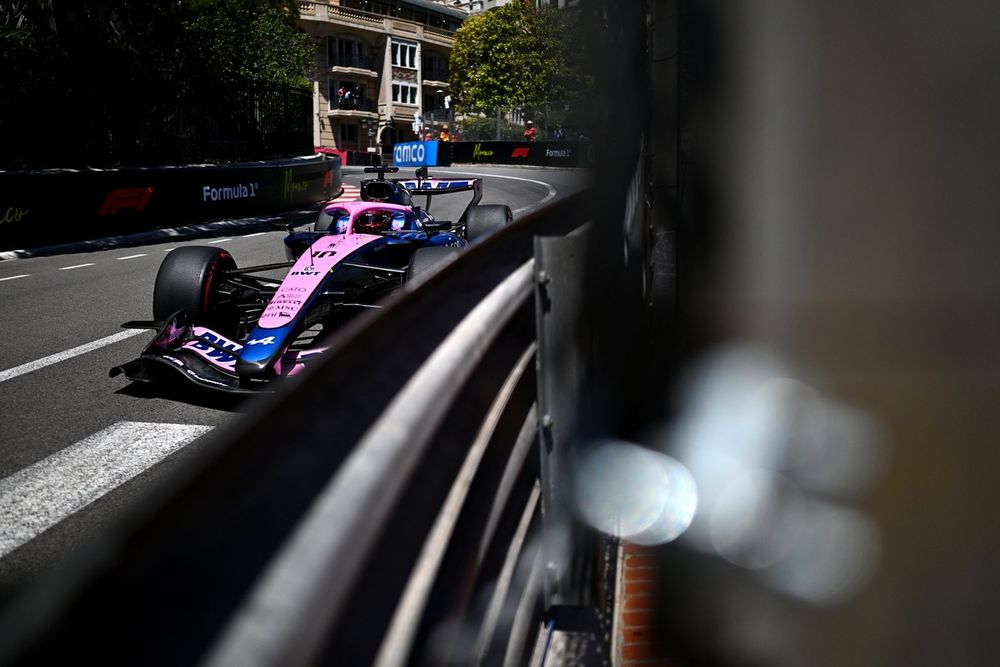
Pierre Gasly, Alpine
Photo by: Guido De Bortoli / LAT Images via Getty Images
Potentially, many of the details will become clearer after Thursday’s hearing, although the race result itself still appears unlikely to change, much as it did not in the Haas case in 2023.
One possible outcome is that the FIA, together with FOM, may have to reconsider how pitlane speed limits are monitored, particularly at unique venues such as Monaco. That, however, is unlikely to give Gasly his podium back – or bring Russell any closer to Antonelli in the championship standings.
We want to hear from you!
Let us know what you would like to see from us in the future.
Take our survey
– The Autosport.com Team
Read the full article here