

MotoGP manufacturers have confirmed plans to remove one of the two bikes currently available to each rider during practice from 2027, while also shortening track time across the weekend, Autosport has learned.
Pending the formal drafting and official ratification of the agreements reached at the latest Motorcycle Sports Manufacturers Association (MSMA) meeting in Balaton Park, everything is in place for the championship to undergo a significant overhaul in several key areas of grand prix weekends from 2027.
As these measures will directly affect the technical regulations, they must still be approved by the Grand Prix Commission (MotoGP SEG, FIM, IRTA and MSMA), the body responsible for ratifying changes of this magnitude.
Most of the planned measures stem from a shared desire to reduce costs for both manufacturers and teams. However, not everyone within the MSMA is fully convinced about the effectiveness of some of the proposed changes.
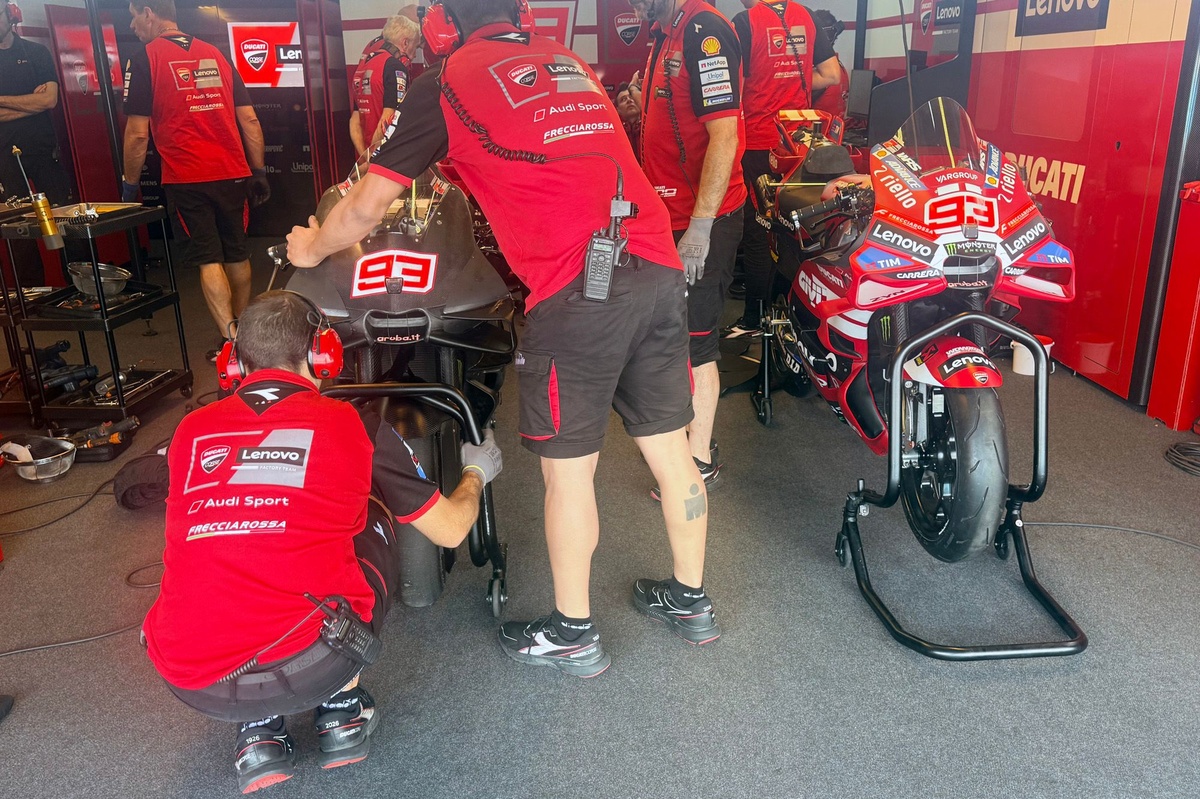
Among all the measures under discussion, the most visible will likely be the removal of one of the two motorcycles currently available to each rider in the garage, an initiative first reported by Autosport last month.
More details are emerging regarding what MotoGP could look like from 2027 onwards.
Autosport understands that the reduction from two bikes to one will only apply to practice sessions on Friday and Saturday. Riders would still have access to two machines during racing activities, including Saturday’s sprint and Sunday’s grand prix and warm-up.
Bikes line-up
Photo by: Mirco Lazzari / Getty Images
In that respect, the proposed format differs from the one currently used in World Superbike and would allow MotoGP to retain its trademark flag-to-flag races, which do not exist in the production-based championship.
It is worth remembering that the nature of MotoGP prototypes makes operations such as wheel changes considerably more complex than in WorldSBK, where a minimum intervention time is enforced whenever weather conditions change and race control orders all riders to return to the pits simultaneously.
Retaining a second bike for races would also avoid situations such as the one that could have occurred during the Catalan Grand Prix at Montmelo. Had the one-bike restriction applied to races, the multiple crashes involving six riders would likely have left significant gaps on the grid for the final restart following the second red flag.
The second motorcycle, however, would not disappear entirely. Instead, it would remain hidden from immediate use and could only be moved to the front of the garage and prepared for track action after receiving approval from designated technical inspectors, understood to be appointed by the International Road-Racing Teams Association (IRTA).
Autosport understands that this process would require a certain amount of time, making it impossible, for example, for a rider who crashes heavily and destroys his bike during first practice to return to the track before the next scheduled session.
This highly visible change will be accompanied by several others that may go unnoticed by spectators, but would have a significant impact on garage operations.
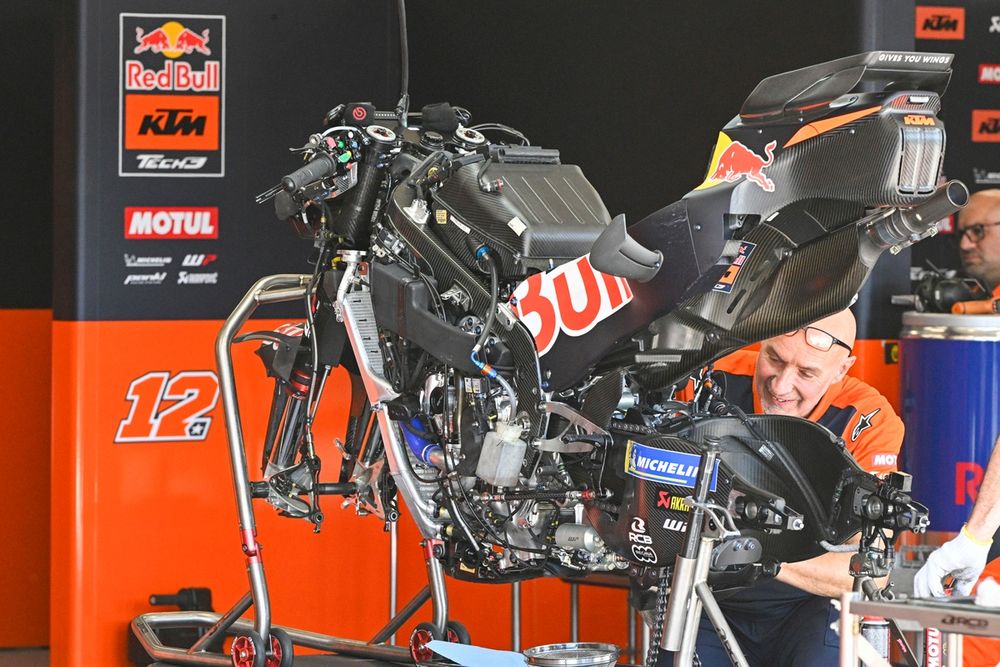
KTM RC16
Photo by: Gold and Goose Photography / Getty Images
One example is the planned reduction in the duration of practice sessions, a measure aimed at limiting wear on prototype components, all of which are subject to mileage restrictions.
At the same time, the MSMA is also looking to restrict working hours for team personnel, in what would effectively be MotoGP’s equivalent of the curfew system that has been used in Formula 1 for many years.
In parallel, discussions are ongoing regarding the introduction of a system that would allow only specifically designated technicians and mechanics to work on the motorcycles.
We want to hear from you!
Let us know what you would like to see from us in the future.
Take our survey
– The Autosport.com Team
Read the full article here