

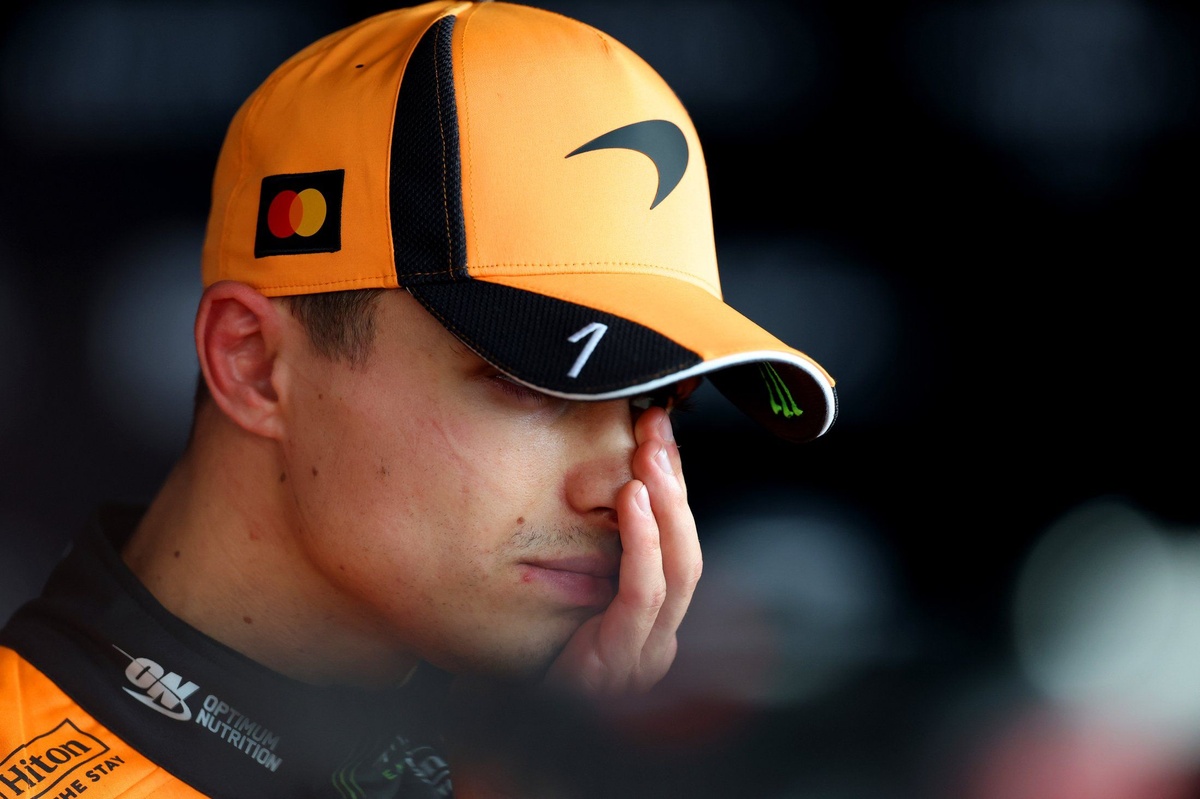
This writer’s first working grand prix was Austria 2002, a race that for most sticks in the mind for reasons pertaining to Ferrari team orders.
A far happier memory is of borrowing a tabard for qualifying and venturing into the trees behind the pits, on the inside of the Jochen Rindt Kurve, where one could stand by the barrier and revel at the sight of Formula 1 cars being driven at maximum commitment and with thrilling precision.
Here, almost within touching distance, two cars stood out as they flashed by in a fury of controlled aggression: Michael Schumacher’s Ferrari and Kimi Raikkonen’s McLaren.
Qualifying ought to be among the defining expression of a racing driver’s art, a magical hour of high-stakes drama, a high-wire act in which the greatest drivers in the fastest cars push to the absolute limits. And yet it has now become a different sort of battleground.
F1’s controversial new regulations have left several elephants disputing real estate in the room, but among the biggest and noisiest is the problem of qualifying, where the drivers can no longer drive flat out. We do not need to call on logicians of Socrates’ calibre to see this defeats the purpose of the exercise.
Many drivers have complained about how pushing too hard through corners and using more electrical deployment is punished later in the lap through earlier de-rating on straights. But the problem runs deeper than that, into the vastly over-complicated bowels of the regulations governing how much electrical power can be used, and when.
So complicated is this regime that the real-time decision-making is now done by machine-learning algorithms, which has led to peculiar problems such as Charles Leclerc’s compromised qualifying in China and Lando Norris overtaking Lewis Hamilton when he didn’t want to in Japan.
Leclerc suffered a critical loss of energy in Chinese GP qualifying, after correcting a slide and getting back on the power
Photo by: Andy Hone/ LAT Images via Getty Images
What this has led to is drivers having to become more risk-averse in qualifying because if they have to back off the throttle to correct a slide, it in effect confuses the system.
“It depends how many laps you’ve done in practice as well,” said Norris during a conference for select media at McLaren’s factory this week. “The system has to learn about certain things and it can still change, it can do little things. If you compare it to last year, there was nothing really to have as an excuse for something happening, like the driver made a mistake or there might have been a fundamentally bigger issue with the car.
“But you’re trying to brake as late as possible everywhere, you’re trying to get on the throttle everywhere, you’re trying to carry as much speed as possible in high-speed corners. Crack open the throttle, do those little things to be as much on the limit as possible at all times.
“It’s still drive as quickly as you can, but within certain aspects, don’t go on throttle here, don’t go on throttle here, which is just not what you’ve ever done” Lando Norris
“And it’s just that extra, who can push it is 1-2% more in qualifying, went away. But those 1-2% are the special 1-2% that make it exciting – that might surprise you in terms of this guy is suddenly on pole because he’s taken those couple little risks.
“And you’ve kind of taken that element away. Japan, one of those places where you’re trying to push the high-speed a little bit and you’re really trying to fight the car, you’ve kind of eliminated some of those instances. The problem is sometimes, like we had in China and a couple of other places, sometimes when you make a mistake, sometimes it benefits you because the battery gets saved in some ways and then redeploys in a different place and you actually gain.
“In an ideal world, we just wouldn’t have any of that. It’s just drive as quickly as you can. It’s still drive as quickly as you can, but within certain aspects, don’t go on throttle here, don’t go on throttle here, which is just not what you’ve ever done in single-seaters or GTs or anything really.”
Drivers have been having to grapple with previously unheard-of minutiae such as working out the optimal point to get to full throttle at the beginning of a qualifying lap – which, in a bygone era, would have been as soon as possible on the exit of the final corner. No longer.
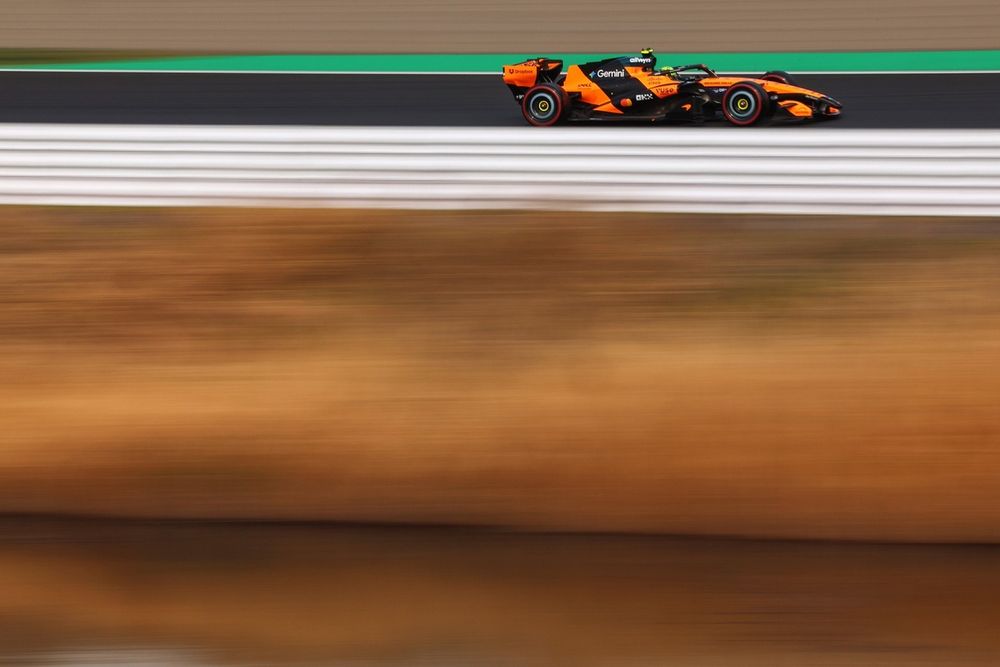
Norris feels the very essence of qualifying has been lost in F1 due to the new cars
Photo by: Alastair Staley / LAT Images via Getty Images
There is also a strictly prescribed regime for throttle positioning during certain corner sequences, depending on track configuration, speed and battery levels. The reasons for this are complex and subtle, and bound up in the wider picture of policing safety and potential cheating.
Given the limited electrical power available, finding the optimal lap time becomes a question of where to ‘spend’ that boost – and it isn’t necessarily on the straights. More typically, a boost out of slow corners is more advantageous if a longer section follows, because it produces a greater net lap time gain than having more electrical power available on the straights, given the ramp-down regime as the stored energy dwindles.
The ramp-down rate varies from circuit to circuit and is clearly defined because of the potential safety issue of varying speeds as cars run out of power. To that end, the engine mapping is set to minimise deployment in so-called ‘power limited’ periods agreed with the FIA in advance.
For safety reasons, such as avoiding huge disparities in deployment, and to prevent teams mimicking the effects of traction control, the activation of power-limited and the intervening power-unit-pending modes are governed by throttle position at various points, and the duration of the period the driver is off the throttle.
But if the driver has to back off to correct a slide (as happened to Leclerc during qualifying in China), or to avoid running into another car (as Norris did with Hamilton in Japan), it can cause the procedure to reset. So when they get back on the throttle, rather than being in a phase of reducing electrical input, they get more than they expected – at the cost of it then running out.
In qualifying, sometimes this can work to a driver’s advantage. But mostly it doesn’t.
“It’s hard to quantify X amount of this, X amount of that,” said Norris. “You still have to do a good job as a driver. You can’t take anything away from a guy who puts it on pole because they still have to drive.
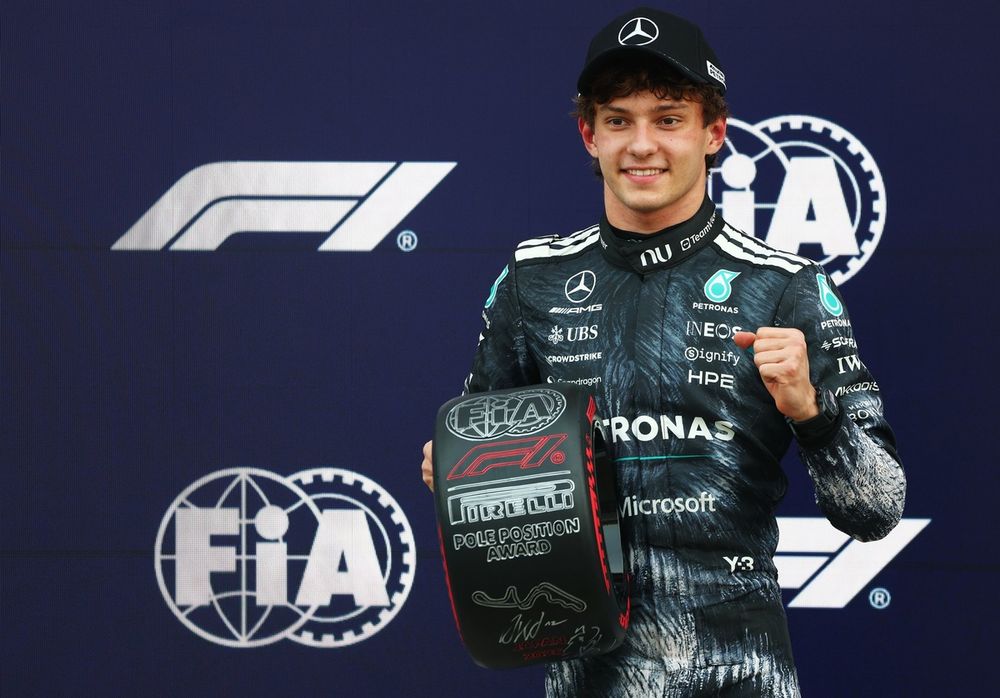
Norris also accepts that Mercedes and its drivers are doing a better job than anyone else in mastering the new challenges in qualifying
Photo by: Sam Bloxham / LAT Images via Getty Images
“George, Kimi, whoever it’s been, they still have to drive incredibly well to get everything out of it. It’s just you don’t get that extra couple of percent special feeling when you’re on a quali lap because sometimes, I think Charles said it, I had it in Shanghai where it gripped up a little bit more. I cracked open the throttle five, 10 meters earlier. It feels good. You see the delta coming down. Then you get to the straight and you just go slower. That doesn’t feel good inside the car. You’re like, I did a better job here. I took that risk. I balanced the car. I felt like I was trying to find perfection. Then you just get paid with a silly penalty of going 10kph slower in a straight and you lose more than you ever gain.
“You have to battle your inner qualifying fight. That’s the way it is now. It’s not the way we perfectly want compared to previous years where I think it was very nice. It’s also the way it is. You have to maximise what you’ve got nowadays.”
The effectiveness of the changes agreed this week, and due to be implemented in the Miami Grand Prix, are yet to be seen. But the fundamental problem remains: if the meting out of power is determined by an algorithm which thinks it knows better than the driver’s right foot, the outcome of qualifying may as well be set by consulting an astrological chart and casting the runes…
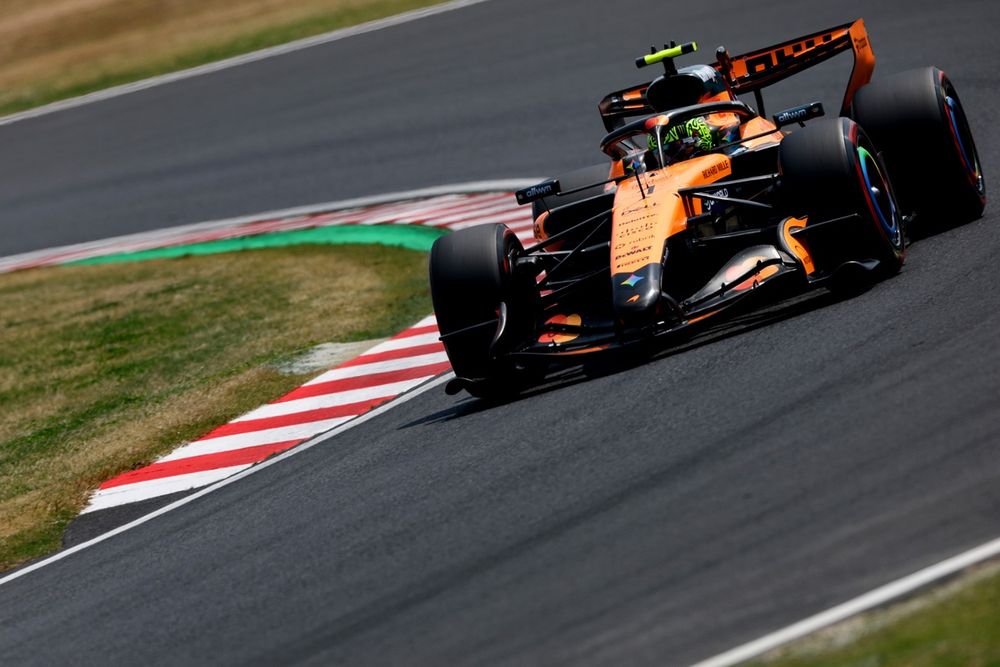
Can the rule tweaks help solve F1’s qualifying problem?
Photo by: Mark Thompson / Getty Images
We want to hear from you!
Let us know what you would like to see from us in the future.
Take our survey
– The Autosport.com Team
Read the full article here