

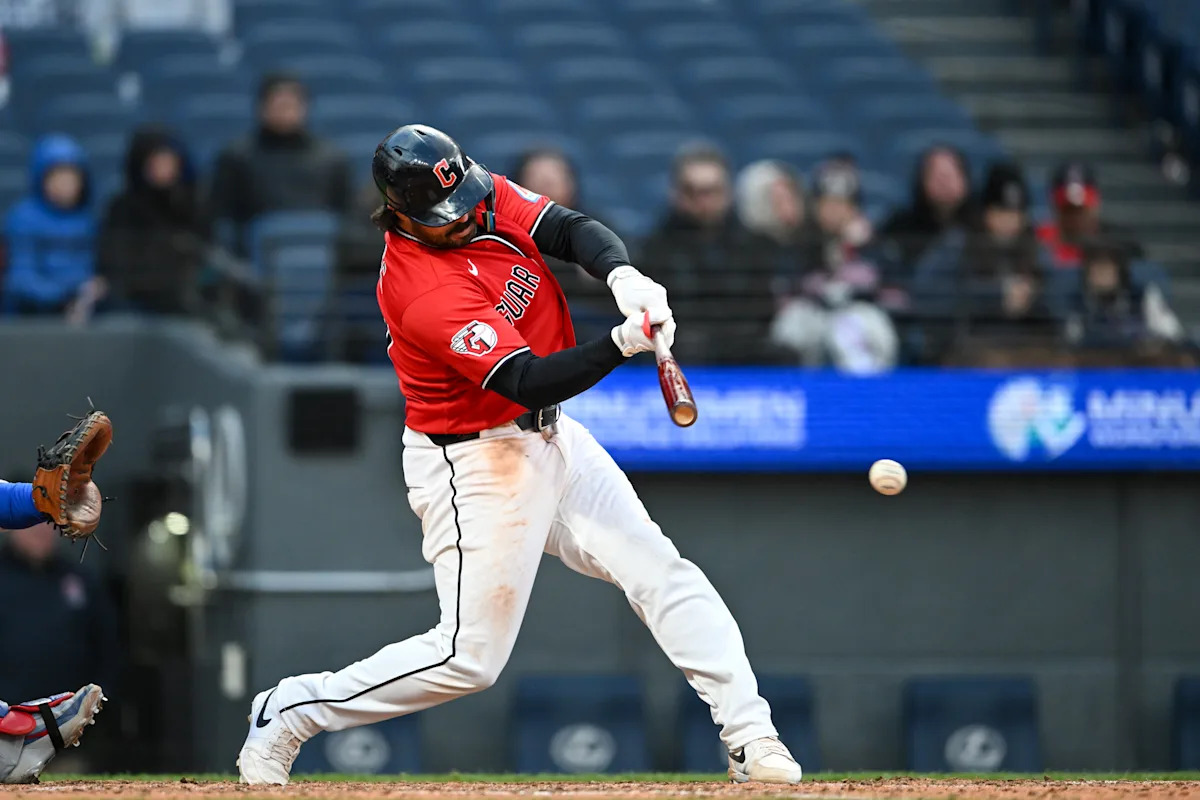
What makes Austin Hedges a valuable Major League Baseball player?
Depending on who you ask you’ll probably get a different answer. Some fans, former teammates, and current teammates might say it’s his ability to keep the dugout in a good mood and make sure guys are ready to play their best. Others might say it’s his excellent game calling and defensive skills as a catcher. Others still may respond saying his value is as a player-coach helping to lead the next generation of catchers for the team.
One thing everyone can agree on is his value does not come in the batter’s box. Since Austin Hedges first debuted in the League in 2015 he is one 246 players with 2500 PAs and his career wRC+ of 51 in those PAs ranks dead last. It’s not particularly close either as the next worst player (Billy Hamilton) sits at a 62 wRC+. His xwOBA (.246), and xBA (.191) in that same time frame are also dead last, and his xSLG (.307) is 2nd worst.
It’s always been known that even though he cannot hit at all Hedges’ defensive ability and personality in the clubhouse makes him more than worth a roster spot. To make sure we give his forte its flowers of those same 246 players when sorting by Fangraph’s Def ranking (Fielding and positional adjustment combined above average) he is 2nd best trailing only Fransisco Lindor, and he’s done so in about half as many games (830 vs 1553).
One could have expected a player in his 10th season in the League who’s been purely a defensive catcher for almost all of that time to accept that role as what he can do for a team and stick with it, but in the 2025 season in the midst of seeing his team struggle through what was shaping up to be one of the worst (if not the worst) offensive seasons in franchise history Austin Hedges set out to do the impossible. Austin Hedges was going to learn how to hit, and since September 1st 2025 he’s posted a wRC+ of 135, an xwOBA of .331, an xBA of .281, and an xSLG of .402. Has Hedgey done the impossible, or is it just a hot streak? Let’s take a look.
As when analyzing any outlier in a data set to see if there truly is a change or it’s just statistical noise we would want to look for a cause that would explain the change. When speaking with Meg (@shuddupmeg on X), creator and host of Caught Lookin’ and Austin Hedges Superfan she explained to me how Hedges made some adjustments to his batting stance, and how he stayed in Cleveland most of the offseason to work with Grant Fink and the other hitting coaches specifically on his hitting.
So, what do these changes look like? Below you’ll see a side by side comparison (provided by Meg) putting an example of Hedges’ old stance from July 20, 2025, next to one from April 5, 2026. Before getting into the sabermetrics and doing any math visually we can see some noticeable changes. His hands are dropped lower from head height to shoulder height, and he’s holding his bat more parallel to the ground vs having the barrel pointed upward. We can also see his front foot is much farther away from home plate. Let’s look at some numbers from statcast to put some data alongside the visual changes. His stance angle has widened from 13 degrees in 2025 to 26 in 2026, and he’s standing about an inch further back in the batters box (from 30.6 to 31.6). These two adjustments help improve visual tracking of the ball, and they allow him to not have to commit to a swing decision as early which in turn lets him track the ball deeper in the zone and still make solid contact.
That’s a good start. These changes already seem like that can be helpful, but what do we look at next? Typically in MLB if you want to look at a run of success/failure for a player and see if it’s sustainable or just statistical noise there’s a few metrics we’d look at first. One of the first things to look at is a players strikeout rate (K%). Austin Hedges has a career K% of 27.2 (League average the last few years is sitting between 22-23), but since September 1st, 2025 that K% has plummeted to 13.8. This drop off is significant enough that even over the very small (58 PA) sample it shows a real effect of the changes. His Chase % (or O-Swing%) has gone from 32.3 in his career to 28.1 since the adjustments. K% and Chase% are some of the stats that stabilize the fastest for hitters after making adjustments. This is because strikeouts are not affected by the defense or other types of batted ball luck, and because chasing pitches out of the zone is directly based on hitter decisions, not bat to ball skill. So these statistics are very reliable indicators even in a small sample size. Another driver of reduced K% is a hitter’s Whiff%. Whiff% can take a little longer to stabilize than Chase% or K%, but it still does so relatively quickly. (I will link below a couple of good articles from Baseball Prospectus and Fangraphs about statistical stabilization over specific sample sizes for anyone as obsessed with math as myself to take a look at if you want to know more about the raw calculations and how it’s done). All of these stats combined with a BB% up to 10.3 from a career 6.3 point to a more patient contact oriented approach supported by the stance changes.
You may be thinking “Ok so he can see the ball better, he’s chasing less, and walking a bit more but that can’t be all there is to it, right?” Well you’d be correct. Well done. Next let’s break down how his batted ball profile has changed and the mechanical aspects that influence that.
There are two main metrics to look at when evaluating quality of contact Exit velocity and launch angle. Austin Hedges in his career averages 86.6 mph exit velocity. His batted ball distribution is 36.9% ground balls, 18.8% line drives, and 44.4% fly balls (15.8% infield fly balls). Since September 1st 2025 those numbers are 88.5 mph exit velocity, 41.9% ground balls, 25.6% line drives, and 32.6% flyballs (7.1% infield fly balls). He also went from a career 29.8 launch angle sweet spot % (the percentage of batted balls that fall into the optimal launch angle range) to 33.3 so far in 2026. When analyzing bat tracking data from statcast we can see Hedges’ Attack Angle (the vertical direction that the barrel of the bat is traveling at the moment it hits the baseball) has gone down from a 13 degree angle to 11. The lowered attack angle is consistent with the batting stance changes, and helps explain the reduction in FB% especially infield FB%.
The next number here that jumps out in my opinion is the sharp increase in the percent of batted balls ending up as line drives. Fly balls and ground balls rates are strongly driven by launch angle, but line drives are a lot more nuanced. Line drives are more dependent on making solid contact and squaring up the baseball while maintaining optimal launch angles.
Hedges’ squared-up swing rate (the percentage of total swings that result in balls defined as “squared up”) has improved from a career 22.4 clip to 24.7 since September 1st, and up to 30.6 so far in 2026. Combine that with a launch angle sweet spot rate increase in 2026 to 33.3%, and you get a player that’s squaring balls up a higher percentage of the time and getting those balls out at an optimal launch angle a higher percentage of the time. These increases together are consistent with a higher probability of line drives for a hitter. It reflects both improved contact quality and a greater share of contact occurring within that optimal launch angle range.
This brings us to the most important question: is this real life? The short answer is that it’s just too small of a sample size to say for sure. Given that Hedges has almost 10 years of data saying he is a very poor hitter, we should be wary to buy in after 2-3 months of data saying that he is competent… but we can be hopeful. It’s hard to imagine a career .246 xwOBA player can become a .331 xwOBA player in a few short months, but it is at least somewhat plausible that this could be a hot streak of a guy that’s now going to be a .280 to EVEN .300 xwOBA hitter, and that would be a very nice improvement for this roster. Austin Hedges as a .280 wOBA would probably be a 3-4 win player as a full-time catcher. A
All these numbers do suggest there’s enough to want to hold the line, and see what more Austin Hedges can give us AT the plate while he continues to be one of the game’s elite defenders BEHIND it.
Baseball Prospectus Sample Size Analysis
Fangraphs Sample Size Principals Chart
(Editor’s note: please welcome Jakhob as our newest staff writer. He replaces Tommy Pecoraro who had to step down due to other commitments)
Read the full article here