

Hardcore motorsport fans know that the best performers aren’t always rewarded with a title at season’s end. Unreliability, misfortune, bizarre scoring systems and inferior equipment can combine to deny drivers even when they are at the top of their game.
For this list, in chronological order, we have picked out Formula 1’s greatest all-season performances by drivers who didn’t win the championship. It doesn’t necessarily mean that the champions from those years were unworthy, it’s more about highlighting star campaigns that went unrewarded. However, there are undoubtedly some here who drove better over the year than the actual champion.
We’ve taken into account the machinery at their disposal, standout drives, the amount of bad luck they had and the points they gave away.
Want to see how we rank these? Take a look here: link to video/podcast
Stirling Moss, 1958
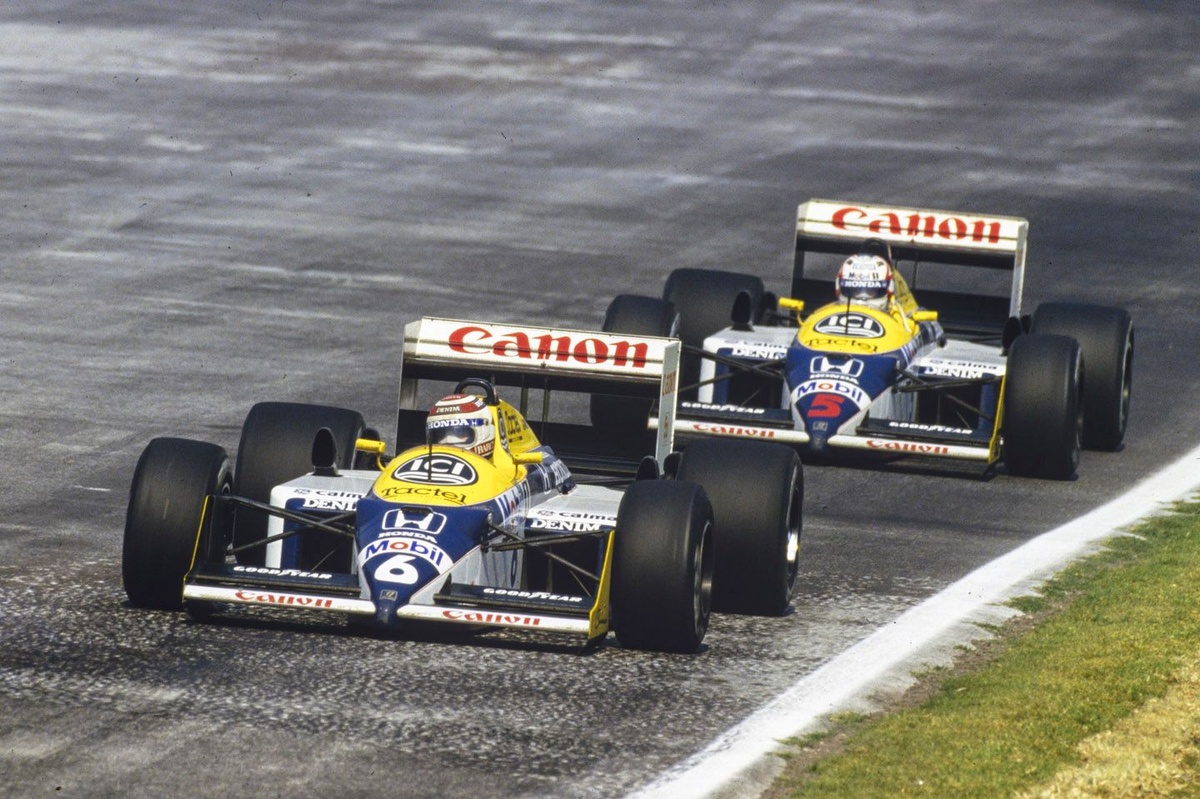
Hawthorn (left) became champion, but it was clear to everybody that Moss (right) was the best driver in ’58
Photo by: Motorsport Images
- Final position: 2nd
- Lost by: 1 point (8 for a win)
- Wins/starts: 4/10
Hardly a shocking entry. Stirling Moss took more wins (four to one) and led more laps (234 to 125) than Mike Hawthorn in 1958, and scored successes in two different cars, one of which was an underpowered privateer entry (Cooper) and the other rapid but tricky (Vanwall). Yet Hawthorn famously beat him to the title by a single point.
Moss’s only mistake of note was over-revving the Vanwall at Spa, unless you count the pitboard confusion over who had the fastest lap (for which there was then a point) at Oporto – or him sticking up for Hawthorn to prevent his fellow Brit being disqualified that day.
For his part, Hawthorn showed incredible consistency in a Ferrari that was more reliable than the Vanwall, scoring five seconds and a third as well as his French Grand Prix win. But everybody knew who had replaced the recently retired Juan Manuel Fangio as F1’s benchmark: Moss.
Given he was the only driver to defeat the dominant Ferrari 156s and took third in the points in an ageing privateer Lotus, Moss’s 1961 campaign was also a contender for this list, but it’s his 1958 defeat that stands as one of F1’s most egregious championship results.
Tony Brooks, 1959
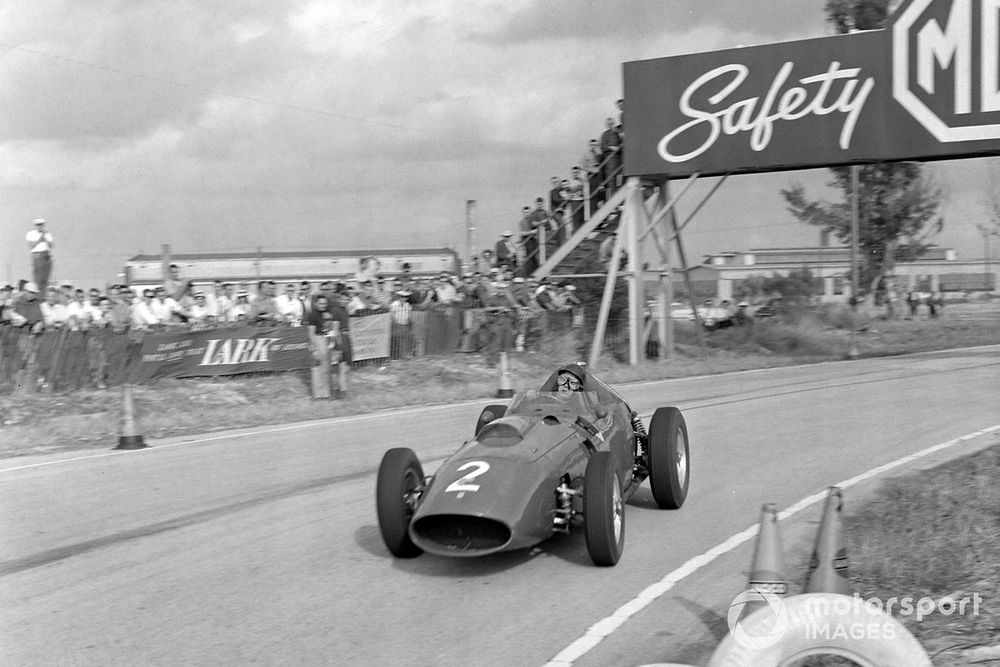
Brooks delivered a near-perfect season in the front-engined Ferrari 246, but rear-engined F1 cars were taking over
Photo by: Motorsport Images
- Final position: 2nd
- Lost by: 4 points (8 for a win)
- Wins/starts: 2/8
The Ferrari Dino 246 was the most-competitive front-engined GP car during the campaign in which Cooper really got the rear-engined revolution going. While the T51’s agility was evident, the Ferrari’s power kept it in the game at most circuits.
Tony Brooks dominated the French GP at high-speed Reims and won at Avus. He was denied a possible victory at the old, fast Spa – where he’d won the year before – thanks to the race being cancelled, and scored no points at Monza due to a clutch failure.
Ferrari also skipped the British GP, which chief rival Jack Brabham won. Brooks did enter the race in a Vanwall, brought out of mothballs, but it didn’t run smoothly and was several seconds slower than the Vanwalls had been two years before.
Aside from lacklustre performances at Zandvoort and Monsanto, both where Ferrari struggled anyway, it’s hard to see points Brooks gave away. Only once did he finish behind a team-mate, in a squad that included future world champion Phil Hill and Dan Gurney.
Given Brooks lost to Brabham by just four points, when eight were awarded to the victor, the Belgian GP cancellation, Ferrari skipping the British GP and Italian GP failure were more than enough to decide the title.
Jim Clark, 1967
![There were several contenders, but '67 goes down as Clark's [left] best non-title-winning campaign](https://sportsreviewnews.com/wp-content/uploads/2026/03/jim-clark-1st-position-on-the--1.jpg)
There were several contenders, but ’67 goes down as Clark’s [left] best non-title-winning campaign
Photo by: David Phipps
- Final position: 3rd
- Lost by: 10 points (9 for a win)
- Wins/starts: 4/11
Once the Cosworth DFV-engined Lotus 49 arrived at round three of 1967, the Dutch GP, Jim Clark led every race. He took six poles and team-mate Graham Hill three, yet unreliability cost Clark and Lotus both championships.
Late failures had lost Clark possible titles in 1962 and 1964, but the Lotus 49’s advantage was such that 1967 should have been a cakewalk. Of his nine world championship races in the car that year, Clark won four and suffered calamity in the other five.
At Spa he took pole by 3.1 seconds and led before having to pit with spark-plug trouble and finished sixth. In France, Germany and Canada, he looked the likely winner until being forced out with transmission, suspension and electrical woes respectively. And at Monza, he brilliantly stormed back to the front following an early puncture that put him a lap down, only for fuel starvation to drop him to third on the final tour.
Clark led more laps, scored more wins and took more poles than anyone else – and didn’t make an error worth the name in 1967. Aside from a fine performance in the wet in Canada, world champion Denny Hulme was rarely able to keep the Lotus in sight.
Given Hill’s even worse finishing record (just two from nine in the 49), was it Clark’s finesse that coaxed miles out of the fragile 49 in its early days?
PLUS: Formula 1’s great Lotus landmarks – Lotus 49
Jackie Stewart, 1968
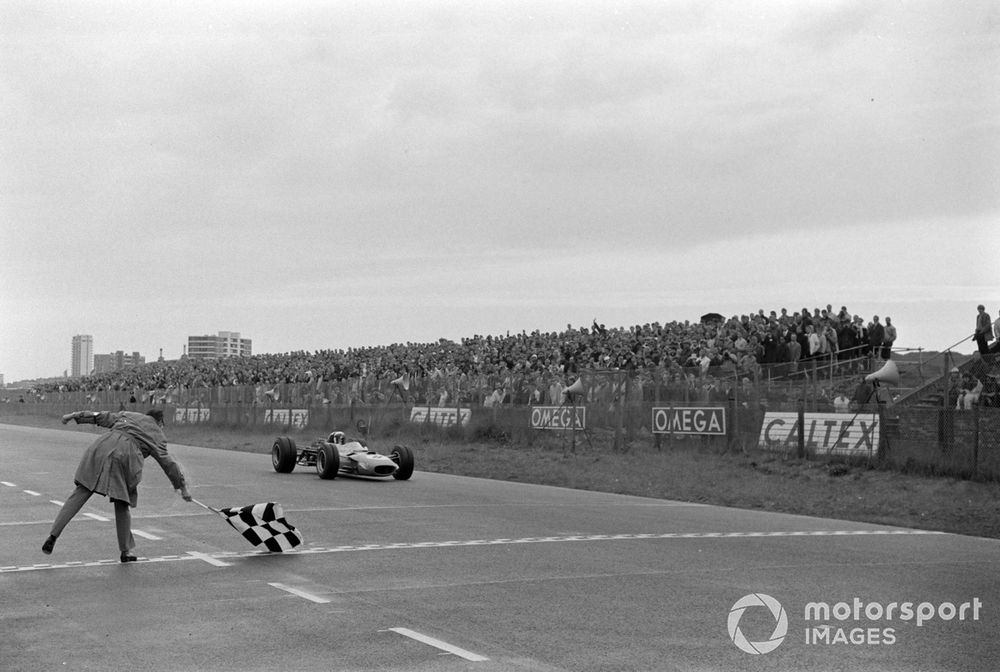
1968 was an incredibly sad year with the death of Clark, but up stepped Stewart as his worthy successor
Photo by: Motorsport Images
- Final position: 2nd
- Lost by: 12 (9 for a win)
- Wins: 3/10
“One man really excelled as far as the drivers were concerned: Jackie Stewart,” wrote Patrick McNally in Autosport’s review of the 1968 F1 season. “He was the only pilot who consistently displayed superior skill; the Scotsman is a worthy successor to Jimmy’s crown.”
Stewart was the only driver to challenge the pacesetting Lotus 49s in the South African GP opener, splitting Clark and Hill for some time before retiring from third when the Cosworth DFV in his Matra MS9 blew up.
He then missed the Spanish and Monaco GPs due to injuries sustained in an F2 accident. Both races were won by Hill, picking up Team Lotus in the wake of Clark’s death, so Hill had 24 points to Stewart’s zero after three rounds.
Stewart returned for the Belgian GP and was set to win before running out of fuel on the final lap, being classified fourth. There were wet-weather masterclasses at both Zandvoort and the Nurburgring, a third in the rain at Rouen and a distant sixth at Brands Hatch on a day the wingless Matra lacked pace.
Stewart then climbed from sixth to fight eventual winner Hulme’s McLaren for the lead in a Monza slipstreamer, only to retire with engine failure. Hill had already gone out, but was still four points ahead of the Scot.
Matra was again off the pace in Canada and Stewart lost seven laps with a suspension problem but finished sixth in a race of attrition in which Hill took fourth and Hulme brought himself into title contention with another win.
Stewart led the US GP from start to finish, but Hill was second and so took a three-point lead into the Mexico finale. Despite starting seventh, Stewart was quickly up with leader Hill, the duo soon joined by poleman Jo Siffert’s Rob Walker-run Lotus.
After Siffert stopped for attention to his throttle linkage, Stewart chased Hill until a fuel pump issue slowed the Matra. Stewart fell to a point-less seventh as Hill won, securing the title by an unrepresentative 12 points.
Niki Lauda, 1976
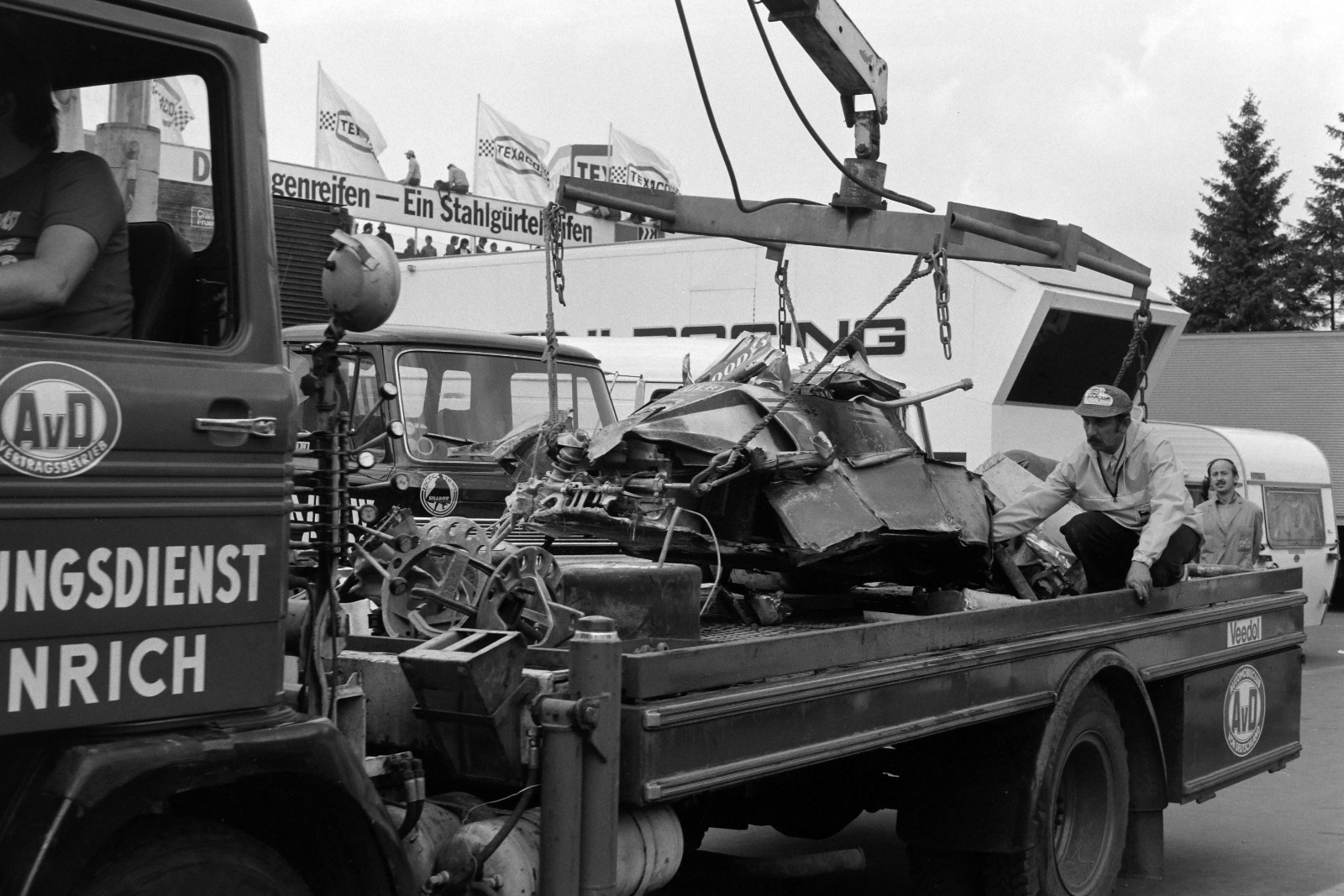
Lauda’s infamous crash at the Nurburgring prevented him from romping towards a second title in 1976
Photo by: Getty Images
- Final position: 2nd
- Lost by: 1 point (9 for a win)
- Wins/starts: 5/14
James Hunt took his surprise McLaren opportunity brilliantly, stepping into Emerson Fittipaldi’s shoes and wringing the neck of the ageing M23. But he would have been a fine runner-up in 1976 had it not been for the awful crash that befell runaway points leader Niki Lauda at the Nurburgring.
Lauda had won four of the first six races (five before Hunt was reinstated in the Spanish GP results) and, even after the German GP (round 10 of 16), was (eventually, after protests!) 26 points ahead of Hunt when nine were rewarded for victory.
Lauda’s heroic return at the Italian GP, just six weeks after his crash, stands as one of sport’s greatest comebacks. He managed to carry a three-point lead into the Fuji finale before withdrawing due to the appalling conditions, Hunt’s last-gasp charge to third after a pitstop just being enough.
Applying the 2026 points system to the season would give Lauda the title by two points – Hunt would have needed to beat Patrick Depailler to second in Japan.
Lauda had been unlucky not to be champion in 1974, but it really did take a remarkable story to prevent him from taking the title two years later. Perhaps someone should make a film about it…
Nigel Mansell, 1987
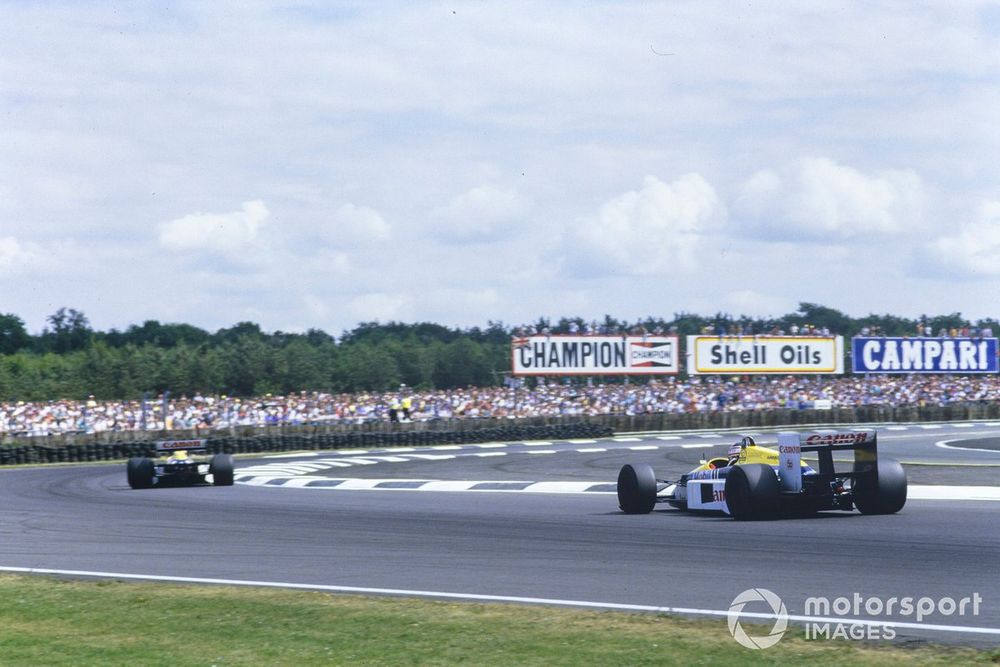
It was only mechanical failures which prevented the dominant Mansell from beating Williams team-mate Piquet to the ’87 crown
Photo by: Motorsport Images
- Final position: 2nd
- Lost by: 12 points (9 for a win)
- Wins/starts: 6/14
You could make a case for Nigel Mansell, Ayrton Senna or Alain Prost being the best driver of 1987. Autocourse went for the order of Prost-Mansell-Senna, with world champion Nelson Piquet fifth (also behind Gerhard Berger), but it’s Mansell we’re going to highlight here.
Williams ‘team-mates’ Mansell and Piquet had been evenly matched in 1986 but, after Piquet’s big crash at Imola, it wasn’t much of a contest in 1987. At least, not in terms of performance.
Mansell scored six wins and eight poles to Piquet’s tallies of three and four as the Williams-Honda FW11B set the pace. Mansell led 416 laps (41%) compared to Piquet’s 154, and there was one of Mansell’s most famous comeback drives at Silverstone.
Mansell lost possible wins through no fault of his own at Monaco (turbo) and the Hungaroring (wheelnut, which gifted Piquet victory), plus was running second in Portugal when electrical problems put him out. It’s also likely Prost and Mansell would have been 1-2 at Hockenheim but both hit trouble (electrical and engine respectively). Guess who won that one…
Mansell’s 1987 was not perfect – it was his mistake that led to the Suzuka qualifying crash that meant he missed the final two rounds. But the championship should have been done and dusted by then. Without him, Williams scored no wins, poles, fastest laps or points in Japan or Australia.
Alain Prost, 1990
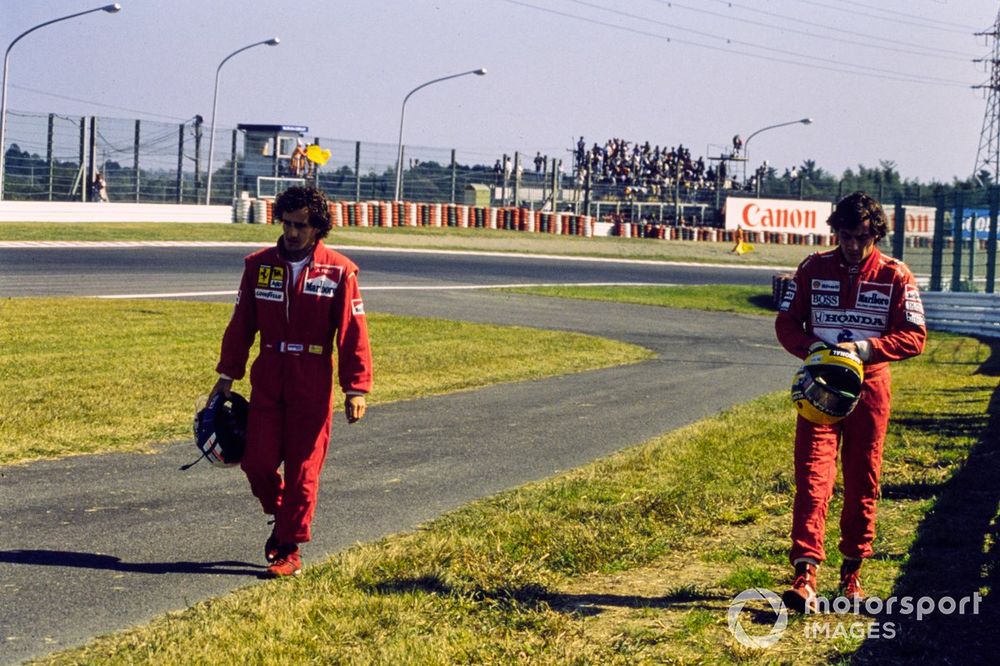
Prost and Senna were a cut above the rest in 1990, but the title fight ended controversially in Japan…
Photo by: Ercole Colombo
- Final position: 2nd
- Lost by: 7 points (9 for a win)
- Wins/starts: 5/16
This entry was going to be about Prost’s 1984 season. He won more races than anyone else, generally outperformed McLaren team-mate Lauda and only lost the title to the Austrian by half a point after suffering more than his fair share of misfortune. Prost was almost certainly the best driver that season – and would have been champion under the current scoring system – but he also made errors, notably his offs in Dallas and Austria.
In 1990, it was far less clear cut who the best driver of the season was – Prost or Senna – but the Frenchman gave little away. Having revitalised Ferrari into a title challenger, Prost’s four 1990 retirements were due to: an oil leak; battery problems; spinning off following transmission failure in Hungary; and being smashed off by Senna at Suzuka.
Prost largely outperformed team-mate Mansell, who did tend to get the brunt of Ferrari unreliability, and Prost’s victory from 13th on the grid in Mexico was one of the greatest drives in grand prix history.
Senna arguably performed more miracles in a McLaren-Honda that was more powerful but often more of a handful than Prost’s Ferrari, but he too made mistakes, such as clashing with Satoru Nakajima’s Tyrrell in Brazil and spinning at Silverstone. If it was up to us, we’d suggest Senna should have been the 1989 champion and Prost the 1990 title winner…
Ayrton Senna, 1993
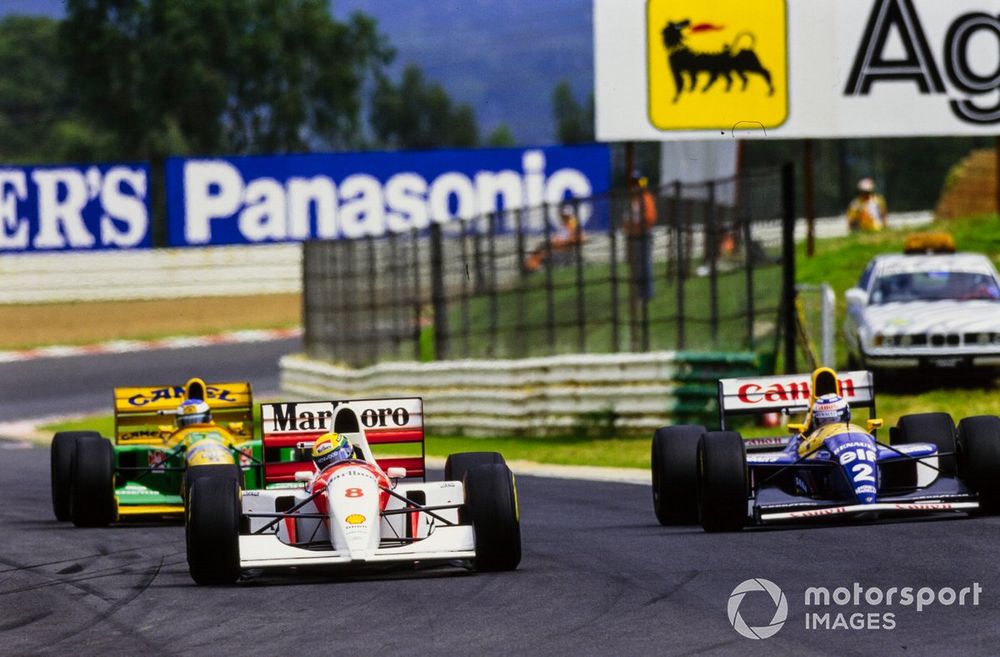
Senna was the best driver in 1993, but didn’t have the quickest car to back it up
Photo by: Motorsport Images
- Final position: 2nd
- Lost by: 26 (10 for a win)
- Wins: 5/16
Although Senna probably deserved to be champion in 1989, he was also in the best car, whereas his 1993 efforts were against the odds.
The MP4/8 was a decent chassis hamstrung by Ford customer power against a works Renault in the back of the all-singing, all-dancing Williams FW15C of Prost and Damon Hill. But Hill was a rookie and soon-to-retire Prost was never entirely comfortable with the gizmo-laden Williams, and Senna was able to score five victories.
His early wins at Interlagos and Donington Park were brilliant wet-weather drives and some good fortune helped him to a record-breaking sixth win at Monaco, after which he led the championship.
Alongside Benetton’s Michael Schumacher, Senna was consistently the strongest challenger to Williams and whereas the rising German star had beaten Senna in the 1992 standings, in 1993 Senna was second only to Prost.
Of Senna’s non-scores, only the collision(s) at Monza was his fault. If there is a criticism of Senna in 1993 it’s that his wage demands and ultimately successful efforts to get a Williams seat perhaps hampered McLaren’s push. But on-track he enhanced his status as the best driver in the world.
Michael Schumacher, 1997
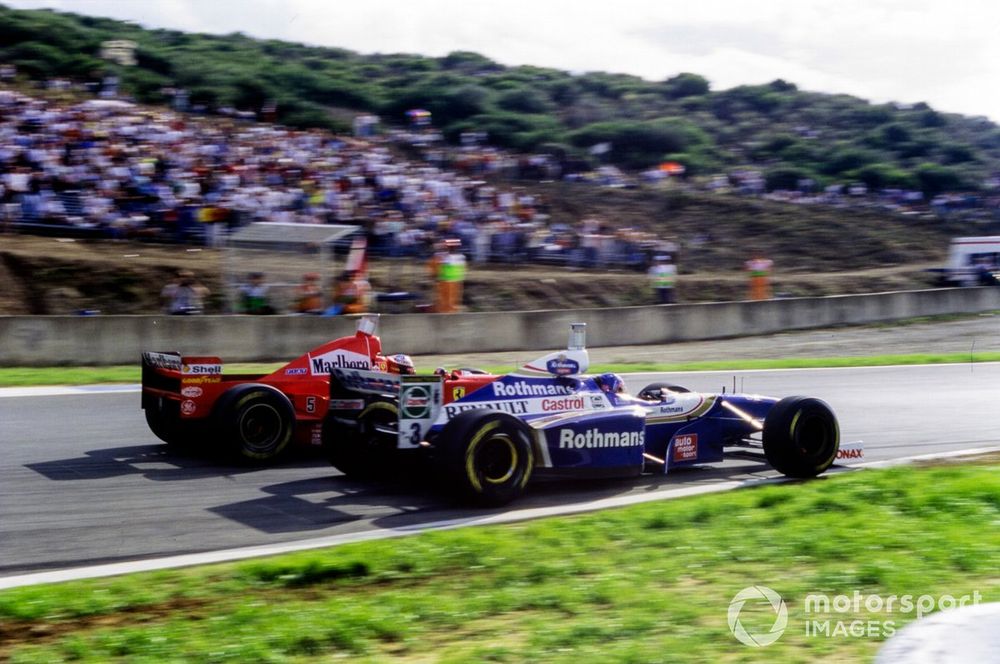
Williams had the dominant car in 1997, but Schumacher still took the title fight with Villeneuve down to the wire…only to be DSQd!
- Final position: 2nd before DSQ
- Lost by: 3 points before DSQ (10 for a win)
- Wins/starts: 5/17
This entry would have been higher had it not been for Schumacher’s attempt to take out Jacques Villeneuve in the Jerez finale. The Ferrari F310B had no right challenging the Williams FW19, which was 2.1s faster at the Melbourne opener. And yet Schumacher conjured up incredible wet-weather victories at Monaco and Spa, took the Canadian and French GPs from pole, and won in Japan with the help of team-mate Eddie Irvine.
PLUS: Michael Schumacher’s top 10 F1 victories
That meant Schumacher went to the European GP showdown with a one-point lead over Villeneuve, who had scored more wins but also made more mistakes. Along with the second Williams of Heinz-Harald Frentzen, they qualified with the same time, Villeneuve taking pole thanks to setting the time first.
Schumacher grabbed the lead and held on until just after the second round of pitstops. On lap 48 of 69, Villeneuve opportunistically dived down the inside into the Turn 6 hairpin, Schumacher instinctively giving him room before turning right into the Williams’s sidepod. The Ferrari bounced off and got beached, while Villeneuve continued to finish third and take the title.
Schumacher was subsequently stripped of his second place in the table. It was the correct decision but was a sad way for such an otherwise excellent campaign to end.
Aside from Jerez, there was a misjudgement at the first corner in Argentina that put Schuey out on a day Irvine finished a strong second, he got a stop-go penalty for overtaking under yellows in Austria and, being super critical, he chose the wrong Goodyear compound in Hungary (along with most others). But there were also points lost outside of his control: a wheel bearing failure while battling for the lead at Silverstone; he was the innocent victim of a first-corner pile-up at the Nurburgring.
It was the beginning of the Schumacher-Ferrari combination fighting for the title.
Kimi Raikkonen, 2005
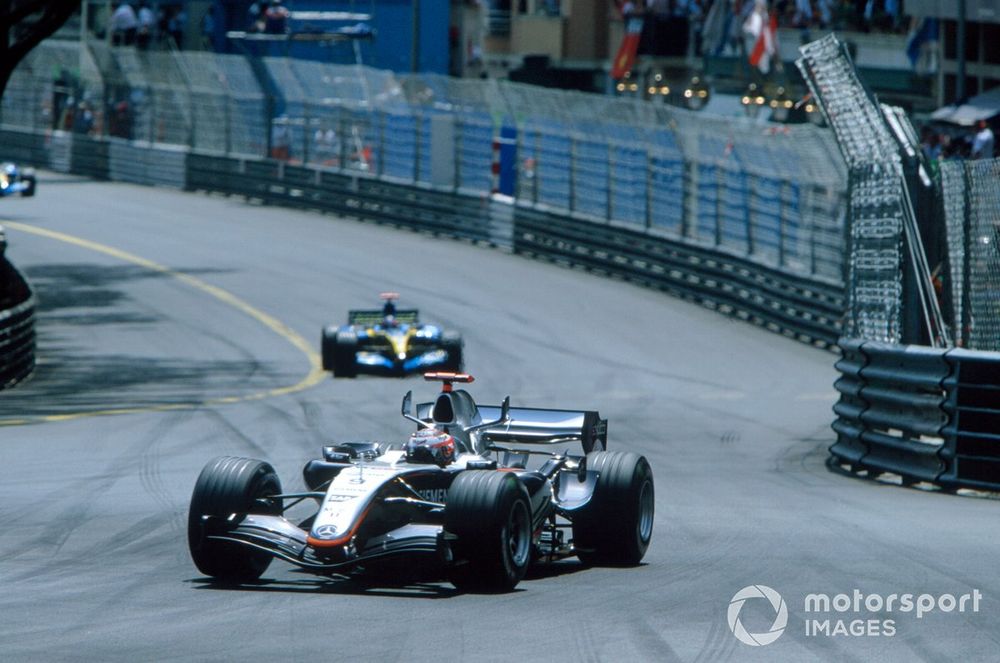
Raikkonen won his sole title at Ferrari, but he was at his best with McLaren
Photo by: Michael Cooper / Motorsport Images
- Final position: 2nd
- Lost by: 21 points (10 for a win)
- Wins/starts: 7/18
Despite winning his title with Ferrari, Kimi Raikkonen was at his best at McLaren. He was brilliant in 2003 and 2006, but 2005 is the season that got away. The Finn and the MP4-20 often set the pace but a combination of unreliability and a relentless rival in Renault’s Fernando Alonso denied Raikkonen the crown.
At Imola, a driveshaft failure took poleman Raikkonen out of the lead, while a hydraulics issue did likewise at Hockenheim. And the requirement for engines to last two weekends caught out McLaren-Mercedes, Raikkonen suffering 10-place penalties at Magny-Cours, Silverstone and Monza. He managed superb recoveries to second, third and fourth respectively but each time Alonso finished ahead to maintain the championship buffer he had built up in the early rounds.
There was also the infamous last-lap suspension failure at the Nurburgring, though Raikkonen has to take some of the blame given his lock-up created the destructive vibration.
At other times, Raikkonen and the MP4-20, which pioneered the seamless shift transmission, racked up wins in Spain, Monaco, Canada, Hungary, Turkey and Belgium, often with big winning margins.
But such was Alonso’s scoring that third place at the Brazilian GP clinched the Spaniard the title, just before Raikkonen’s greatest race. Another 10-place penalty forced him to start 17th at Suzuka but he stormed through to snatch a remarkable victory from Giancarlo Fisichella’s Renault on the final lap.
Given the machinery at his disposal, Alonso was a deserving world champion in 2005 – which he underlined with an impressive win in the Chinese finale – but it’s also hard to see much wrong with Raikkonen’s best F1 campaign.
PLUS: F1’s fastest runner-up
Jenson Button, 2011
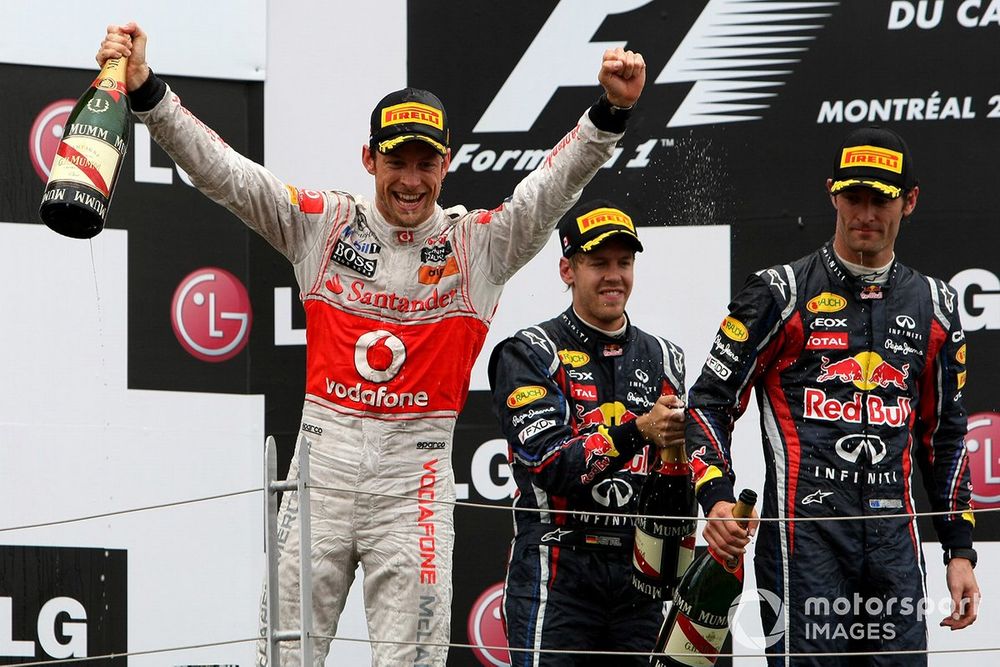
Button dominated team-mate Hamilton in 2011, his Canada victory being that year’s highlight
Photo by: Andy Hone / Motorsport Images
- Final position: 2nd
- Lost by: 122 (25 for a win)
- Wins/starts: 3/19
Jenson Button’s move to join Lewis Hamilton at McLaren straight after winning the 2009 world title was brave and bold. And, though Hamilton overall proved his pace and won more races, it paid off: Button scored more points over their three seasons together, largely thanks to a brilliant campaign that was arguably better than his championship-winning season.
Yes, personal issues meant Hamilton wasn’t at his best, but Button also outscored Mark Webber in the second Red Bull, peak Alonso and beat his team-mate by 43 points. Button’s 2011 Canadian GP, grabbed from Sebastian Vettel on the last lap after a rain-hit race of incidents and drama, is probably his most famous drive, but there were several other standout races.
Great tyre management and over-ruling a team call to pit in difficult conditions at the Hungaroring helped Button take victory, while a sublime performance at Suzuka allowed him to defeat Alonso and runaway title winner Vettel.
Button was nowhere near toppling Vettel and the RB7 in 2011 and there were days when Hamilton beat him, but Button was outstanding – and added credibility to his 2009 crown.
Fernando Alonso, 2012
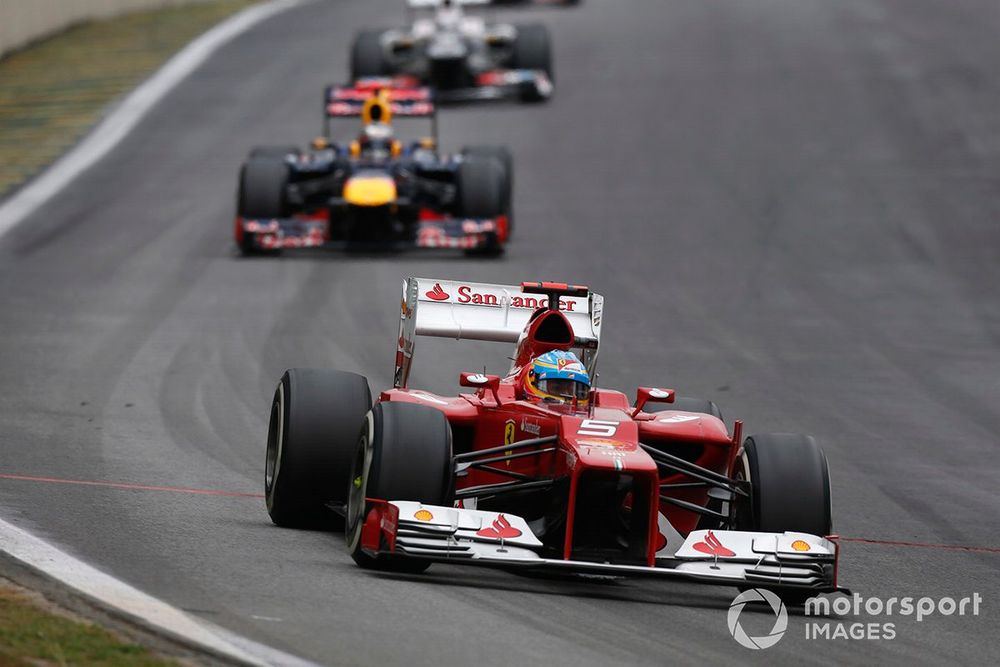
The fact that Alonso was even in title contention during 2012 was remarkable
Photo by: Andrew Ferraro / Motorsport Images
- Final position: 2nd
- Lost by: 3 points (25 for a win)
- Wins/starts: 3/20
On average raw pace, the Ferrari F2012 was the fourth fastest car of 2012. Even taking into account the randomness created by fragile Pirelli tyres, the fact Alonso came so close to the title is a testament to one of the greatest campaigns in motorsport history.
Ferrari started the season over a second off the pace but Alonso made the most of the arrival of rain in Malaysia to win from eighth on the grid. His relentlessness and Ferrari’s slick operation meant he usually moved forward in races, often helped by great starts – and he took every opportunity as others made mistakes or hit trouble.
His Spanish GP qualifying effort was one of the great laps, setting him up for second, ahead of all his title rivals, even if he couldn’t stop Pastor Maldonado winning for Williams.
PLUS: Top 10 F1 one-hit wonders ranked: Alesi, Maldonado and more
The European GP in Valencia was perhaps Alonso’s greatest drive. From 11th, Alonso pulled off incisive, opportunistic overtaking moves to reach second, then took a remarkable win when leader Vettel’s Red Bull failed.
Rain at Silverstone and Hockenheim allowed Alonso to take two poles, which he turned into a second and a first respectively in two dry races.
What points did Alonso drop? At Monaco, a slightly later pitstop might have pushed him higher than third, but it was a brilliant performance to get the Ferrari that high anyway after qualifying sixth fastest. He was also the innocent victim of Romain Grosjean madness at the start in Belgium.
Only in Japan, when he moved slightly across on Raikkonen’s Lotus and retired after the subsequent collision, could a loss of points be put at Alonso’s door.
As is always needed when someone battles for the title in an inferior car, Alonso’s rivals had issues. Aside from Vettel’s alternator at Valencia, Hamilton lost likely wins at Singapore and Abu Dhabi through McLaren unreliability.
When Vettel found himself facing the wrong way on the first lap of the Interlagos finale, a shock Alonso title looked possible. But the Red Bull ace recovered to sixth and Alonso just couldn’t overcome leader Button’s McLaren to grab the points he needed.
Team-mate Felipe Massa scored 122 points to Alonso’s 278 and, apart from the Spaniard’s two retirements, didn’t finish ahead of Alonso all season, though he did allow him by at the Brazilian GP finale. Massa scored two podiums to Alonso’s 13.
It’s no slight on champion Vettel but there’s a reason both Autosport and Autocourse rated Alonso as the best driver of 2012.
Lewis Hamilton, 2021
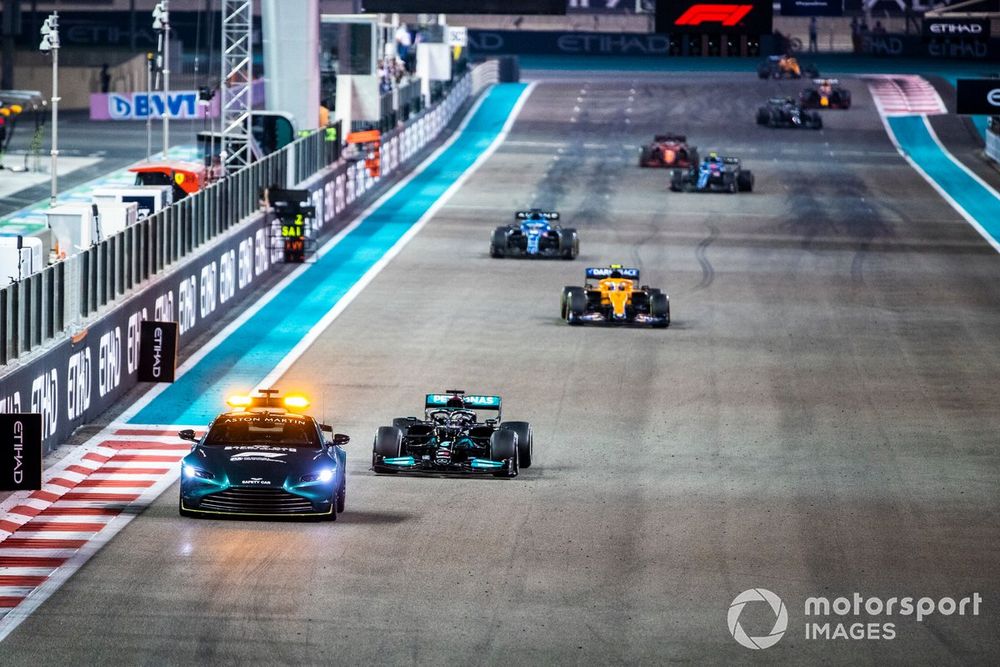
Hamilton was one lap away from a record-breaking eighth world title
Photo by: Sam Bloxham / Motorsport Images
- Final position: 2nd
- Lost by: 8 points (25 for a win)
- Wins/starts: 8/22
We really don’t want to get drawn into the toxic discussion about the Abu Dhabi 2021 GP, so let’s just say Hamilton was incredibly unfortunate that motorsport precedent was turned on its head.
Prior to that, the fight between the Briton and Red Bull’s Max Verstappen had been brutal, with both pulling out stunning performances around clashes, usually caused by the Dutchman.
Hamilton did make errors in 2021, most notably at Imola (a red flag saving him after he slid off at Tosa) and Baku, plus he was quiet at Monaco. But Verstappen wasn’t perfect either, witness the French, Italian and Saudi Arabian GPs. That underlined the intensity of the battle, one in which Red Bull had arguably the better car, albeit marginally.
There were also some incredible peaks, Hamilton’s drive to victory at Interlagos being one of his greatest weekends following grid penalties. There he went from last to fifth in the sprint, then from 10th to win the GP, despite dubious defence from Verstappen.
We’re not saying Verstappen was an unworthy 2021 champion, for both were equally brilliant and he merely played the cards he was dealt in Abu Dhabi. But Hamilton didn’t deserve to lose the title thanks to decisions from race control that left him defenceless.
Less controversially, Hamilton was largely brilliant in 2007, when he lost the championship by one point. That gets an honourable mention as probably F1’s finest rookie campaign.
Max Verstappen, 2025
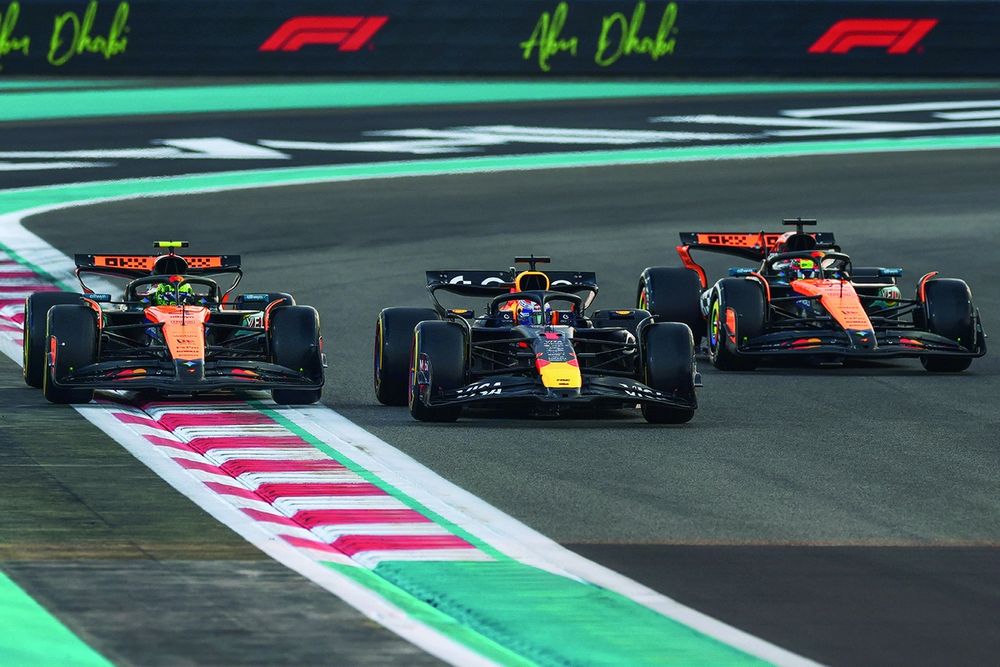
Verstappen was clearly the best driver in 2025
Photo by: Clive Rose / Getty Images
- Final position: 2nd
- Lost by: 2 points (25 for a win)
- Wins/starts: 8/24
Verstappen’s 2020 campaign, in which he finished miles ahead of the next non-Mercedes driver and managed to snatch a couple of wins against one of the greatest racing cars of all time, was superb. But we’ve gone for the 2025 season in which he came within two points of his fifth world title despite having a car disadvantage for most of the year.
Verstappen’s season was a demonstration of maximising the car on any given weekend, even improving it overnight with the help of Red Bull’s simulation and set-up tools.
When the RB21 was inferior to the McLaren MCL39, Verstappen kept the pressure on Lando Norris and Oscar Piastri. A brilliant pole at Suzuka allowed him to control the race and take a win against the run of play, while an opportunistic move on Piastri at Imola set up another victory.
Then, when the Red Bull received its upgrades in September, including a new floor, Verstappen reeled off six more wins, including the title decider in Abu Dhabi.
Yes, McLaren blunders – most notably the double disqualification in Las Vegas and strategy blunder in Qatar – helped keep Verstappen in the game, but that shouldn’t take anything away from the Dutchman’s stellar season, in which he only obviously gave away points in one of the 24 GPs…
When people come to assess Verstappen’s career, it will perhaps be seen as fitting that he lost the 2025 title by less than the points he gave away with his red-mist moment in Spain, penalised from fifth to 10th for driving into George Russell, but there’s also no doubt that – in terms of pure, relentless, driving performance – Verstappen’s campaign was one of the greatest.
We want to hear from you!
Let us know what you would like to see from us in the future.
Take our survey
– The Autosport.com Team
Read the full article here