

LOS ANGELES (AP) — For a show that lasts roughly 13 minutes, the Super Bowl halftime performance has fueled decades of conversation.
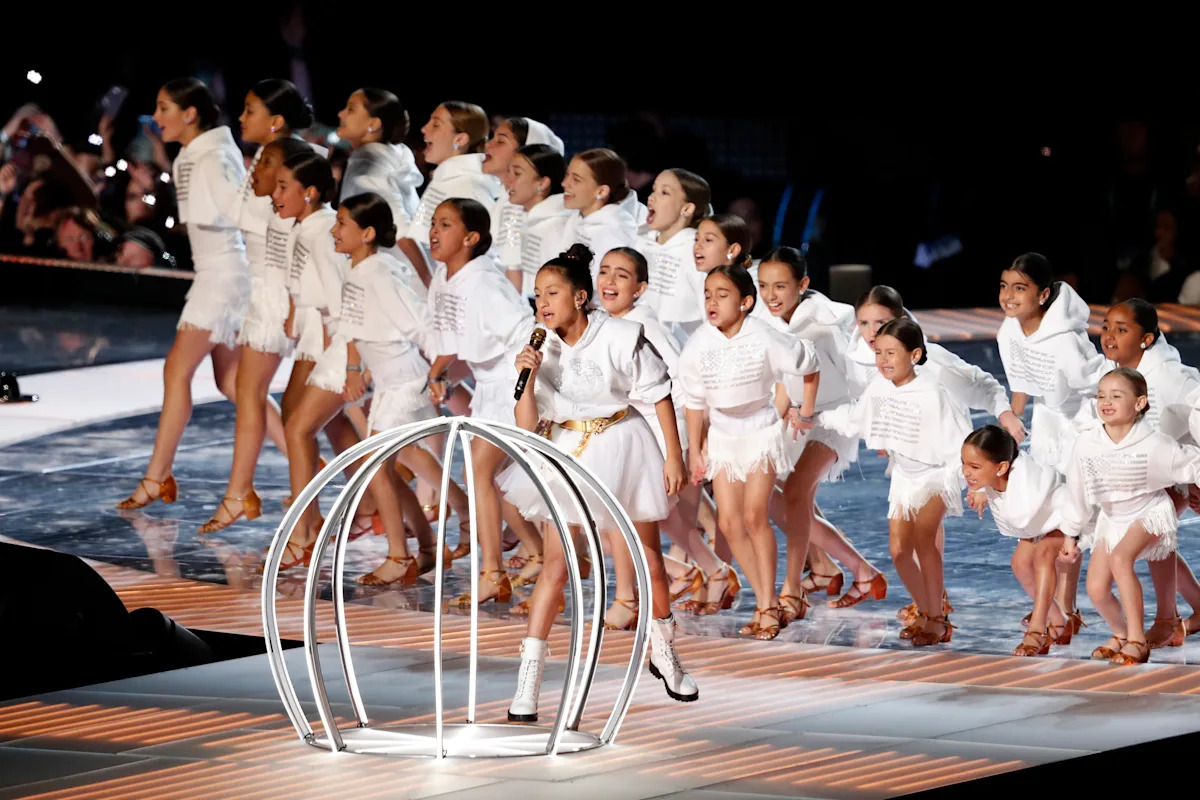
Sometimes the spark comes from a single moment — as it did when Janet Jackson and Justin Timberlake’s infamous “wardrobe malfunction” triggered a broadcast reckoning. Other times, it arrives through imagery and intent, from Jennifer Lopez’s 2020 caged children staging that critiqued U.S. immigration policies to children at the U.S.-Mexico border to Kendrick Lamar’s carefully layered Black storytelling, delivered as Donald Trump watched from his seat inside the Caesars Superdome in New Orleans.
The halftime show magnifies everything — fashion choices, choreography, symbolism — and invites interpretation on a scale few artists ever experience.
That history forms the backdrop as Bad Bunny prepares to take the halftime stage, a moment that places Latin identity at the center of America’s most-watched television event. The conversation building around his performance extends beyond music, touching on language, culture and how much room one of the world’s biggest stars will have for symbolism and social commentary — including past critiques of Trump — within a show long shaped by tight NFL oversight.
With that context, here is a look at some of the most talked about halftime moments:
Timberlake and Jackson’s “wardrobe malfunction”
The most enduring halftime controversy unfolded during the 2004 Super Bowl in Houston, when Jackson performed alongside Timberlake.
In the closing seconds of “Rock Your Body,” Timberlake tugged at Jackson’s costume, briefly revealing her right breast, adorned with a decorative shield. Timberlake later described the moment as an unintended “wardrobe malfunction,” a phrase that quickly entered pop-culture shorthand.
The reaction was immediate and far-reaching. The incident prompted FCC scrutiny, congressional attention and a reevaluation of live television standards. CBS, which aired the game, was fined $550,000 by the Federal Communications Commission, a penalty later overturned, and broadcasters expanded the use of delays for live events.
The professional fallout, however, was uneven. Jackson was disinvited from the Grammy Awards telecast the following week and largely retreated from the public spotlight, while Timberlake’s career continued uninterrupted. Years later, Timberlake said the two had reconciled, but the disparity in their treatment wasn’t forgotten.
When the NFL announced Timberlake’s return to the halftime stage in 2018, the decision reignited debate. Critics pointed to what they viewed as a racial and gender double standard, arguing that Jackson, a Black woman, bore the brunt of the consequences while Timberlake, a white man, emerged largely unscathed.
Online, hashtags such as #JusticeForJanet resurfaced, reframing the moment through a broader cultural lens.
“Formation”: Beyoncé and political symbolism
When Beyoncé performed “Formation” in 2016, the halftime show became a moment of cultural declaration.
Set in the Bay Area, the performance leaned heavily into Black history and identity. Dancers appeared in Black Panther–inspired attire, raised clenched fists and formed symbolic shapes on the field as Beyoncé delivered lyrics celebrating Black features and pride. The imagery echoed decades of Black activism, from civil rights-era protest to modern calls for social justice.
The performance drew widespread acclaim for its clarity and artistry while also sparking criticism from conservative commentators and some law enforcement groups who accused it of promoting anti-police sentiment. With an audience of more than 110 million viewers, the debate quickly moved beyond the stadium.
Several moments stood out. Dancers briefly formed an “X,” interpreted by some as a reference to Malcolm X, while raised fists recalled the 1968 Olympic protest by Tommie Smith and John Carlos. The visuals aligned directly with the message of “Formation,” which centers Black identity and self-definition.
“Believe in Love”: Coldplay and evolving visibility
Coldplay was the halftime show headliner in 2016, bringing out Beyoncé and Bruno Mars for a performance built around themes of unity, inclusion and joy.
The set featured a rainbow-colored stage, vibrant dancers and a crowd mosaic that spelled out “Believe in Love.” A pride flag was visible near frontman Chris Martin, and the show’s closing imagery emphasized togetherness.
While many viewers praised the message as affirming and timely, some conservative groups criticized the presentation for embracing LGBTQ+ symbolism. The reaction reflected broader cultural conversations around representation and visibility in mainstream entertainment.
When Kendrick Lamar’s symbolism becomes the story
Last year, Kendrick Lamar treated the halftime stage as a controlled narrative space, using choreography, costuming and staging to explore themes of identity, power and perception. His performance unfolded with cinematic precision, opening as dancers spilled out of a Buick GNX in choreographed fashion before Lamar took command of the field.
Dancers dressed in red, white and blue framed the performance, while Samuel L. Jackson appeared as an “Uncle Sam” figure who interrupted the action with pointed commentary, labeling the spectacle “too loud” and urging Lamar to “play the game.” The exchange underscored the tension between expression and expectation that has come to define modern halftime shows.
While the performance stayed within league parameters, it still sparked debate among commentators who scrutinized the imagery and tone. The response reinforced how the halftime show, even without overt rule-breaking, can function as visual storytelling that invites interpretation at a scale unmatched in other live events.
Other defiant moments on a global stage
The NFL has long maintained guardrails around the halftime show, particularly when performances edge toward political commentary.
Still, some artists have chosen to test — and at times ignore — those limits.
Ahead of Jennifer Lopez’s performance with Shakira in 2020, the NFL raised concerns about a segment widely interpreted as referencing children held in immigration detention facilities. The league asked Lopez to cut a segment featuring children in cages, a critique of U.S. immigration policies. But she refused and moved forward with the imagery, using visual symbolism rather than explicit messaging.
The 2022 show featured a hip-hop celebration with a robust lineup of Dr. Dre, Snoop Dogg, Mary J. Blige, 50 Cent, Eminem and Kendrick Lamar. But as Eminem’s performance of “Lose Yourself” concluded, the rapper dramatically took a knee, lowering his head in a gesture widely interpreted as a tribute to Colin Kaepernick, whose decision to kneel during the national anthem in 2016 to protest police brutality sparked a nationwide cultural reckoning. Kaepernick’s protest was later echoed by other players, and he would soon find himself out of the league.
Reports ahead of the game suggested the NFL had discouraged the gesture, though the league disputed that account. “We watched all elements of the show during multiple rehearsals this week and were aware that Eminem was going to do that,” NFL spokesman Brian McCarthy said at the time.
During Madonna’s halftime set in 2012, M.I.A. flashed a middle finger toward the camera, a split-second gesture that immediately drew regulatory attention and replay-heavy coverage. The action prompted an immediate fine and a legal dispute with the NFL. The sides later reached a settlement, ending a multimillion-dollar case over the incident.
Read the full article here